Child & Family Studies Professor nominated for Early Academic Career Excellence Award for research on Mindfulness and Relationships
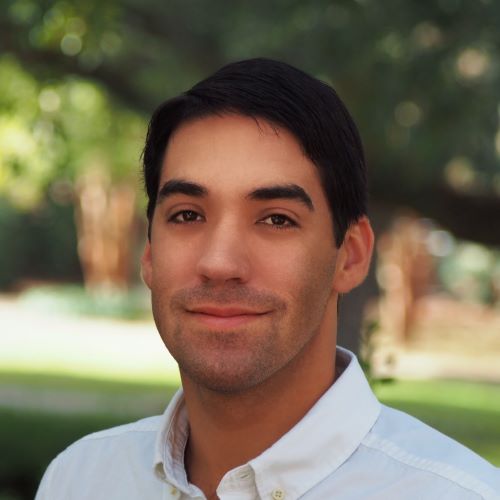
Department of Child and Family Studies assistant professor Matthew Jaurequi was recently nominated for CSULB’s Early Academic Career Excellence Award for his latest publication in the Journal of Marital and Family Therapy (JMFT) entitled, “Trait Mindfulness and Depression in Latino Couples: The Mediating Role of Relationship Satisfaction.”
As a licensed marriage and family therapist and certified family life educator, Dr. Jaurequi’s research is focused on how mindfulness improves the quality of romantic relationships and how these relational benefits contribute to better overall health. In his latest study, he demonstrates the cultural relevance of mindfulness in supporting stronger relationships and better mental health for Latino couples.
These findings reflect the broader practical and relational view he brings to studying mindfulness and one he also emphasizes when explaining the concept to the public.
“I think we know intuitively that practicing mindfulness is good for our health. We all have that capacity to be mindful – it’s something we can target, something that we can use in our daily lives. Mindfulness is just being intentional with our attention,” says Dr. Jaurequi.
“If we think about this research on mindfulness -- it has historically taken this individualist approach, and over the past decade it has started to take this more relational approach -- like what does mindfulness look like within relationships and families?”
That same relational lens also shapes the way Dr. Jaurequi teaches and mentors students. As a professor in the Child and Family Studies program within the Department of Family and Consumer Sciences, he impresses upon his students that learning about child development and family functioning must be understood ‘in context.’
“Family science is really about trying to understand the individual and family development within the context of the family system itself, as well as larger ‘ecosystems’ like schools, healthcare, culture, and society.”
This idea comes to life in the program’s signature “Family Stress and Coping” course. In this course, students examine major life events, known as “stressor events,” such as the birth of a child, a marriage or divorce, or a family’s experience with substance abuse. Whether these stressor events lead to positive or negative outcomes largely depends on the family’s relationships, resources, and the environment in which they are embedded.
“What impact does that have on the family and its functioning, and how does that translate, say, to the developing child?”
The Family Stress and Coping class, as well as overall learning and research in the Child and Family Studies program, is very much an interdisciplinary endeavor, says Dr. Jaurequi. Students are taught by a diverse faculty with a wide range of expertise.
“We’ve got such a wonderful mix of faculty here. For example, some do really good work on early childhood teacher preparation. We’ve got a lot of those types of instructors and teaching faculty serving our students wishing to enter the education field.”
“On the other hand, we’ve also got some great faculty who do a lot of program development and management in the community with children and families. I, myself, am a licensed marriage and family therapist and we have those [faculty] who have worked in more clinically-oriented settings. So, we have this great group of educators working together in an interdisciplinary way, which makes sense for our students, who can find themselves going into various job settings upon graduation -- whether they go the education, clinical, or community setting route.”
This interdisciplinary training prepares students for a wide range of careers supporting children and families.
Based on recent data performed by the department, those are some of the major areas in which Child and Family Studies students find jobs upon graduation. In addition to the career pathway of early childhood teaching, the program also produces students who find work as a child life or family life specialist – professionals who support children and families in a variety of settings. These positions may be located in the classroom (though not as a teacher), hospital or other healthcare environments, as well as in different community settings. For example, Dr. Jaurequi explains that graduates who get hired as a family life advocate may work to support families navigating challenges such as chronic illness or end-of-life issues.
Others may work as community care coordinators, parent educators, or program coordinators. They may work in violence- or substance-use-prevention programs, youth services, or, like Dr. Jaurequi, pursue pathways such as becoming a licensed mental and behavioral health professional.
“And so those are just some examples of this idea for our students getting to work with families in diverse contexts. Some of our students want to be educators, and that’s wonderful. Some want to be in the education system, though don’t necessarily want to be a teacher. Well, we’re here to say, there’s a spot for you in that job market, if that’s your end goal.”
“Or our students will come and say they are thinking about wanting to work in a more medical, healthcare setting, and there’s a spot for you there. Or some might want to work in social services -- there’s a spot for you there too. Our students have a lot of options available to them, and I think for us as faculty, our big aim is that we want to make sure that the students leave here understanding children and families in context and, especially that they have a really strong conceptual background for the field they decide to pursue -- whether that means seeking more training or finding a job immediately after obtaining their bachelor’s degree. There’s something for everyone here.”
As the program continues to equip its students to enter a wide scope of practice working with children and families, Dr. Jaurequi, meanwhile, will no doubt continue to offer support to the program through his own family life education lens, while continuing to pursue and develop research in his field as a marriage and family therapist.

“If I can help people be more mindful, to stop and say, ‘Hold on,’ and label their emotions – like, ‘This is my worry about ‘x’ in my relationship,’ or ‘This is my self-doubt about ‘y.’ Right then and there you can begin to say, in terms of being mindful in a relationship, ‘Hey, you know what? I am loveable, my partner is trustworthy, I do have a good relationship.’ Doing this helps soothe the stress response system and keep it lower [in activation], making us less vulnerable to things like anxiety and depression, and less susceptible to stress related health issues like gastrointestinal or respiratory problems. It's merely this idea of just getting people to slow down – again, to be ‘intentional’ with our ‘attention.’”
As we practice mindfulness, according to Dr. Jaurequi, we are better able to connect with those people in front of us, and are able to have more enriching and rewarding romantic relationships, which will in-turn promote better mental and physical health outcomes. For Dr. Jaurequi, it’s about building people’s capacity to be mindful in the face of stress and worry. And it’s about creating happier, healthier, and safer communities by looking at children and families in context to promote resiliency among individuals within the broader systems at play -- all while teaching students to be able to do the same, in order to have an impact for generations to come.