Physical Therapy and Engineering Collaborate on Assessing Ankle Injuries
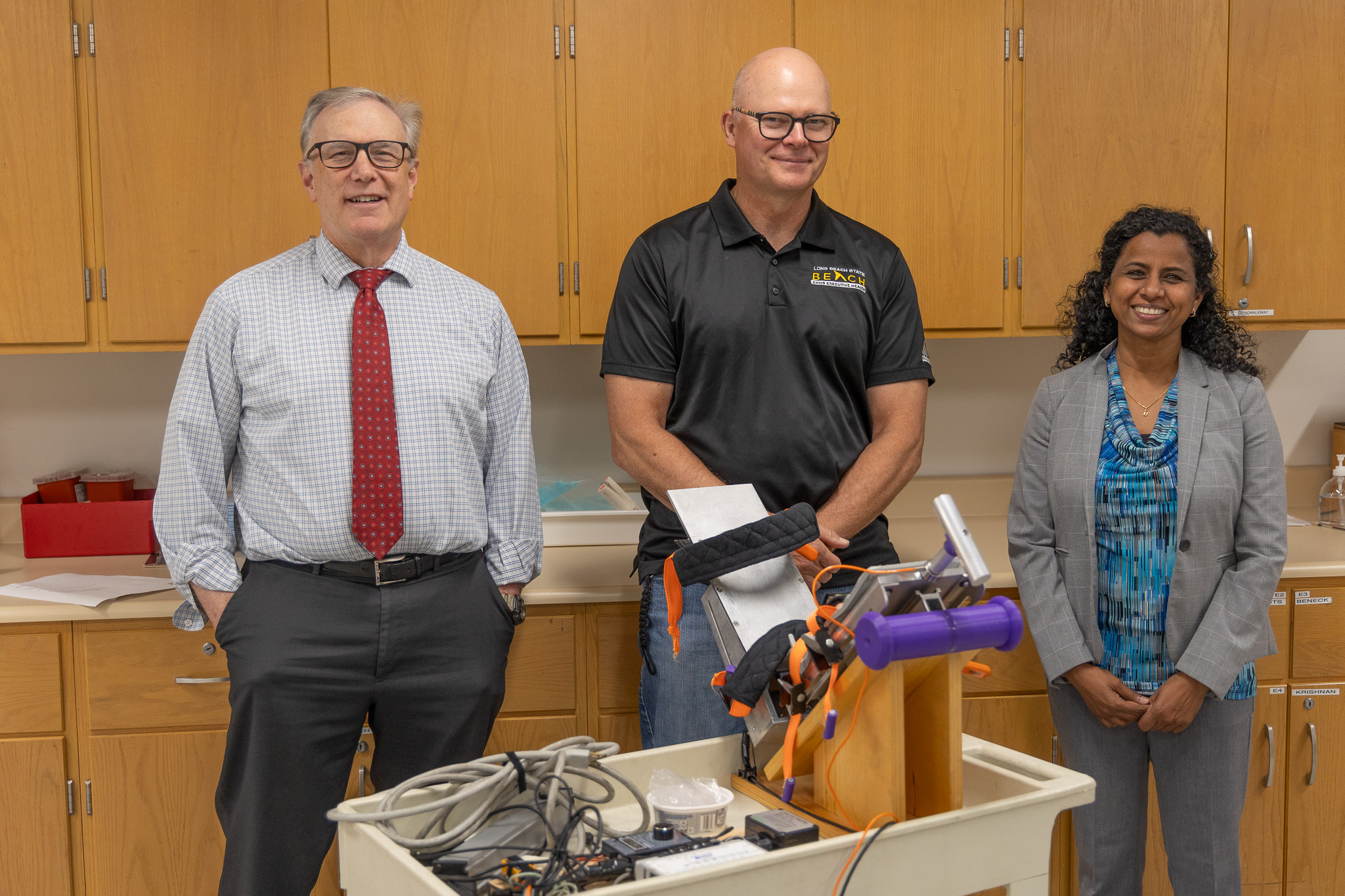
Ankle sprains are among the most common musculoskeletal injuries, affecting athletes, military personnel, and the general population alike. They are also the leading cause of emergency department visits for musculoskeletal trauma and have a high socioeconomic impact. That is why an expert team of collaborators comprising students, faculty and staff from the College of Health and Human Services (CHHS) and College of Engineering (COE), are working together to create a device that would improve how ankle injuries are assessed.
“In a typical PT clinic, we don’t have a device that can quickly quantify joint displacement; it’s largely based on clinical judgement,” said Dr. Vennila Krishnan, Professor in the Department of Physical Therapy.
Dr. Krishnan, along with physical therapy professor Dr. George Beneck, state that if a device can be developed to quantify ankle laxity – referring to abnormal looseness or “play” in the ankle joint often following injury – it would dramatically change the way ankle sprains are assessed and ultimately treated.
Under the Office of Research and Economic Development (ORED) multidisciplinary grant award, the team is addressing this goal by developing an Ankle Instability Measurement System (AIMS) – a portable, instrumented and easy to operate device to support real-time clinical assessment.
The collaboration extends beyond physical therapy and brings together expertise from engineering and clinical practice. Drs. Beneck and Krishnan are teaming up with CHHS Lead Safety and Facilities Officer Steven Irby, as well as Dr. Mahdi Yoozbashizadeh, Associate Professor in the Mechanical Engineering Department.
“The most exciting thing about this project is the interdisciplinary colloboration. We have electrical engineering students and mechanical engineering students working alongside with physical therapy students, each contributing unique expertise to solve a complex clinical problem,” said Dr. Krishnan.
“The idea is that we are bringing in these different groups and having the conversations needed, in order to try and understand the ankle from multiple vantage points,” said Steven Irby, who currently supports the College of Health and Human Services with laboratory operations, and who has an extensive background in motion capture analysis in hospitals and clinical settings across the United States.
Meanwhile, Dr. George Beneck and his physical therapy students have had the task of recruiting members of the population with severe ankle injuries – a task not so easy, Dr. Beneck relays – one that requires his students to talk with members of the campus, including those who work out at the Student Recreation and Wellness Center – along with posting flyers in neighborhoods at parks and recreation centers.
“We spent a lot of time looking into the literature to find out where people injure their ankles, and it was mostly playing court sports – like volleyball and basketball,” Dr. Beneck says.
Students are actively involved not only in recruitment but also in testing and data collection. In some cases, they even volunteer as subjects themselves. Earlier in the semester, Liam, a physical therapy student participated in testing the new device.
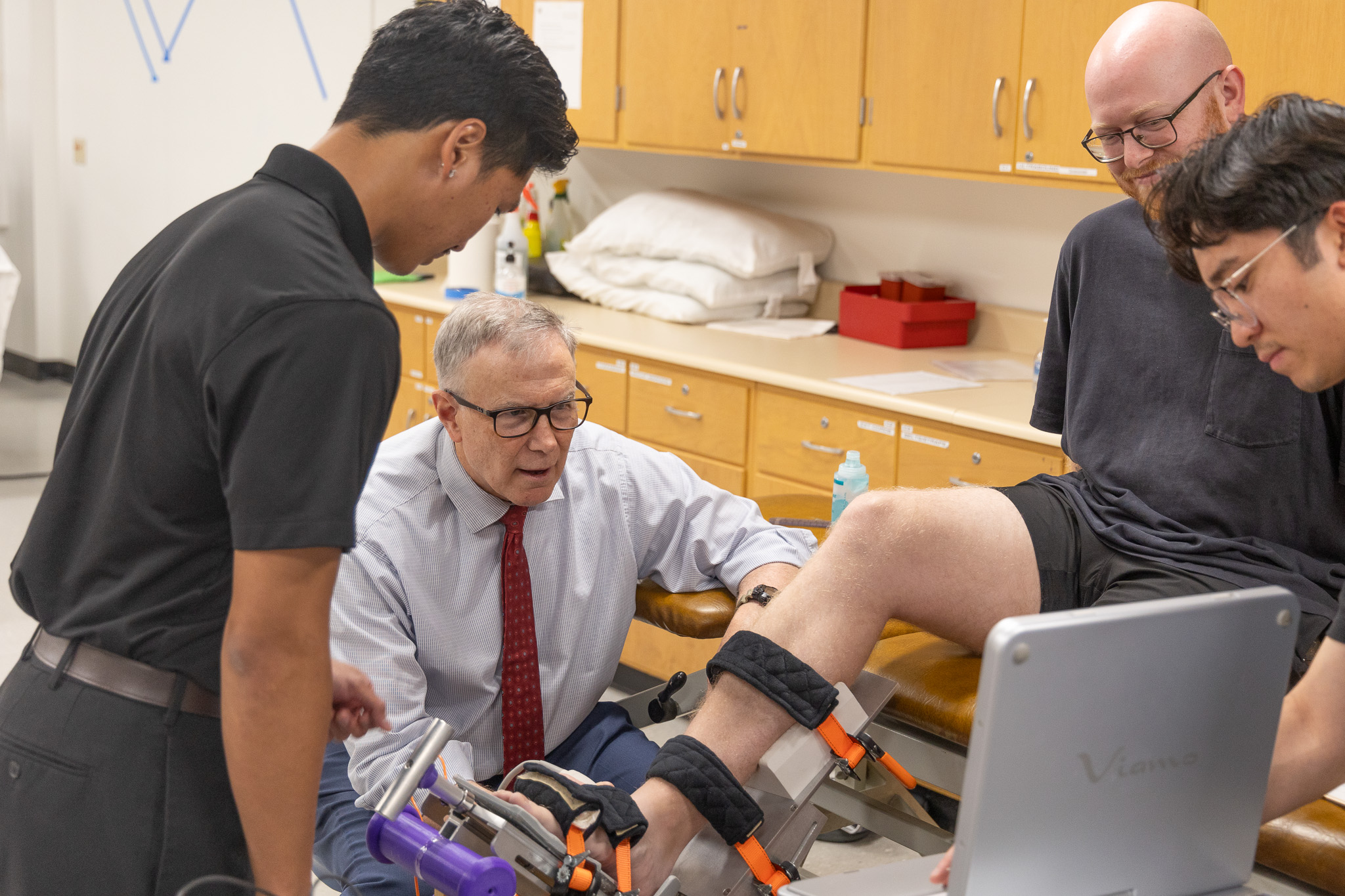
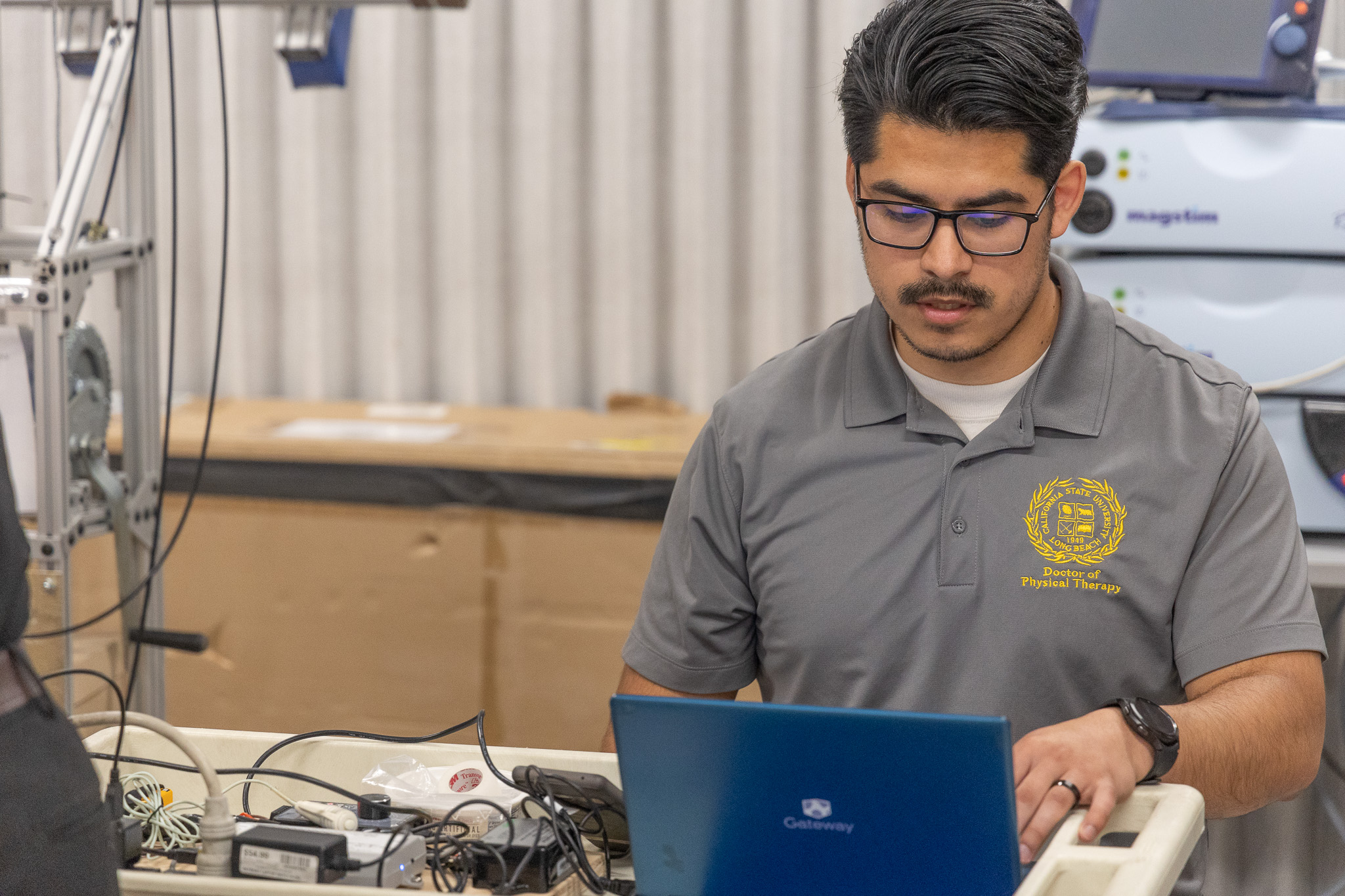
“It is critical for the success of this study that we find people with severe injuries,” Dr. Beneck says.
Though it is serious business, the physical therapy students often have a laugh when using each other as test subjects – particularly when imaging reveals just how much stress an ankle joint has endured.
As development of the AIMS device continues, the team remains focused on its goal: bringing objective, accessible measurement tools into everyday clinical practice.
If interested in participating in the AIMS project, please contact Dr. George Beneck or Vennila Krishnan. George.Beneck@csulb.edu / Vennila.Krishnan@csulb.edu