Fueling the Future: Professor Michelle Barrack's Sabbatical Research Sheds Light on Athlete Nutrition
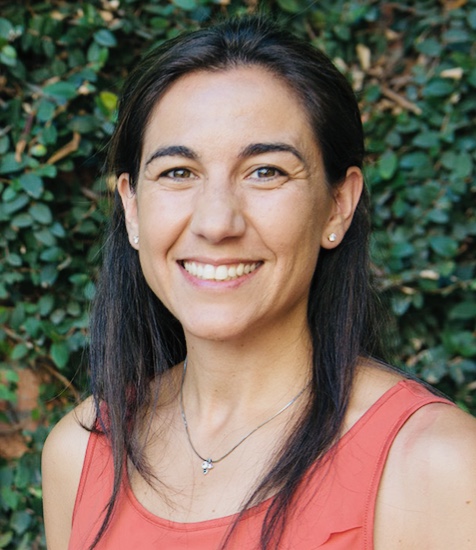
When CSULB Nutrition and Dietetics Professor Dr. Michelle Barrack took her sabbatical last spring, she didn't slow down — she dove deeper. A faculty member in the Department of Family and Consumer Sciences, Professor Barrack used her time away from the classroom to pursue two compelling research projects at the intersection of sports nutrition, health and well-being, and equity. Most of Dr. Barrack’s research is focused on adolescent runners and bone health.
“A big part of that is looking at energy deficiency and under-fueling,” Dr. Barrack said. “But I've also expanded to look at other barriers to adequate fueling, with food insecurity being another potential barrier for athletes to get adequate nourishment."
Her findings are already reshaping how we think about the fueling needs of collegiate athletes, and they underscore the College of Health and Human Services’ commitment to research that is both rigorous and socially meaningful.
Food Insecurity Among Collegiate Athletes
During her sabbatical, Professor Barrack turned a critical lens on a problem that often goes unspoken in competitive sports: food insecurity – or lacking consistent, reliable access to enough safe and nutritious food to live an active and healthy life. The urgency of this work reflects a growing trend in collegiate athletics.
"A lot of the sport nutrition conferences I've been at…a lot of collegiate sports dietitians are seeing a lot more food insecurity in their collegiate athletes, and are really concerned about their access to adequate, healthy, nourishing food," Professor Barrack notes.
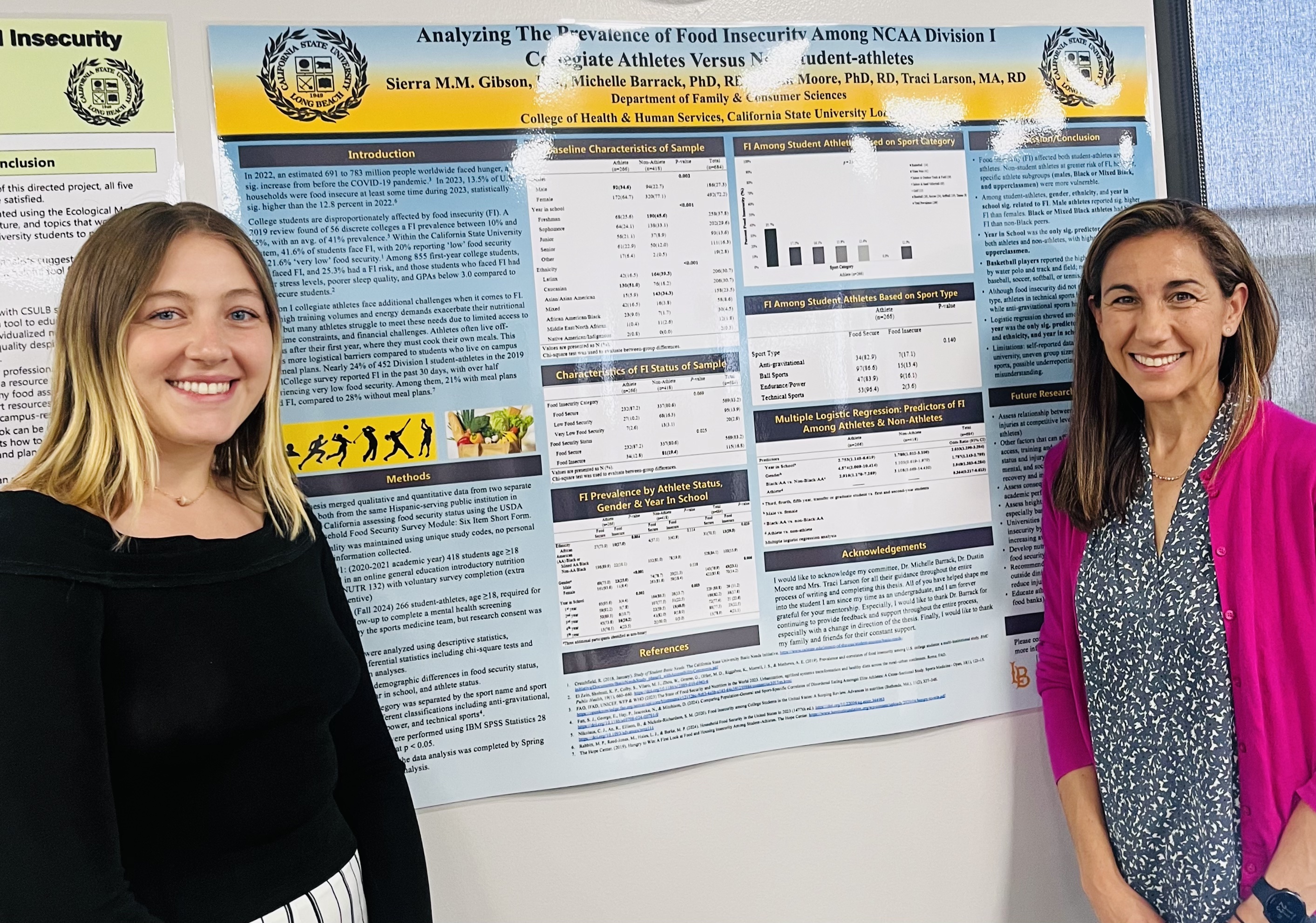
The study revealed that 12.5% of collegiate athletes experienced food insecurity — a figure that challenges the common assumption that student-athletes, by virtue of their visibility and scholarships, are adequately nourished. The project was further supported by CSULB athlete case manager Caitlin Broadwell and sports registered dietitian (RD) Traci Larson, along with CSULB faculty Drs. Virginia Gray and Dustin Moore.
The findings grew more striking when broken down by demographics. Male athletes faced three times the risk of food insecurity compared to their female counterparts, a finding that upends conventional narratives and points to a need for more targeted outreach.
“The goal for this project during the sabbatical period was to complete the data analysis and manuscript preparation,” notes Dr. Barrack, who, as part of her sabbatical time, worked to advise a MS in Nutritional Science graduate student on their master’s thesis regarding the topic of the interrelationships between food insecurity and disordered eating.
Perhaps the most novel contribution of this work is the identification of a link between food insecurity and binge eating behaviors among athletes — a connection rarely explored in this population.
"There was an association between food insecurity and binge eating in the athletes that we evaluated within the sample. And to my knowledge, that has not yet been reported in collegiate athletes before," Professor Barrack explains.
This association opens an important conversation about the psychological and behavioral consequences of chronic under-fueling, extending the conversation well beyond the training room and into the realm of mental health.
Dr. Barrack explains that broader awareness of campus and community resources is needed – for example, the availability of the Laurén Chalmers Beach Pantry, which provides food items and other essentials for students in need; as well as the CSULB Beach Bites App, which notifies students when leftover food is available from on-campus catered events and meetings.
In addition, Dr. Virginia Gray, chair of Family and Consumer Sciences, has also published extensively on Food Insecurity. Dr. Gray’s involvement in the CalFresh healthy living program on campus has helped provide students with food assistance benefits and related nutrition education experience.
Energy Availability in Black Collegiate Long-Distance Runners
Professor Barrack's sabbatical time also took her beyond the CSULB campus to a national collaboration led by Dr. Altelisha Taylor at Morehouse University, a Historically Black College and University (HBCU). Together, they examined low energy availability (LEA) among Black female long-distance runners — a subpopulation that has been largely underrepresented in sports nutrition research.
The team employed the doubly labeled water method, a gold-standard technique in human energy expenditure measurement, to assess whether athletes were consuming enough energy to support both their training demands and basic physiological functions. The results were striking: over half of the runners studied had suboptimal low energy availability, placing them at risk for a cascade of health consequences associated with the condition.
Compounding these concerns, the study also uncovered iron and vitamin D deficiency among the participants — two nutrients critically important for endurance performance and immune function. For long-distance runners, these deficiencies can translate directly into diminished performance, increased injury risk, and longer recovery times. The study highlights an urgent need for culturally responsive nutrition support at HBCUs and across collegiate athletic programs nationwide.
Implications & Broader Research Mission
Taken together, these two projects are part of a larger research mission that Professor Barrack has been building for years: identifying subpopulations of athletes who are most vulnerable to under-fueling and understanding the downstream effects on their health and athletic performance. Furthermore, her work deliberately seeks out the gaps — the athletes whose needs have been overlooked or assumed away.
“I feel very fortunate to be involved in this work in identifying these athletes who, for whatever reason, encounter barriers to getting overall calories, macronutrients, and vitamins and minerals – and how that can impact their athletic performance, their overall health and future health.”
The implications extend far beyond academia. Coaches, athletic trainers, campus health professionals, and university administrators all stand to benefit from a clearer picture of which athletes need more support and why. Professor Barrack's research makes the case that nutrition equity is a performance issue, a health issue, and an institutional responsibility.
Graduate Program Spotlight: Applied Nutrition and Dietetics
Professor Barrack is part of a team in the CSULB Nutrition and Dietetics program. The new graduate program in Applied Nutrition and Dietetics offers students the opportunity for a sports nutrition specialization.
“Many of our students want to work with professional sports teams and athletes,” Dr. Barrack stated.
The program is built on experiential learning, with partnerships that place students alongside elite organizations. In the past, graduates have gone on to hold positions with the LA Galaxy, LA Lakers and have supported athletes competing at the Paris Olympics — a testament to the program's ability to prepare students for careers at the highest levels of sport. Furthermore, the Beach Edge program also allows high-achieving undergraduate students to transition seamlessly into the graduate program, creating a clear pipeline for the next generation of sports dietitians.
In many ways, Professor Barrack's sabbatical research and the CSULB Nutrition and Dietetics program tell the same story: the power of informed, compassionate nutrition science to change lives — one individual, and athlete, at a time.