Master's students get up-close exposure to the “Blue Economy"
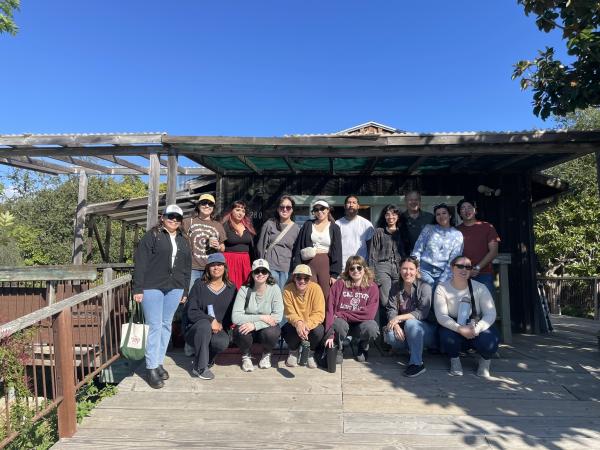
In January, students from CSULB’s Master of Science in Sustainability Management and Policy (MSSMP) program toured The Cultured Abalone Farm located in Goleta, CA. The purpose of this tour was to learn about abalone conservation initiatives and the farm's sustainable aquaculture practices. It’s an example of a business that is considered part of the Blue Economy, which the World Bank defines as "sustainable use of ocean resources for economic growth, improved livelihoods, and jobs while preserving the health of ocean ecosystem.”
- “I try to find as many opportunities as possible to see sustainability and conservation efforts in action, and this experience seemed like an ideal place to go,” said MSSMP program director Dr. Monica Argandoña. “It’s not something we often see, and fishing is one of our biggest global sustainability issues. This farm has found a way to balance both conservation efforts and being a sustainable business.”
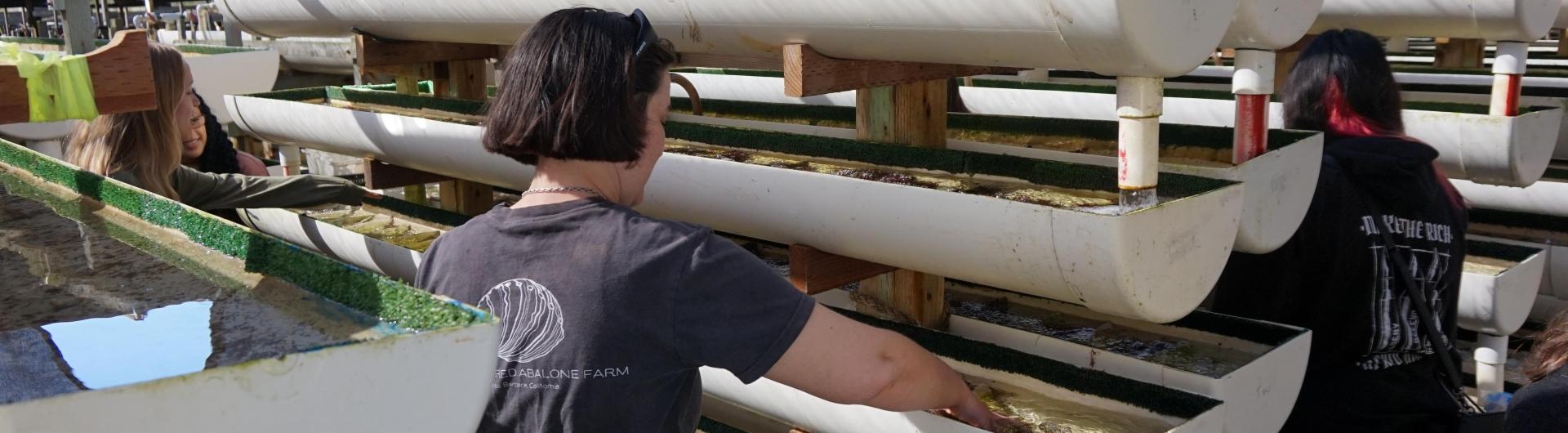
The Cultured Abalone Farm was established in 1989 on Rancho Dos Pueblos and is one of only three abalone farms in the United States. The farm specifically raises native red abalone using a seawater tank system. The tanks use around 2 million gallons of sea water every day, directly from the Santa Barbara Channel, replicating the same conditions abalone experience in the wild. On a mission to restore abalone as an icon in California, the farm aims to nurture abalone in a natural environment, while focusing on sustainable harvesting methods.
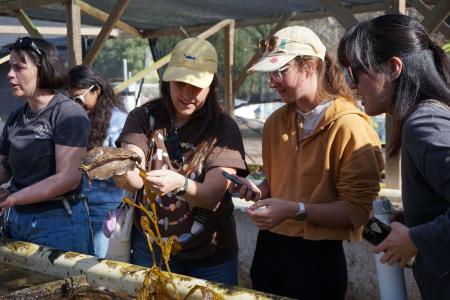
During the visit, the Tours Coordinator and Guide, Andie Van Horn led the students through the phases of the farming process, from the earliest insemination and hatching stages, to the abalone’s growth to market size (up to twelve inches). In addition to abalone, purple sea urchin and red seaweed are also grown under high maintenance. The students were able to interact and hold each of the sea creatures, giving them an understanding of how the tank systems work, and conditions needed for a healthy and natural environment.
Through the tour, the students gained valuable insight into the process of how abalone is grown, and how the farm’s practices support environmental conservation. Experiences such as these allow them to understand the struggles of sustainability when it comes to ocean life.
- “I think it's an amazing way to connect with coastal life,” current MSSMP student Stephanie Gonzalez shared her experience at the farm. “Seeing a sustainable way to save the culture of the coast was interesting. Seeing the different phases of their business model and the consideration of the local ecology goes along with our in-class discussions on sustainable business models.”
Learn more about the MSSMP program or The Cultured Abalone Farm by checking their website for information about farm tours and more.