Rocketry
| Images | Description |
|---|---|
Image
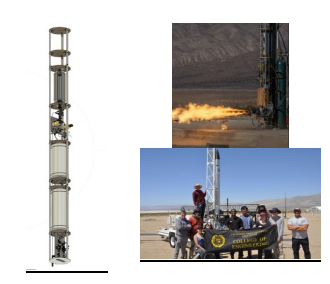
| Low altitude liquid rocket development (Supernova / Stratos) The 25-26 Long Beach Rocket Lab team carried out the final preparation and successful launch of a nitrous kerosene powered rocket, Supernova. Additionally, the team completed a design of the structural, fluids, and avionics systems for use in Stratos, a new rocket utilizing kerosene and liquid oxygen. The new Stratos rocket, currently in manufacturing, will utilize a pressure fed fluids system, storing the pressurant via a Carbon Overwrapped Pressure Vessel (COPV). Stratos has been designed for a target height of 30,000 feet |
Image
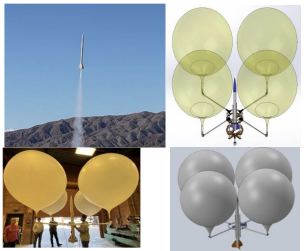
| High Altitude Launch System (HALS) The High Altitude Launch System (HALS) consists of a modular, four-armed structure that will be lifted into the air by helium weather balloons attached to the ends of each arm. In the center of the structure is a high-powered rocket that launches when the structure's altimeter indicates the minimum desired altitude has been reached. A mass control system that dynamically responds to changes in stability is used to correct any significant tilt caused by external forces. After launch, custom fabricated sleeve valves are used to gradually release helium from the balloons, allowing for safe recovery of the structure. |
Image
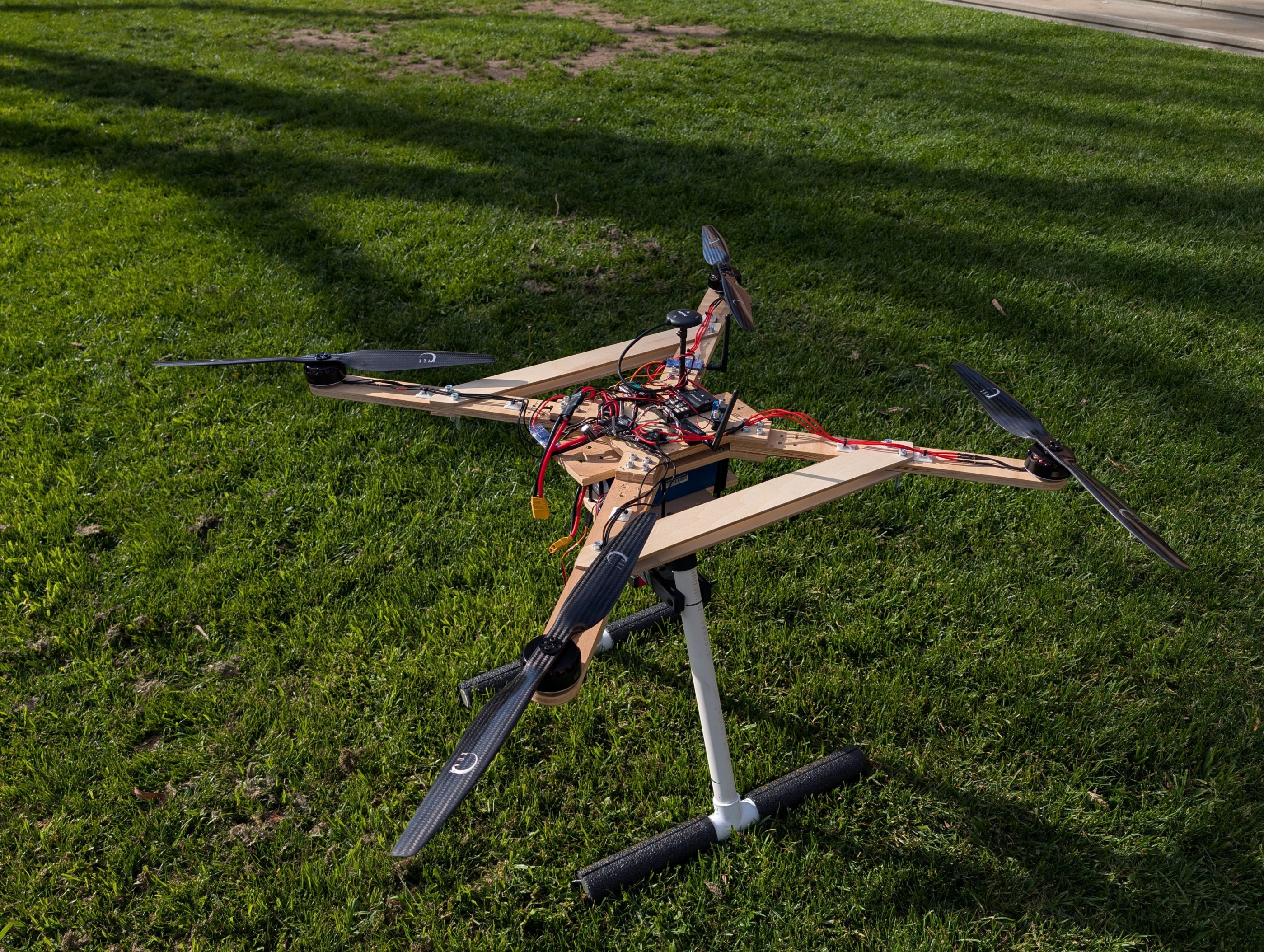
| Electromechanical Rocket Recovery System his project deployed parachutes from a high-power rocket using an electromechanical system instead of conventional pyrotechnic charges. This improves safety by minimizing stored energy. A radio system was also developed to manually trigger deployment or other in-flight events from a ground station over one mile away. The test Rocket was launched on Nov./16/2024 |
Image
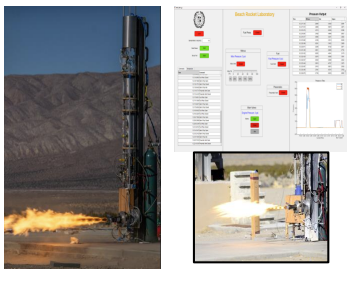
| Nitrous-Kerosene liquid rocket development This project successfully designed, built, and tested a liquid rocket engine, test stand, and flight vehicle. In the first phase the team redesigned the propulsion and ignition systems of the previous year’s static fire test stand followed by two successful static fire tests achieved 175 lbs of thrust. In the next phase the team designed and fabricated a flight vehicle. Developing a robust data acquisition and control system led to two successful static fires with a peak thrust of 276 lbs. The Rocket static test was conducted on Nov./16/2024 |
Image
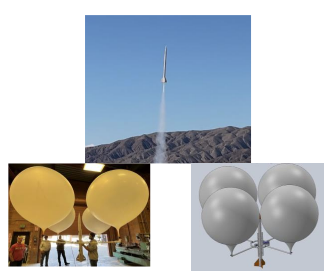
| Reduced Altitude Rocket Launch Pad The Reduced Altitude Launch System consists of a four-armed structure that will be lifted into the air by large helium balloons connected on each arm. In the center of the structure is a high powered, dual deployment rocket that launches when the altimeter reads the minimum desired altitude has been reached and the gyroscope reads less than 10 degrees of tilt for the entire structure. Helium is pumped between the balloons to correct any significant tilt caused by external forces. After launch, solenoid valves gradually release helium from the balloons, allowing for safe recovery of the structure. |
Image
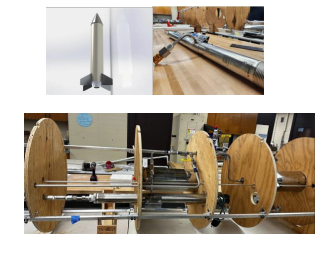
| Pump Fed Liquid Rocket (both versions) In this project, the team designed and manufactured the University’s first attempt of a pump fueled liquid rocket. Previous projects involved the use of pressurized systems to ensure the flow of fuel and oxidizer to the engine. For the project, a pump was bought for the pump fed system. The centrifugal pump used is a Grundfos 15 SQ15-290, which was retrofitted as it met the criteria necessary for the project, a flow rate of 10-15 GPM, a pressure requirement of 200 psi working pressure and a weight limit of 18 lbs. The rocket is designed for the use of liquid oxygen as an oxidizer and Kerosene as the main fuel. |
Image
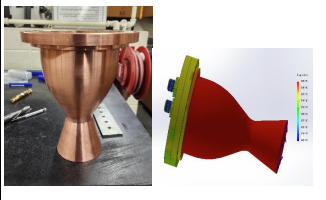
| Chromium-Copper Heat Sink Engine for Liquid Rocket This project showcases the collaborative effort involved in designing and manufacturing a high-performance heat sink engine for a liquid rocket similar performance to the Rocketdyne LR-101. Constructed from chromium copper, the engine uses a propellant combination of Nitrous Oxide as the oxidizer and Kerosene as the fuel. The final product is engineered to produce an impressive 1,120.38 pounds-force of thrust while maintaining structural integrity, all while weighing just 16.23 pounds. |
Image
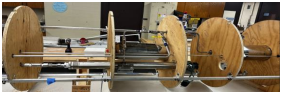
| Pump Fed Liquid Rocket with copper-chromium thruster In last year project, the team designed and manufactured the University’s first attempt of a pump fueled liquid rocket. Previous projects involved the use of pressurized systems to ensure the flow of fuel and oxidizer to the engine. For the project, a pump was bought for the pump fed system. The centrifugal pump used is a Grundfos 15 SQ15-290, which was retrofitted as it met the criteria necessary for the project, a flow rate of 10-15 GPM, a pressure requirement of 200 psi working pressure and a weight limit of 18 lbs. The rocket is designed for the use of liquid oxygen as an oxidizer and Kerosene as the main fuel. This year a team developed the EGSE and performed testing and characterization. |