Winter Break Means More than Just Relaxing for CNSM Graduate Students
Research doesn't stop just because the semester is over!
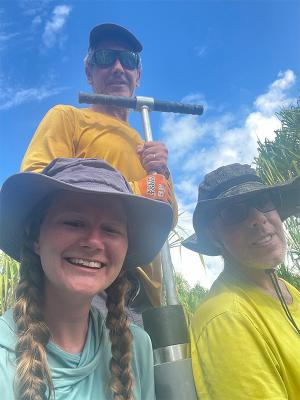
Over the break Earth Science graduate student Hannah Fitzpatrick joined professors Matt Becker and Ben Hagedorn in French Polynesia to install 14 temporary monitoring wells, and gave us an inside look at what it's like to be an Earth Science researcher here in CNSM:
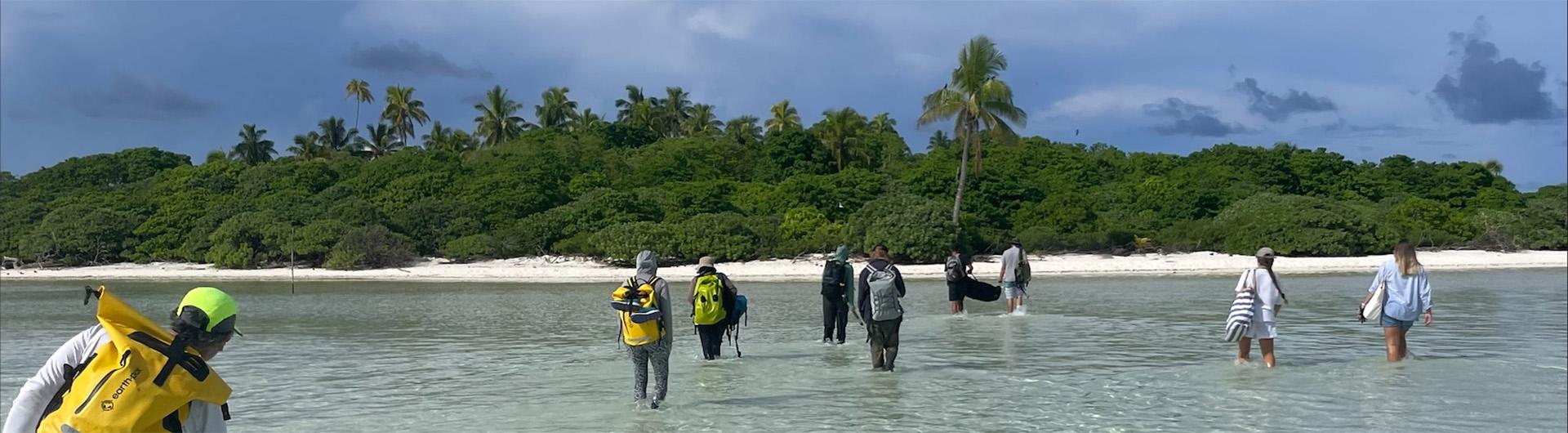
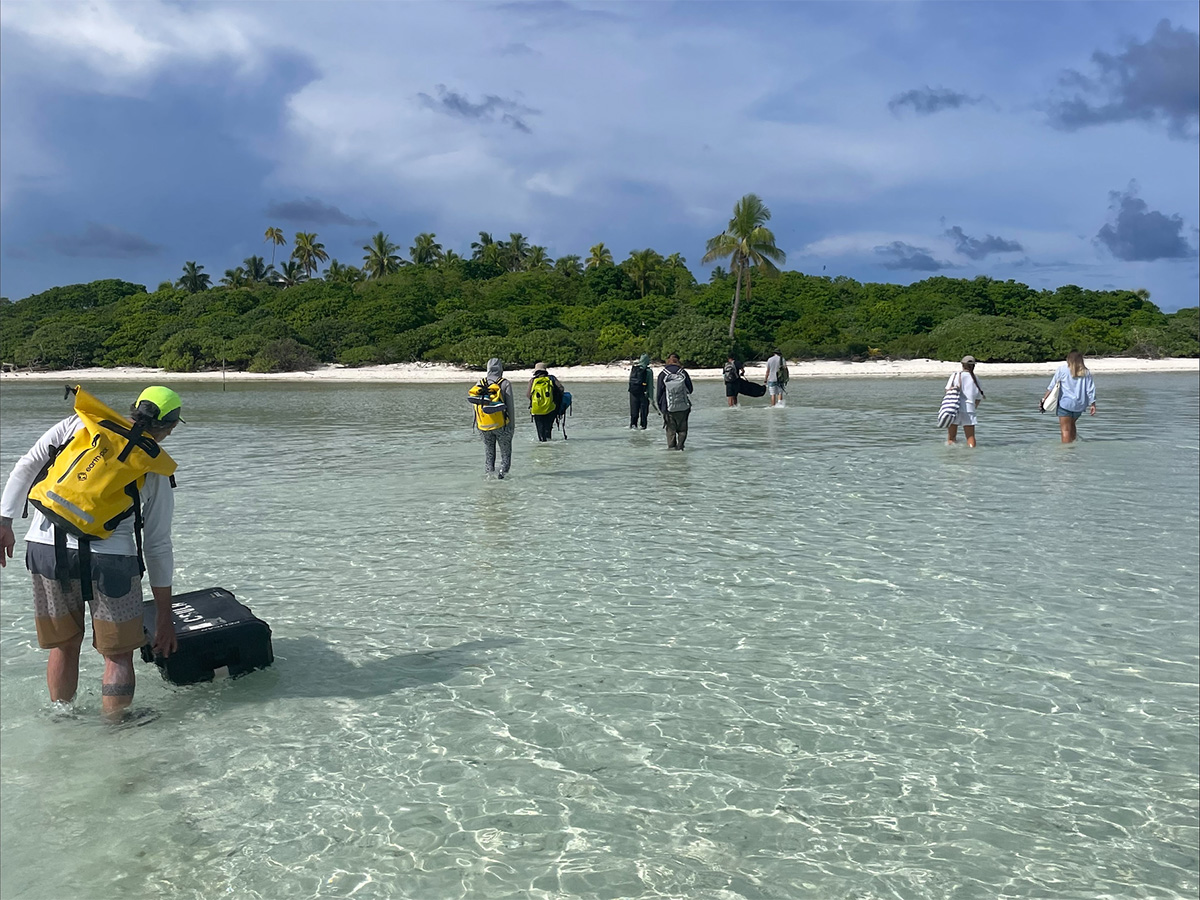
Just getting to Tetiaroa is part of the experience. The journey began with an eight-hour flight, followed by a two-hour ferry ride that stopped just outside the reef. From there, the team transferred to a small ski boat to cross the reef before boarding another ferry for a final 40-minute trip to the atoll, a ring-shaped coral reef system surrounding a central lagoon, where a shallow freshwater–saltwater groundwater lens develops beneath the islands.
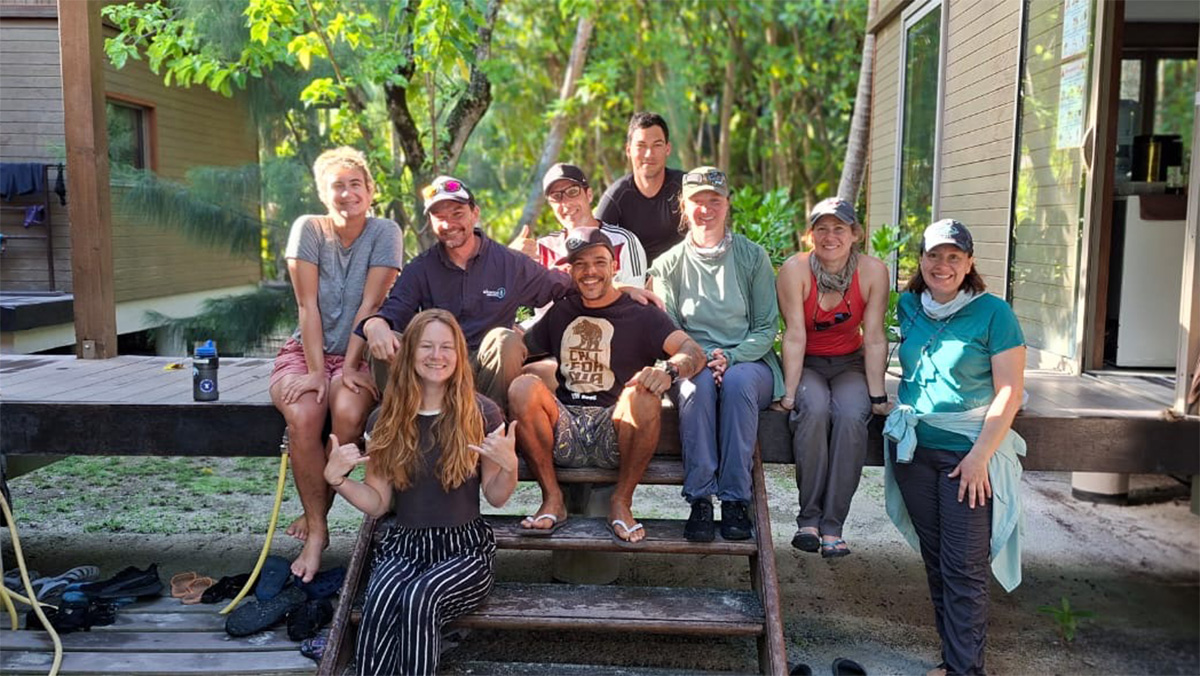
Field operations were based on Onetahi, the main island of Tetiaroa, where the Hydrogeology Lab from the Earth Science Department was hosted by the Tetiaroa Society at their research station. From this base, the team conducted 10 days of fieldwork across the motu (small islets) of the Tetiaroa atoll.
Understanding the Land-Ocean Connection
A key focus of this research is understanding how seabird-derived nutrients move through the groundwater system and reach the surrounding reef. Elevated nitrate concentrations observed on some motu are linked to the recovery of seabird populations following rat eradication efforts approximately eight years ago. As seabird populations have rebounded, their guano deposits have significantly increased nutrient loading to the islands. These nitrates infiltrate through the soil and enter the shallow freshwater lens, where they are transported via groundwater discharge to the reef ecosystem.
Understanding redox conditions is critical because they control the chemical fate of nitrate as it moves through the groundwater system. In oxygen-rich (oxic) conditions, nitrate remains stable and mobile, traveling through the aquifer to discharge into the reef. However, in oxygen-depleted (anoxic or reducing) zones, microbial denitrification can convert nitrate to nitrogen gas, effectively removing it from the system before it reaches the ocean. By characterizing redox gradients within the freshwater lens, particularly near the freshwater-saltwater interface where mixing and biogeochemical reactions are most active, the team can determine how much seabird-derived nitrogen actually reaches the reef versus how much is naturally attenuated through subsurface processes. This submarine groundwater discharge represents an important nutrient delivery pathway that supports primary productivity in the nearshore marine environment.
Fieldwork and Methods
During the field campaign, the team installed 14 temporary monitoring wells by hand auguring in the field. Dr. Matt Becker, Dr. Ben Hagedorn, and I worked together throughout the well installation process. The team carried out groundwater sampling and aquifer testing to characterize subsurface hydrologic processes. Profile and nested wells were installed to collect depth-discrete groundwater samples for nitrate analysis and to evaluate redox conditions near the water table interface.
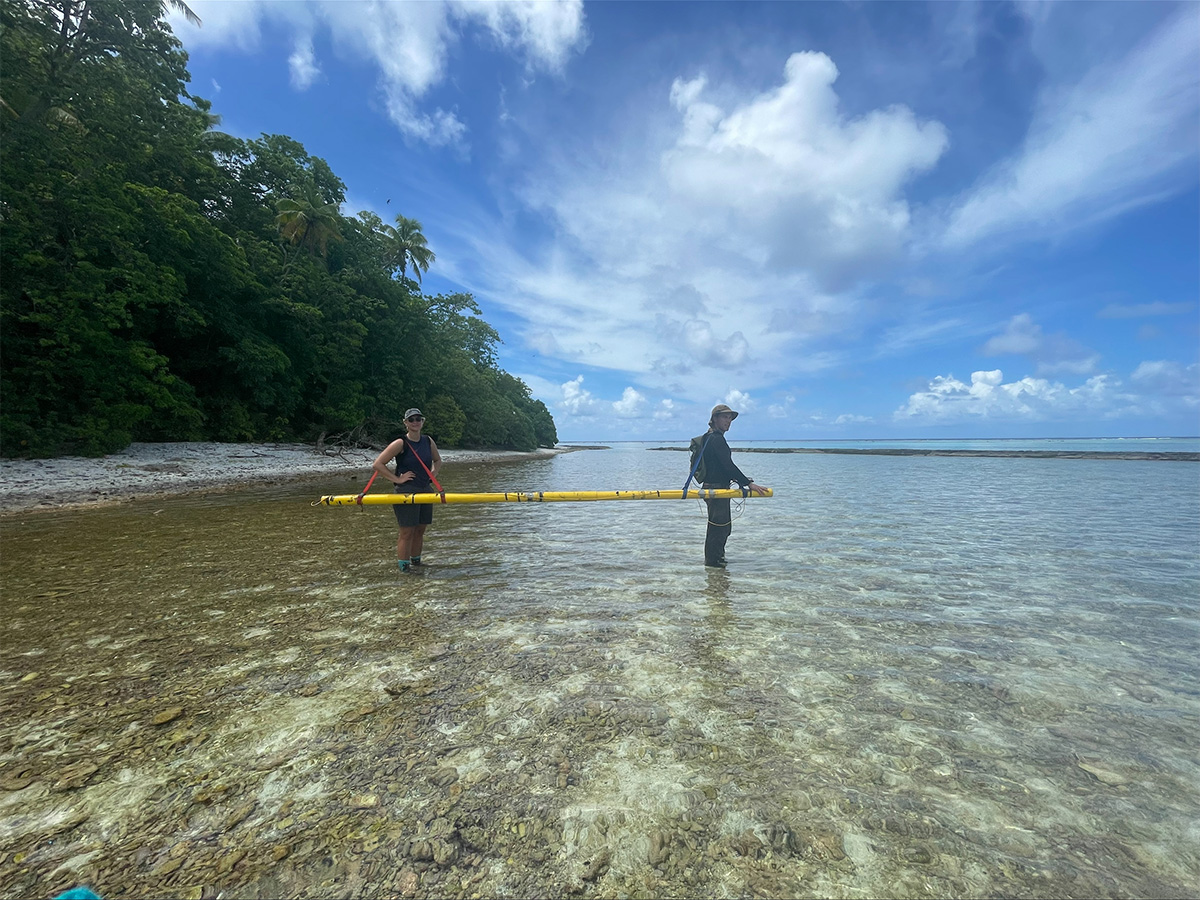
Electromagnetic induction (EMI) surveys were conducted across the motu to image the freshwater–saltwater lens system. These data will be analyzed by graduate researcher Siena Oswald as part of her master's thesis, with field support from Raymond Hess (Rutgers University- Newark). Aquifer test data collected from the monitoring wells will be used to estimate specific yield and will be analyzed by graduate researcher Abby Dimicco using AQTESOLV.
Understanding this land-ocean connection helps inform conservation management strategies and demonstrates how terrestrial restoration efforts, like rat eradication, can have cascading positive effects on adjacent marine ecosystems. This information is essential for quantifying nutrient export rates and predicting how changes in seabird populations or climate-driven sea level rise might alter nutrient delivery to the marine ecosystem.
About the Project
The project is led by Dr. Matthew Becker, hydrogeologist, and Dr. Benjamin Hagedorn, hydrogeochemist. Hannah Fitzpatrick (Geology, 2026) is a graduate student in CSULB's Earth Science Department.
Related article: Matt Becker Recognized by the National Ground Water Association