
Colloquium
Upcoming Colloquium
Determining the Radiative Properties of Anthropogenic Halocarbons by Integrating Experimental FTIR Spectroscopy with Quantum Chemistry Calculations
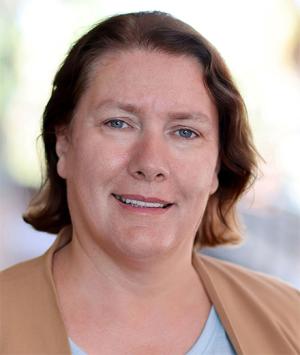
Dr. Karine Le Bris, CSU Los Angeles
October 12, 2026
11:00am-12:00pm in HSCI-102
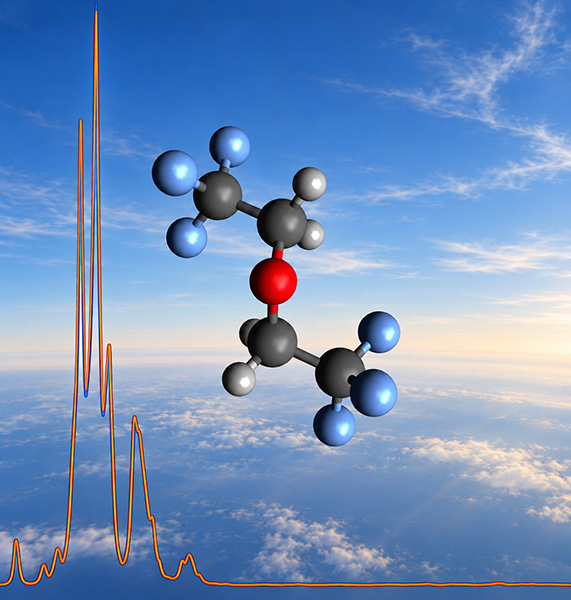
Anthropogenic halocarbons are molecules widely used as refrigerants, propellants, repellents, pharmaceuticals, and pesticides. Many persist in the atmosphere, where they influence climate by absorbing terrestrial infrared radiation. Quantifying these effects requires characterization of their mid-infrared radiative properties. The first part of this talk discusses the acquisition of infrared spectra using Fourier-transform infrared (FTIR) spectroscopy. Absorption cross sections measured under controlled conditions quantify the molecular interactions with terrestrial radiation. The second part examines how quantum-chemical calculations complement these measurements. Calculated vibrational frequencies and infrared intensities support band assignments and extend spectral coverage beyond the instrumental range. Combining measured and calculated spectra enables estimates of the molecule’s atmospheric radiative efficiency. Calculated reaction rate coefficients with OH also provide estimates of tropospheric lifetimes. Because global warming potential depends on both radiative efficiency and atmospheric lifetime, integrating these experimental and computational approaches provides a more comprehensive and robust framework for assessing the climate effects of halocarbons.
About the Colloquium
The Colloquium is a unique opportunity for students to learn about new developments in physics and what physicists do after they graduate. Hosted by the Physics and Astronomy Department at California State University, Long Beach, the weekly meetings invite guests from universities, research laboratories, and industry to present and discuss current topics in physics. All students are encouraged to attend for a well-rounded experience and training in physics.
Colloquium Coordinator
For information and suggestions about the colloquium please contact the colloquium coordinator:
Dr. Sarah Grefe
Sarah.Grefe@csulb.edu
Schedule
The schedule for Fall 2026 is posted below.
| Date | Title | Speaker and Affiliation |
|---|---|---|
| October 12, 2026 | Determining the Radiative Properties of Anthropogenic Halocarbons by Integrating Experimental FTIR Spectroscopy with Quantum Chemistry Calculations | Dr. Karine Le Bris, CSU Los Angeles |
| October 19, 2026 | (topic: biophysics) | Dr. Alex Klotz, CSU Long Beach |
| October 26, 2026 | (topic: quantum materials experiment) | Dr. Jing Xia, UC Irvine |
| November 2, 2026 | (topic: astrophysics) | Dr. Brad Hansen, UCLA |
| November 9, 2026 | (topic: bose-einstein condensation) | Dr. Maren Mossman, University of San Diego |
| November 16, 2026 | (topic: quantum sensing techniques) | Dr. Darmindra Arumugam, JPL |
| November 30, 2026 | (topic: AI in mathematics) | Dr. Michael Mulligan, UC Riverside |
| December 7, 2026 | Student Presentations | students, CSU Long Beach |
| December 9, 2026 | Student Presentations | students, CSU Long Beach |
Previous Colloquia
| Date | Title | Speaker and Affiliation |
|---|---|---|
| October 5, 2026 | Detecting the Secrets of the Cosmos with Quantum Materials | Dr. Elizabeth A. Peterson, Los Alamos National Laboratory |
| September 28, 2026 | Faculty Presentations | department faculty, CSU Long Beach |
| September 21, 2026 | Metamagnetic Materials as Switchable MRI Cell Tracking Micro-Labels | Dr. Barbic Mladen, Caltech |
| September 14, 2026 | Unravelling the hidden state of a kagome magnet | Dr. Yona Soh, Paul Scherrer Institute, Villigen, Switzerland |
The Colloquium Archive has the Colloquia from previous semesters.
Sponsors
We acknowledge with gratitude donations and support from the following present sponsors:
- H.E. and H.B. Miller and Family Endowment
- Benjamin Carter
- Mary L. Bresnan
- K. Y. Shen
- American Physical Society
- Anonymous
We also acknowledge with gratitude our past donors: The Forty-Niner Shops, Inc., The Northrop Grumman Foundation, Sandra Dana, Anonymous.
If you wish to support the Colloquium, please contact the colloquium coordinator or the department chair. Thank you!