Colloquium
Upcoming Colloquium
Creating Atomic Superlattices by Chemically Functionalizing Low-Dimensional Materials
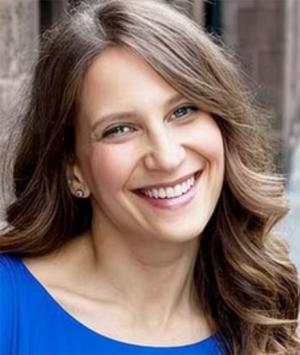
Dr. Tamar Mentzel, UC Riverside
April 20, 2026
11:00am in HSCI-105
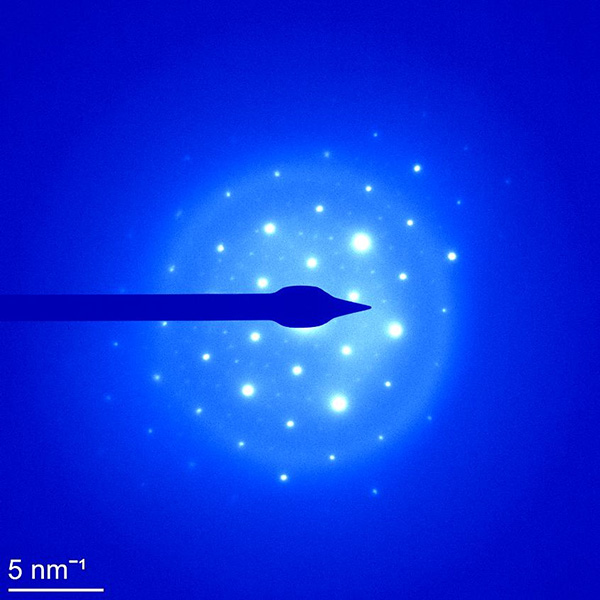
Nanomaterials' reduced dimensionality leads to enhanced quantum effects and increased charge correlations, making them an exciting platform for exploring novel quantum phenomena with application in quantum information processing and quantum computation. Moreover, the tunability of nanomaterials holds promise for achieving quantum properties 'on demand.' Our research draws on chemical methods to functionalize the surfaces of and thereby tune low-dimensional materials. In this talk, I will present our work on two distinct systems: semiconductor nanocrystals and atomically thin, two-dimensional materials. First, I will discuss our nano-patterning technique to create a nanocrystal, or "artificial atom," superlattice that is free of structural defects and with enhanced electrical conductivity. We isolate the charge dynamics in a single conductance channel of the superlattice, providing insight into the charge transport mechanism that was dominated by disorder in prior instances of nanocrystal solids. We find indications of long-range Coulomb interactions, which are a precursor to the predicted geometric charge frustration in semiconductor nanocrystal superlattices. Second, I will present our low-temperature, chemical method for adding atom superlattices in the van der Waals gap of two-dimensional materials. This technique is flexible to a wide variety of elements at concentrations as high as 60%. I will present our progress intercalating Fe3GeTe2, Bi2Se3, and ZrTe3. The latter two are motivated by the interplay of charge density waves and superconductivity.
About the Colloquium
The Colloquium is a unique opportunity for students to learn about new developments in physics and what physicists do after they graduate. Hosted by the Physics and Astronomy Department at California State University, Long Beach, the weekly meetings invite guests from universities, research laboratories, and industry to present and discuss current topics in physics. All students are encouraged to attend for a well-rounded experience and training in physics.
Colloquium Coordinator
For information and suggestions about the colloquium please contact the colloquium coordinator:
Dr. Zoltan Papp
Zoltan.Papp@csulb.edu
Schedule
Additional details will be posted as they become available.
| Date | Title | Speaker and Affiliation |
|---|---|---|
| April 20, 2026 | Creating Atomic Superlattices by Chemically Functionalizing Low-Dimensional Materials | Dr. Tamar Mentzel, UC Riverside |
| April 27, 2026 | TBA | Dr. Aaron Szasz, Google Quantum AI |
| May 4, 2026 | Student Research Presentations I | Physics students, CSU Long Beach |
| May 6, 2026 | Student Research Presentations II | Physics students, CSU Long Beach |
Previous Colloquia
| Date | Title | Speaker and Affiliation |
|---|---|---|
| April 14, 2026 | Data Memory Storage: Past, Present & Future (Distinguished Lecture Speaker) | Dr. Stuart S. P. Parkin, Max Planck Institute for Microphysics, Halle, Germany |
| April 6, 2026 | A New Approach to the Flavor Puzzle | Dr. Michael Ratz, UC Irvine |
| March 23, 2026 | The Story of Five Physicists who framed the Atomic Age | Dr. Zoltan Papp, CSU Long Beach |
| March 11, 2026 | Twinkle Twinkle Dying Star: Massive Stars at the Intersection of Large-Scale Simulations and Time-Domain Surveys | TBA |
| March 9, 2026 | Gravitational Wave Astronomy - A New Window into the Universe | Dr. Jon Feicht, Caltech |
| March 4, 2026 | The Evolution of Supermassive Black Holes: from the Event Horizon to the Cosmic Web | TBA |
| March 2, 2026 | From Voids to Clusters: Deciphering the Drivers of Differential Galaxy Evolution Across the Cosmic Web | TBA |
| February 25, 2026 | Characterizing Exo-Kuiper Belts with Polarimetry and GPU-Enabled Modeling | TBA |
| February 23, 2026 | How Environment Shapes the Structure and Star Formation of Low-Mass Galaxies | TBA |
| February 16, 2026 | A Cluster Carol: Asteroseismology of Red Giants in Stellar Clusters | Dr. Madeline Howell, The Ohio State University |
| February 9, 2026 | An Electronic Structure Toolbox for Quantum Materials | Dr. Nicholas Dale, Lawrence Berkeley National Laboratory |
| February 2, 2026 | Magnetic Proximity Effects and Spin–Orbit Torque in Two-Dimensional Ferromagnet Heterostructures | Dr. Mark Lohmann, Caltech |
| January 26, 2026 | Neural Network–Based Classification and Regression of Magnetohydrodynamic Modes in Tokamaks | Dr. Laszlo Bardoczi, UC Irvine |
The Colloquium Archive has the Colloquia from previous semesters.
Sponsors
We acknowledge with gratitude donations and support from the following present sponsors:
- H.E. and H.B. Miller and Family Endowment
- Benjamin Carter
- Mary L. Bresnan
- K. Y. Shen
- American Physical Society
- Anonymous
We also acknowledge with gratitude our past donors: The Forty-Niner Shops, Inc., The Northrop Grumman Foundation, Sandra Dana, Anonymous.
If you wish to support the Colloquium, please contact the colloquium coordinator or the department chair. Thank you!