Astronomy Colloquium: How to Find a Star by Accident
Friday, May 8, 2026
2:00pm-3:00pm in HSCI-100
Join us for a special Astronomy Colloquium, "How to Find a Star by Accident" with Dr. Meridith Joyce, Assistant Professor in the School of Computing & Department of Physics and Astronomy at University of Wyoming.
Abstract
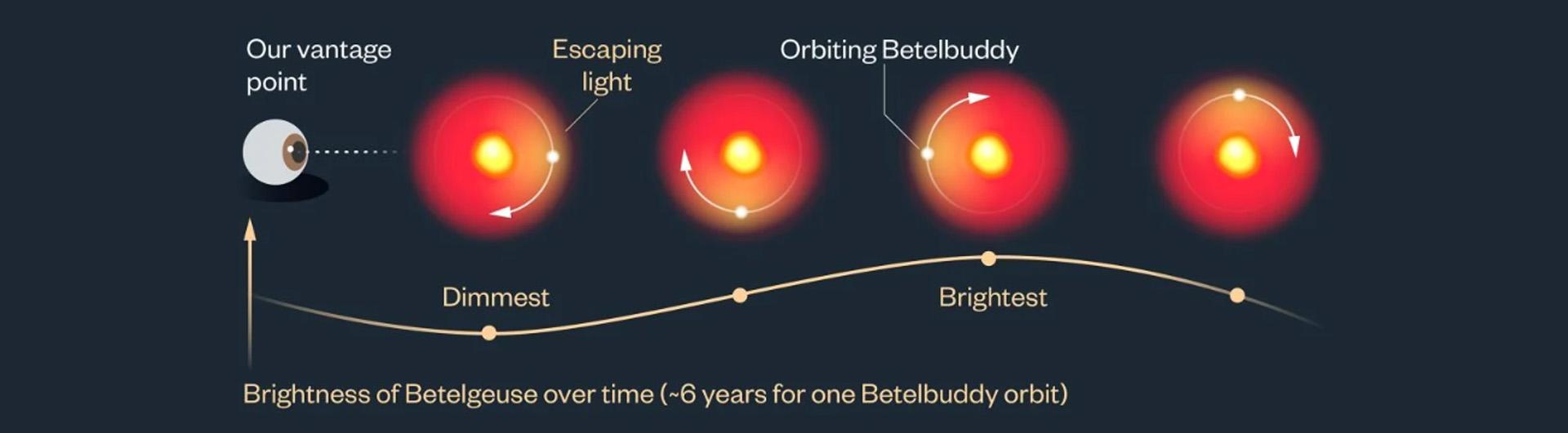
Alpha Orionis, popularly known as Betelgeuse, is a nearby red supergiant star visible to the naked eye. In light of the star's "Great Dimming"—a sudden, extreme drop in brightness that occurred in early 2020—a recent controversy surrounding Betelgeuse concerned whether it would explode as a supernova within the next few years, centuries, or millennia. Using a series of numerical techniques including onedimensional stellar evolution models, hydrodynamic simulations, linear oscillation calculations, Fourier analysis, and the methods of a subfield of stellar astrophysics known as asteroseismology, my collaborators and I constrained the timeline for Betelgeuse's demise and revised many of the best estimates for its fundamental properties. In doing so, we discovered not only that Betelgeuse was not likely to undergo an imminent detonation, but that a pulsation signal unexplained by our models was, in fact, the signature of an as-yet-undiscovered binary companion. Its presence was confirmed earlier this year. What we never managed to do was explain the Great Dimming.
In this talk, I will use the story of the discovery of Betelgeuse’s hidden, low-mass binary companion, Alpha Orionis B—affectionately nicknamed "Betelbuddy"—both to highlight the computational and numerical techniques employed in modern stellar astrophysics and to illustrate how the most meaningful discoveries often arise not from confirming what we set out to find, but from venturing down the rabbit holes of unexpected problems that emerge along the way.
Biosketch
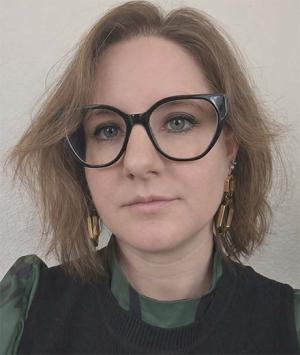
Dr. Meridith Joyce is an assistant professor jointly appointed in the School of Computing and Department of Physics and Astronomy, with an adjunct appointment in Mathematics and Statistics, at the University of Wyoming. She received her PhD in computational astrophysics from Dartmouth in 2018, where her thesis focused on stellar structure and evolution models, particularly the treatment of convection therein. Dr. Joyce has held postdoctoral and academic appointments on five continents, including taking the European Union's prestigious Marie Curie Fellowship to Budapest, Hungary, from 2022-2024. Dr. Joyce is an astronomy software developer and plays a leading role in the pedagogical arm of the MESA project. Dr. Joyce is an avid hiker, skier, dog enthusiast, pianist, and painter of flowers.