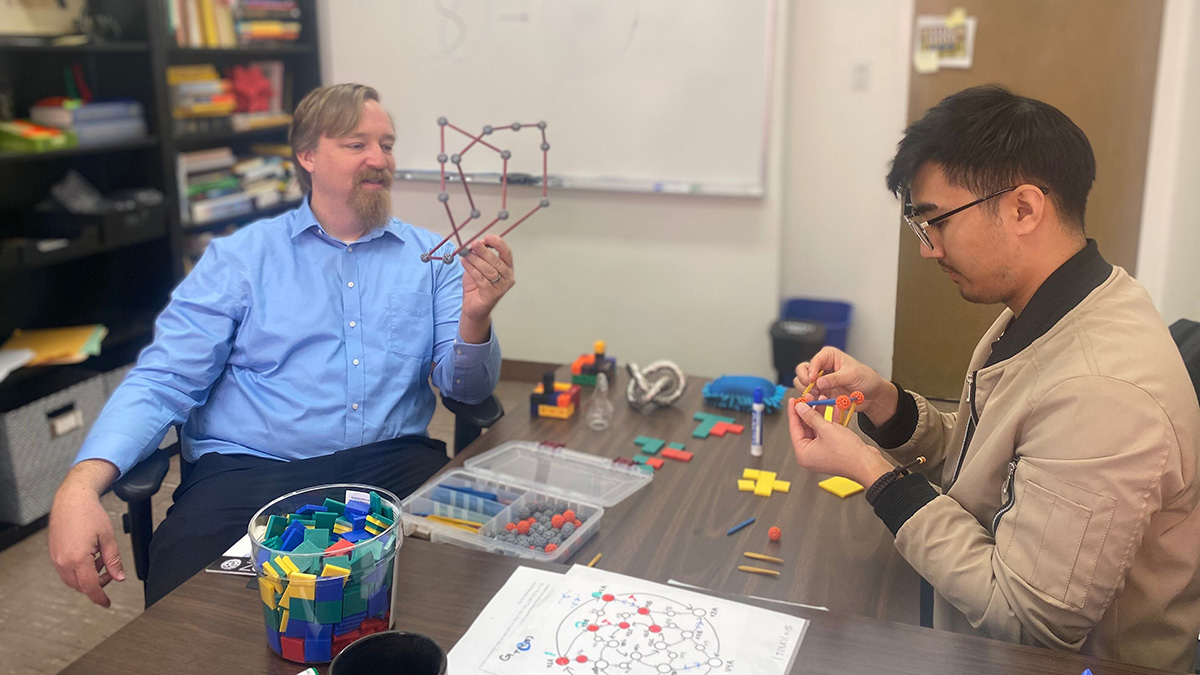
Dr. Ryan Blair, June 2026 Snapshot
Dr. Ryan Blair, a Professor in the Mathematics and Statistics Department, studies the complex shapes and patterns that can exist in three-dimensional space. Dr. Blair and his research students examine how complicated loops in 3-dimensional space (called knots) can be organized, classified, and measured. The Blair Lab focuses on understanding the complexity of knots, including how tangled they are, how they can be pulled apart, and what hidden structures lie inside their twisting paths.
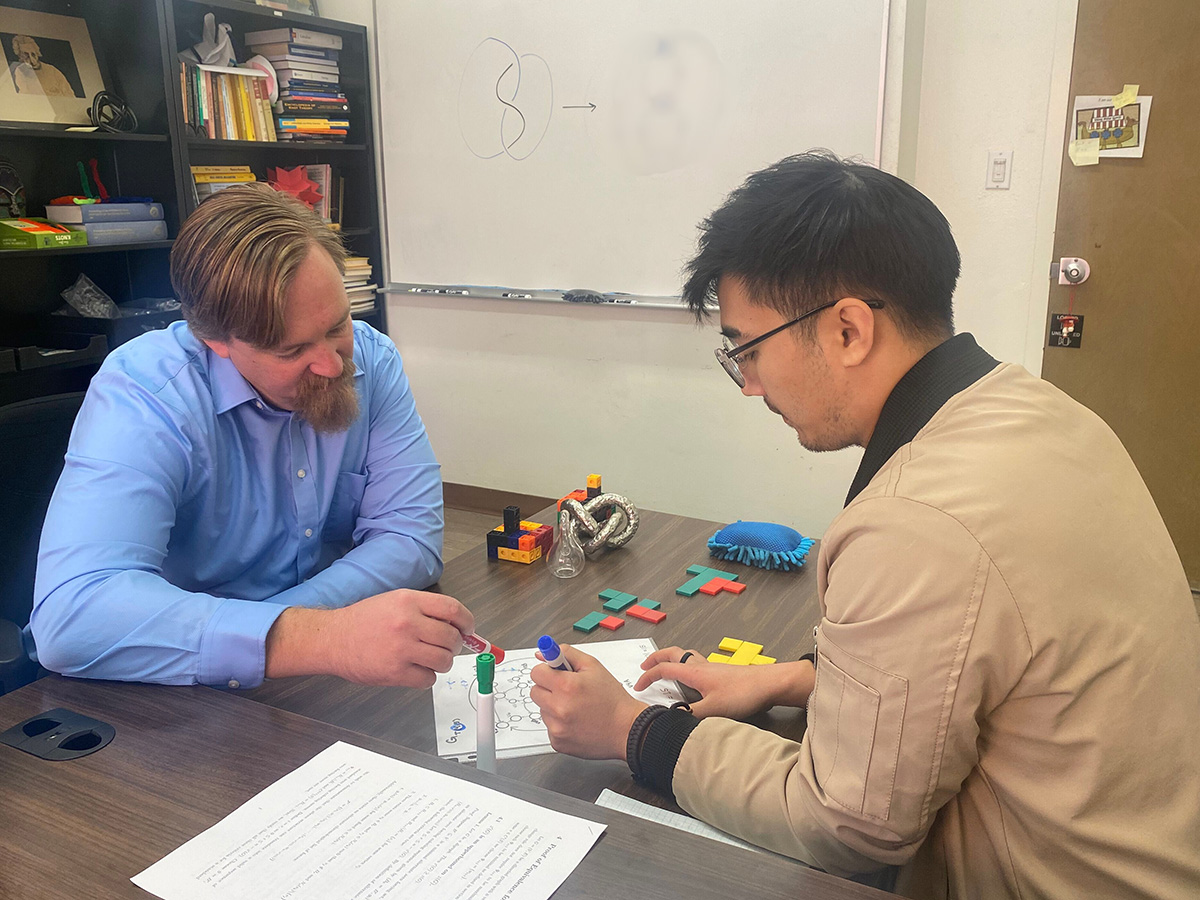
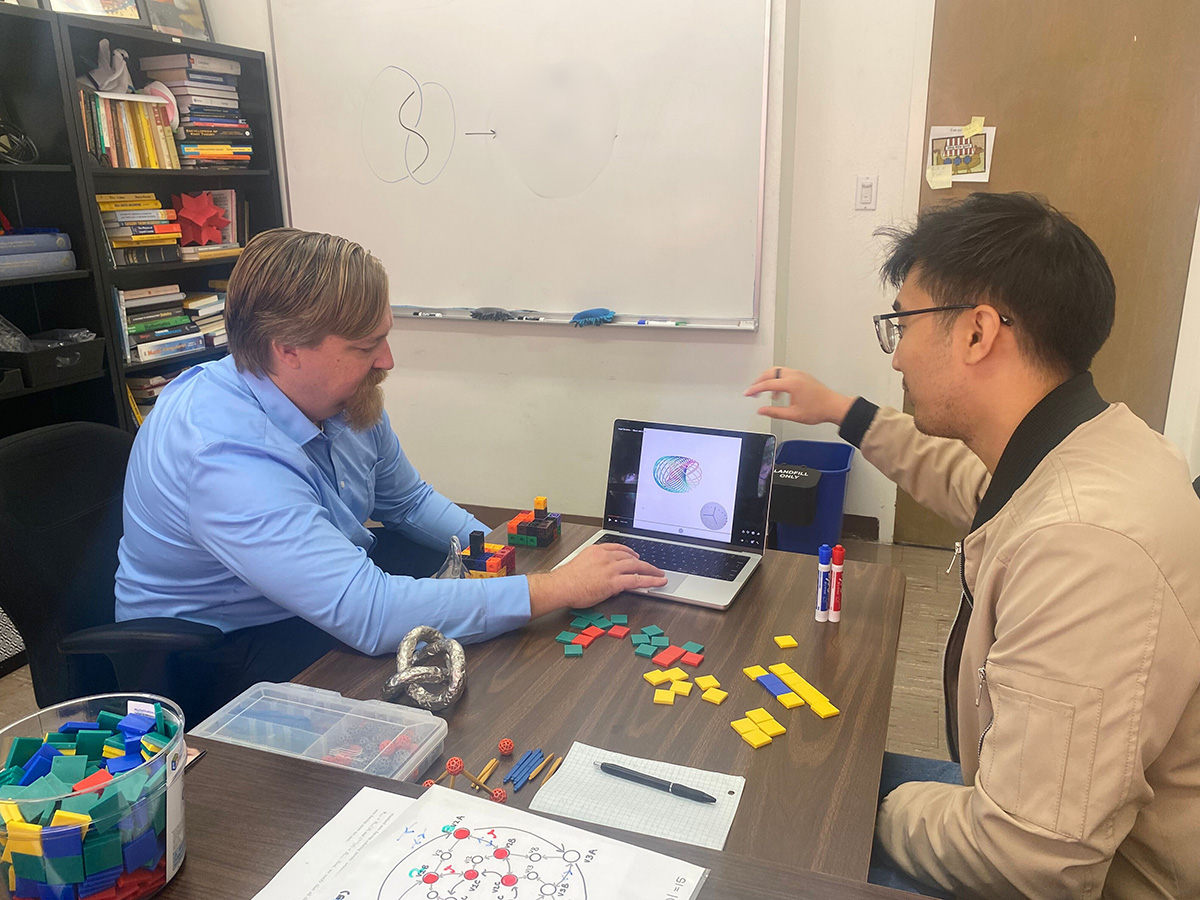
Knot theory has many applications in biology and chemistry for analyzing DNA and protein structures, in physics for modeling systems like particle interactions and quantum computation, and in engineering for tasks like robotics and understanding materials science from a topological perspective. Dr. Blair has even teamed up with Dr. Alex Klotz, an Associate Professor in the Physics and Astronomy Department, on applications of knot theory to soft matter material science, like kinetoplast DNA.
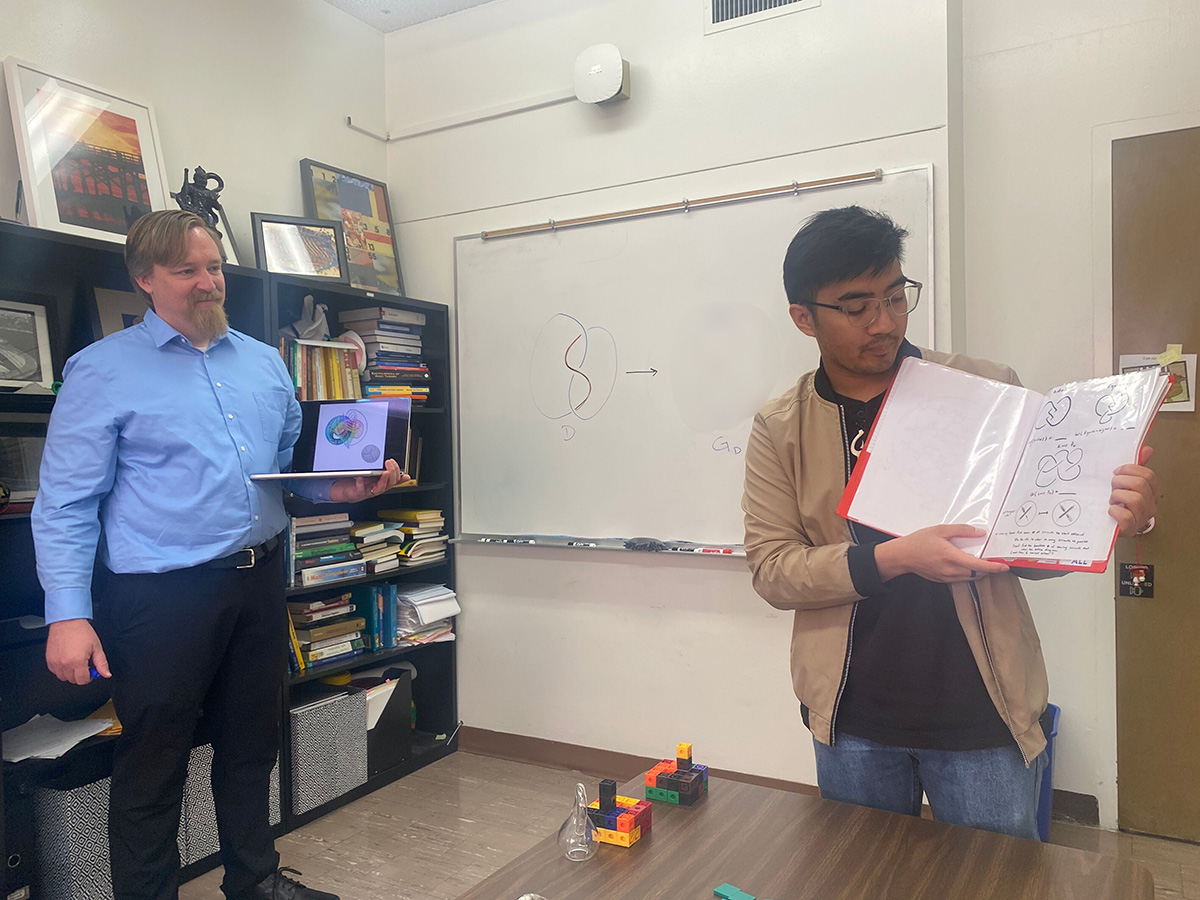
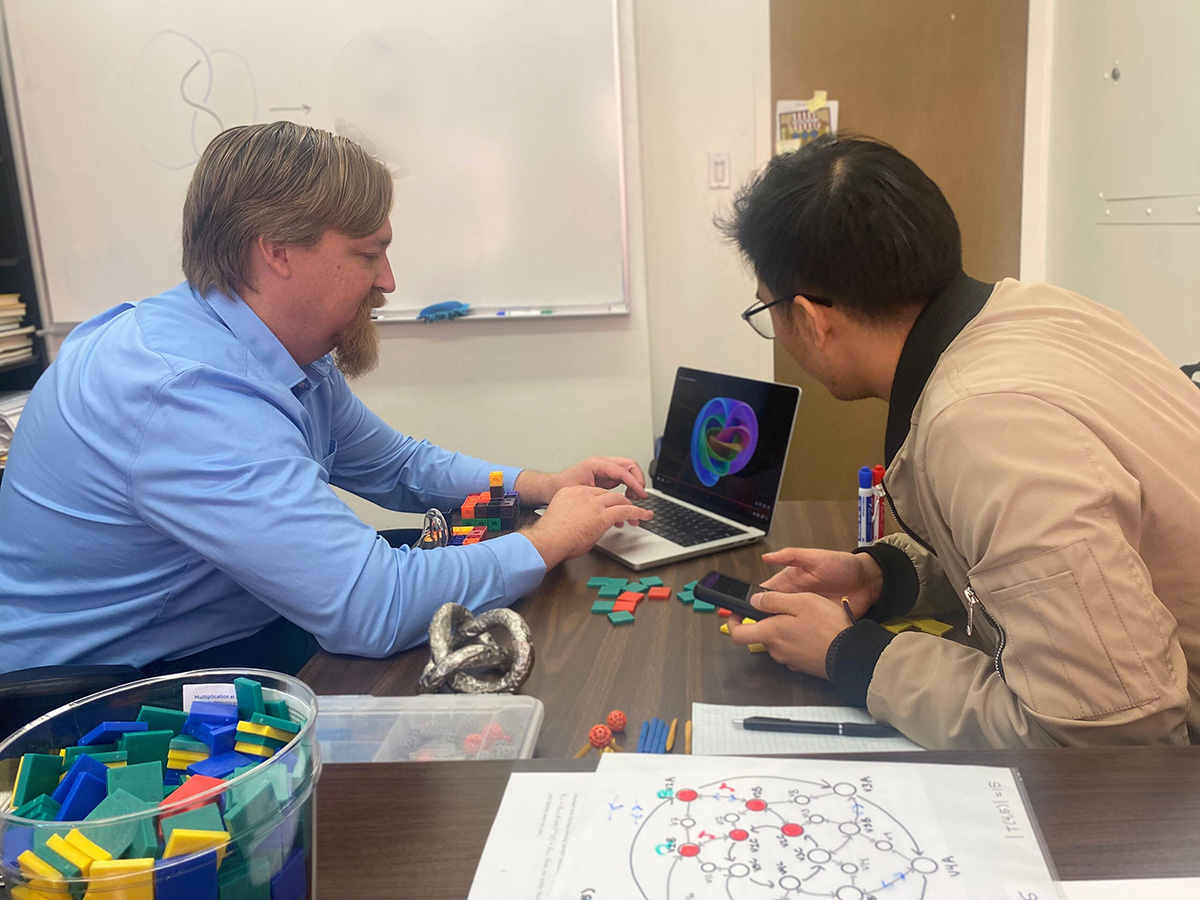
The lab also explores a different kind of geometric puzzle known as rep-tiles, which are shapes that can be divided into smaller copies of themselves, like a self-similar jigsaw. Together, Dr. Blair and his collaborators have classified which three-dimensional and higher-dimensional spaces can be deformed into rep-tiles. Their work shows that self-replication is not rare but is a deep topological property that almost all shapes have.
Learn more about the Blair Lab.