CSULB faculty turn AI proposals into bold new paths for student learning
From inventing a teaching chatbot nicknamed after a fish to incorporating artificial intelligence (AI) in research and learning activities, CSULB faculty members are harnessing the power of AI to prepare students for the next generation of work and education.
Four Cal State Long Beach faculty members received awards in the inaugural, CSU-wide Artificial Intelligence Educational Innovations Challenge. The awards are supporting projects that have the potential to transform teaching methods, foster groundbreaking research and address key concerns about AI adoption in the academic environment.
“We want to teach students how to use AI in an ethical manner that adds to their learning, rather than detracts from their learning,” said Claudia Barrulas Yefremian, a business lecturer who is one of the grant recipients.
Learning to teach from a chatbot
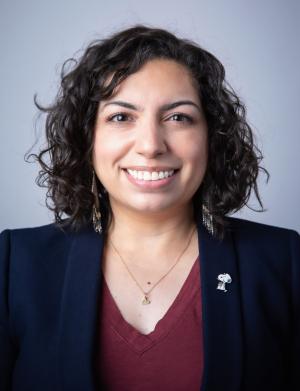
Heather Macías, an associate professor of teacher education, has created a Beach Teach chatbot named “Remi.” Coined after the remora fish, which attaches itself to other sea creatures like the shark, Remi provides support and feedback for new teachers, especially when they’re not able to reach out to a mentor. Remi draws from relevant articles, texts, videos and websites collected by Macías and vetted by fellow faculty.
“Student teaching is stressful,” said Macías, who has been piloting Remi in her teacher education classes this semester. “It’s often probably the most stressful point in their credential journey. But this chatbot (can) support our student teachers, to mitigate the stress a little bit.”
The chatbot first addresses the student’s mental health, asking the user how they’re doing. Remi is equipped to direct users to CAPS, Basic Needs or other campus resources. Then the chatbot provides answers to questions, informed by actual best practices and research-backed advice.
“If students need help, we want to make sure they’re going in the right direction, not just pulling something off the internet,” Macías said. She hopes to have an official roll-out ready for 2026.
Integrating AI into business courses

Yefremian, a lecturer in the Department of Management, believes business majors need to build AI literacy to work efficiently when they leave The Beach and enter the business world.
She is using the existing framework TILT, or Transparency in Learning and Teaching in Higher Education, to incorporate AI in new learning activities, assignments and assessments.
“What I’m trying to do in the classroom is engage students with AI and use it as a tutor and a partner when learning, rather than a copy-paste strategy,” she said. She found that students learned to view AI as a collaborative learning partner, “something that enhances analysis and reflection rather than replacing original thought.”
Up next is creating a digital book based on her lessons, available to instructors across the CSU, by the end of spring 2026. She will also put the book in Canvas, the campuswide learning management system.
Rethinking research
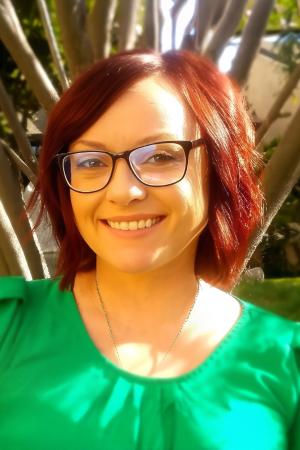
Geri Lawson, a lecturer in the Department of English, and her co-principal investigator, E. Jann Harris, are using large language models (LLMs) as co-researchers. LLMs are AI systems trained on vast amounts of text data to understand and generate language – like ChatGPT or Gemini.
Lawson and Harris are creating a curriculum that prompts students to use LLMs to generate four sources on a research topic. Rather than blindly accepting those sources, the students are encouraged to “read laterally,” or investigate those sources and determine whether they are relevant, legitimate and up to date.
The English instructors are creating modules to educate students on the downfalls and advantages of using LLMs for research. “Part of this is training students in the ethical use of these systems, and the shortcomings in them,” Lawson said.
So far this semester, Lawson and Harris have developed mini-lessons for their students in English 100A, 310, 337 and 4/510. They are making sure students are not using AI to “offload cognitive tasks” – or having ChatGPT and other LLMs do all the work for them.
They will create modules in Canvas by June 2026, so other faculty can adapt the lessons to their courses. Even as they adapt their proposals and report their findings, they notice that the AI landscape is changing – almost on a daily basis.
“We are open to exploring,” Harris said. “Things are coming to us that we haven’t even predicted.”
A space for reasoning
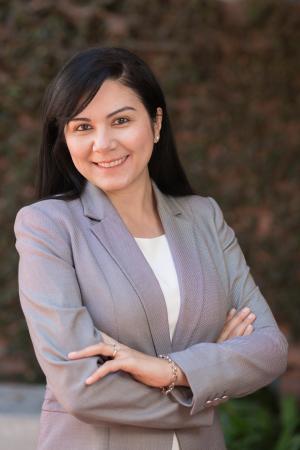
Sara Nourazari, an associate professor in health care management, is bringing AI into the learning process through ThinkMate Edu, an environment she and a colleague designed to transform AI from an “answer machine” into a structured space for reasoning.
Nourazari describes ThinkMate as a “critical-thinking gym” that allows students to practice analyzing complex issues, engage in ethical reasoning and reflect on their problem-solving methods.
She has been piloting ThinkMate in a couple of courses and plans to further implement and scale up in the coming semesters.
In one of her master’s-level courses, students use ThinkMate to critique their papers (written without any AI use) along specific dimensions. Students are then expected to submit a transcript of their engagement with the ThinkMate environment.
“This allows students to experiment with AI,” she said. “We’re not banning the use of AI, we’re bringing AI into class but in a very structured and controlled way.”
Since her CSU award was announced in July, she says she’s been contacted by faculty in various departments, asking if they can pilot ThinkMate in their classes.
“AI is here to stay – it’s getting stronger every day. The question is, how can we use it to our benefit? We can lean in and help students learn with and through AI.”