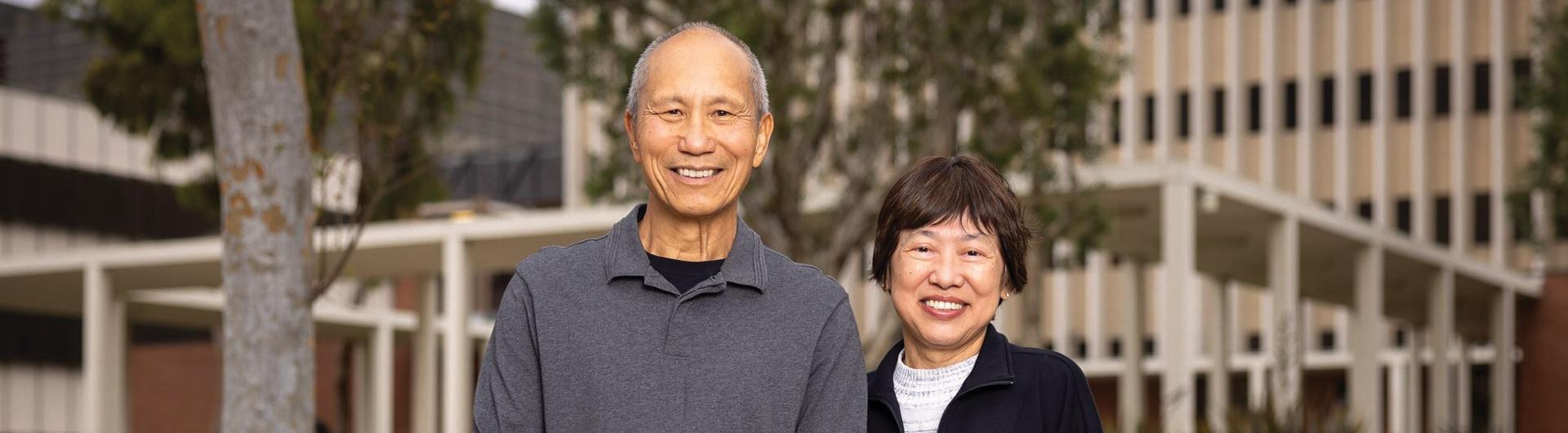
Hing and Doris Hung invest $30 million in the future of engineering at CSULB
In 1966, Hing Hung ‘85 was in the wrong class.
Not the kind you skip or switch — but the kind that, in postwar China, determined whether you advanced, suffered or simply disappeared.
Hung was in eighth grade when his country's devastating Cultural Revolution closed his school — a situation he now likens to a years-long COVID-19 shutdown without the benefits of Zoom. His family home was raided, books and photos burned. At 16, he was sent to a village 100 miles away to be “re-educated,” laboring in rice and sugarcane fields up to 16 hours a day.
“For six years, I was on the farm,” Hung said, “from 16 to 22.”
Then he ran. That was April 1974.
By year’s end, Hung had traded a class system in China for a class schedule in California — starting in English as a Second Language, then moving into electrical engineering. In 1992, seven years after earning his master’s from Cal State Long Beach, he co-founded a security technology company that would, by 2013, exceed $34 million in annual sales.
“Public education,” Hung said, “is really important. I really benefitted from it.”
Now, generations of CSULB students will benefit, too.
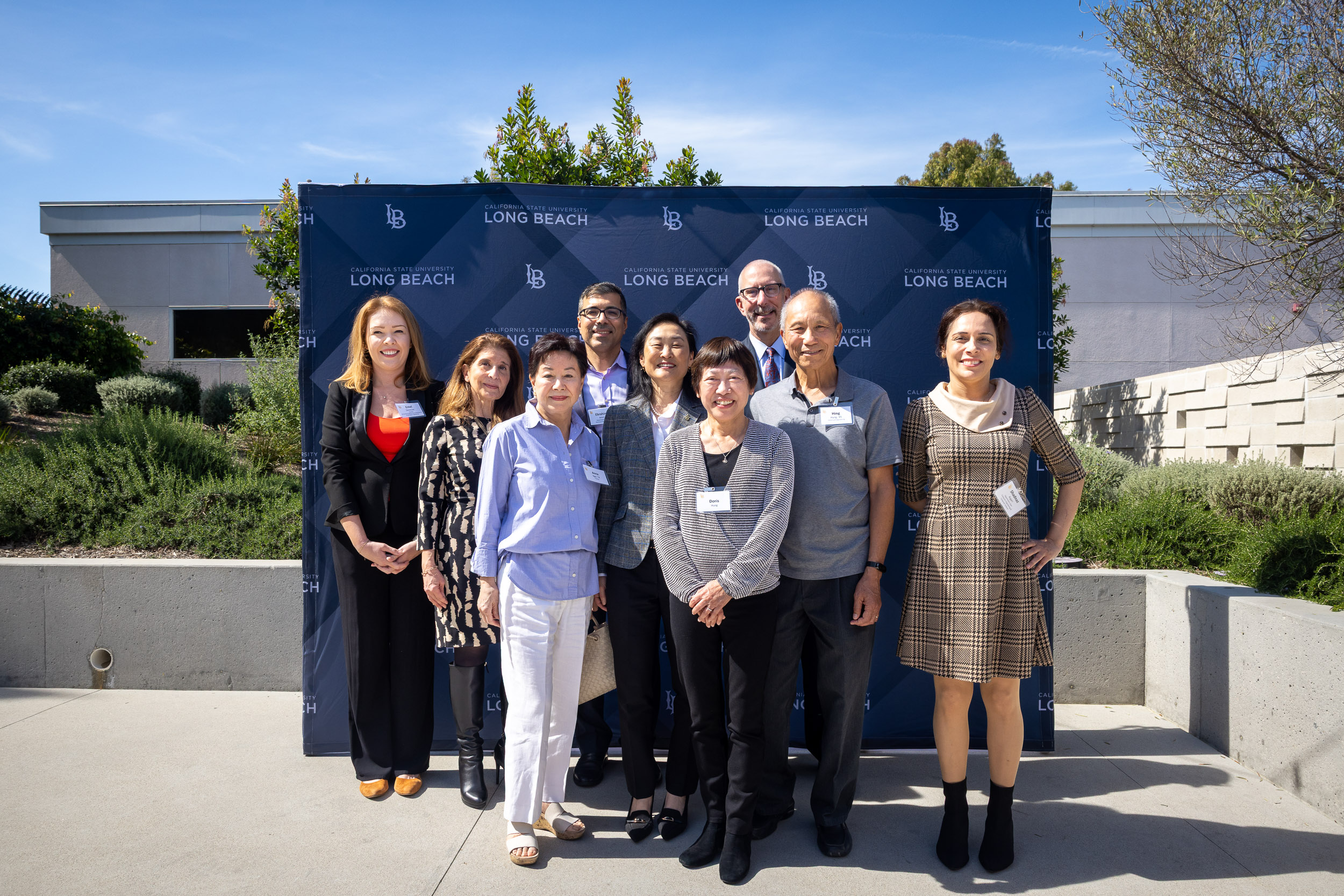
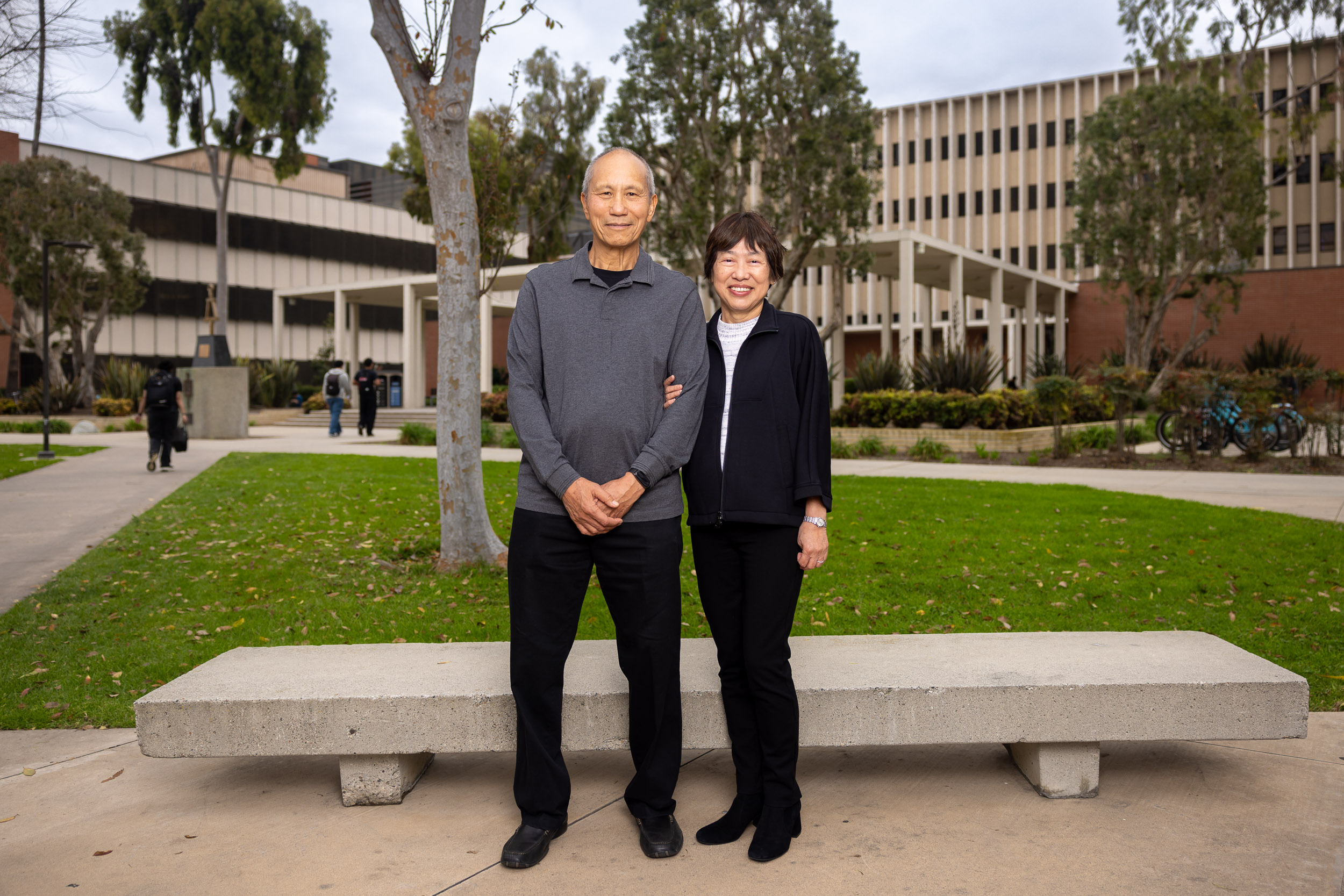
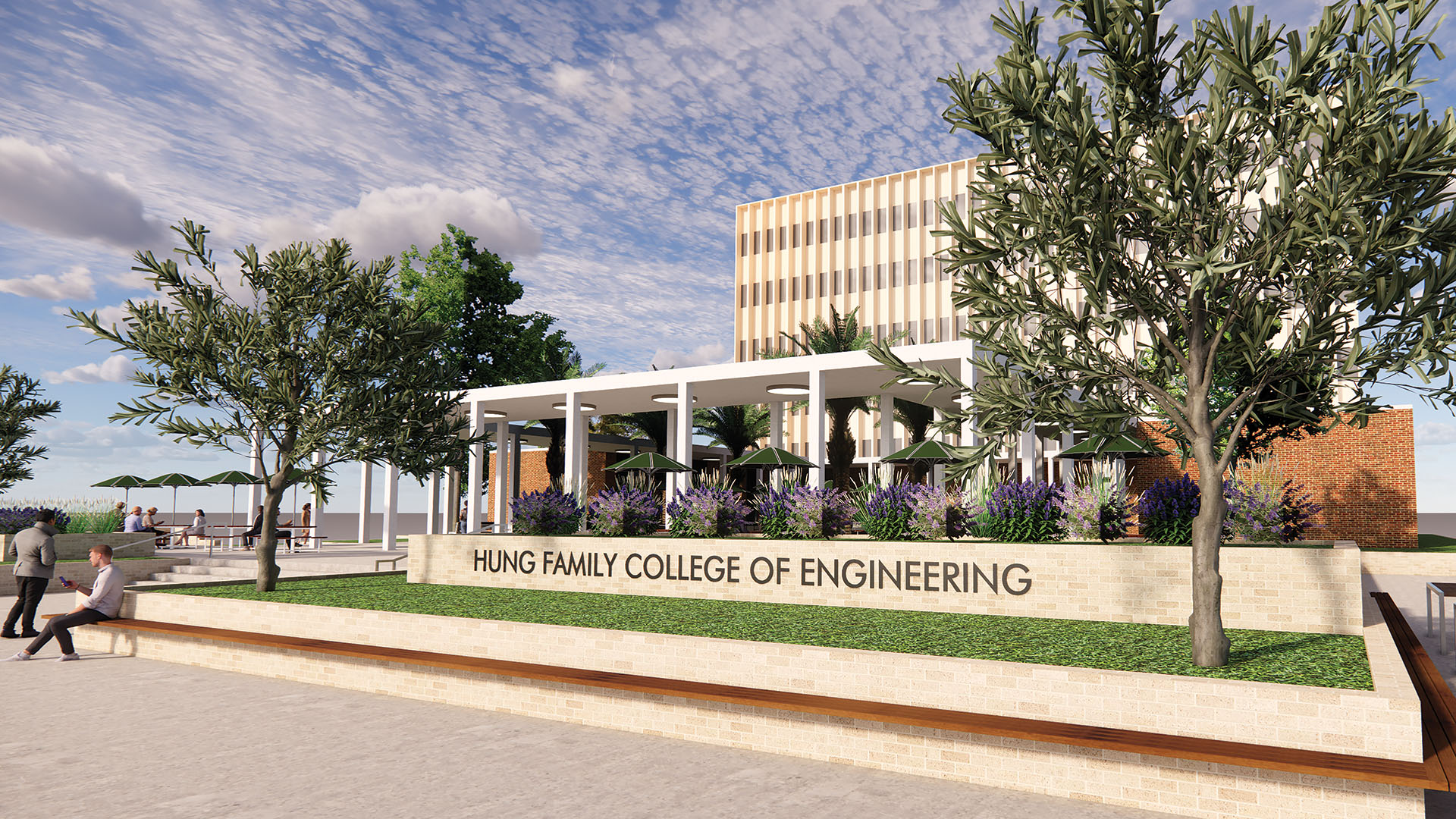
Signaling the largest philanthropic gift ever designated for CSULB's College of Engineering, Hing Hung and his wife, Doris, have donated $30 million to the university. In recognition, the CSU Board of Trustees is expected to consider naming the college in their honor; pending approval in March, it will become the Hung Family College of Engineering.
“We are honored to name our college after the Hung Family, which exemplifies the ingenuity, grit and perseverance we value,” said Dean Jinny Rhee. “They are now an indelible part of our college's history.”
Among largest gifts in CSULB history
Not only does the donation break college records, CSULB President Andrew Jones also called it “one of the most significant philanthropic investments in the history of Cal State Long Beach.
“We are so grateful to the Hungs for this gift,” he said, “which positions the College of Engineering for its next era of growth while demonstrating great confidence in the future of the university.”
The Hungs have supported the College of Engineering’s infrastructure for years.
“I always like to do things that are longer-lasting — buildings, equipment, something that can benefit more than a single student," Hing Hung said. "Especially for the College of Engineering, where the equipment continues evolving. They need to train students with the same tools they will be facing in the industry, and those cost more money. It’s not just paper and pens.”
The naming consideration comes as the college gains momentum. Multiple programs have earned top national rankings, federal investment has supported major equipment upgrades, and a comprehensive renovation soon will modernize and expand aerospace and learning labs. Of the $30 million gift, $10 million will support the renovation; $5 million will seed next-level, industry-aligned learning initiatives; and $15 million will create an endowment.
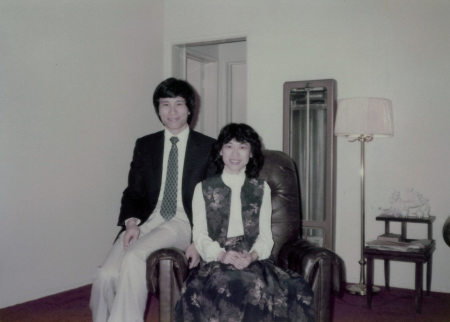
Doris, who emigrated from Taiwan, met Hing at a student gathering while pursuing her MBA at Cal Poly Pomona. They married the same year that Hing began graduate studies at Cal State Long Beach, raised two sons and helped build a company whose high-tech access controllers now secure more than 5 million doors worldwide, many within Fortune 500 companies.
Yet they've never left the home where they raised their boys.
“Since Hing sold the company,” Doris said, “our life is still the same. We have a simple life. We were very blessed, and we are so grateful that we have found someplace we like to give.”
From rice paddies to radio waves
It is hard to imagine a techie like Hing Hung once working barefoot in flooded rice paddies. But even then, he said, he found ways to feed his curiosity. On the farm, he built a transistor radio from parts smuggled in by his cousin, listening at night to broadcasts from Hong Kong.
“I used it all the years during my time on the farm,” he recalled. “When you listen to the outside [world], you have to be secretive.”
Village leaders put him to work repairing water pumps and diesel engines before placing him in charge of a tractor, which he eventually modified to improve its performance.
“That modification increased plowing speed and significantly reduced fatigue," Hung said. "I received an award from the county and gave a presentation.”
Still, they wouldn’t let him go home.
So, one moonless night, he and seven others launched a harrowing escape, rowing a small boat toward the lights of Macau, hiding in marsh grass when patrol boats passed. They made it, barely, and Hung eventually gained asylum in Hong Kong before landing in California with a relative. From there, it was a matter of fighting for the education he’d lost.
“I think you have to overlook many things,” he said, of students born into adversity. “Just have a goal and continue to achieve it.”
Hung may have once lived under a system that assigned his class. But now — through his family's gift — generations of students at The Beach will get to choose theirs.