Dr. Maulana Karenga: A Celebration of Service and Activism
Dr. Maulana Karenga, a prominent figure in African American studies, activism, and cultural revitalization, has retired from Cal State Long Beach after over 30 years of work and activism. Dr. Karenga has had an impact on both the academic world and the cultural landscape of the African diaspora, as his work includes teaching as a professor and being an activist and cultural founder. As we celebrate his retirement, we also remember his contributions that continue to inspire generations to celebrate their cultural roots and work toward a more just and equitable society.
Dr. Karenga moved from Maryland to California to attend college and began taking classes at Los Angeles City College. From there, he furthered his academic journey at the University of California, Los Angeles (UCLA), earning his bachelor's degree in political science. His hunger for knowledge about African history, culture, and philosophy deepened, leading him to pursue a Ph.D. in political science and a master’s in African Studies. Dr. Karenga’s work was rooted in a fervent responsibility to uncover the African historical narrative and re-connect African Americans to their rich cultural heritage. From reaching the epitome of education, he then decided to put his skills to use and teach the future generations of Black Americans.
Dr. Karenga received several awards for scholarship and activist service from major Black Studies professional organizations including: the President’s Award for Exemplary Service and Outstanding Contribution to the Field of Black Studies; the Paul Robeson-Zora Neale Hurston Award for Scholarly Work and the C.L.R. James Award for Outstanding Publication.
Dr. Karenga’s most enduring legacy is the creation of Kwanzaa, a celebration that honors African culture, history and values. In 1966, inspired by the African-centered movements of the time, Karenga conceived Kwanzaa as a response to the social upheavals of the 1960s and the desire to reclaim and celebrate African traditions. The holiday, which begins on December 26 and ends on January 1, focuses on the NguzoSaba (Seven Principles), which emphasize unity, self-determination, collective work, cooperative economics, purpose, creativity and faith.
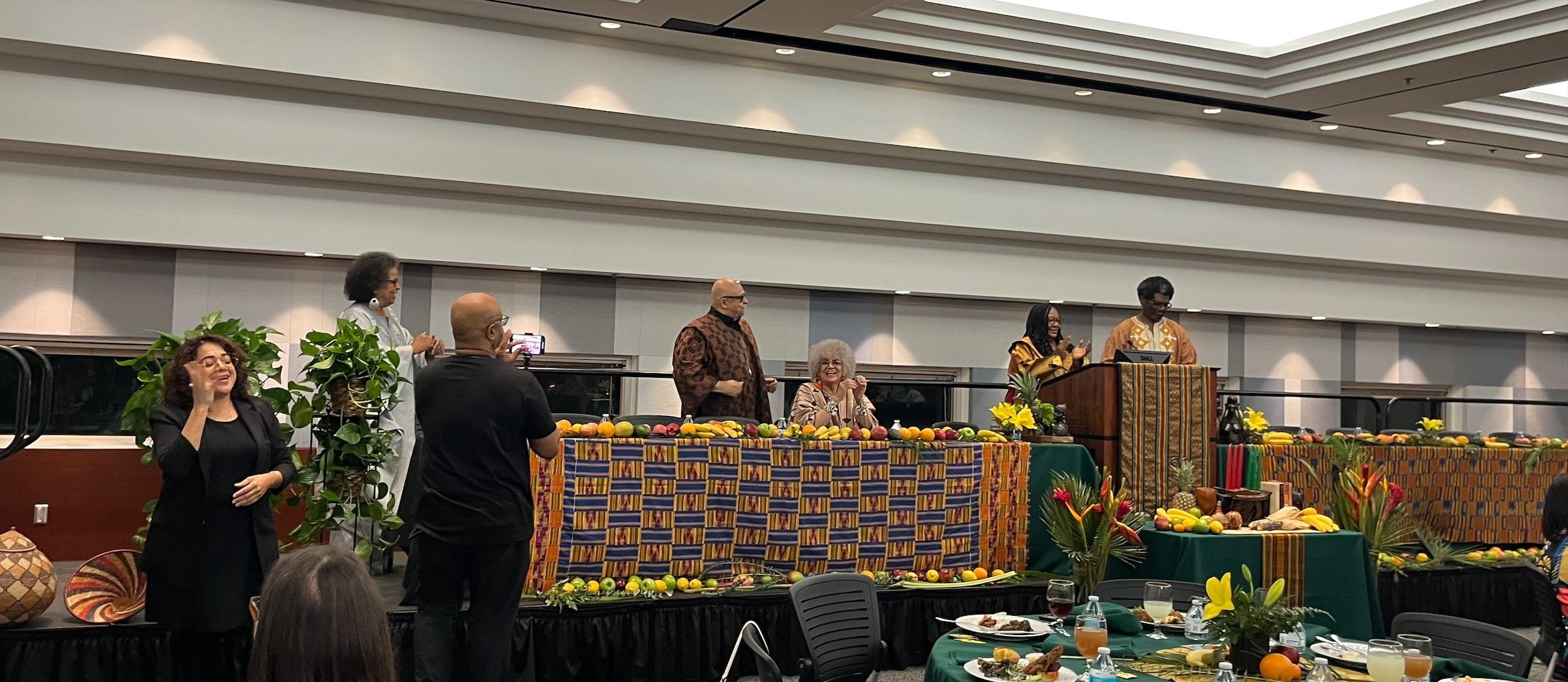
Karenga’s Retirement Celebration, on November 10, was filled with energy, unity, and heartfelt support. The room came alive with cheers as various figures who contributed to positive change in the educational community were recognized. Guest speakers reflected on Karenga’s profound impact on education and the African American experience.
The event opened with a vibrant cultural dance accompanied by drums, chants, and traditional instruments. The music inspired the crowd to join in with shouts and dancing, creating an atmosphere of joy and connection. Guests were also treated to a spread of cultural foods. The richness of African culture was evident, not only in the cuisine but in the colorful dresses and suits worn throughout the room.
Unity was further expressed through call-and-response participation, and a libation ceremony to honor those who had passed away and made a lasting impact on society. During the ceremony, water was poured onto a bowl of leaves, symbolizing growth and prosperity. Attendees were invited to speak the names of loved ones who had passed, creating a moment of collective remembrance and gratitude.
Ultimately, the celebration was not only a tribute to Dr. Karenga but a recognition of all who have contributed to uplifting society, a powerful testament to culture, community and legacy.
Dr. Karenga’s legacy extends beyond his academic and cultural contributions at CSULB. He has influenced generations of activists, educators, and artists who have taken his work as inspiration for their own struggles for justice and equality. His life serves as a beacon of hope for those who continue to fight for the dignity, recognition and empowerment of Black people in the United States and throughout the world.