A new major takes shape where AI meets tomorrow’s job market
First-year engineering student Steffy Jibikilay thought she knew exactly what she was signing up for when she chose to study data science at Cal State Long Beach.
Then, at a conference last fall, Jibikilay mentioned her major to an organizer.“Oh, my gosh,” the woman said. “Oh, my gosh, wow!”
Jibikilay paused. “I was confused by her reaction.”
What Jibikilay didn’t know, but would soon find out, is that the applied data science program at CSULB was only weeks old. Out of more than 6,000 students in the College of Engineering, just 23 shared her field of study. She had not just enrolled in a major — she was helping to inaugurate one.
“I was like, ‘Wait, what?’” she said. “I was so shocked.”
Although CSULB’s computer science program is one of the university’s most in-demand and rapidly growing majors, it’s never had a dedicated data science program. But as artificial intelligence redefines how people work, faculty added applied data science — an interdisciplinary major that combines data analysis, computing and real-world application — to prepare students for new careers powered by AI and data-driven decision-making.
“We are living in this big data era,” said program advisor Wenlu Zhang, an associate professor in the Department of Computer Engineering & Computer Science.
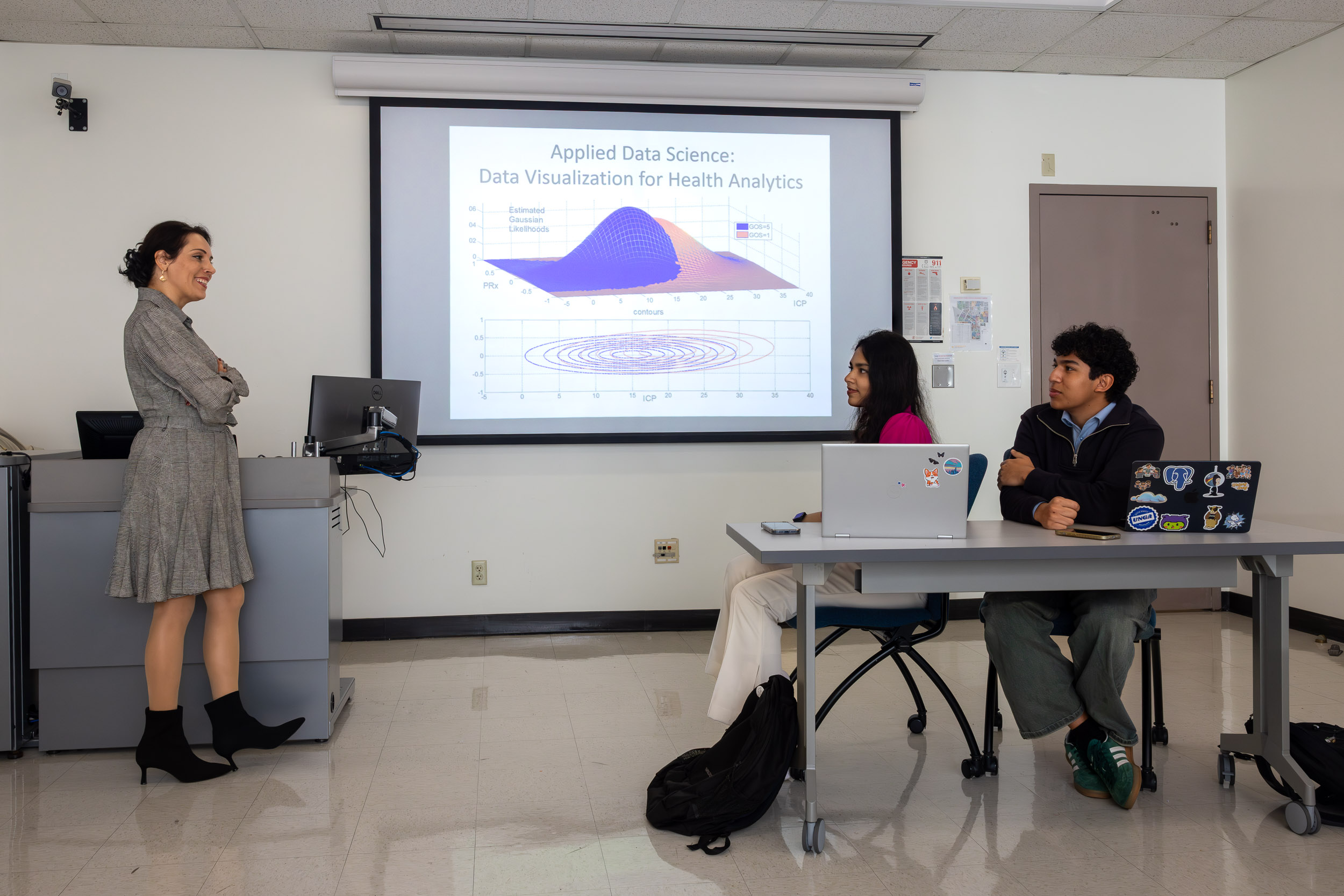
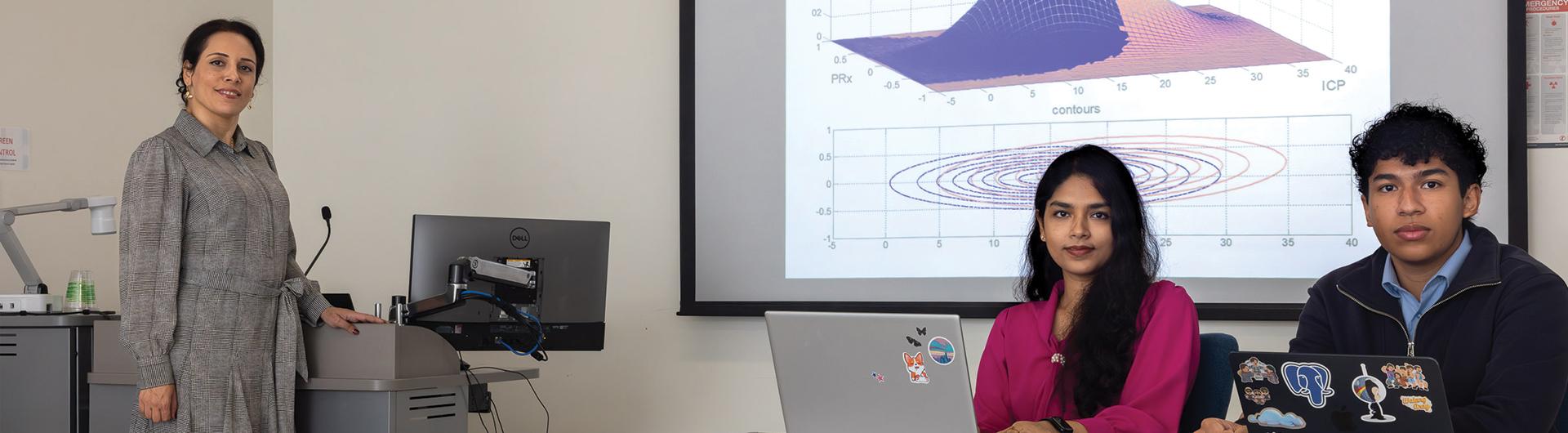
Department chair and professor Shadnaz Asgari said the small number of students was a strategic choice; the plan has always been to get the curriculum locked into place before expanding.
“We have focused on building a high-quality, rigorous academic foundation first,” she said. “Now that the infrastructure is in place, we are ready to scale.”
Unlike traditional data science degrees, CSULB’s new program is designed to connect technical skills with specific fields of study. Excluding the general education requirements, the major's curriculum is split: Roughly 65% of the coursework is in core computer science, while the remaining 35% is dedicated to a specialized track
We are living in this big data era.
Right now, the program offers two such tracks — computational linguistics and health analytics — although Asgari predicts many more will follow.
“We want to give them flexibility, in addition to specific expertise,” Asgari said.
In healthcare, for example, data science is already changing how doctors diagnose and treat patients. Instead of relying on trial and error to find the right medication, future systems could analyze genetic data to predict what will work best for each individual.
“Things become more personalized,” Asgari said.
In language-focused fields, data science powers tools like chatbots, translation systems and voice recognition — technologies that shape how people communicate every day. All those systems rely on massive datasets and computing power.
AI is a tool. The same way that the calculator was invented, or the knife was invented.
"You divide the workload into smaller subtasks across different processors," Asgari explained, describing the distributed computing process. Then, once the tasks are complete, you merge the results to get the final solution."
That’s the kind of work that excites Jibikilay.
In high school, she worked on a research project analyzing bacteria levels in hand dryers — collecting samples, tracking patterns and presenting findings.
“It’s definitely a sense of storytelling and pattern recognition,” she said. “You need to think about the bigger picture.”
Now that she knows she’s part of this program’s launch, she’s beginning to appreciate how datasets can be applied across different fields. An avid reader with strong English skills, Jibikilay is leaning toward computational linguistics as her chosen pathway, although applications of AI in other sectors also interest her.
“It can be used in different places,” she said, “like business." And that’s exactly the point. In fact, according to the U.S. Bureau of Labor Statistics, jobs in data science are projected to grow 35% over the next decade — far outpacing most industries.
While AI continues to dominate debate, Asgari tends to view it in practical terms.
“AI is a tool,” Asgari said. “The same way that the calculator was invented, or the knife was invented.”
How it’s used — and who knows how to use it — is what comes next.