



Planning Support Team
The PLANNING SUPPORT TEAM (PST) is dedicated to designing and facilitating an inclusive planning process that includes different groups in the process, especially those who have been marginalized; centering their issues throughout the process; recognizing the historical barriers and current systemic obstacles that undermine their well-being; providing safe conditions for creative dialogue; and ensuring transparency with information and decision-making; among other conditions.
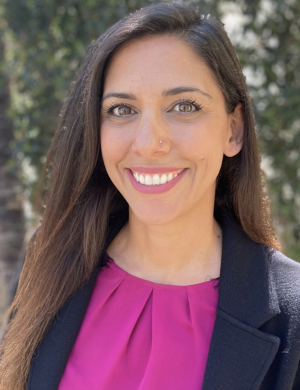
Sabrina Alimahomed-Wilson is Associate Professor of Sociology at California State University, Long Beach. She is currently a Faculty Equity Advocate in the College of Liberal Arts. She has published her research in various journals includingGender and Society, Critical Sociology, Race and Class, and Women, Gender, and Families of Color on the topics of gendered Islamophobia and state violence, FBI racialized surveillance and gendered counterterrorism, and the profiteering of private capital in the War on Terror. She is an Affiliate Faculty at the Center for Security, Race, and Rights at Rutgers Law School. She previously served as an Honorary Research Fellow at University College London’s Centre for the Study of Education in Muslim Contexts. She has served on the National Minority Fellowship Program Advisory Board for the American Sociological Association, President’s Commission on the Status of Women, and as the campus CSU Long Beach Chair for the California Faculty Association’s Racial and Social Justice Council.
While growing up, Sabrina’s family became homeless, so she left high school early to work, eventually attending community college and transferring to UC Berkeley. She went on to earn her MA and PhD at UC Riverside. As a queer cis woman of color with straight passing privileges, she organizes with grassroots community organizations that are working towards the abolition of the War on Terror while attending to the intersections of state violence and gender-based violence. In partnership with these community organizations, she is building a digital community-based archive of oral histories that feature grassroots activists who have resisted and organized against the War on Terror, including centering the stories of Muslim women, femmes, queer, and non-binary Muslim activists who have been instrumental to this work.
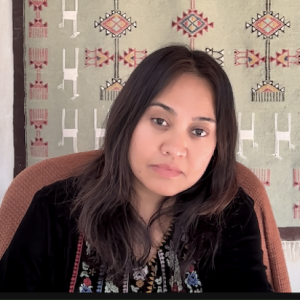
Azza Basarudin is Assistant Professor in the Department of Women’s, Gender and Sexuality Studies at CSULB. Trained in gender and sexuality studies (Ph.D., UCLA), her research interests are transnational feminisms, gender and Islam, and intimacy and human rights politics. Her writings have appeared in journals, edited anthologies, and popular forums including Meridians: Feminism, Race, Transnationalism, The Scholar and Feminist Online, and Departures in Critical Qualitative Research. She is the author of Humanizing the Sacred: Sisters in Islam and the Struggle for Gender Justice in Malaysia (University of Washington Press, 2016). She held visiting positions and fellowships at Harvard Divinity School, Syracuse University, and the American University in Cairo. Her research has been supported by the University of California Humanities Research Institute, the Wenner-Gren Foundation, the Social Science Research Council, and the National Science Foundation, among others.
In her research, teaching, and mentoring, Basarudin is committed to the advancement of gender and racial justice through anti-racist and ant-imperialist praxis. She has worked with underserved student populations on institutional and communal levels to support low-income and first-generation college students. She is a faculty mentor for the California State University Chancellor’s Doctoral Incentive Program (CDIP) and member of the Future of Minority Studies Research Institute, a mobile think tank of scholars and academic institutions focusing on minority identities, education, and social change. As a longtime resident of Los Angeles, she has merged her passion for intellectual work with a commitment to activism through collaborative social and political networks. She is a founding member of a feminist task force in Southern California to tackle Islamophobia and anti-Muslim racism by connecting scholarly output to public policies. Basarudin is dedicated to advancing equity and justice in society through academia and is delighted to work collaboratively towards this vision at CSULB.

Araceli Esparza is Associate Professor in the Department of English at California State University, Long Beach, where she joined the faculty in Fall 2011. She holds a doctoral degree in American Studies and Ethnicity from the University of Southern California, a master’s degree in Chicana/o Studies from California State University, Northridge, and a bachelor’s degree in Public Policy and Management from the University of Southern California. As an undergraduate she was a McNair Scholar and has always been a supporter of programs that work to increase academic success among scholars and students of color, first-generation college students, those from working-class backgrounds, and other marginalized groups. Her teaching areas and scholarly expertise include Chicana/o/x and Latina/o/x studies, women of color feminism, theories of race and ethnicity, gender theory, and U.S. literary and cultural production. Professor Esparza’s research has been published in various anthologies and the journals Feminist Formations and Chicana/Latina Studies. Currently she is working on a book project focused on how the hierarchies that exist within Latinidad and identity formation processes are represented in works by U.S. Central American and Chicana/o/x cultural producers.
Born out of her lived experience and academic training, Professor Esparza is committed to building equity and racial justice in academic spaces throughout the University and serves on various committees engaged in that work, including the President’s Commission on the Status of Women, the President’s Equity and Change Network, Parents and Caregivers at CSULB, and the Latinx Faculty and Staff Association. She looks forward to continuing the work of creating a more racially and socially just and equitable College of Liberal Arts for students, staff, and faculty at CSULB.
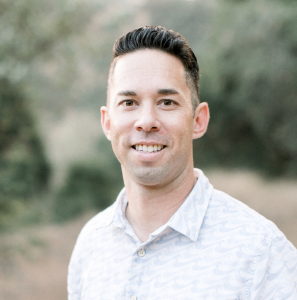
Justin Gomer is Associate Professor of American Studies at CSULB. He was trained in Ethnic Studies. His degrees are all in African American Studies from UC Berkeley. His work focuses on racial formations, popular culture, and modern US history. As an Ethnic Studies scholar, he strives to live up to the superlative tradition of scholar-activists who interrogate the ways in which race and racism has and continues to shape our nation and the experiences of those who inhabit it. As a white-presenting mixed-race person who has profited immensely from white privilege, these questions are also personal. Justin aims to ensure that an Ethnic Studies ethos—of thinking critically about the ways in research and teaching work in concert with political activism and racial justice efforts—informs the things he writes, the courses he teaches, and the work he does off campus. To the latter, he’s done things like work with tenants’ rights organization in Long Beach and supported student groups on multiple campuses to help build a prison–to–university pipeline. Justin understands it’s a privilege to participate in our college’s next strategic planning process. He hopes that his efforts as a facilitator are useful and help support the Steering Group create a more equitable vision for our students, faculty, and staff.
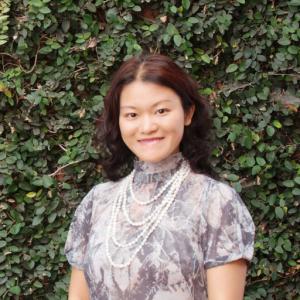
Yuping Mao is Associate Professor in the Department of Communication Studies at CSULB. She earned her Ph.D. from Ohio University. She has extensive working, living, and research experiences in China, the U.S., Canada, and the Netherlands. Her research focuses on communication and global health. Dr. Mao is passionate about applied research to promote cultural diversity and bridge health inequities in healthcare systems. She is particularly interested in health communication issues among migrants and underserved populations. She is the co-editor of two books: Culture, Migration, and Health Communication in A Global Context, and Handbook of Research on Citizen Engagement and Public Participation in the Era of New Media. She is the first woman of color serving as the Editor-in-Chief (2022-2024) of Communication Studies since the inauguration of the journal in 1949.
Dr. Mao has extensive experience of transforming academic knowledge to practices and policies through training and consultation. She played an important role in designing, implementing, and evaluating the 2009 Edmonton Citizen Panel on budget priorities. As an immigrant woman of color, Dr. Mao sees the college classroom as a critical space to teach inclusion and social justice in an increasingly diverse and globalized world. She has been teaching courses on intercultural communication in various contexts for over a decade. She aspires to serve others and the campus communities in ways that empower others, open new doors, or make resources available, especially to minority groups and international students on campus. She was the Chair of the East Asia Subcommittee of the International Education Committee at CSULB in 2019-2010.
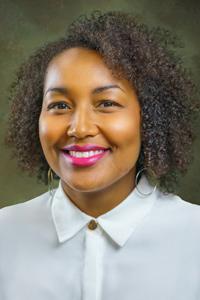
Chantrey J. Murphy is a sixth year as a tenure track Assistant Professor in Sociology. Her primary research is in the field of structural social psychology, or group processes with a focus on creating interventions that reduce unequal and inequitable outcomes between members of diverse task groups. She also practices “mentorship through research” through the campus’ Building Infrastructure Leading to Diversity (BUILD) program and through the American Sociological Association – Social Psychology Graduate Student Mentoring Program. Her service to the college and university includes Co-Chairing the CLA Intersectionality and Pedagogy Steering Committee, co-facilitating the Spring 2019 CLA Women of Color “shared-identity group discussion”, serving as Co-Chair for the President’s Commission on the Status of Women, and coordinating the Women of Color in Academia @ CSULB faculty support program. She is also a member of several groups committed to social justice and equity-minded policy & practices on and off campus, including the Division of Equity and Inclusion’s Campus Climate Research Collaborative, the Black Faculty and Staff Association, and Black Lives Matter – Long Beach.
As a Black women first generation college student from a rural South community, CJ brings to PST the experiences of someone who has had to navigate the many challenges of higher education alone, with little encouragement to advocate for or against polices that impacted her success, and with even fewer mentors who share her intersecting identities that could serve as models for achievement. It is these experiences and those like them that CJ commits to advocating for in the PST process, and in the overarching goal of helping the college achieve policies and practices that are truly inclusive, equitable, and social justice oriented.
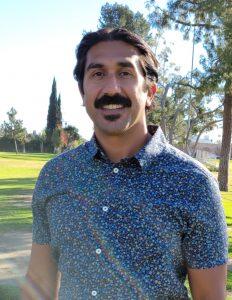
Muhammad Rafi is a graduate student in the History department at CSULB. Rafi’s research examines how mass incarceration intersects with race, economic inequality, and drug laws. His research informs his understanding of the ways in which communities of color are systematically removed from social participation. Rafi is excited to be part of a team that will facilitate the process of creating an equitable strategic plan for the College of Liberal Arts. He believes centering marginalized voices in decision-making processes will help ensure the next CLA strategic plan will better represent the faculty, the college, the community, and future students at California State University, Long Beach.
Rafi’s father is a practicing Muslim who immigrated from Hyderabad, India. His mother was born and raised in upstate New York. Being multiracial, multiethnic, and raised in a home with parents from different religions, Rafi’s identity and lived experience aligns with many of those in our CLA community. Experiencing the ways in which folks are marginalized via race, immigration, and religion motivates him to serve on the PST. Additionally, as a fitness coach for ten years, he’s encouraged by efforts to pay greater attention to the physical, mental, and emotional health of students, faculty, and staff. As a small business owner, he’s excited by the prospect that the next strategic plan will strengthen ties between CSULB and the Long Beach community. Through his contributions, Rafi wants to help bridge a better future for the college, university, and the community that he loves so much.
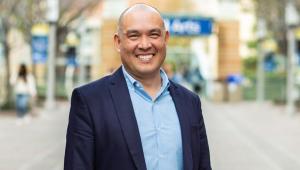
Rigo Rodriguez is Associate Professor of Latina/o/x Public Policy and Chair of the Department of Chicana/o/x and Latina/o/x Studies at California State University, Long Beach. Rigo specializes in participatory approaches for large-scale, equity-driven organizational and community change in local settings and public institutions; community organizing for social policy and systems change to create healthy communities in racially segregated neighborhoods; and popular education methods to bolster the civic and political capacity of Mexican/Latinx immigrant communities in local governance. One of his recent projects involved co-designing and co-facilitating the Alternatives to Incarceration strategic planning process to reduce incarceration rates and eliminate racial disparities in Los Angeles County, that involved over 1500 participants using a racial equity approach. At CSULB, Rigo has previously participated in the Program Assessment and Review Committee (PARC) and in CLA, for the last three years, he has been a member of the EPCC.
For over 25 years, Rigo has worked with parents, neighborhood residents, community-based nonprofits, public agencies, and foundations to facilitate complex community and systems change initiatives in the fields of mental health, early childhood development, child welfare, community development, and transnational economic development. He currently serves as Board President for the Santa Ana Unified School District, the tenth largest and predominantly Mexican/Latinx school district in California. He earned a bachelor’s degree in Comparative Literature and Spanish Literature, a master’s degree in Urban and Regional Planning from the University of California, Irvine, and a doctorate in Geography from the University of Southern California. Rigo is the youngest of 13 siblings from a Mexican immigrant family.
