CSULB leads nationwide movement in green filmmaking
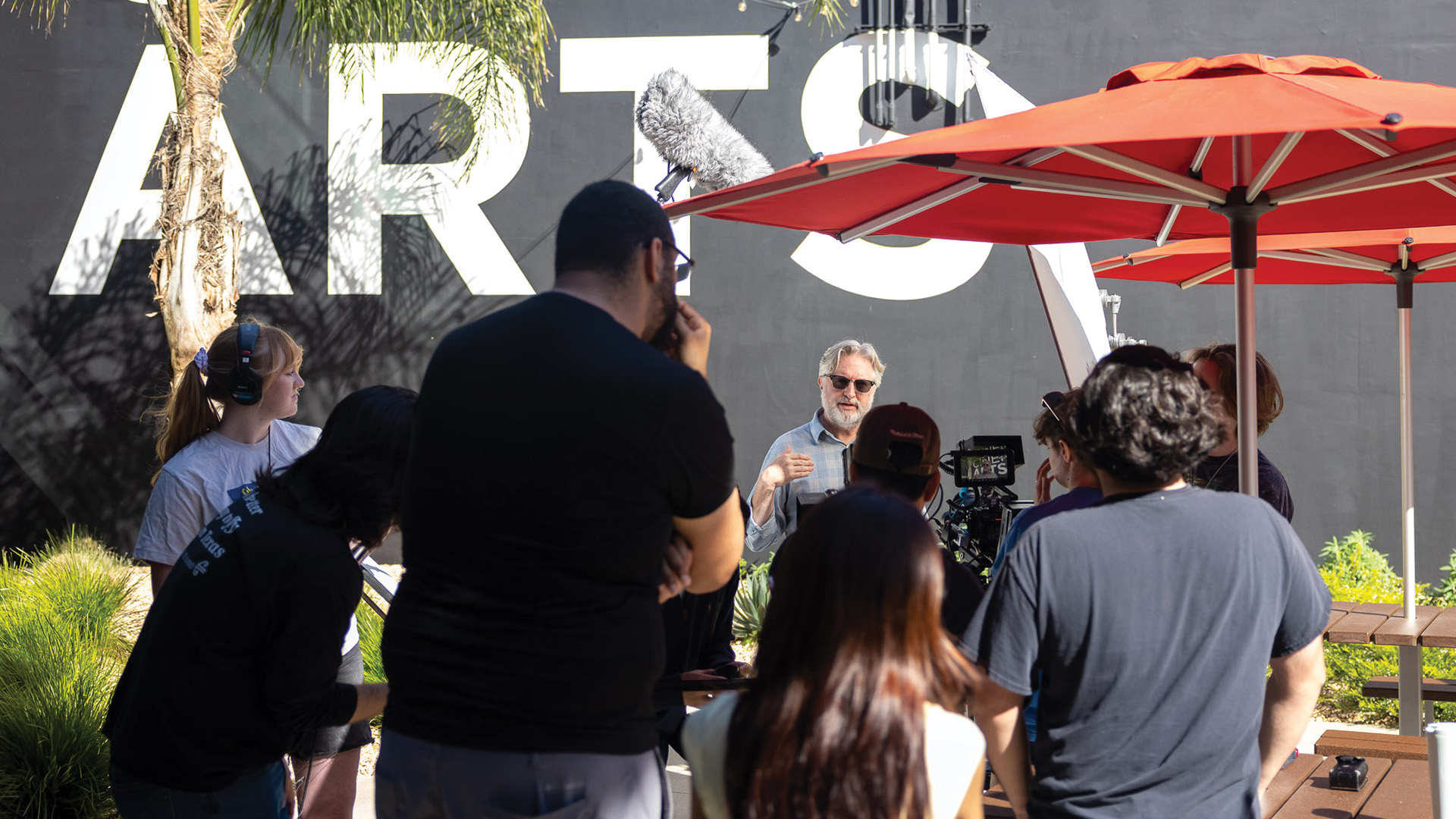
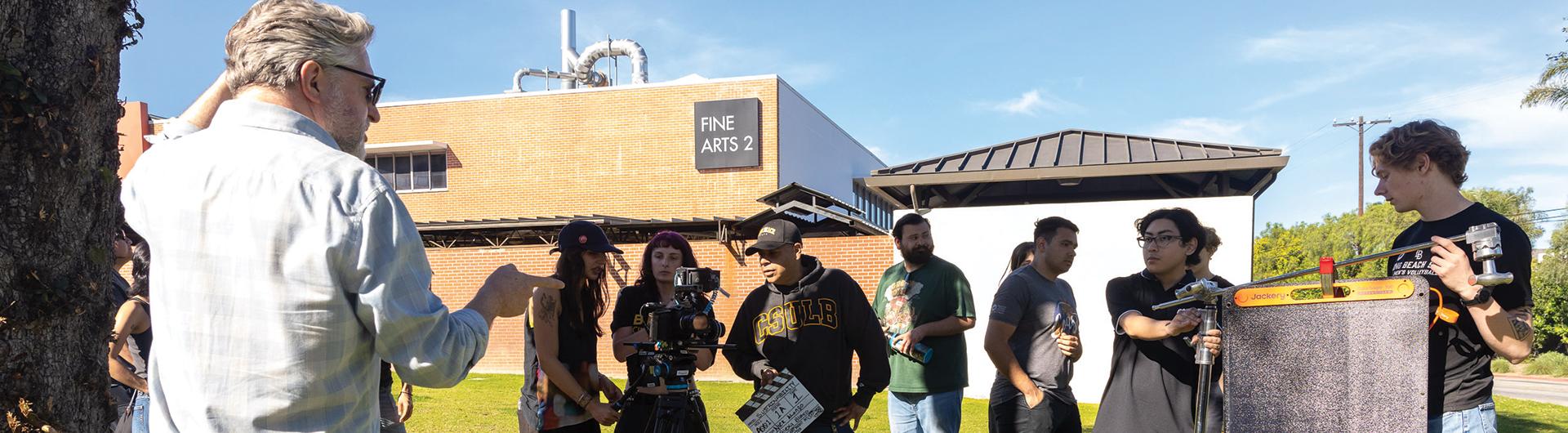
Kent Hayward, an associate film professor in Cinematic Arts, remembers working on a big franchise film in which the company spent months building beautiful miniature sets, several enormous fake caverns and a life-sized restaurant set.
Movie magic was made, and at the end of the shoot, everything was piled sky-high into the dumpsters, including recyclable materials. Hayward remembers feeling it was all very wasteful. As he started teaching, he began saving stuff for future use — possibly by students.
That’s when the green filmmaking movement on campus started.
“I started to talk to students about incorporating sustainable practices as a way to save money and resources — something that independent and low-budget filmmakers are pretty familiar with already,” Hayward said.
Cal State Long Beach and its students have become national leaders in the green filmmaking space. CSULB is one of the two founding members of the Green Film School Alliance, which is now 50-plus collegiate members strong, in 10 countries. Professor Hayward wrote “Green Filmmaking: A Guide to Sustainable Movie Production,” published by Routledge in 2025. This spring, he is teaching CSULB’s first “Sustainability in Film” class.

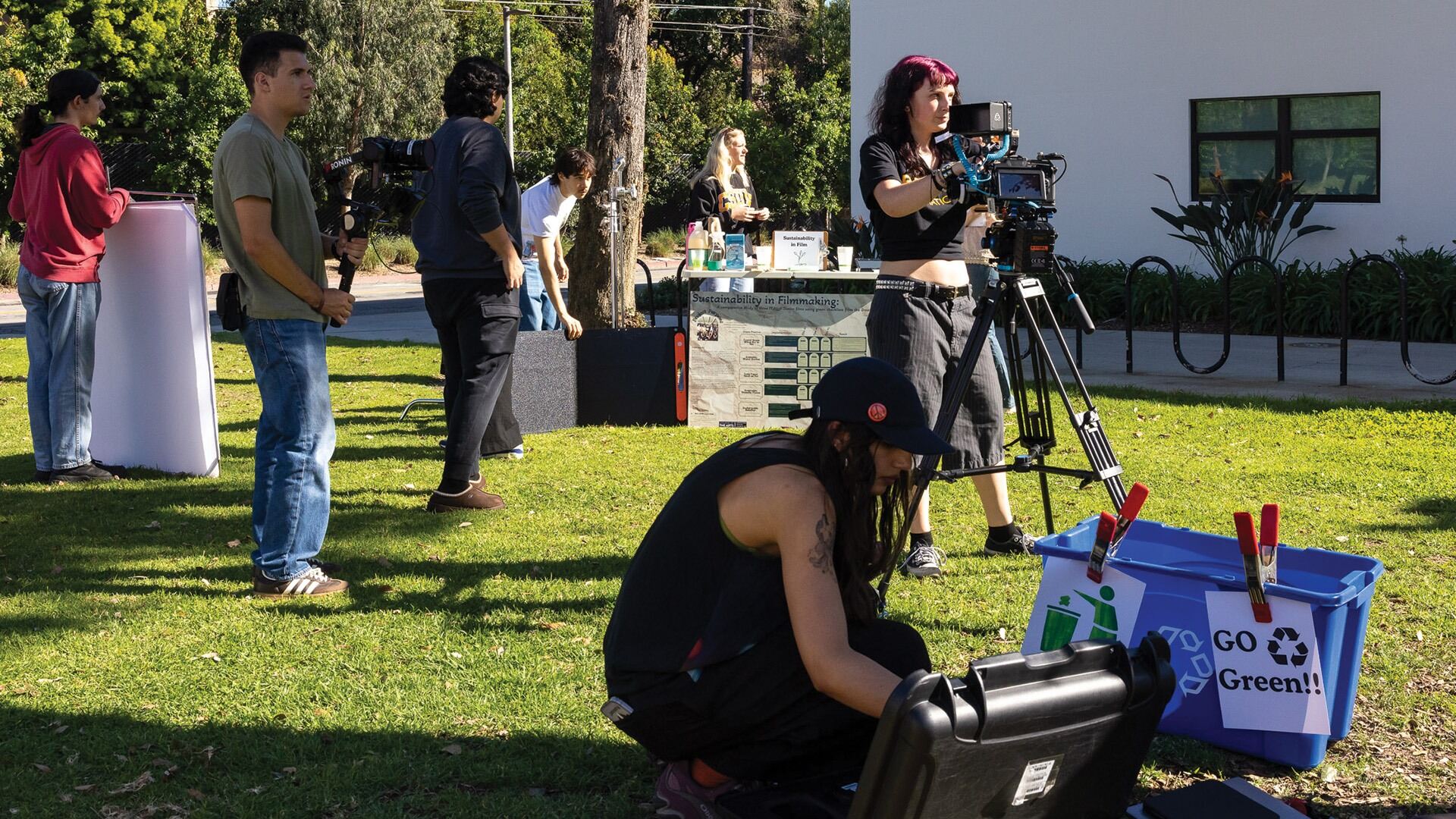
And for a few years running, students have been making green films by putting sustainability principles into practice, recycling materials and conserving resources like energy, water, compost and paper. Their efforts have been recognized with green seals of approval and in the annual Green Generation Showcase, which takes place in April at the Earl B. Miller Japanese Garden.
“Every department in a film can contribute to sustainable practices, from catering and food to the camera department, lighting, makeup and wardrobe, props, construction, sound, actors and post-production, too,” said Hayward, who co-created the Green Film School Alliance in 2020. “With a little planning, we can build things to be reused, recycled, or broken apart to component bits again.”
Hayward noted that film and TV productions are significant employers in California, with great potential for waste or sustainability. Recent reports indicate that the film and TV industry make up more than 50% of the broader entertainment industry in Los Angeles County.
“Film and TV are responsible for a big chunk of our economy; like many other industries, there is a footprint that it leaves behind,” Hayward said. While they’re not as impactful as the agriculture or fossil fuel industries, they can be wasteful, he said, with so much getting thrown away after one-time use.
“There’s a lot of room to inspire good behavior, responsible actions, and other things too,” Hayward said. He cited the shift from physical to digital film as an example.
“There’s savings of toxic chemicals, processing, developing, physical prints, plastic, celluloid — there’s far less of that now, which is great.”
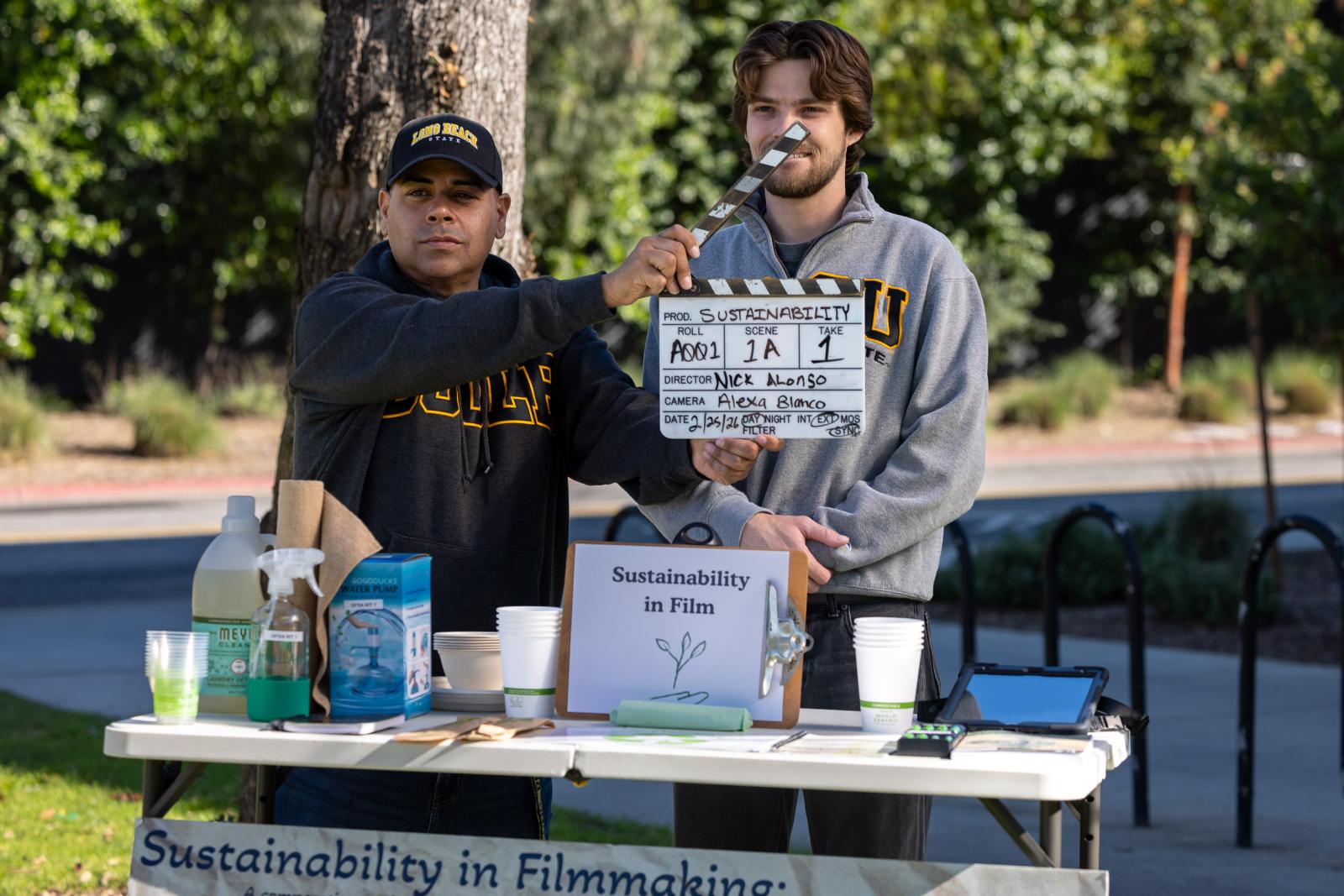
Feeling PEACHy
The Beach was an early adopter of PEACH and PEACHy, the Production Environmental Action Checklist, and the same list for young filmmakers. The checklist is a free tool created by the Sustainable Entertainment Alliance that Hayward helped adapt for film students. It breaks down all the different ways that filmmakers can bring green practices into their projects, from using rechargeable batteries in sound and camera gear, to using e-tablets instead of printing out scripts.
Claudia Villalta-Mejia ’19 implemented the PEACHy checklist when she worked as a sustainability coordinator on a short student film called “Don.”
“We diverted 15 pounds of trash to compost … and used 18 water bottles instead of 180,” she said in a video CSULB students made about sustainability in film. “There was support from the whole crew and cast, which put a lot of wind in my sails …. We want to make our movies environmentally friendly, so future generations still have a planet to make films on.”
After graduating with a major in film and electronic arts and a minor in environmental science, she worked at Sony Pictures Entertainment as a sustainability specialist for 2 ½ years. Now, she works as a bilingual sustainability consultant for a corporation that advises companies and government agencies in Santa Cruz County on how they can be greener.
Hayward says CSULB is uniquely positioned to keep the green filmmaking movement alive and thriving.
“It’s a state school; we have great resources, but we don’t have the deep pockets that bigger schools have, so we are scrappy,” he said. “We know how to make things and work with less and thinking outside the box is a really valuable skill.”