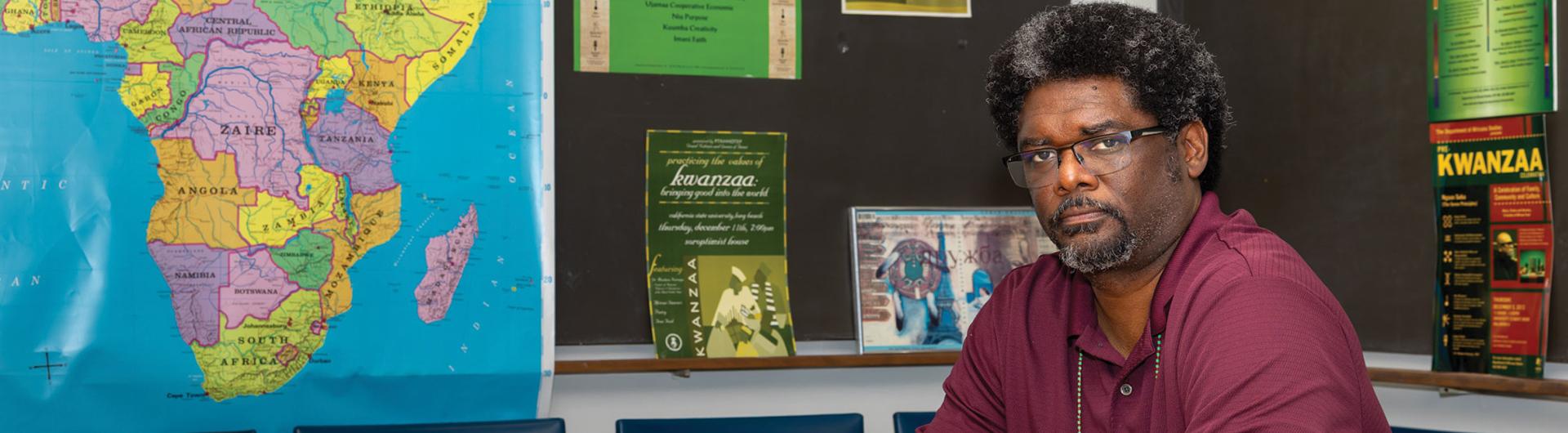
Africana Studies chair M. Keith Claybrook Jr. affirms Black culture while fostering human connections
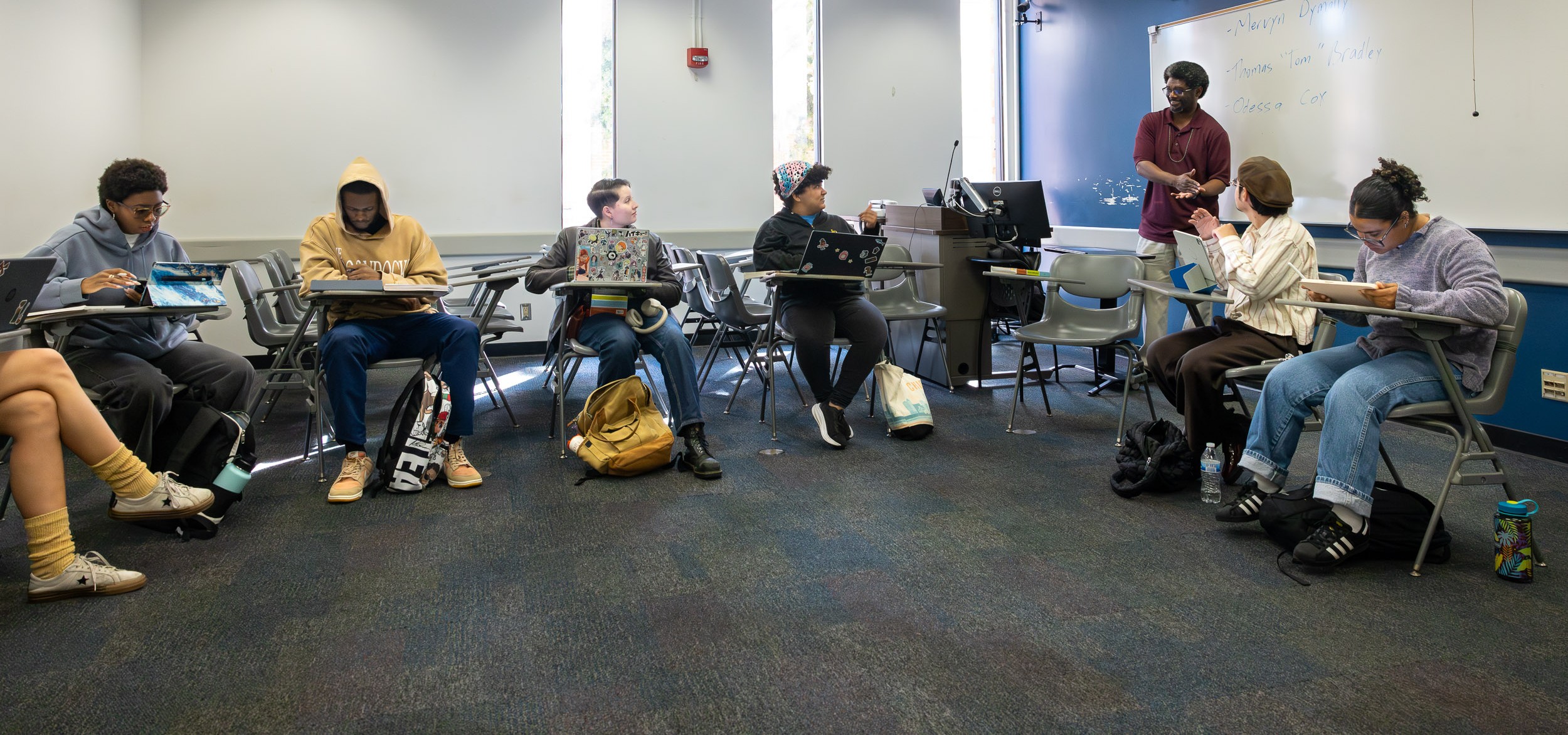
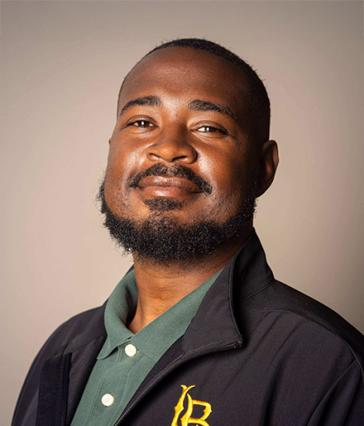
For more than 20 years, M. Keith Claybrook Jr., chair of Cal State Long Beach’s Department of Africana Studies, has been steeped in researching and teaching the history of the African diaspora and the immeasurable influence that descendants of enslaved people have had in the United States for the past 400+ years.
His interest and curiosity are vast, running the gamut from the liberation movements on the African continent and in the Caribbean to the history of Black Los Angeles and hip hop.
For Claybrook, it’s personal. The Compton native’s parents made sure he was immersed in all that the city — and the region — had to offer an impressible young man growing up in the ‘80s.
“My parents exposed me to the full diversity of the Black experience — good, bad and otherwise.”
His goal today in the classroom? Help students gain a greater understanding of the joy, pain and complexities of the Black experience.
Q: How do you spark passion in your students?
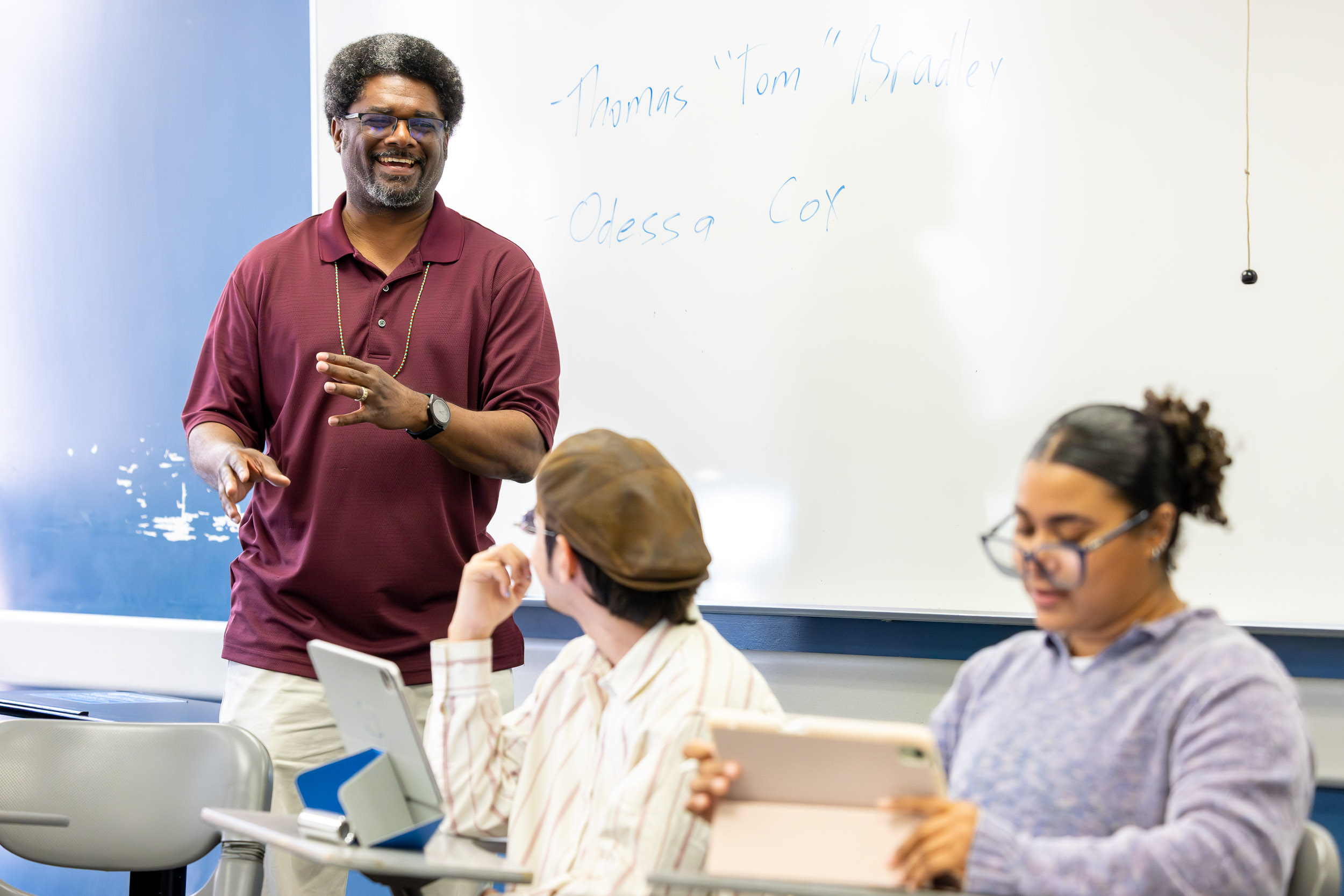
A: I try to connect it (the topic/subject) to them. I was listening to a lecture by Dr. Asa Hilliard years ago. Hilliard is an educational psychologist and one of the giants in Black psychology and Africana studies. He said it's not enough to reach a student's intellect. You have to reach their soul. And I heard that and never forgot that.
And when I started understanding that myself, I thought, “This is not an intellectual project for me. This is deeper than that.” So, when I am in the classroom, giving a lecture or writing, I'm trying to figure out how to reach my students beyond their intellect.
Q: Why is it important for students to understand the impact of African American people?
A: The one thing that all people share is the human experience. There’s not one experience that’s more important than the other. Each community of people around the world has made their own unique contribution to the world. To really respect and understand all of humanity, you have to have a working understanding of all of what humanity has to offer and what different groups of people have uniquely contributed to human experience and to the country.
Q: What are some of the practical applications your students are learning?
A: I'm developing critical readers, critical thinkers and effective communicators. Those three skills must be developed and they're transferable across not only educational spaces, as a discipline, but also across jobs that people may have in future. I’ve written a lot about this topic over the years.
For different populations, it's going to get a little different look. So, for Black students, we’re talking about being reaffirmed in their own history and culture. Seeing themselves as part of the global community, as well as the U.S community. But for non-Black students, it also speaks to seeing Black people both on the continent and around what we call the African world as human beings, one, and critical participants in the flow of human experiences.
Q: What are some of your proudest moments as an educator?
A: I love working with students, especially mentoring and advising.
We take them to the National Council of Black Studies national conference every year. They put together student panels to present on, and watching them prepare, work on their original research and go through that experience is hands down the most rewarding part for me. That, and working with McNair Scholars.
Our student, Alyssa Rowland, won first place in the annual undergraduate student essay contest this year. Darrell White Jr., who's now a graduate student at Arizona State, won second place in the same contest in 2025.
That’s the highlight of my career: watching them go through those experiences and come out on the other side more comfortable, more confident, more competent, on the back side of that experience.
Q: How do you help students connect the dots from African (and African American) history to contemporary America?
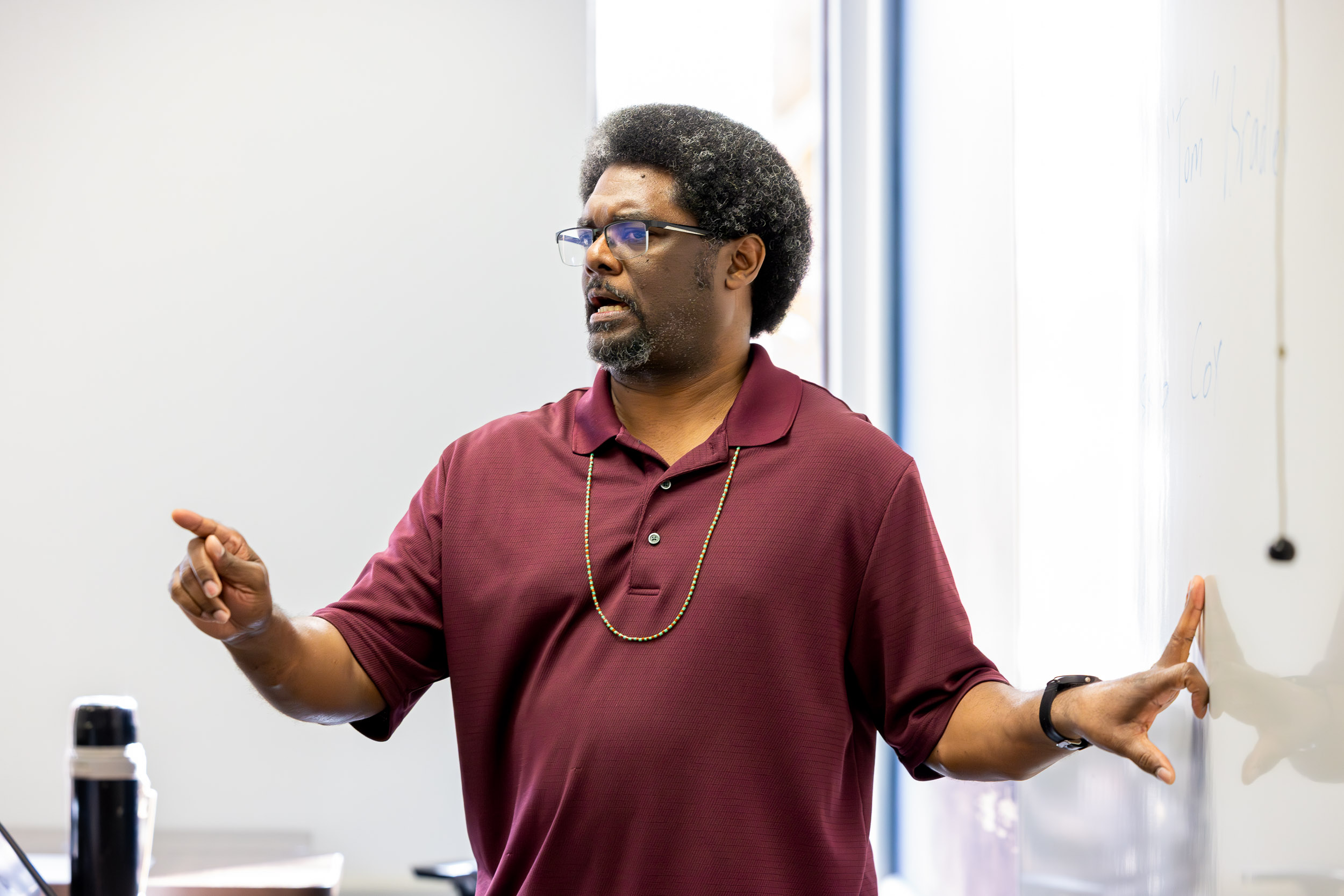
I do different things to try to connect them on a human level, not an intellectual level, so that the students can understand it deeply. That's one. Secondly, I try to connect the material to their lived experiences. So, if we're talking about something that's very philosophical and abstract, I'm still going to try to make it connect to them on a very human level.
Q: What are you most excited about looking to the future of Africana Studies?
I am excited about expanding the reach of Africana Studies on our campus and in our community. I'm excited about the opportunity for it to continue to grow as a discipline around the country and around the world.
A lot of people don't even know it, but much of the work that scholars are doing in Africana Studies informs some of the stuff that people are seeing in social media and in society.
Much of the language around being anti-racist and anti-Black is popularized in the works of Ibram X. Kendi (author of “How to Be an Antiracist.”) He got his doctorate in Africana Studies from Temple University.
I want to continue to do that work while also making others aware of the contributions that students and scholars in Africana studies are continuing to make in this discipline. I'm excited about the possibility of doing my part.