McNair doctoral program launches alumna’s research on formerly incarcerated women
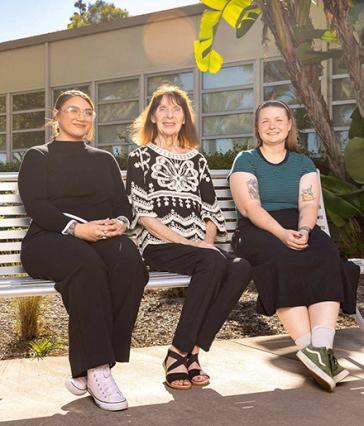
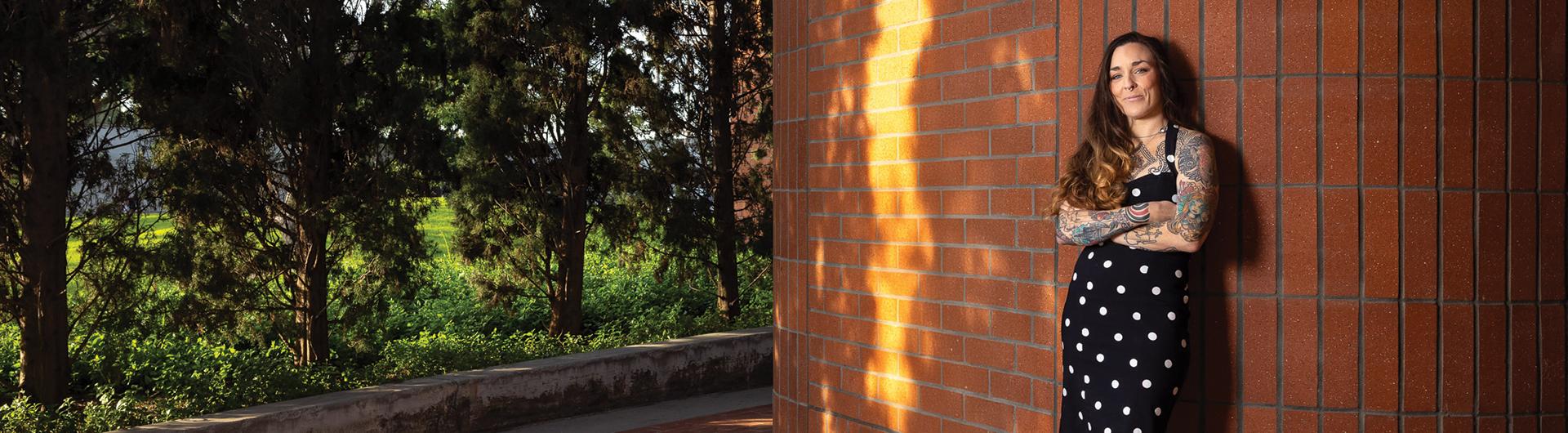
Taryn Williams ’20 is on a mission to increase society’s understanding of formerly incarcerated people and their job prospects after release. In her doctoral research, she’s examining gender differences in the evaluation and hiring of applicants with criminal records.
“Most existing research on criminal records and employment has focused on men, even though women are one of the fastest-growing segments of the formerly incarcerated population,” said Williams, an alumna of Cal State Long Beach’s McNair Scholars Program who expects to get her Ph.D. in management from UC Irvine in June.
“My work addresses this gap by asking not only whether discrimination occurs, but how it operates differently across gendered labor markets.”
She found that women face compound disadvantages in obtaining employment, especially for jobs that are typically associated with females – like receptionist, administrative assistant, childcare worker or home health aide.
Williams has faced this reality herself – she spent two years in prison and after her release, she struggled to find employment with a criminal record. Eventually, she made her way back to school, attending CSULB and getting accepted into the McNair Scholars Program. She says McNair helped her get serious about an academic career.
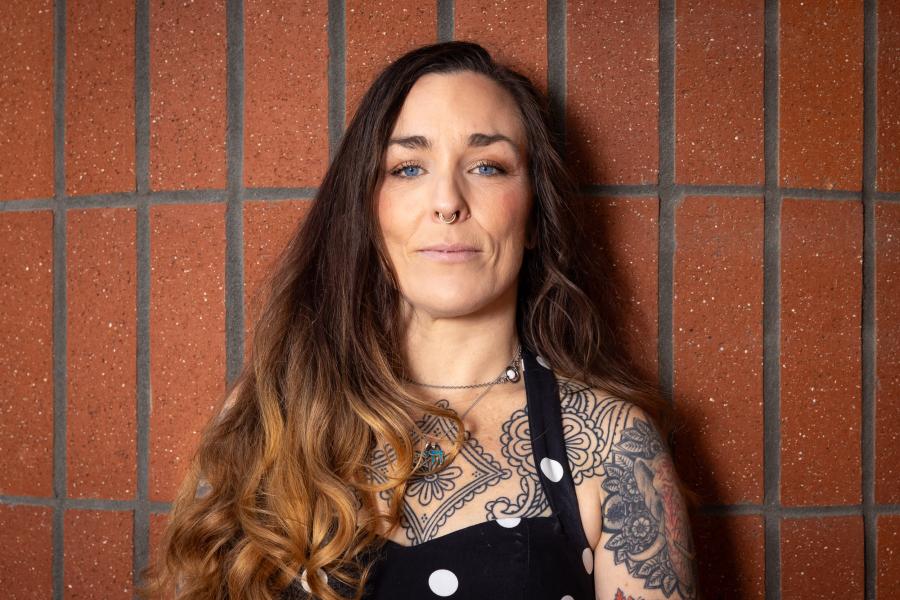
A first-generation college student, Williams graduated from The Beach magna cum laude in December 2020 with a bachelor’s degree in business administration, double concentrating in management and operations and supply chain management. She has spent the past 4.5 years at UCI’s Paul Merage School of Business, teaching, researching and writing her dissertation.
Sharing her research and story has had ripple effects, she says. She has seen scholars who do not typically study incarceration begin to integrate formerly incarcerated people into their teaching and research conversations, from MBA classrooms to doctoral presentations.
She aims to shift how future managers, employers and organizational leaders understand the criminal record stigma, especially since stable employment is one of the strongest predictors of reduced recidivism.
Completing the circle
Williams is returning to The Beach in the fall to teach full-time at CSULB’s College of Business. She says she couldn’t have done it without McNair.
“The support I got from McNair was really unlike anything I had ever seen in a lot of the other programs I had been in,” she said. “It was very hands on, very supportive. For someone like me – I had no resources, no money, no experience, no job history – there’s not a single planet where I could have gone to grad school without McNair.”
The McNair Scholars Program has been on campus since 1997. The federally funded program is designed to prepare and support low-income, first-generation and underrepresented undergraduate students to pursue doctoral studies.
Each year, a minimum of 25 CSULB students experience the program, which starts with a 10-week summer research internship. Currently, there are about 27 McNair Scholars on campus, according to Brenda Lopez, director of the program.
After the summer, McNair helps with workshops, seminars, mentorships, tutoring, guidance on applying to graduate schools, grad school visits, financial literacy and planning. McNair Scholars also get access to a computer lab and printing.
“I think these programs are instrumental for first-generation students in helping us navigate a world we are unfamiliar with,” Lopez said.
Williams, an honors student and President’s Scholar while at The Beach, has presented some of her doctoral research at the Academy of Management annual meeting in Copenhagen, Denmark, and at the Equitable Opportunity Conference at MIT.
She has written white papers and worked closely with nonprofit organizations to support business education in prisons and create sustainable career pathways for formerly incarcerated people.
“McNair helped me see that I could study what genuinely mattered to me, even when the work crossed disciplinary boundaries or drew on my lived experience,” Williams said. “Perhaps most importantly, McNair gave me the confidence to claim my identity as a nontraditional scholar and to see my background not as a liability, but as a source of insight that strengthens the questions I ask and the contributions I hope to make.”