Mapping language: CSULB researchers seek California's 'coolest' Spanish
Survey says: Los Angeles area Spanish speakers proclaim they converse in the Golden State’s coolest version of the language.
“Everyone associates the city’s Spanish with coolness,” graduate student Alejandra Rivas ‘24 said.
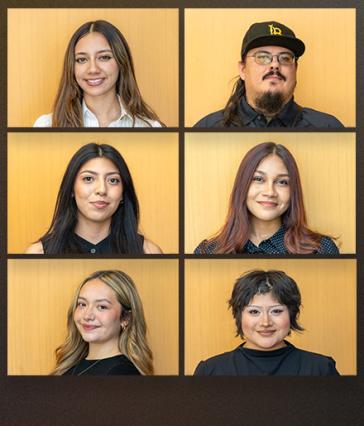
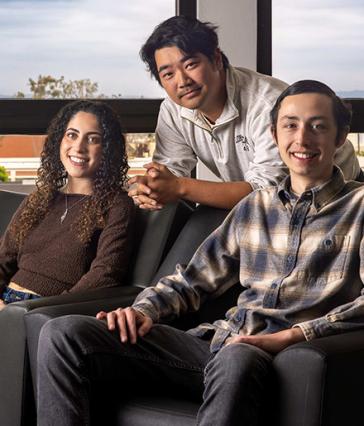
Rivas is among the Cal State Long Beach students contributing to “Perceptual Dialectology in California: Latinx Perspectives,” an ongoing study revealing what Spanish speakers living in the Golden State think about regional varieties of the language and its distinctive blend with English – Spanglish.
Terms like “Valley Girl” or “Surfer Dude” can recall notions of how some Californians talk, or at least how listeners perceive the quirks of California-style English. A Beach student’s realization that prior research into this phenomenon omitted the Latine experience inspired this study, so CSULB’s work promises a more comprehensive understanding of California’s linguistic culture.
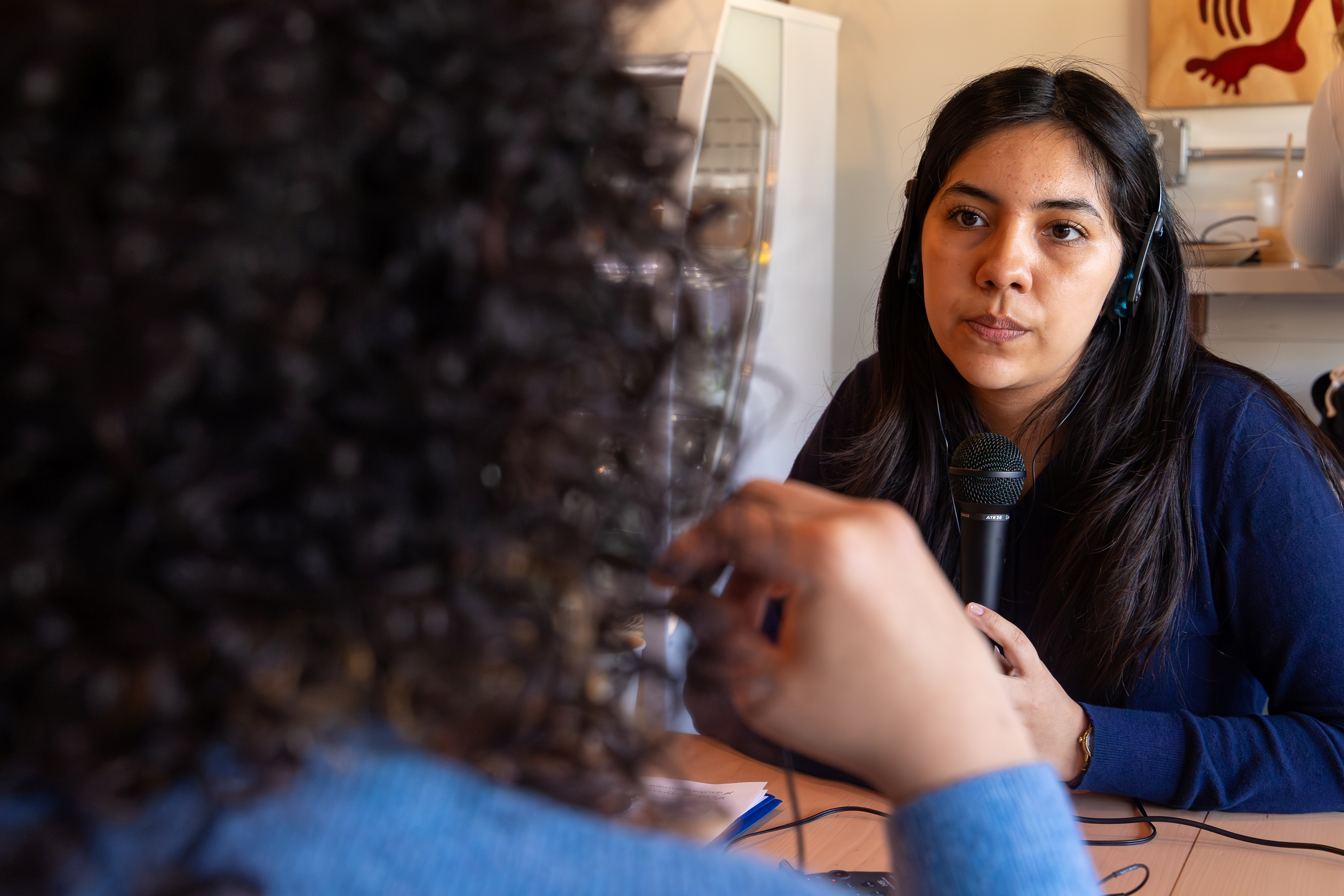
Students immerse themselves in field research, interviewing Spanish speakers and gathering information for the team’s geography specialists. Their goal is to use geographic information systems (GIS) software to create a map displaying how Spanish varies throughout the state.
Conceptually, researchers are venturing into new territory.
“It’s something that’s not widely used,” said Kathy Chavarria ‘22, a graduate student seeking a Master of Science in Geographic Information Systems. “We’re hoping that can lead to more frequent collaboration between the Linguistics Department and Geography Department with GIS.”
Community conversations
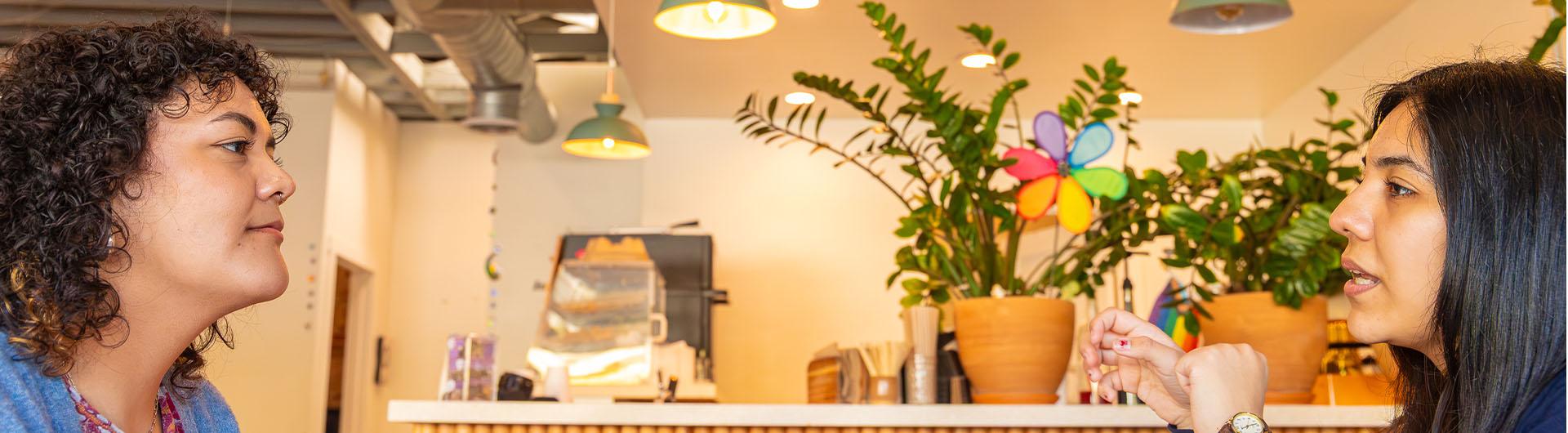
People sharing a common language can hear more than the dictionary definitions of words when encountering dialects. Itxaso Rodriguez, associate professor of linguistics, explained how this is known to work among English speakers: Surfer-inspired vernacular lends to the impression that coastal Californians are a perpetually chilled-out populace. Bay Area residents tend to be more proper, but that leads to a reputation for being “hella boring.”
CSULB researchers are similarly assessing perceptions of Spanish dialects on dimensions of coolness and correct usage, she said.
Students have completed some 250 interviews since spring 2024, Rodriguez said. Los Angeles-style Spanish scores highly for coolness in part because it blends influences from several Latin American countries. The top influences are Mexico, El Salvador, Guatemala and Colombia.
Interviews also associate Los Angeles with Spanglish, a mix of English and Spanish that younger speakers understand as a common bond for people living in a bilingual world.
“They feel like Spanglish is a way for them to belong,” Rodriguez said.
Common Spanglish words include “lonche,” used in place of English’s “lunch” or Spanish’s “almuerzo,” said Kathy Chavarria, a graduate student in the Master of Science in Geographic Information Science program. Another is “troca,” replacing “truck” or “camioneta.”
Rivas, a first-year graduate student in English literature who joined the project as an undergraduate, said Spanglish should not be mistaken for people falling back on their primary language while learning a new one. It is a distinct, comprehensive way of speaking.
“If you’re using Spanglish because you have a firm grasp both languages, and you’re using it to flex a certain muscle or show cultural knowledge, it’s cool,” Rivas said.
The film “Stand and Deliver,” set in an East Los Angeles high school, is among the better media representations of Spanglish, said Rivas, interested in teaching English literature at the college level after completing her master’s.
Mapping dialect
Even lawyers, at least some of them, see Spanglish as a source of cultural cachet. Rodriguez snapped a picture in 2023 of a Long Beach Transit bus, adorned with an ad for a Southern California law firm declaring “Líderes, desde antes que el Spanglish fuera cool.” That translates to “Leaders, since before Spanglish was cool.”
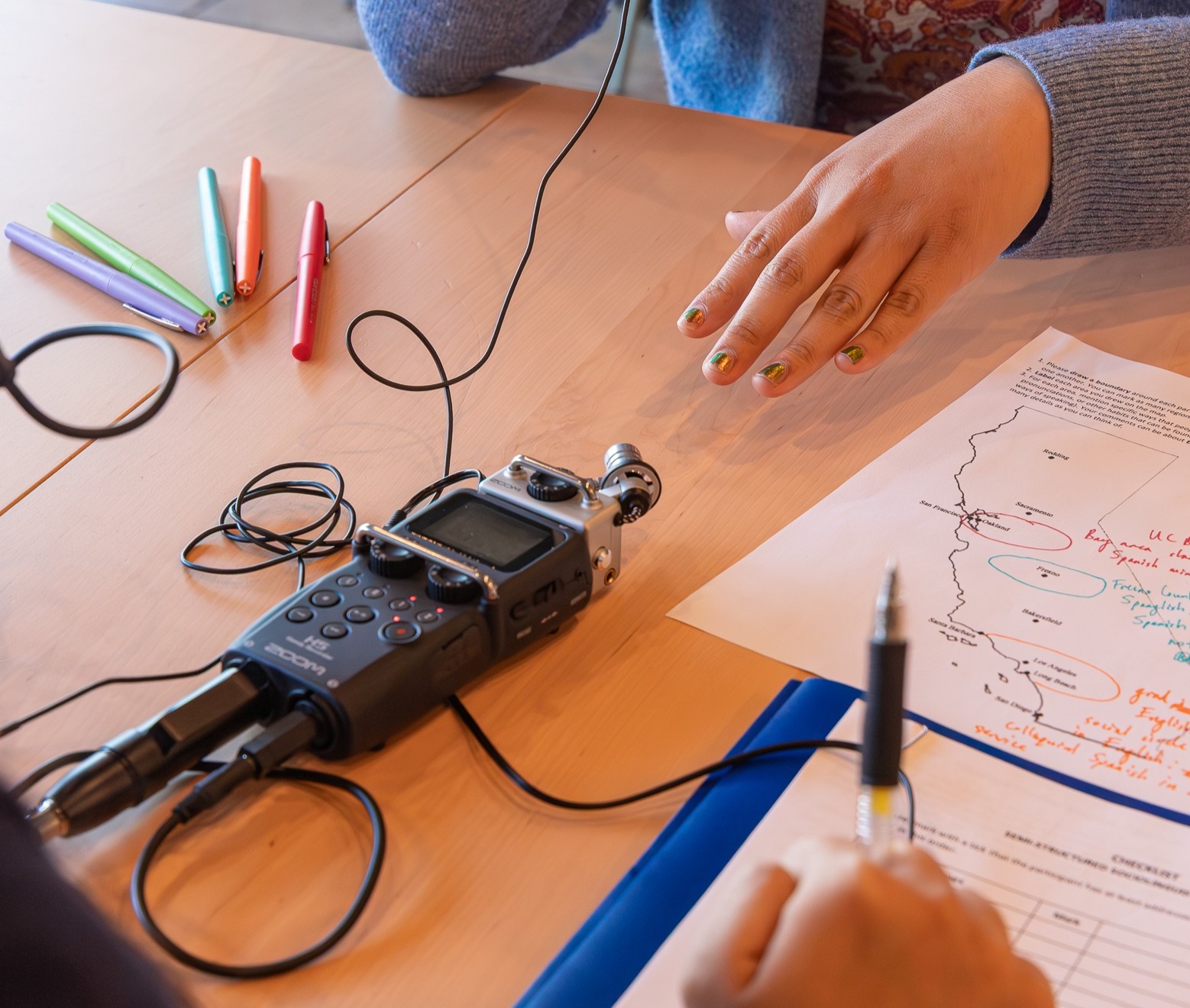
Collecting opinions from a broader swath of Latine California, Rivas and other students invite interviewees to attach their opinions to California’s geography. Participants mark up a map of the state with their impressions of regional Spanish.
These maps are relayed to geography-minded students like Chavarria. They draw from hand-annotated maps to code digital files in ArcGIS, widely-used GIS software. The goal is to create a heat map displaying how Latine Californians perceive regional Spanish.
Although the work is still in progress, students have already attended conferences in Michigan and Texas to discuss their work. They are also preparing to expand the study, Rodriguez said.
Beach students have so far focused on Southern California speakers. The next phase will be to partner with Northern California researchers to add more communities’ perspectives to the data, leading to a more inclusive knowledge of how Californians communicate.
Add your voice to CSULB’s survey
Is Greater Los Angeles really home to California’s coolest Spanish dialect? Let CSULB researchers know what you think. If you have lived in California for at least one year and are over the age of 18, you can go online and request to be included in the survey.