




Mathematics Colloquium
Upcoming Colloquium
Fast Methods for Forward and Inverse Problems: Element Learning, Sampling, and Experimental Validation
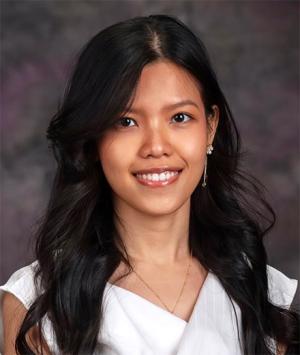
Dr. Thu Le, University of Wisconsin-Madison
October 23, 2026
12:00pm-1:00pm in FO3-200A
Abstract
Machine learning (ML) is increasingly explored as a low-cost surrogate for traditional solvers in forward and inverse problems governed by partial differential equations. Forward problems determine a system’s response from known model parameters, while inverse problems recover information about these parameters from measurements of the system’s response. However, a common drawback of many ML approaches is the loss of reliability and interpretability. This talk presents approaches that use ML to accelerate computations and improve reconstructions for these problems while retaining desirable properties of well-established numerical methods. For forward problems, we introduce element learning (EL), an ML framework built on finite element-type methods. Neural networks are trained only on a reference element and then reused to accelerate the computation of solution operators throughout the computational mesh. While many ML models have difficulty with steep gradients that arise in many applications, EL can resolve such features effectively through hp-adaptive mesh refinement. We also consider ML approaches for solving inverse problems, focusing on inverse scattering problems. These problems are challenging due to their ill-posed nature. We discuss a stable sampling-type approach and its integration with ML to accelerate and improve reconstructions from limited data. Numerical results using synthetic and experimental data are presented to demonstrate the effectiveness of these methods.
Biosketch
Thu Le is a Van Vleck Assistant Professor in the Department of Mathematics at the University of Wisconsin–Madison. She earned her Ph.D. in Mathematics from Kansas State University in 2024. Her research focuses on computational inverse problems and imaging, inverse scattering and source problems associated with partial differential equations, scientific machine learning, deep learning, and data science.
About the Colloquium
The Mathematics Colloquium is a unique opportunity for students to learn about new developments in mathematics and what mathematics and statisticians do after they graduate. Hosted by the Department of Mathematics and Statistics at California State University, Long Beach, the weekly meetings invite guests from universities, research laboratories, and industry to present and discuss current topics in mathematics. All students are encouraged to attend.
Schedule
The following schedule is for Fall 2026.
| Date | Title | Speaker and Affiliation |
|---|---|---|
| October 23, 2026 | Fast Methods for Forward and Inverse Problems: Element Learning, Sampling, and Experimental Validation | Dr. Thu Le, University of Wisconsin-Madison |
| October 30, 2026 | TBA | Tryphon Georgiou, UC Irvine |
| November 6, 2026 | TBA | Anton Bernshteyn, UCLA |
| November 13, 2026 | TBA | Tom Gannon, UC Riverside |
| November 20, 2026 | TBA | TBA |
| December 4, 2026 | TBA | TBA |
Previous Colloquia
| Date | Title | Speaker and Affiliation |
|---|---|---|
| October 2, 2026 | Disrupting Deficit Narratives about Multilingual Learners (MLLs) in Math: Tensions and Opportunities | Dr. Anna Gustaveson, Radford University |
| September 25, 2026 | Quantum graphs and associated C*-algebras | Dr. Lara Ismert, University of New Mexico |
| September 11, 2026 | Implementing the Analytical Geometry Approach to Linear Trigonometric Inequality Problems | Dr. Abdullah Kurudirek, Al-Naji University, Iraq |
| September 4, 2026 | Curve counting in enumerative geometry | Dr. Reginald Anderson, UC Irvine |
The Mathematics Colloquium Archive has the colloquia from previous semesters.
Colloquium Committee
For Spring 2026:
- Dr. Pavneet Kaur Bharaj
- Dr. Dan Kaplan
- Dr. Kathryn McCormick
