When home is uncertain, new support reaches CSULB students
For many college students, staying in school can mean a hard choice: keep up with classes or work enough to keep a roof overhead. A 2025 survey of undergraduates across 22 states found that more than 1 in 3 reported housing insecurity.
At Cal State Long Beach, Basic Needs is helping ensure students don’t have to face that choice alone — and two new efforts are expanding that work. A Conrad N. Hilton Foundation grant will help the university proactively reach students who are unhoused or facing housing instability, while a partnership with CSU Dominguez Hills and Interval House expands housing support for students with families.
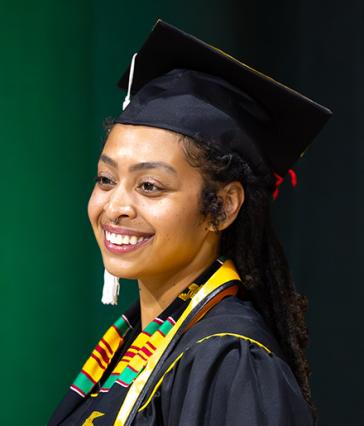
For graduate student Tenae Aubry, the new partnership came at a critical moment. Halfway through her first year, Aubry’s grandmother died — leaving behind a mortgage that Aubry, her mother and brother could no longer afford. They called the bank repeatedly and filled out rental applications but could never meet the minimum income and credit requirements.
Aubry tried to downplay the crisis, even after the foreclosure sign went up and her schoolwork fell behind. Angela Locks, chair of the Department of Educational Leadership, saw through the reassurances.
“I kept saying, ‘I’m fine, Dr. Locks, I’m fine, I got it,’ you know?” Aubry recalled. “She's like, 'But you don’t. I don’t want you to have it. I need you to get some help.’"
Locks sent her to Basic Needs, where the partnership with Interval House — a nonprofit that works with landlords willing to overlook income and credit scores — opened a door. A little over a month ago, Aubry got the keys to an apartment large enough that her family could come, too.
“I was able to finally have a full night’s sleep without a panic attack," she said. And the best part? “I’m a student again.”

Help that comes looking
Among the most comprehensive assistance programs in the CSU system, Basic Needs was one of the first to attempt College-Focused Rapid Rehousing. During the 2025-26 school year, the center secured housing for 37 students, rent subsidies for 49 and emergency grants for 563.
The Hilton Foundation grant pushes the model further.
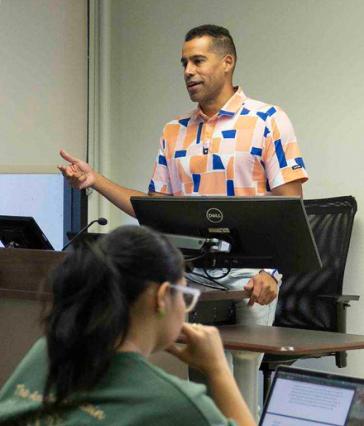
Basic Needs Director Danielle Muñoz-Channel said the plan is as simple as it is rare: identify students ages 18 to 24 who are unhoused or facing housing instability; have significant financial need; and are multi-marginalized — facing barriers in more than one category.
Then, rather than wait for those students to walk in, the team reaches out first.
“They are going to get an email that says, ‘Hi, I’m your case manager. You’ve got money in your account,’” Muñoz-Channel said. “I want to just tell the student: ‘We know who you are. We're here to help you. And we want to make it easy for you.’”
'You have to think about your survival'
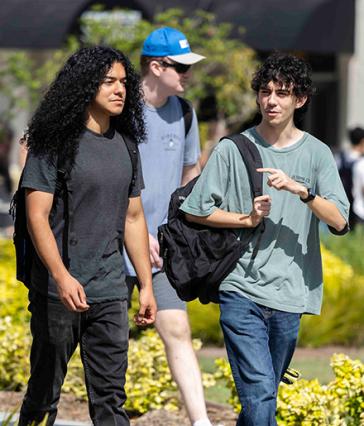
That kind of email would have been a godsend for Justin Stock, a CSULB journalism major who moved into his car last summer after failing to get approved for an apartment.
“I was trying to save money by moving into my car,” he said, “but it was really uncomfortable — and not safe.”
Within hours of visiting Basic Needs, he had been set up in a hotel room. Within days he had a room at Parkside North, where he stayed until he qualified for his own studio apartment this fall.
Stock is now an executive producer at BTV News, editor-in-chief of one of the campus magazines and an intern running the Journalism and Public Relations Department’s social media account.
“I didn’t want to have to drop out," he said, but “you have to think about your survival more than your education.”
Housed — and graduating
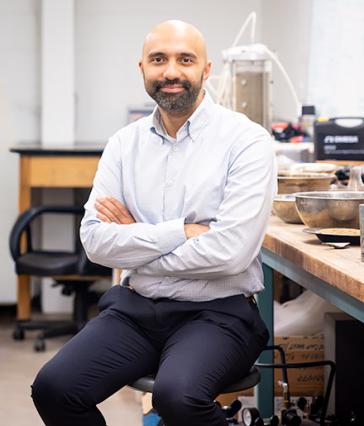
Social Work Professor Rashida Crutchfield, executive director of the Center for Equitable Higher Education, said Aubry’s story underscores the findings of her three-year evaluation of the program.
“People often are afraid of dealing with homelessness because housing just feels too big,” Crutchfield said. “But what we’re seeing is that those students are getting housed, most of them are staying housed beyond the program — and they’re graduating.”
None of it would work, Muñoz-Channel said, if the students didn't do the hard part.
“What impresses me is that they are so committed to their future selves,” she said. “They know why they want this degree … The goal will never change, even if the path there does.”
That is certainly the case for Aubry and Stock, both of whom are scheduled to walk across the Commencement stage this spring — diplomas in hand, keys in pocket, their futures bright.