An inaugural queer studies scholarship, OUTober events and more Beach achievements
Making Waves is a monthly column that celebrates accomplishments of the CSULB community.
Scholarship winner centers the Golden State’s LGBTQ+ history
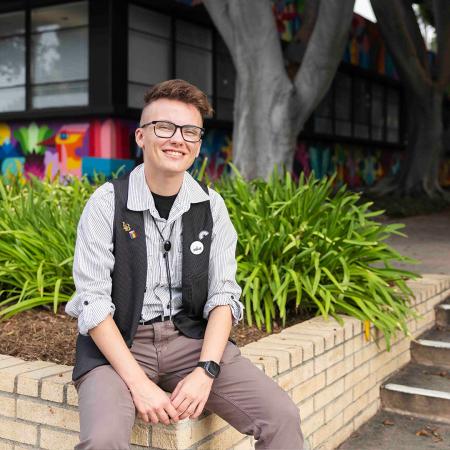
Kass Malcor ‘26, the inaugural awardee for the Susan M. Rigney Scholarship, has returned to The Beach to research the history of HIV and AIDS in California. Their studies build on an award-winning 2025 paper, “Moralization and Mystification: Rhetoric of California AIDS Propositions, 1986-1988,” which contrasted attempts to enact laws at the polls with municipal ordinances intended to protect civil rights and public health.
Malcor completed their bachelor’s degree in history, minoring in queer studies. They are now pursuing a master’s degree in history. The Rigney Scholarship is open to students of any major who complete a CSULB course in queer studies. The scholarship’s namesake is retired therapist Susan Rigney ‘81. In 2025, Rigney provided gifts to CSULB establishing the scholarship and creating an endowment for the LGBTQ+ Resource Center.
October is LGBTQ History Month. For Beach events celebrating OUTober, visit the campus’s Events & Orgs page.
Classics professor wins national award for outstanding scholarship
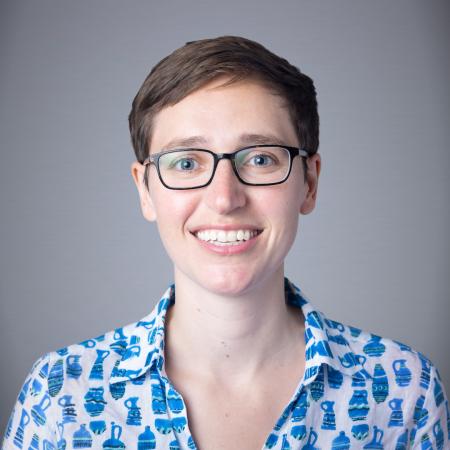
Debby Sneed, an assistant professor of classics, recently received the national Barbara McManus Award for Outstanding Scholarship. The annual award is presented by the Women’s Classical Caucus, a national organization that, since 1971, has advocated for the representation of feminist and gender-informed perspectives in the study and teaching of women in classical antiquity.
With co-author Erin Lawrence-Roseman, Sneed published “A Dwarf Maiden on the Athenian Acropolis: Disability and Dedication in the Archaic Polis” in The Art Bulletin, one of the most prestigious journals for art and archaeology in the field. Through the article, Sneed and Lawrence-Roseman challenge the assumptions that classical art historians have made for centuries about ancient art representing an “ancient Greek ideal” by arguing that the well-known statue in question was intended to be a realistic representation of an elite maiden with dwarfism.
History professor examines Russian diaspora in Mexico and Southern California
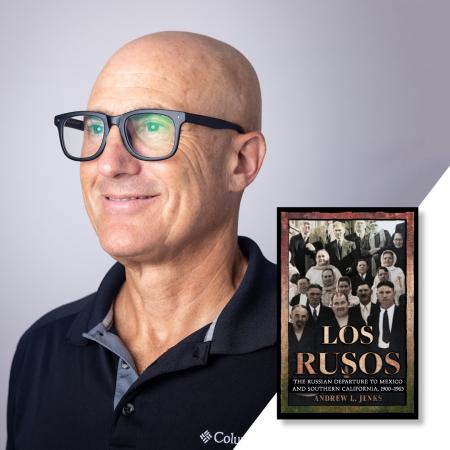
Andrew Jenks, a professor of history, recently published a book titled “Los Rusos: The Russian Departure to Mexico and Southern California, 1900-1965” (Northern Illinois University Press). “Los Rusos” tells the little-known story of the Russian diaspora in Southern California and Mexico. During the first half of the 20th century, thousands of Russians emigrated to Mexico as refugees, spies, political exiles and diplomats, and many wound up in Southern California.
Jenks examines the processes by which the immigrants acquired new identities as they attempted to escape marginalization and persecution. The book challenges the notion that migration from war and revolution was a tale of escape to freedom. The reality was more complex, and involved human smuggling, indentured servitude, persecution by new host societies and economic exploitation.
Professor’s book explores democracy in Mexico, 1920s-30s
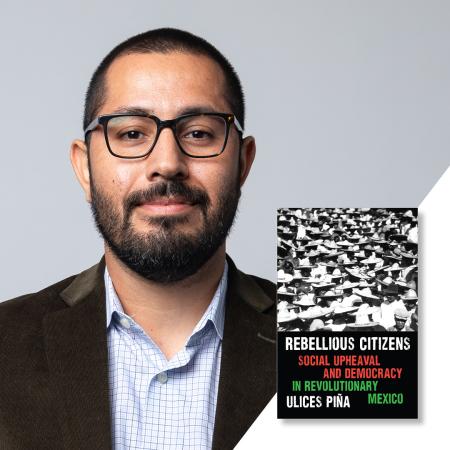
Ulices Piña, an associate professor in history, recently published a book, titled “Rebellious Citizens: Social Upheaval and Democracy in Revolutionary Mexico” (University of Nebraska Press). In his book, Piña demonstrates that democracy in Mexico has never been the exclusive domain of elites, nor confined to the ballot box. Focusing on the aftermath of the Mexican Revolution of 1910-20, Piña explores how citizens forged a legitimate democratic culture in the crucible of three successive social upheavals that shook the established social order in the central western state of Jalisco during the 1920s and 1930s — a formative period in the nation’s political history.
Piña explains how ordinary Mexicans actively shaped the political process, made their own history and fought for equality in the country’s long fight for democracy.
Employee of the Month: Michelle Ramirez
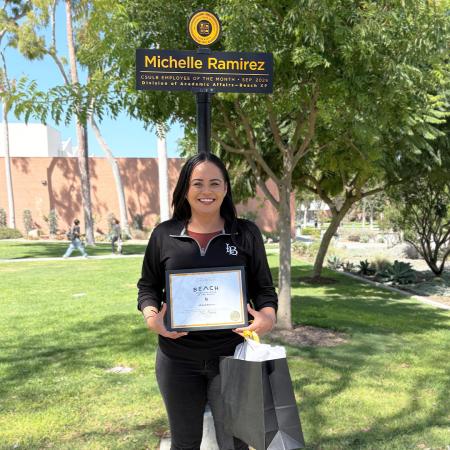
Michelle Ramirez ‘13, a Beach XP program analyst since 2023, has been named CSULB’s Employee of the Month for September 2026. Short for Beach Experience, Beach XP is a first-year student community program, designed to support the transition of incoming students into college life.
“As program analyst, Michelle has become the backbone of the Beach XP program,” said Adrian Camacho, executive coordinator for undergraduate studies and academic advising, in his nomination. “From managing data analytics and fiscal operations to overseeing student timesheets, supporting student-led events and coordinating class scheduling with Enrollment Services, Michelle has been in every aspect of Beach XP.”
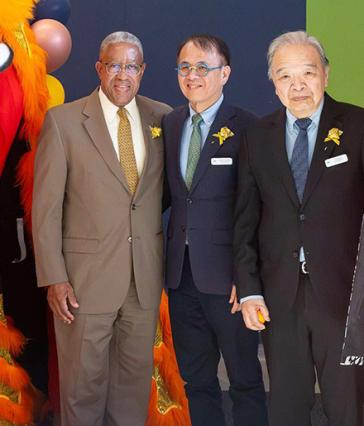
Candice Chick, director of Beach XP, noted Ramirez’s “extraordinary dedication, adaptability and heart-centered work with Beach XP” in her nomination. Ramirez was honored Sept. 15 at Friendship Walk, joined by President Loren J. Blanchard, Vice Provost of Planning Dhushy Sathianathan and other campus colleagues.
Have an item for Making Waves? Send your submissions to Richard Chang.