Where astronomy meets the dance floor: CSULB’s boldest new course
Nothing about the instructions sounds like a science lecture: Get closer. Scrunch together. Now travel. Disperse.
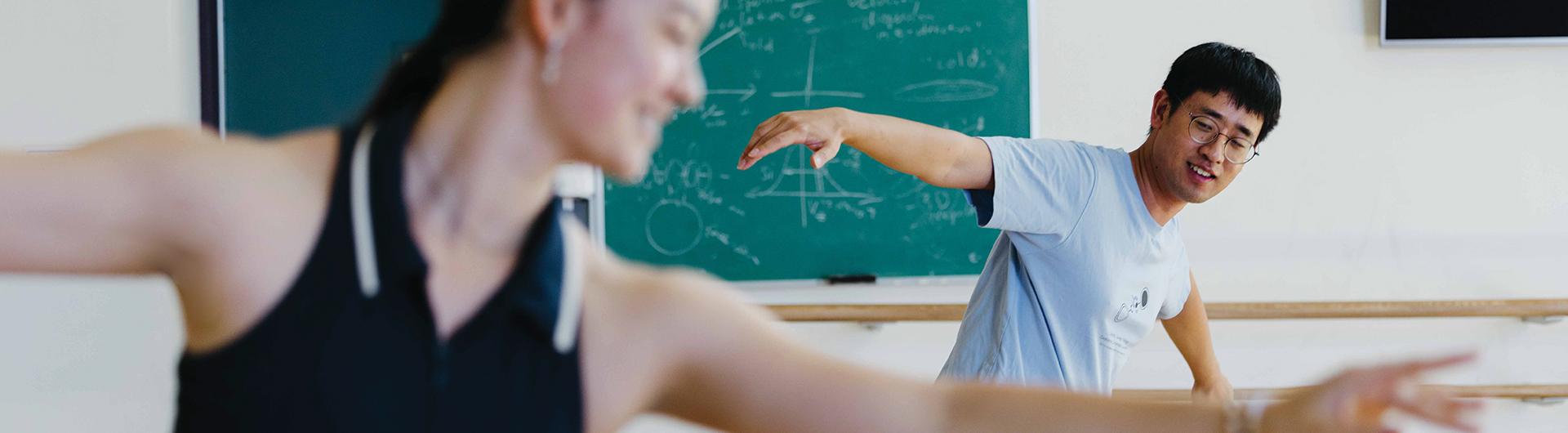
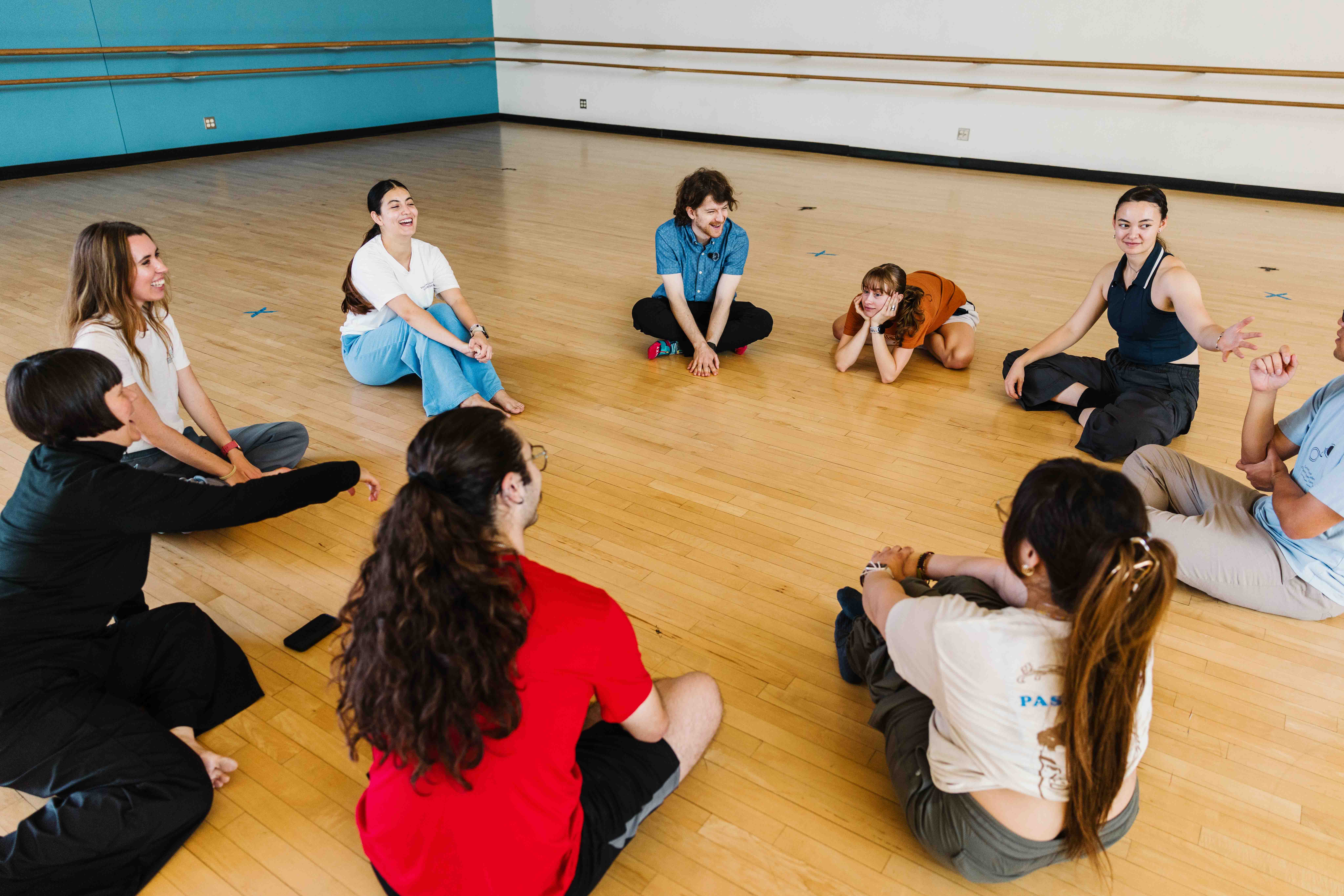
Yet, standing in the middle of Studio 6 of the CSULB Dance Building, a group of physics students are taking these cues as they clasp hands and move in a rippling circle — an attempt to improvise a density wave. This is, as it turns out, a living model of what gives spiral galaxies their shape.
"Almost every star in the galaxy will pass through a spiral arm at some point," Physics and Astronomy Professor Joel Zinn tells the students. "The arm isn't made of the same stars. . . . It's more like a traffic jam." Stars slow as they enter, then accelerate out the other side.
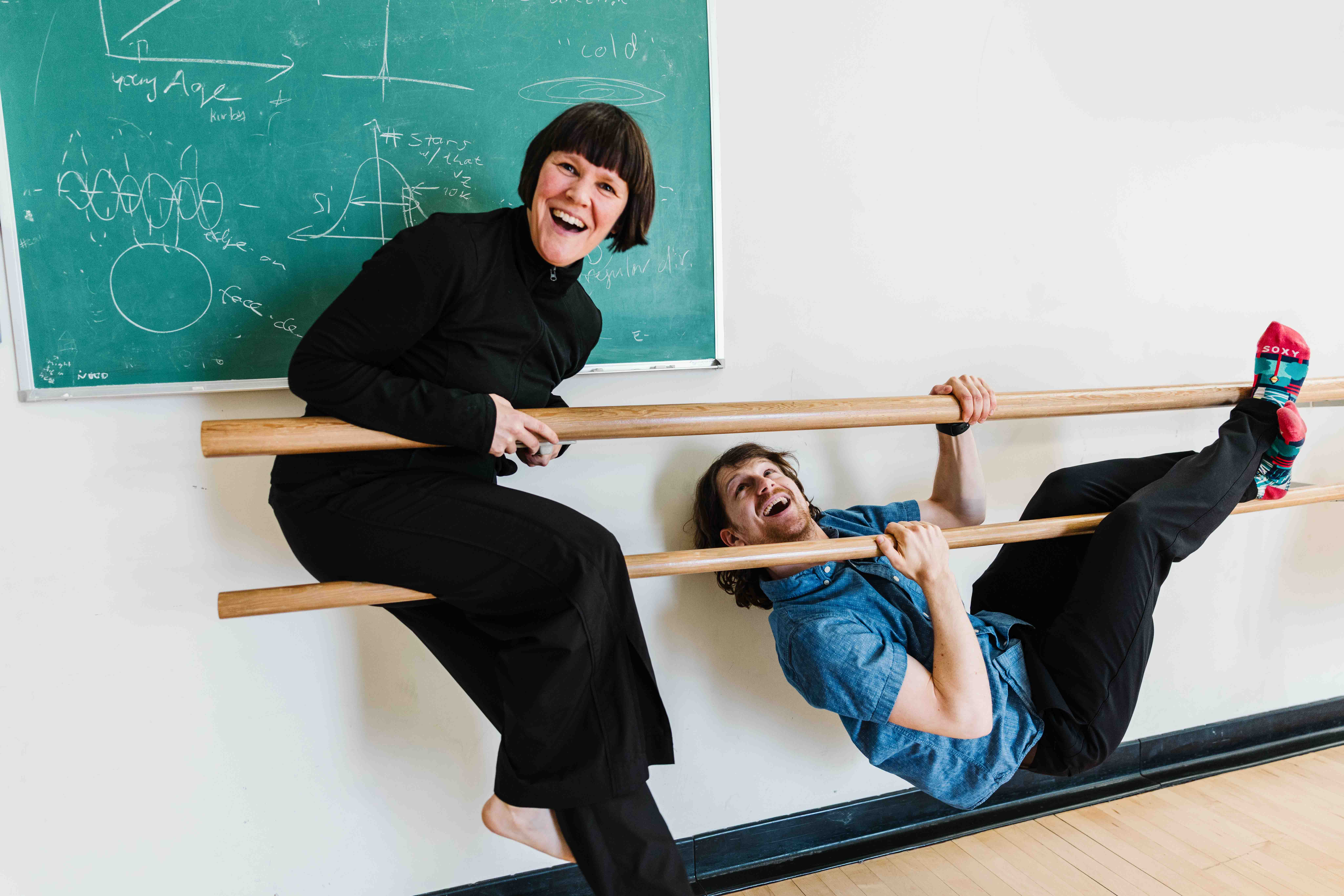
That idea — counterintuitive, hard to visualize, easier to feel — sits at the center of a new course Zinn is developing with Dance Professor Rebecca Bryant. The two received a grant to workshop a dual-disciplinary curriculum that uses movement to teach astronomy. And what's been happening in Studio 6 is exactly that: a working session to develop and test the material before it becomes a formal class.
The course is tentatively titled Galactic Bodies in Motion (ASTR 330/ DANCE 330), and both professors believe it to be the first of its kind in the country.
"So many people on campus have a relationship to dance," Bryant said — whether it's a formal background in ballet or just moving to music at a party. "Dance can be the gateway to get someone into a science class."
Two ways of knowing
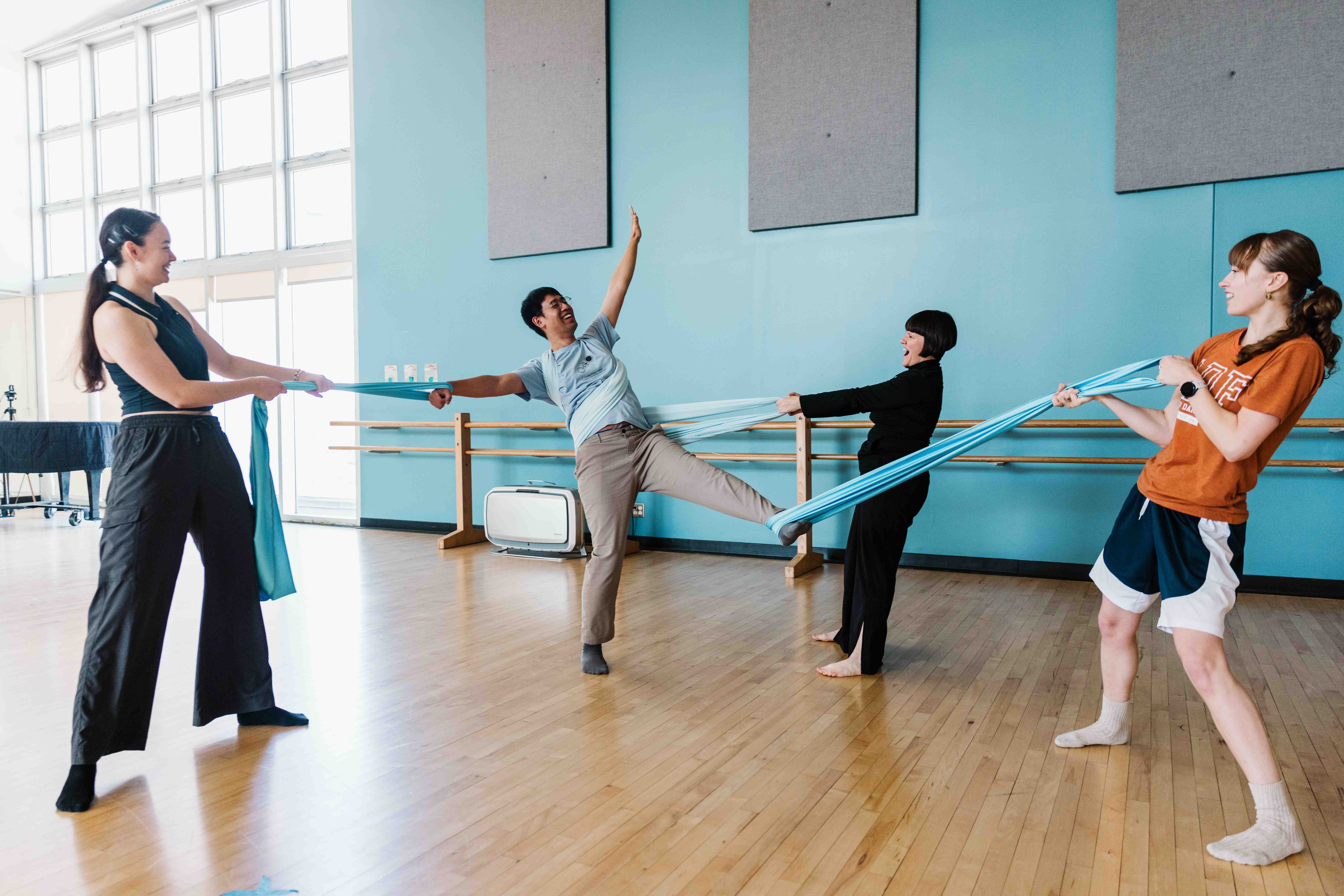
Although Zinn co-developed an early version of the course with New York-based dancer Sophia Diehl during his National Science Foundation postdoctoral fellowship, these students are the first to experience it. Acting as both guinea pigs and collaborators, the students have improvised their way through 12 movement labs — from Newton's laws through gravitational pull, Keplerian orbits, dark matter and spiral arms.
Ashlyn Yoshikawa, a fourth-year dance major, came in expecting to step outside her comfort zone, which she did. But more than that, she said, she found gaps she’d never been able to name.
Her example is Newton's third law of motion, which she used constantly in contact improvisation classes: weight sharing, pull and counterbalance. But in class, she struggled to verbalize her knowledge.
“I can use it actively in a piece,” she said. “I have that bodily understanding. But then in these sessions, I could not explain it in words or in numbers or in pictures. I'd know it, but I couldn’t explain it.”
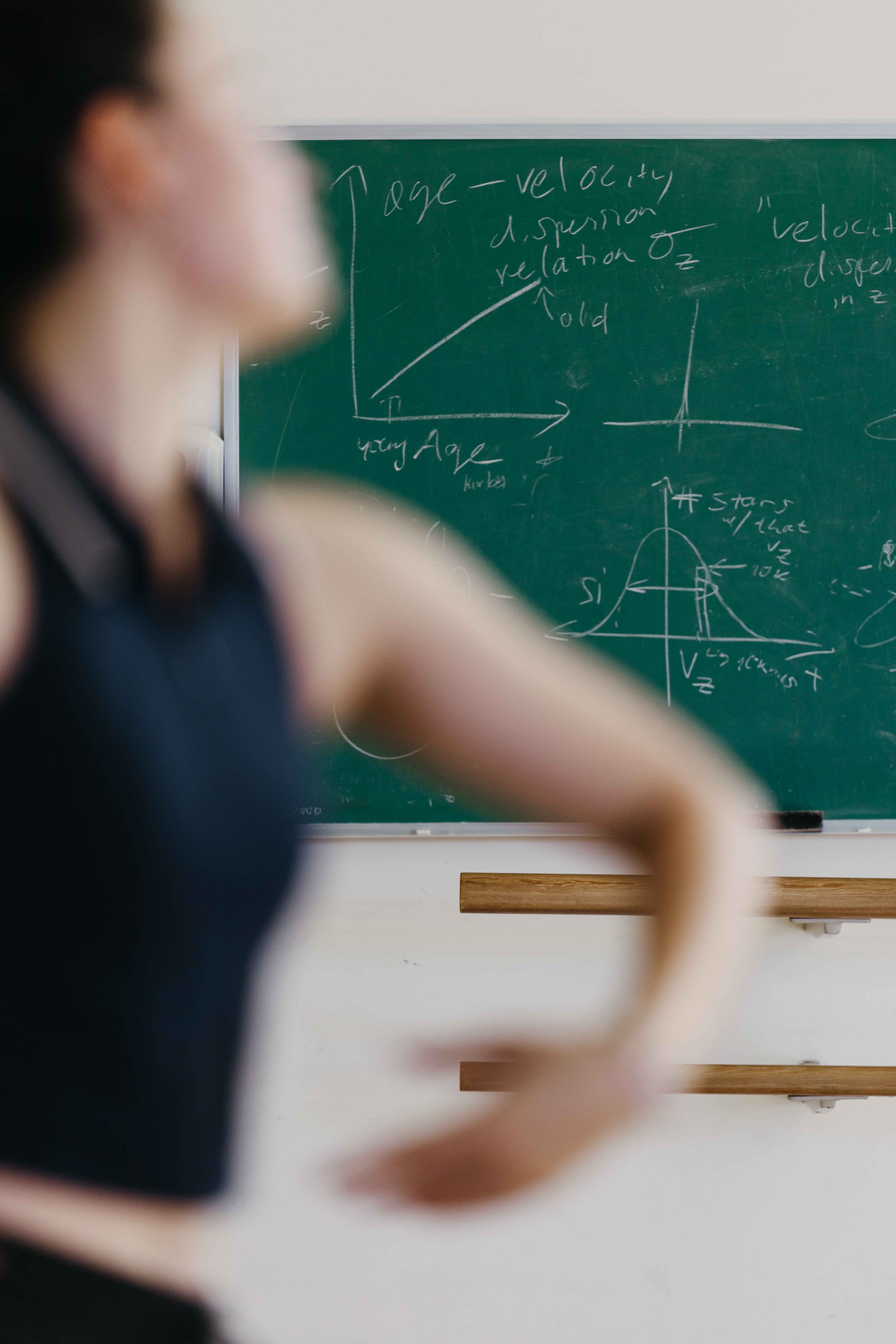
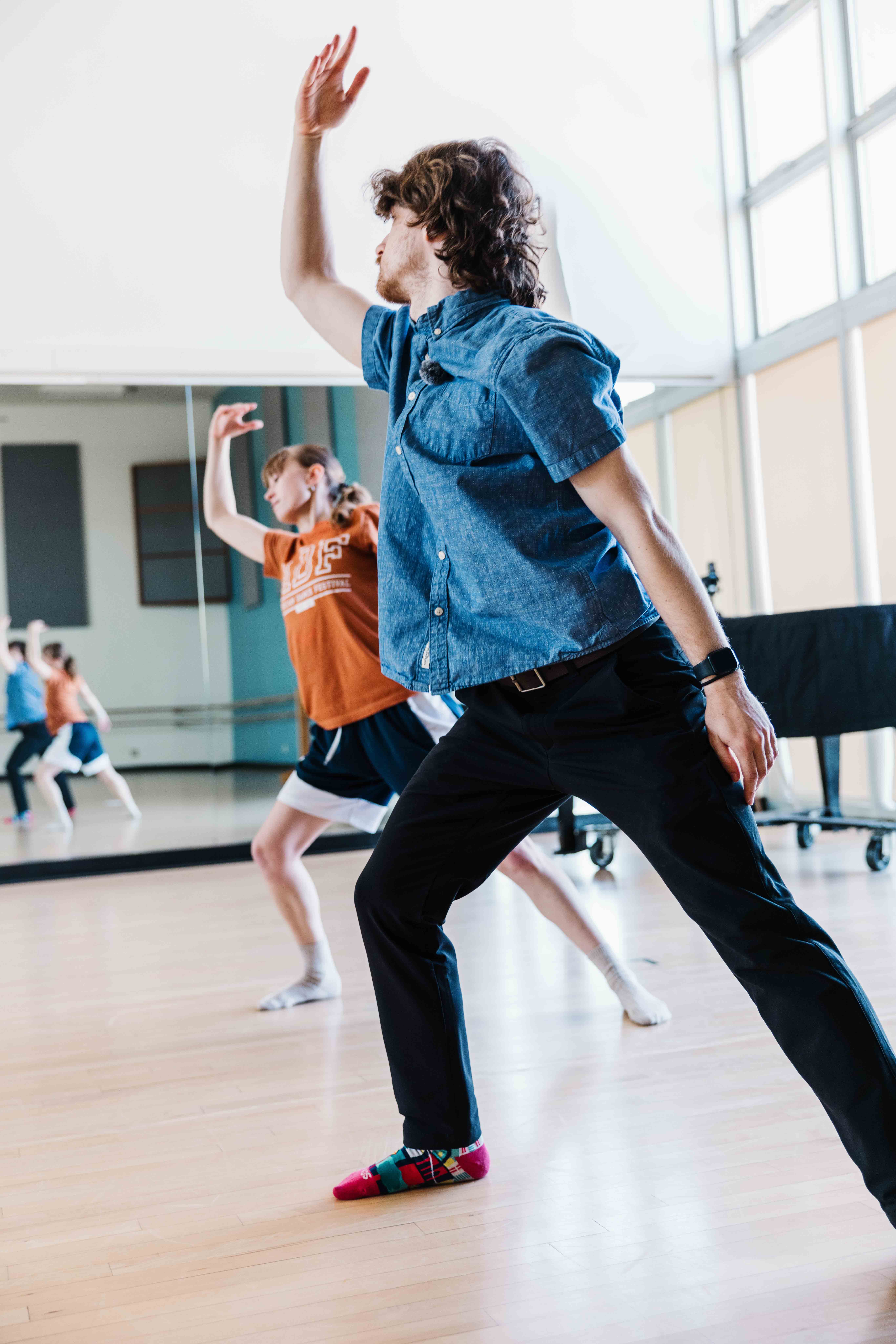
It’s not a question of intelligence, she said. It’s a question of how people experience the world.
"You're training the brain to understand the written or the visual or the theoretical; or, in dance, you're training the body to understand."
Mechanical engineering major Amanda Luyks — a dance minor — knows the gap from the other side. When she tells people in her engineering program that she dances, the response is usually confusion.
"People don't really see the purpose of the overlap," she said, adding that this class proves there is one. If Galactic Bodies in Motion counted toward General Education requirements, said Luyks, who will graduate in May, "I definitely think there would be a lot of potential for a really popular course."
Counting in beats
Back in the studio, after the spiral arm exercise, Zinn and Bryant push the group to quantify what they just did with their bodies. How would you measure the speed of the stars versus the speed of the wave? Watching their dance played back on video, the class works toward an answer: count steps per revolution, time the “compression” traveling the full circle, then compare the two.
"Speed is distance per time," Zinn tells them. "One rotation — 17 feet — measured in beats. Beats are a perfectly valid unit of time."
It was a small moment — a dance concept confirmed as a legitimate scientific measurement — that captured what the course is built to do: give students a new way into ideas that can feel out of reach.
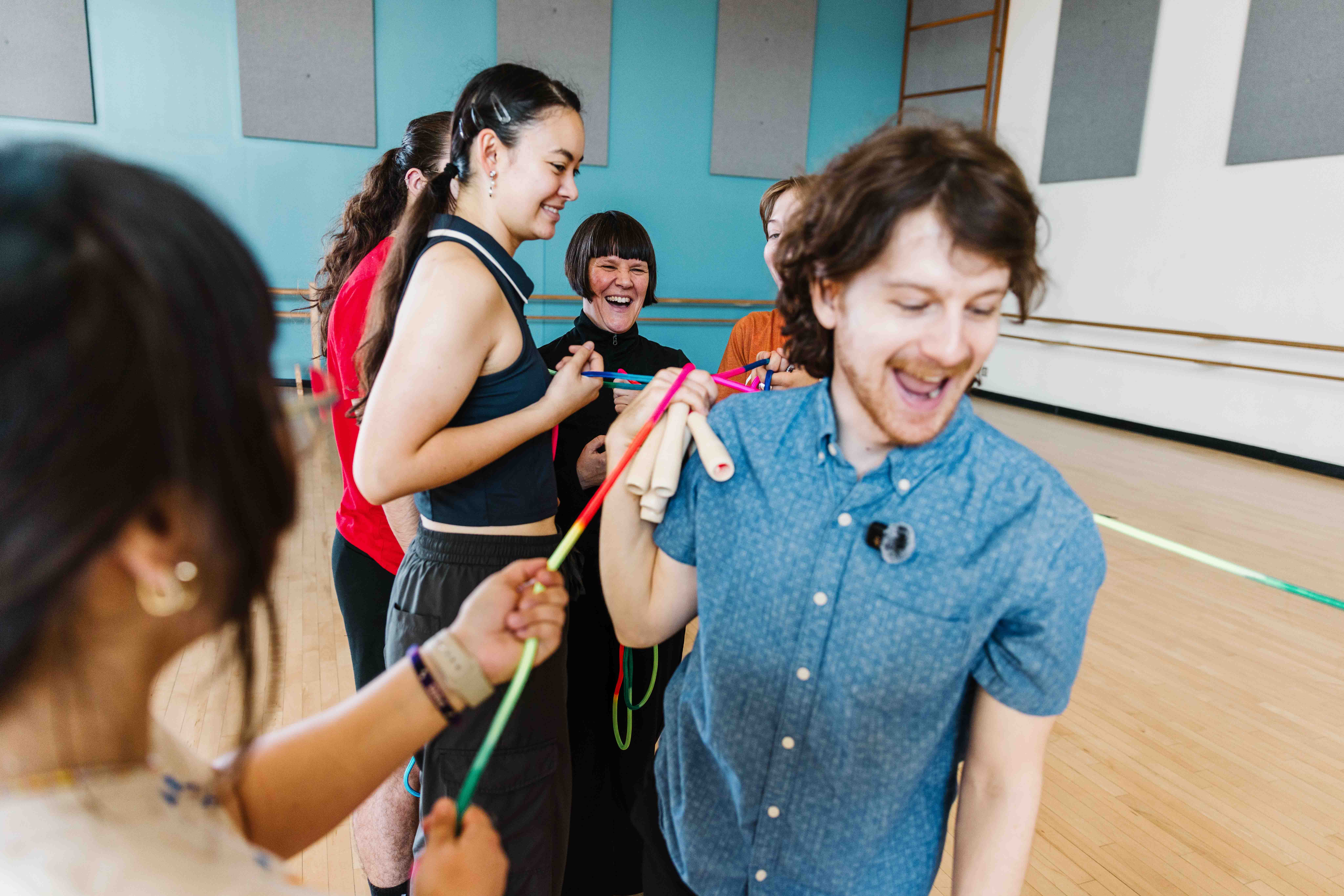
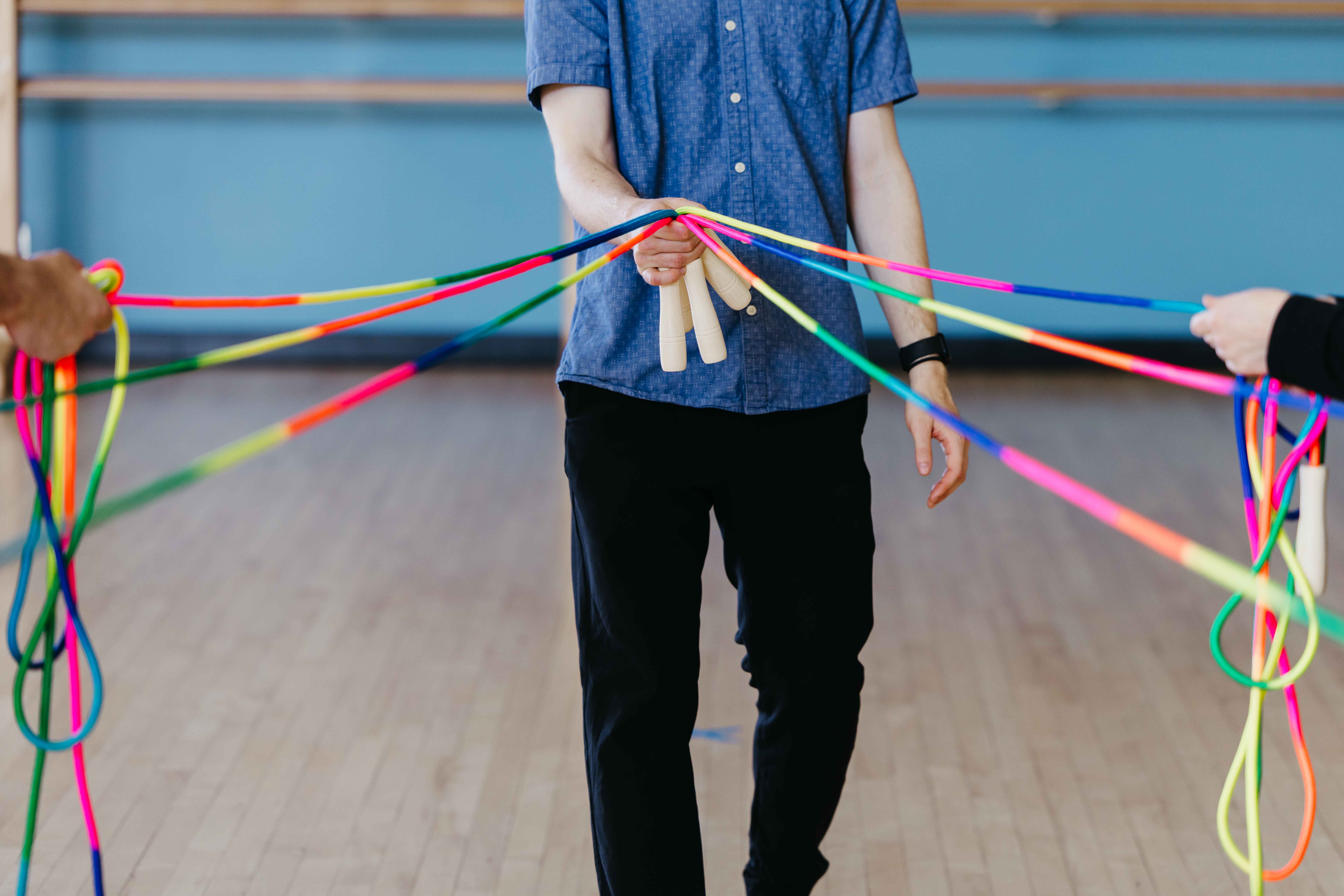
Funded through a grant from the Office of Research and Economic Development, the proposed class is moving through curriculum committees in both of their departments, Bryant said. A larger grant application would follow, she said, aimed at bringing the curriculum to other universities.
For Yoshikawa, the value is already clear.
"It's like using two different muscles," she said. "Realizing how the two understandings of the world are so separate in our society is really interesting — because to live a fulfilling life is to have both of those."