Researchers combine design, psychology to restore independence for injured veterans
Cal State Long Beach researchers are drawing upon the powers of psychology and design to investigate how technology can improve independence and well-being for veterans living with serious injuries.
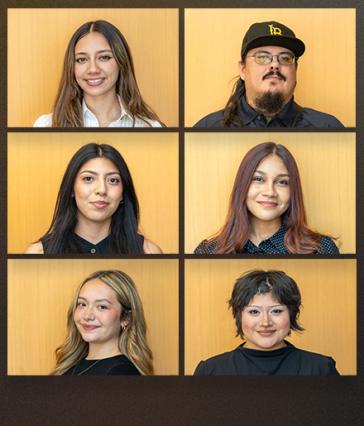
Adelynn Everitt, a fourth-year psychology student, derives motivation from the fact that her half-brother is a veteran. A student researcher with the Stress & Technology Applied Research (STAR) Laboratory, she is leading a new phase of research focused on helping veterans with spinal cord injuries and disorders.
“I want to be able to help contribute to technological innovations that are going to help support functional independence,” said Everitt, who is also minoring in human development and gerontology.
“It’s really important that we try to help improve their quality of life as much as possible.”
For about seven years, STAR Lab Director Gabriella Hancock and Sam Anvari, associate professor of graphic design, have included students in their study of a device, called an environmental control unit (ECU), that is intended to give patients more control over their daily lives. From the early stages of the project, they described their work as a way to give back to veterans.
The work unites the fields of psychology and UX/UI design with the goal of enhancing the ECU’s user-friendliness and restoring autonomy for veterans living with spinal injuries and disorders.
“It would allow them to do a variety of everyday tasks for themselves,” said Hancock, also an associate professor of psychology. “It would restore independence.”
'Literally life altering’
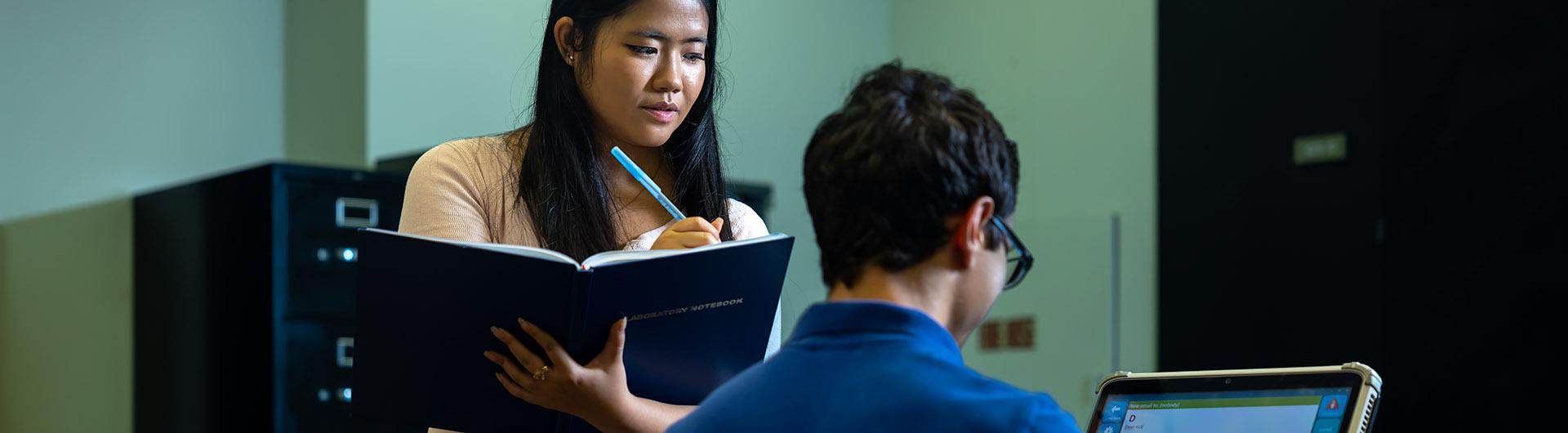
The ECU, donated to The Beach by Accessibility Services, Inc. of Florida, resembles a smart tablet. Patients can use it for everyday tasks that may otherwise require assistance, such as adjusting room temperatures, making phone calls, going online or finding something to watch.
“It could be quite literally life altering in multiple ways,” said Laura Ornelas, ‘19, '24, who participated in STAR Lab research. “Just having that ability to affect the world around you immediately, but also to interact with the world at large and have contact with people that you’re normally cut off from. We’re not meant to be in isolation, as a species.”
Ornelas served 12 years in the U.S. Army before enrolling at The Beach. The opportunity to work on research to help veterans factored in her decision to join the STAR Lab, and she is one of several students who have assessed how users interact with the ECU in different ways.
These methods include the ECU’s touchscreen, eye-tracking, voice controls and a pneumatic tube enabling users to select options by breathing.
Faculty and other student researchers, over the life of the project, have also sought input from patients and care providers at the nearby VA Long Beach Healthcare System.
Now, Everitt is interested in a doctorate in human factors psychology or community health. Human factors psychology centers on understanding how technology and systems can be designed to accommodate the ways people think, and Everitt could see herself eventually working in the medical device industry.
“If I talked to my 18-year-old self, I think I would be very surprised, but in a good way,” Everitt said.
Cross-pollination
Like Everitt, Ornelas concentrated on psychology during her time at CSULB, which led to a master’s in human factors psychology. She remains involved with a forthcoming STAR Lab paper.
“Everything I did in that lab felt like it was applied to the degree, that it actually was going to make a difference, and that’s important to me,” Ornelas said.
Looking at the research from a different angle, Anvari and his students have concentrated on what ECU users see. Their contributions have focused on making it easier for users to navigate from screen to screen, and which color and font options help users find the control options they want to find.
“This cross-pollination helped our students understand how design is not subjective, and it needs to serve a purpose,” Anvari said. “Human factors students learned the techniques and nuances that apply to art and visual design.”
Honoring Veterans at CSULB
Following the Veterans Day campus closure on Nov. 11, The Beach will host the Boba & Bloom Women Veterans Social on Nov. 12 and Bowling with Veterans on Nov. 13.