Curiosity abounds as acclaimed Shark Lab holds open house
It's been a summer of shark headlines in Southern California — sightings, beach closures, drone footage on the evening news. Some of that attention washed up at Cal State Long Beach on Saturday.
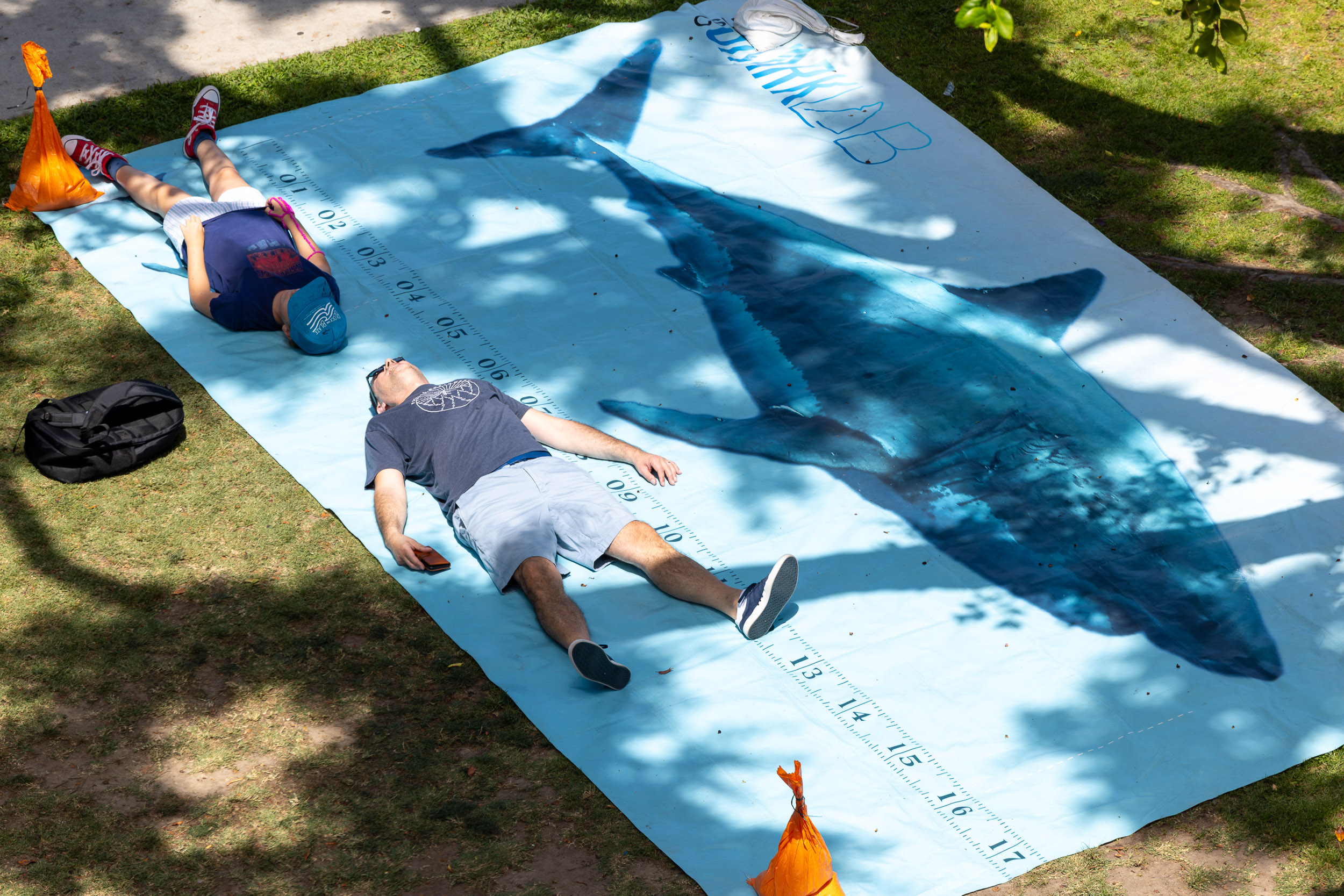
More than 3,000 people turned out for Sharks @ The Beach, the Shark Lab's annual open house, so many that organizers lost count somewhere past 2,900.
“It was packed the entire time,” said Professor Chris Lowe, the lab’s longtime director, adding that he suspects the news coverage nudged some of this year's crowd through the gate. Some visitors, he said, spent so long at the outdoor exhibits they never realized there were displays and presentations waiting inside.
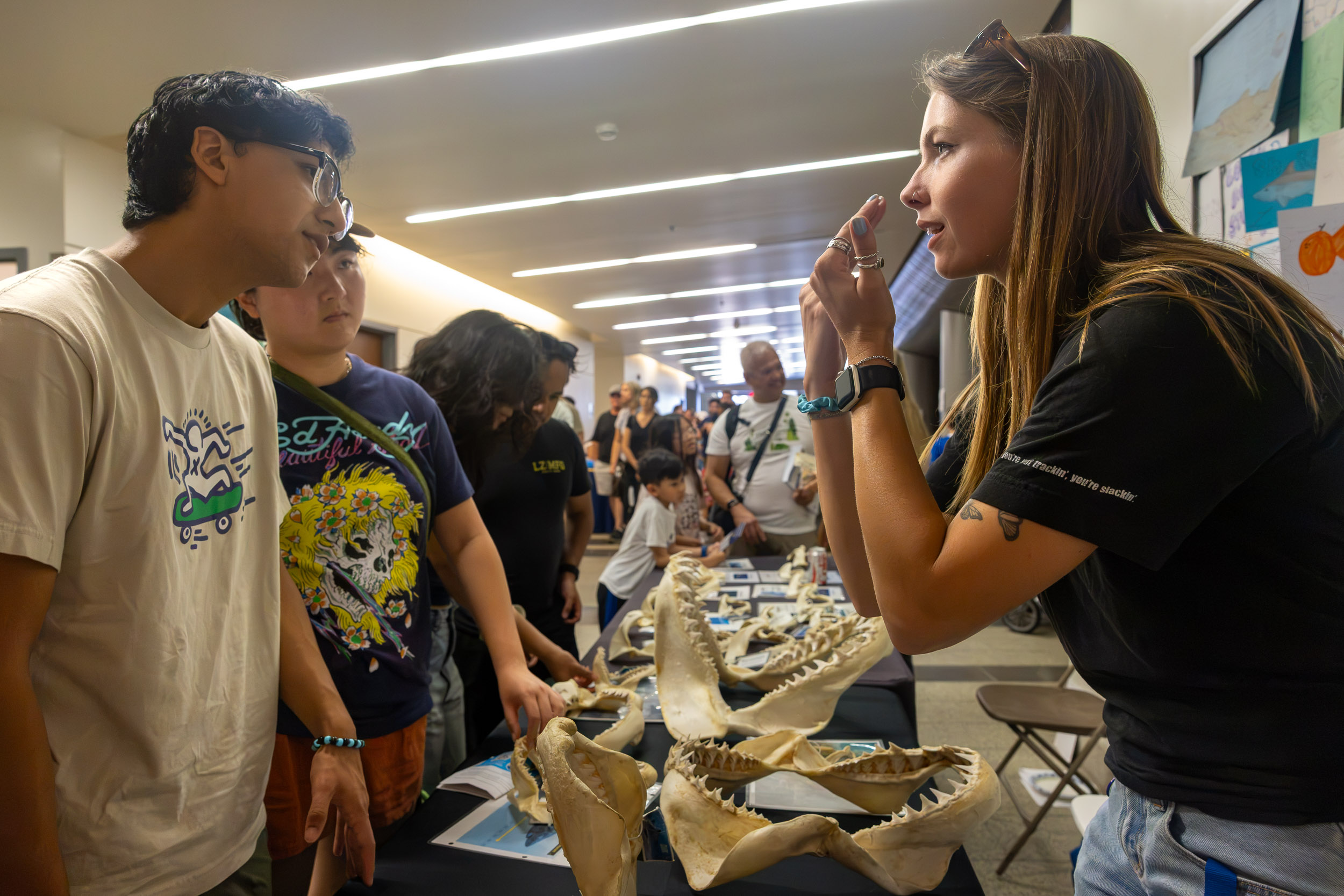
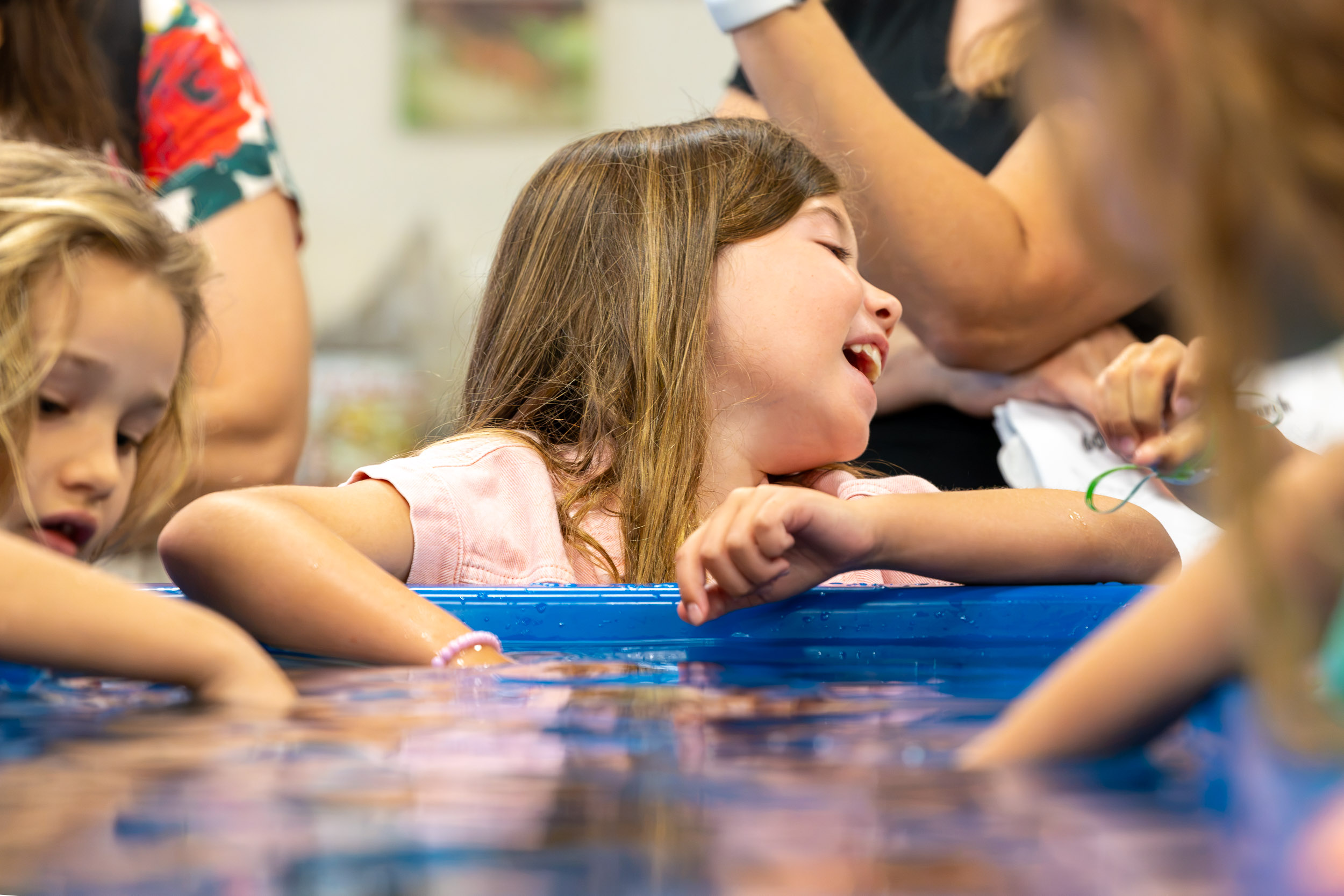
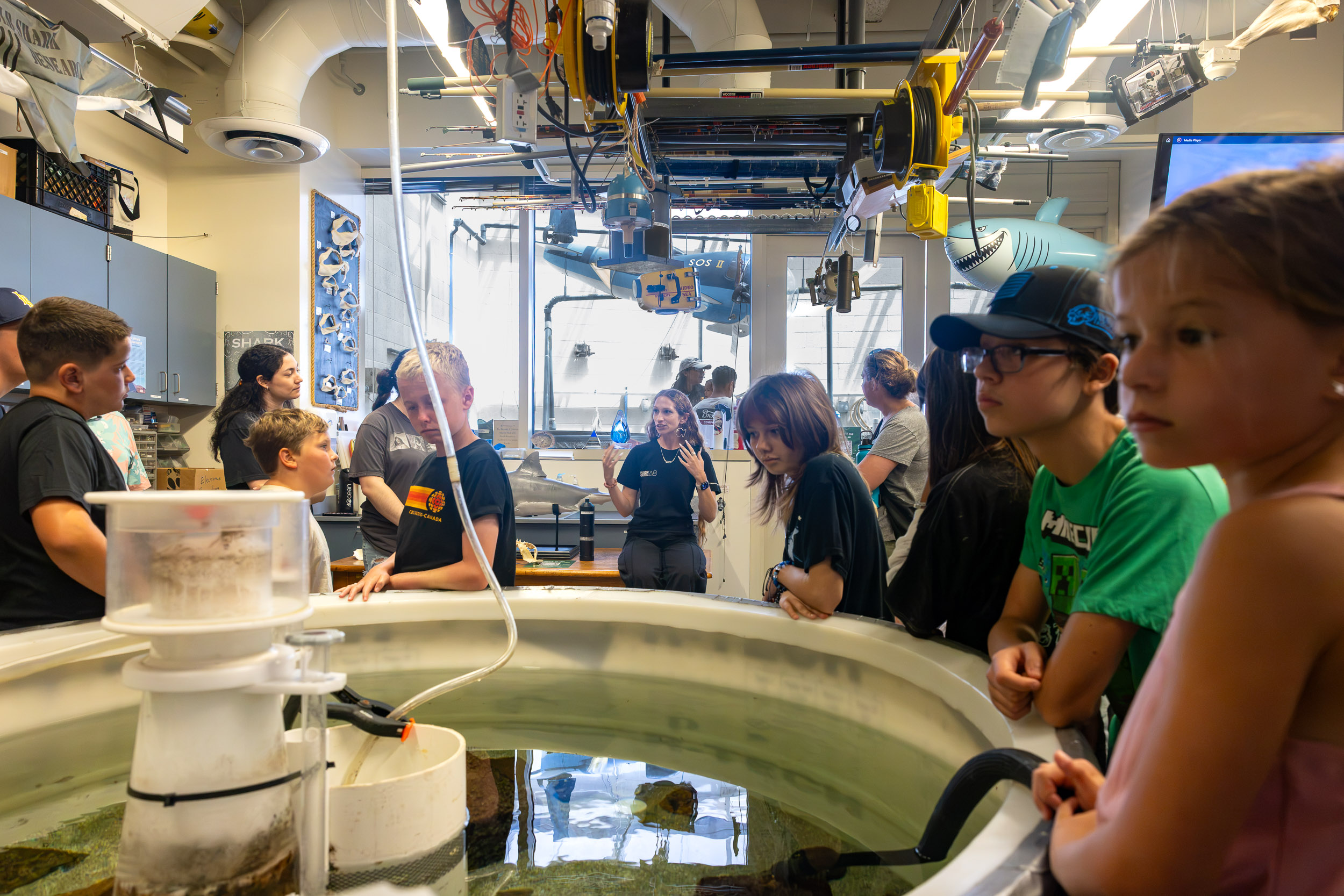
Although other marine labs were open for visitors, the big draw was, as always, the Shark Lab itself. Lines stretched down the walkway all afternoon for a look inside one of the longest-running shark research programs in the country.
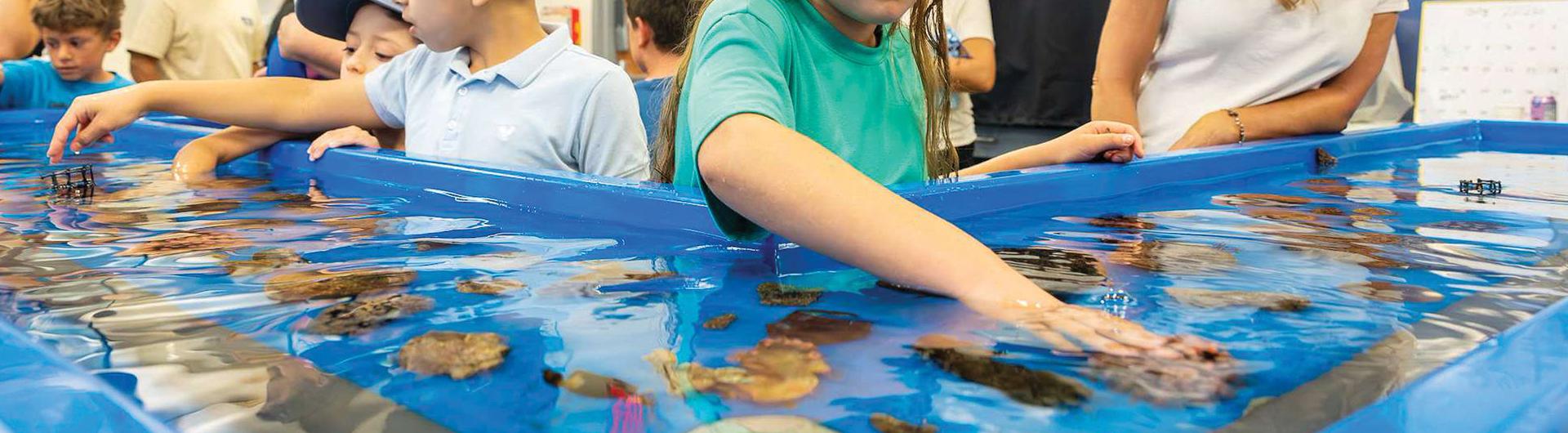
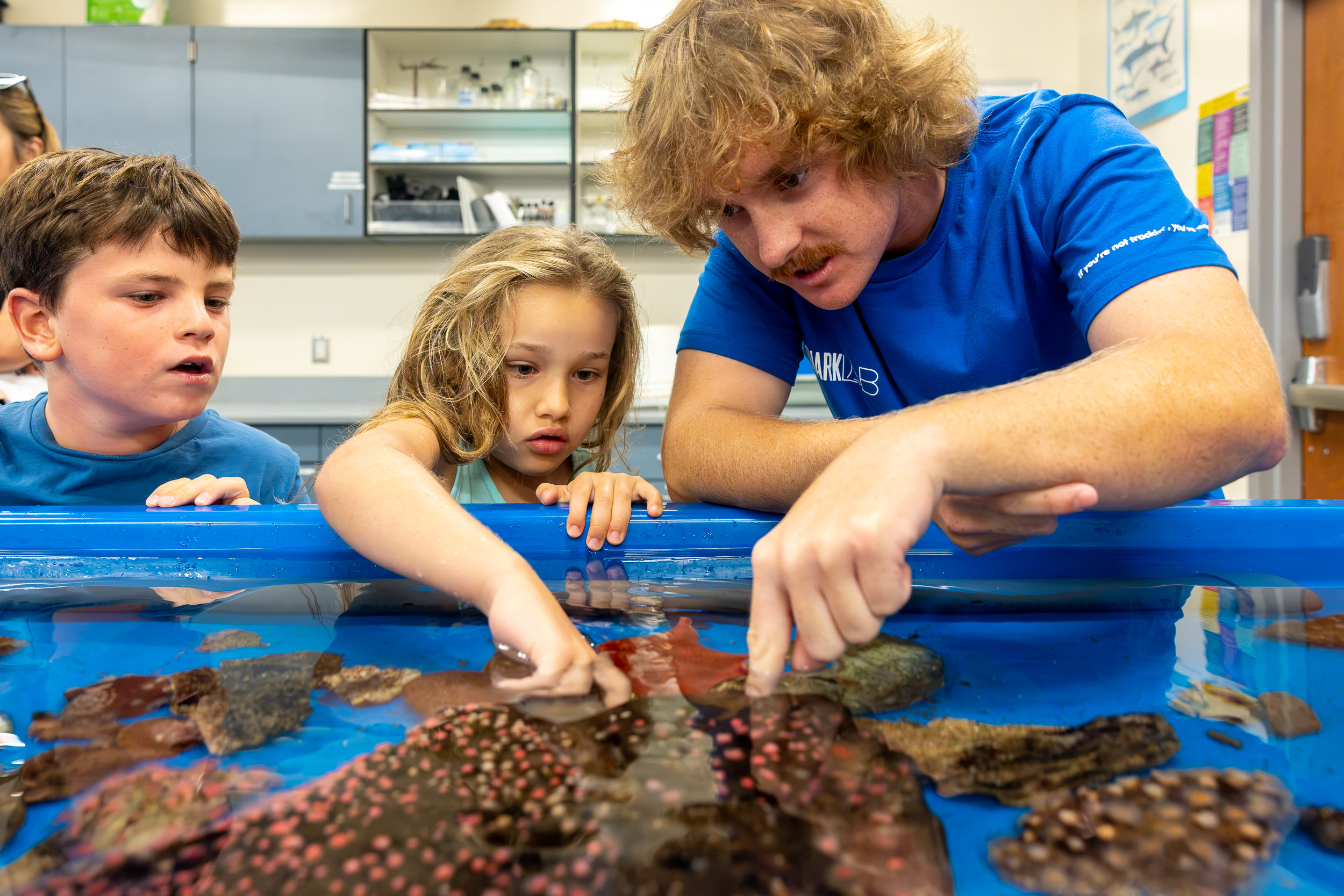
In the tanks: two horn sharks, a gray smoothhound and a crowd of stingrays.
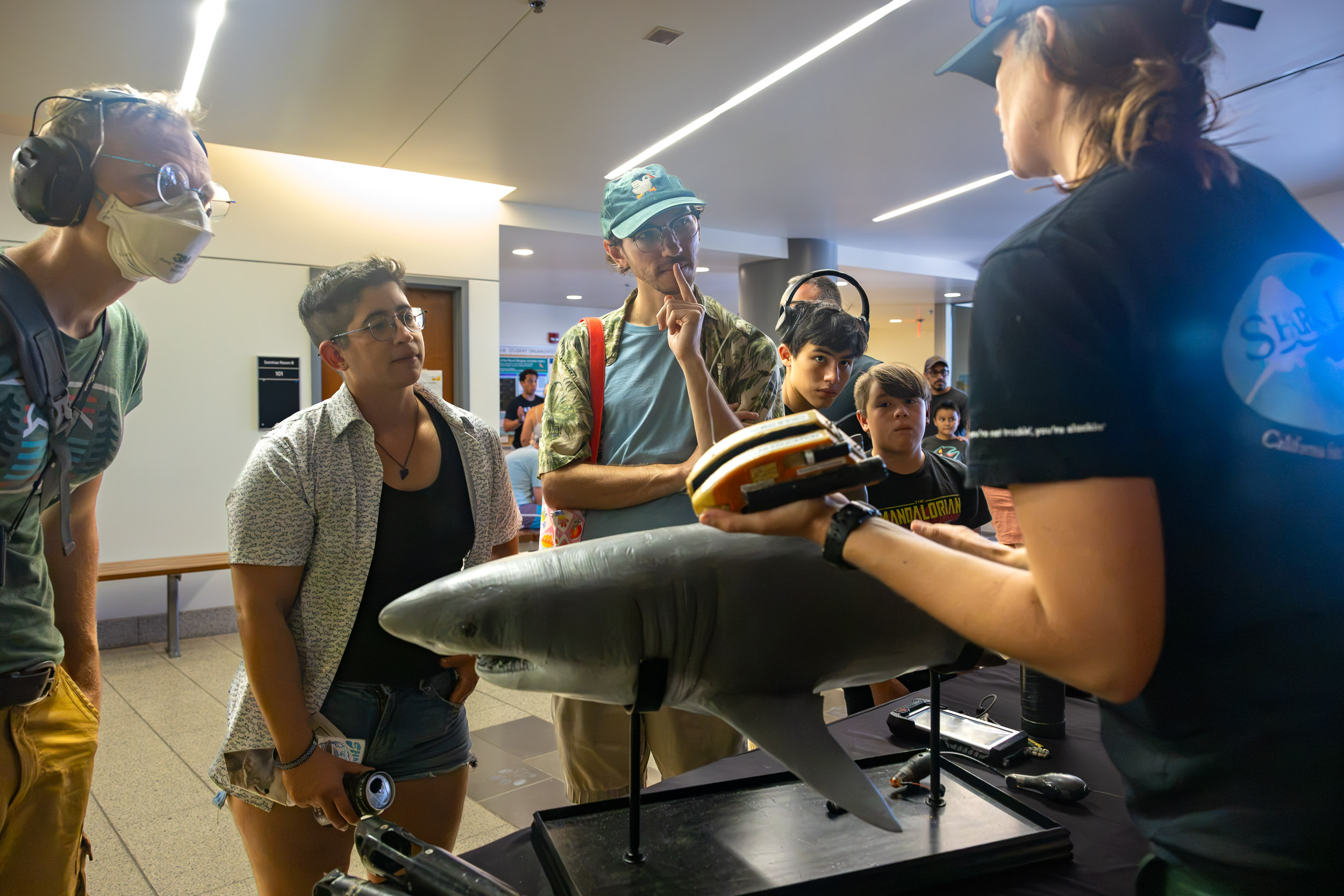
New this year was research showing how white sharks may hear and feel people playing in the water — and how they may be able to tell that we're humans, not food. The lab also debuted its semi-autonomous shark surveillance bot, an autonomous surface vessel built to monitor for white sharks off public beaches.
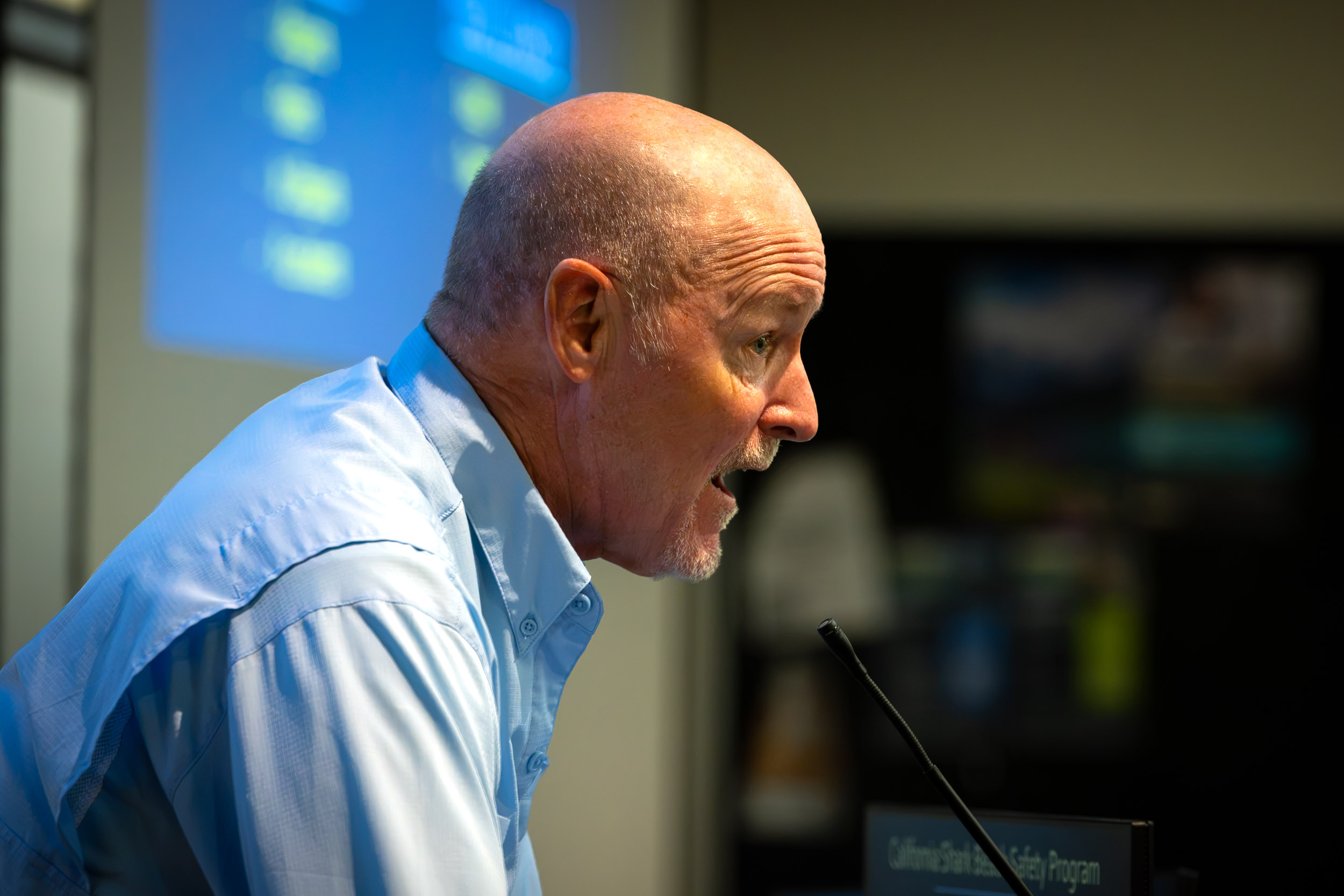
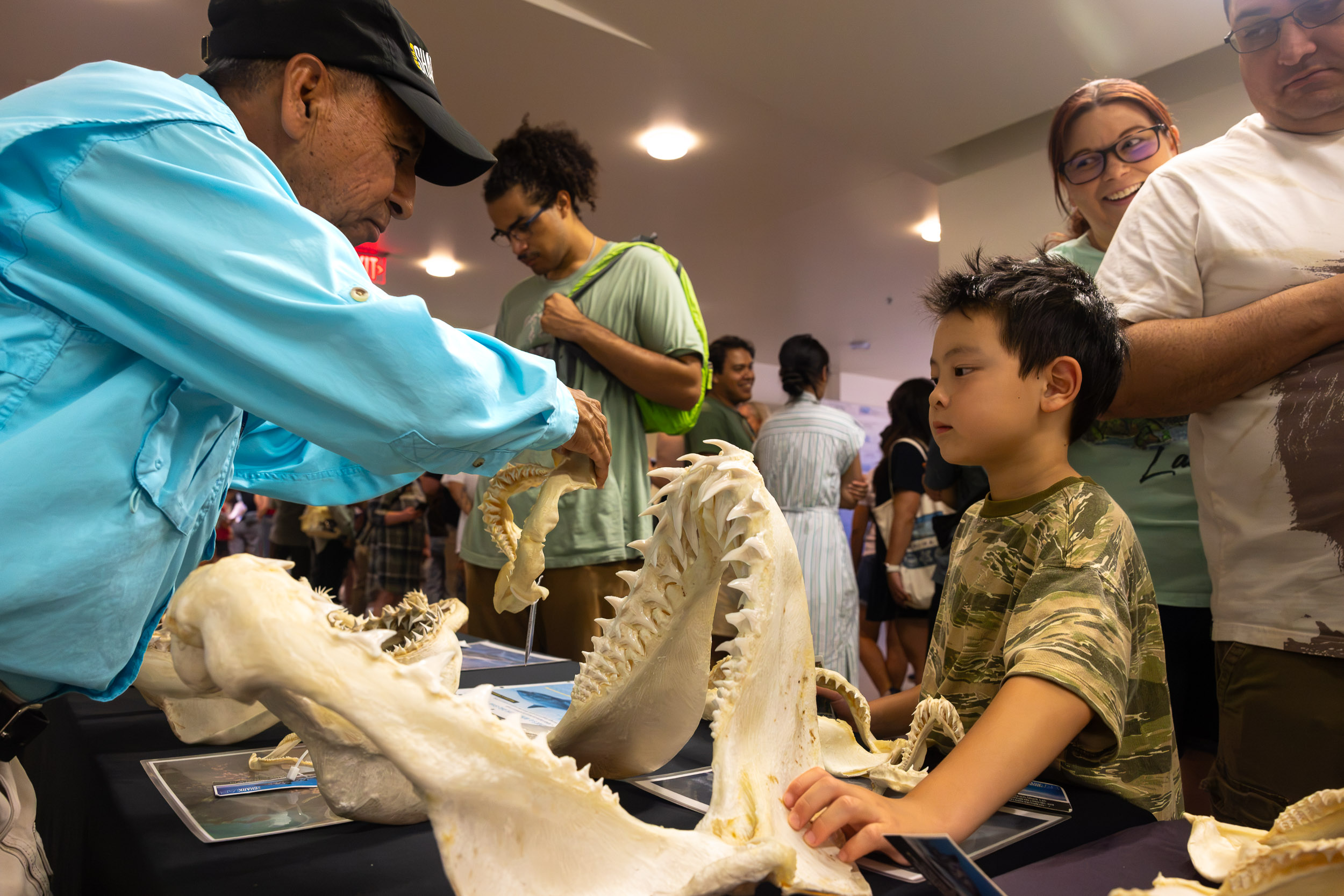
As usual, Lowe said, visitors came with questions: “Where are all the sharks coming from?,” “Is it safe to swim off California beaches?” and — one often posed to him personally — “What's your favorite shark?”
For the record, Lowe's partial to the cookie cutter shark. “Coolest little nipper out there,” he said.