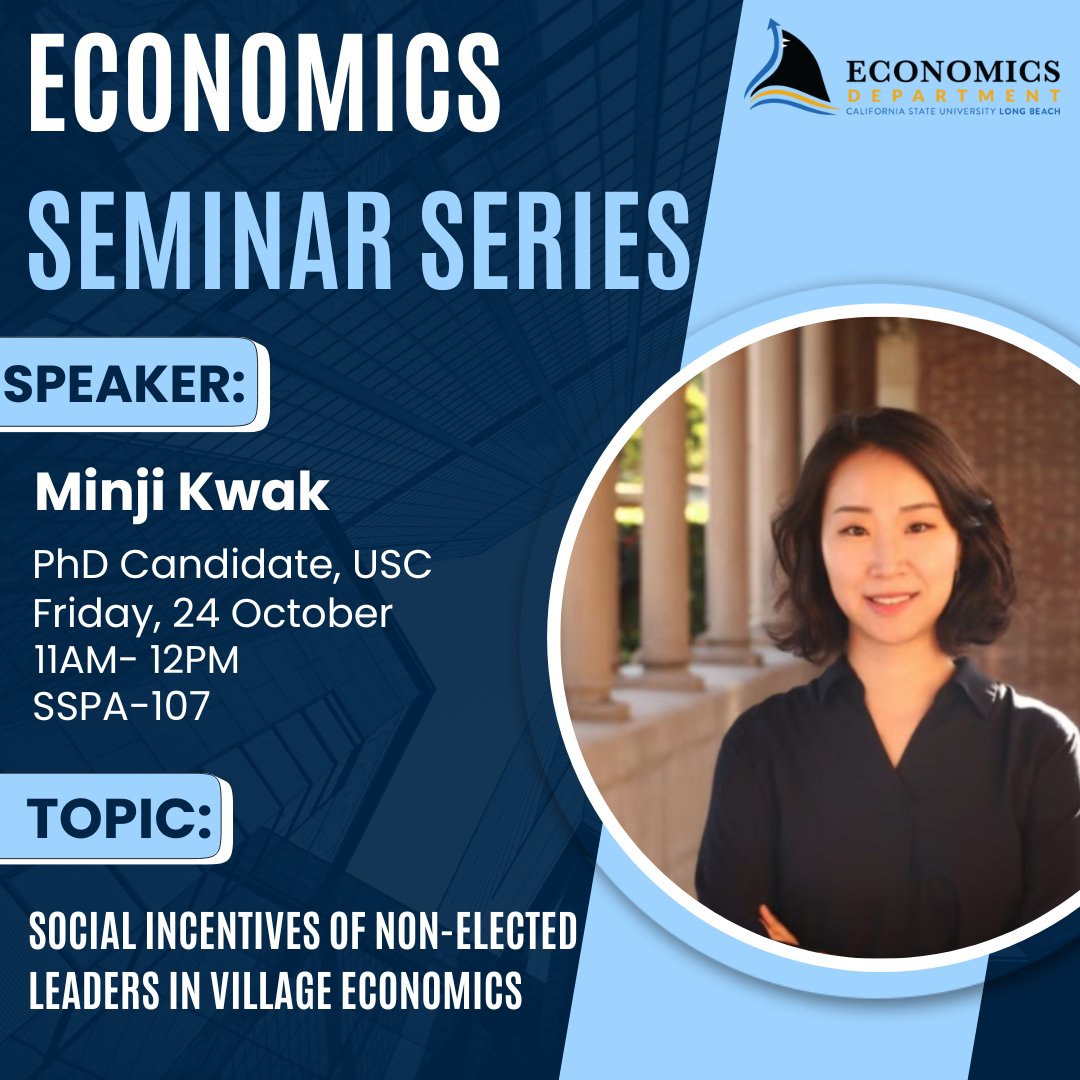
Minji Kwak: Social Incentives of Non-Elected Leaders in Village Economics
USC PhD Candidate Minji Kwak will present a talk hosted by the Economics Department.
Minji, a development economist, uses a lab-in-the-field experiment to examine how traditional leaders in Malawi allocate social subsidies intended for the poor based on accountability (or a lack thereof) and social incentives. She finds that when traditional leaders are informed that their rankings of who gets what will be disclosed to villagers, they shift allocations toward wealthier and more productive households. These shifts are strongest where leaders’ authority is weaker, such as in smaller villages, among shorter-tenured leaders, or those facing complaints. This suggests that increased transparency may worsen poverty targeting while improving productivity targeting, as accountability to villagers leads leaders to favor better-off yet more productive households to maintain local stability and to promote perceived welfare.