



Reclaiming Pride: The Black Roots of Queer Liberation
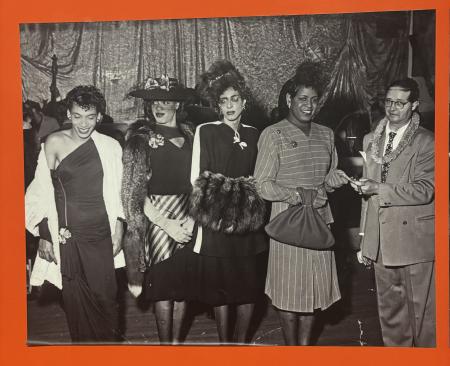
Visiting Free & Queer: Black Californian Roots of Gay Liberation at the California African American Museum was a powerful experience. It reinforced how Black queer history is foundational yet often overlooked. I felt a deep sense of pride in the people who came before and made space for others. The exhibition invites visitors to learn how entire communities have shaped movements we often take for granted today.
At its core, the exhibition explores the contributions of Black Californians to the gay liberation movement. It centers themes of visibility, resistance and community, and highlights how interconnected cultural expression and activism have always been.
One of the most interesting aspects of the exhibition was its exploration of drag and performance, particularly its roots in Black cultural traditions. The exhibit briefly traces the early use and evolution of the term “drag,” noting its presence in performance spaces as early as the 1920s in California. Figures like blues artist Gladys Bentley challenged gender norms long before mainstream recognition of drag culture. Seeing this history made me reflect on how far the art form has come — from underground spaces to global platforms like RuPaul’s Drag Race. What is often seen today as entertainment is deeply rooted in cultural self-definition and identity.
Another powerful element examined the impact of discriminatory policies. It mentions that an order introduced in the 1950s barred LGBTQ+ individuals from federal employment. These acts of exclusion became a catalyst for organizing, especially in Los Angeles. The longest-standing LGBTQ+ organization in the United States was also born out of this movement. This aspect of the CAAM exhibition reminds us that progress often emerges from adversity.
Last, but not least, the exhibit emphasizes the critical role of print media in the queer liberation movement. Before the existence of digital platforms, newspapers and magazines were essential tools for visibility and connection. I appreciated being reminded of how impactful it is to create your own spaces, especially as a member of marginalized communities. The existence of Black queer media was, and continues to be, an integral part of preserving voices that might otherwise be erased.
What stayed with me most was the realization that so much of this history remains underrecognized. I was unaware of some of the ways Black communities have had such a significant influence on queer culture. I appreciate that the California African American Museum made this history more accessible.
Free & Queer challenges the absence of Black narratives and encourages a deeper understanding of how liberation movements are built. It also nudges us to recognize that history is not fixed, there is always more to uncover and acknowledge.
