Roger Fouts '64 and a life spent teaching chimpanzees to speak

Roger Fouts ’64 approached his time at Cal State Long Beach with a clear sense of purpose: to help autistic children like his brother, who struggled to communicate. He wanted to reach those too often dismissed as unreachable, so they could express themselves and be understood.
And that’s what he did — just not in the way he had planned.
In a poignant turn that took him from psychology to primatology, Fouts helped teach the world’s first chimpanzee to use American Sign Language, a breakthrough that would influence the rest of his life, eventually guiding him from research to advocacy.
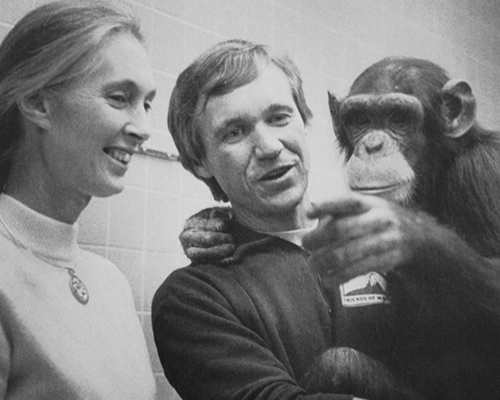
In fact, by the time Fouts retired 15 years ago, he had become a leading critic of great ape research and a key voice in the movement that ultimately brought an end to invasive chimpanzee experimentation in the United States. Alongside renowned primatologist Jane Goodall, he argued that chimpanzees are intelligent, socially sophisticated beings whose treatment should mirror that of humans.
“We are not different in kind,” he said. “We are different in degree.”
A defining detour
Fouts’ trajectory may have been unplanned, but he traces the throughline straight back to a CSULB professor who recognized and nurtured his unique talents. The professor was Joseph White, a clinical psychologist who would later become known as the godfather of Black psychology.
“Joe White was amazing,” Fouts said. White prioritized relationships over theory and built immediate trust, especially with children. “He saw that in me, too,” Fouts said. “He called it ‘a knack.’”
By his final year in college, Fouts had plans to marry fellow alumna Deborah Harris Fouts ’65 and move straight into a top clinical psychology doctoral program.
Joe White was amazing . . . He had a tremendous effect on me.
White supported his ambition, but not his approach.
“He was very realistic,” Fouts said, “in that he knew that my grades weren't always the best all through my career.”
White suggested widening the field and considering other disciplines — which led Fouts to the University of Nevada, where researcher Allen Gardner was raising a chimpanzee named Washoe as a deaf human child while attempting to teach her sign language; he needed a graduate assistant.
Fouts flew to Reno for an interview, which didn’t go well. “I basically blew the interview,” he said.
A major breakthrough
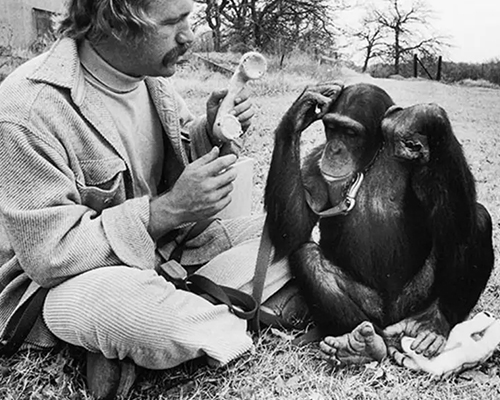
Before leaving for the airport, though, Gardner walked him to a fenced area where Washoe was playing. She spotted them, ran forward and leapt over the fence — not toward Gardner, but to Fouts.
“She jumped into my arms,” he said, still marveling at the encounter. “I'm sure she saw that I needed a hug.”
Gardner may not have wanted Fouts for the job, but Washoe did.
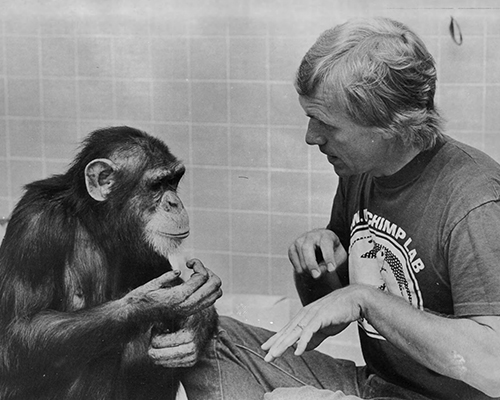
“For 20 hours a week, I was with Washoe. I changed diapers, prepared meals, played games.”
Caregivers signed constantly, modeling communication as part of daily life. Over time, Washoe acquired hundreds of signs and used them intentionally.
She jumped into my arms. I'm sure she saw that I needed a hug.
The real breakthrough came years later when she began generating her own language — swans as “water birds,” Thanksgiving as “Bird Meat Day,” and radishes as “cry hurt food.”
“She wasn’t just imitating; she was communicating.”
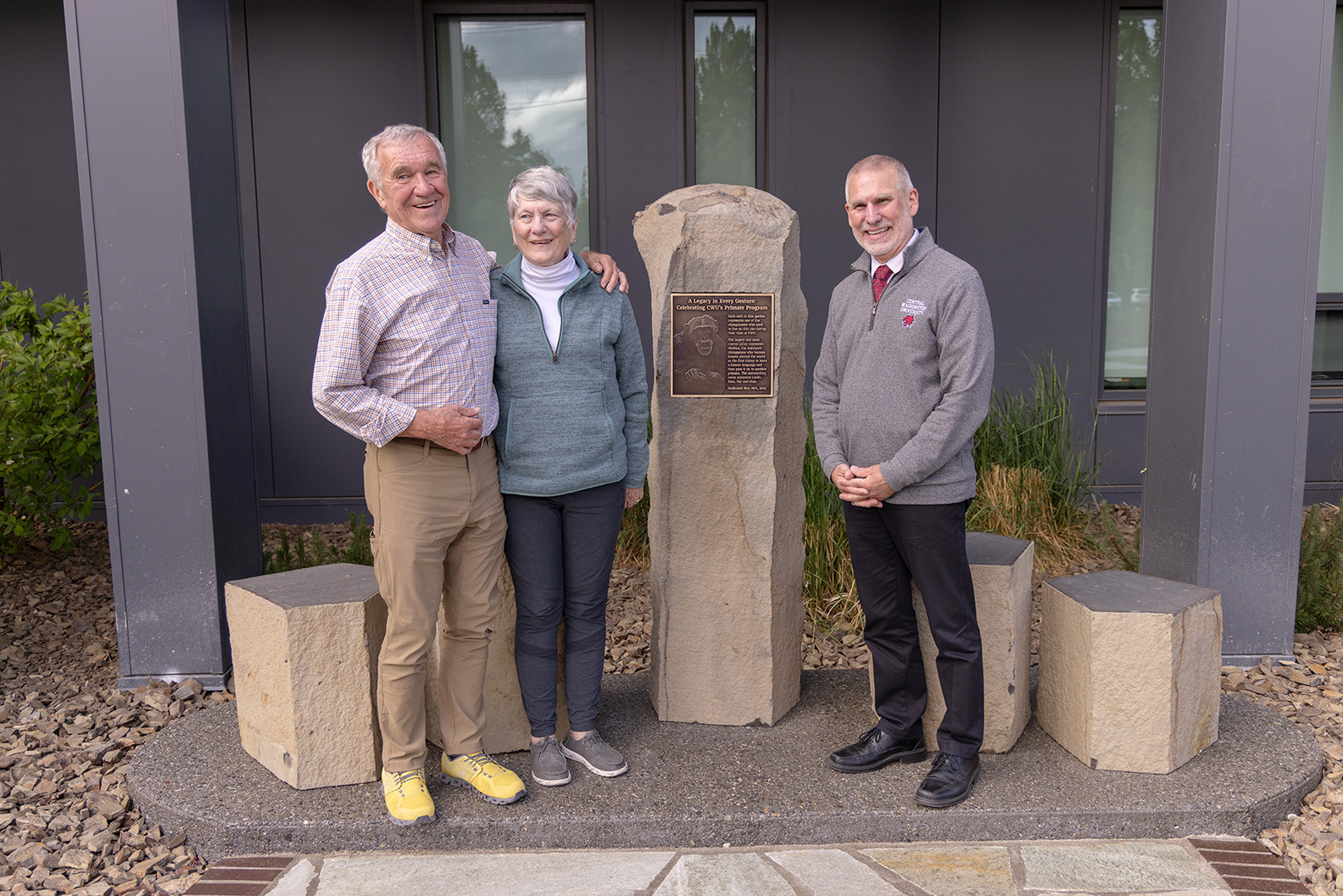
With Deborah as his collaborator, Fouts expanded his research, eventually landing at Central Washington University, where the couple founded the Chimpanzee and Human Communication Institute, a sanctuary where chimps were allowed to interact with humans only when they chose to do so.
Washoe would live out the rest of her years there, dying in the Foutses’ arms in 2007 at age 42 — a loss they felt deeply, having come to view her as family.
A shared commitment
Meanwhile, Fouts had begun using his platform to speak out against the scientific community’s often-barbaric use of chimps. In 1997, he co-authored “Next of Kin,” a book that framed chimpanzees as relatives — biological, emotional and moral.
Although he was invited to serve on advisory panels and regulatory discussions, biomedical researchers framed his concerns as sentimentality.
“They called me ‘activist’ and so on. As if there’s something wrong with having compassion.”
Fouts never lost touch with White — who established CSULB's Educational Opportunities Program in 1967 to serve historically low-income, first-gen students; the program later expanded across the CSU system.
Over the years, their conversations often returned to questions of race and power, and the importance of standing with those who don’t have it. White called Fouts “his voice,” he said. “He took ownership. He had a tremendous effect on me.”
Reflecting on what he would tell students today, Fouts pointed to the impulse that first drew him to psychology — a desire to give voice to those unable to speak for themselves.
“Keep your mind,” he said, “but most important, keep your heart.”