Earnest McBride's Lasting Impact on the NAACP
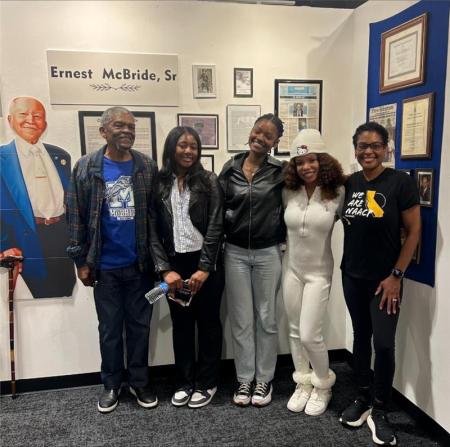
A new chapter of the NAACP has been established at California State University, Long Beach, helping connect students to one of the most influential civil rights organizations in the nation. Its presence on campus builds upon an85-year legacy of advocacy in Long Beach, where community leaders fought discrimination in housing, policing, education, and employment. This celebration would not be complete without honoring Ernest McBride’s pivotal role in making this opportunity possible.
The Long Beach NAACP Branch was established in 1940 when Ernest and Lillian McBride, Roscoe Hayes, L. J. Jones, and Nathan Holly petitioned the national office for recognition. They were supported by the Rev. Percy Anderson, John and Lillian Grisby, Zelma Lipscomb, and others who believed the city needed a formal civil rights presence. Seventy residents became the first members, a courageous act, as police officers repeatedly attempted to obtain the membership list to intimidate individuals through job threats. Ernest McBride Sr. safeguarded the list, and members stood firm despite the risks.
During the 1940s, the branch fought discrimination in public facilities, schools, and neighborhoods. A defining moment of change occurred at the Cabrillo Housing Project, which was segregated by race: Cabrillo 1 and 2 were reserved for white residents, while Cabrillo 3 was restricted to Black families employed in defense industries. Through the efforts of Ernest McBride, the Rev. Joe Croom, and the Anti-Discrimination Committee, the project eventually began renting Black residents throughout all sections. The committee also worked to end minstrel shows in local schools, advocated for markets to hire Black cashiers, and challenged discriminatory housing practices.
The McBride family left an enduring mark on the city. Ernest McBride used his home on Lemon Avenue as a meeting space for activists, a site now recognized as a historic landmark. His wife, Lillian, was a dedicated partner in the work and active in New Hope Baptist Church. Their children continued the legacy, with Ernest Jr. helping to cofound the branch, and the family celebrated as standout athletes who proudly represented their community. Today, McBride High School honors the family’s decades of service.
The fight for fairness has flourished thanks to the inspiration Ernest McBride instilled in the community. Under the leadership of Distinguished Alumna Naomi Rainey ‘72, ‘80, ‘81 from 2000 to 2024, the branch expanded its focus to include diversity compliance in city hiring, fair contracting practices, disability inclusion, and youth development programs. Initiatives such as ACT-SO, NAACP Scholars, and the Community Impact Program helped young people pursue academic excellence, explore creative talents, and develop skills in conflict resolution and financial literacy. In 2025, Dr. Sharifa Batts was elected branch president, ushering in a new era of growth and community engagement.
The Long Beach Branch of the NAACP invites students to join in advancing justice by speaking up, building leadership skills, and exploring potential careers in law. Serving as a liaison for the university chapter, the branch encourages students to voice concerns, seek guidance, and access support by signing up to become a member. Through workshops, panels, mentorship, and networking, students can gain confidence, public speaking abilities, organizational skills, and a deeper understanding of social issues affecting their peers. These experiences will demonstrate how civil rights advocacy connects to government, nonprofit work, legal advocacy, and community leadership.