Boundless Opportunity
The Beach is experientially expansive, boasting immersive learning, vibrant life outside the classroom and the broadest range of relevant and evolving educational programs.
Students Train Autonomous Robots for Real-world Rescue
Keaton Safu was nine when his mom brought home his first Star Wars Lego set. He poured out a scatter of pieces, opened the instruction booklet and clicked his way forward until he was holding an Imperial starship.
“It wasn’t the biggest one,” said Safu — nothing like the hulking collector ships that eat dining-room tables — “but it was definitely like I had a spaceship in my hands.”
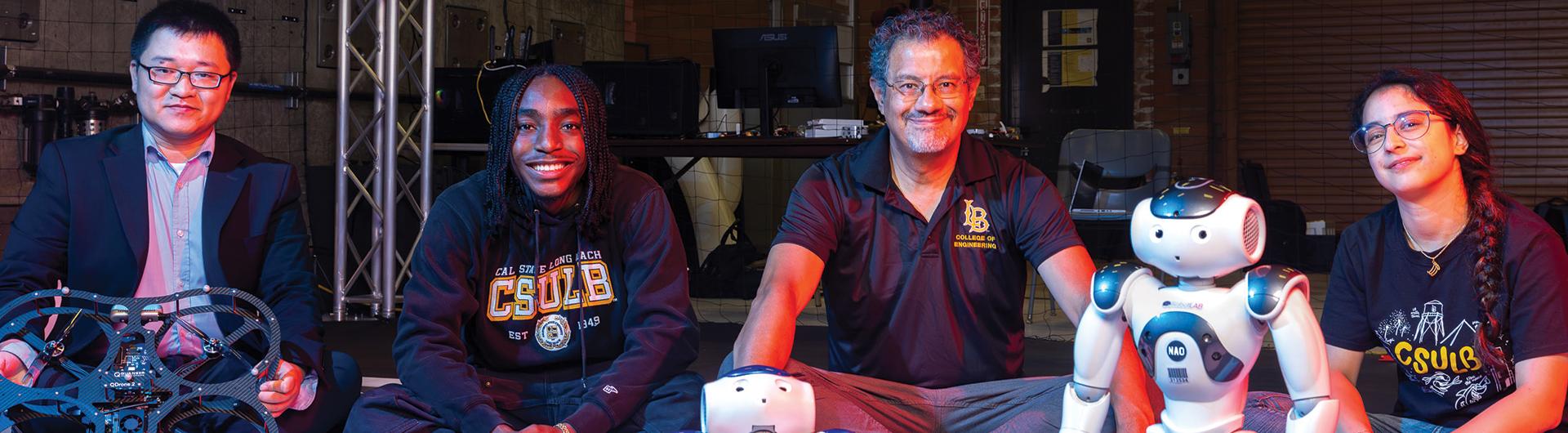
Dozens of Lego sets, STEM courses and design projects later, Safu is finishing his mechanical engineering degree at Cal State Long Beach while working in the College of Engineering’s future-forward PACK Lab — CSULB’s new testbed for multi-agent systems, where student-written code sends collaborative drones and robots into motion as cameras track everything in real time.
Named for the way wolves move together, PACK (Perception, Actuation, Control and Network) focuses on swarms of drones and fleets of vehicles that sense one another and make intelligent decisions together without a central computer. Think merging vehicles that negotiate the right-of-way the way flocks of birds change course midair.
The potential applications are as varied as they are exciting: fewer traffic collisions, faster environmental monitoring, smarter search-and-rescues, safer wildfire response.
That last one hits home for Safu.
“We just saw the Palisades and Eaton fires,” said Safu, who grew up in Cerritos, less than 40 miles from burn zones. “What might have happened if you had an autonomous network of drones that could fly over those fires and extinguish them? You’re minimizing the risk at that point. That makes the job safer for everybody involved and potentially changes the outcome of the situation.”
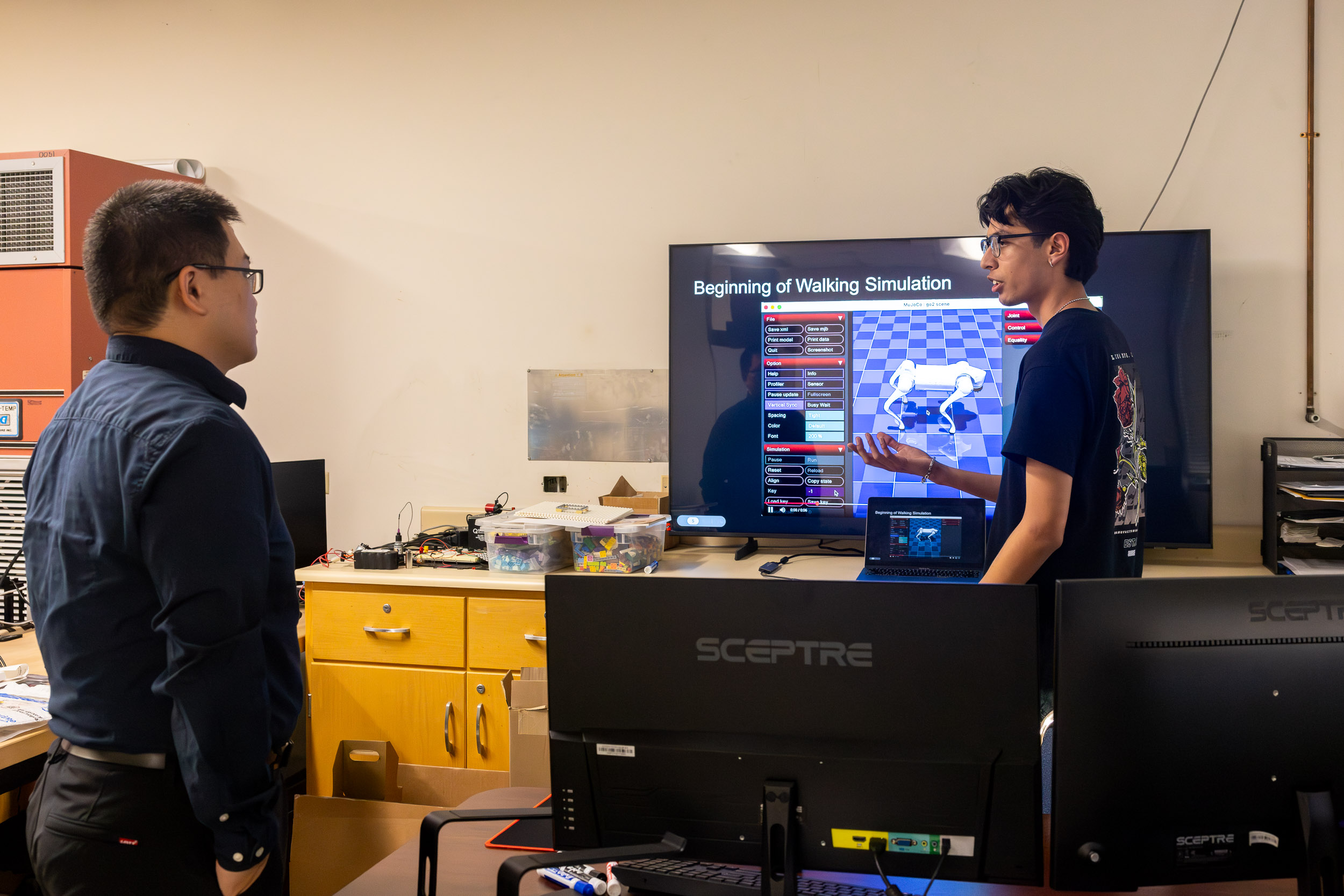
Backed by a recent Department of Defense grant, PACK Lab Director Tairan Liu (Mechanical & Aerospace Engineering) and Associate Professor Oscar Morales-Ponce (Computer Engineering & Computer Science) have built out a scaled, netted flight cage with research-grade UAVs (unmanned aerial vehicles), a micro-swarm, ground vehicles, an optical motion-tracking system and an indoor test range for multi-car scenarios.
What students do with it is the point. Undergrads turn class concepts into working systems — designing the logic that guides a robot’s decisions, testing it on hardware and running experiments that translate directly to internships, jobs and graduate study.
“I will design new lectures for my students to do some hands-on learning [and] design on their own,” Liu said. “We follow… physics rules, procedures, quality control.”
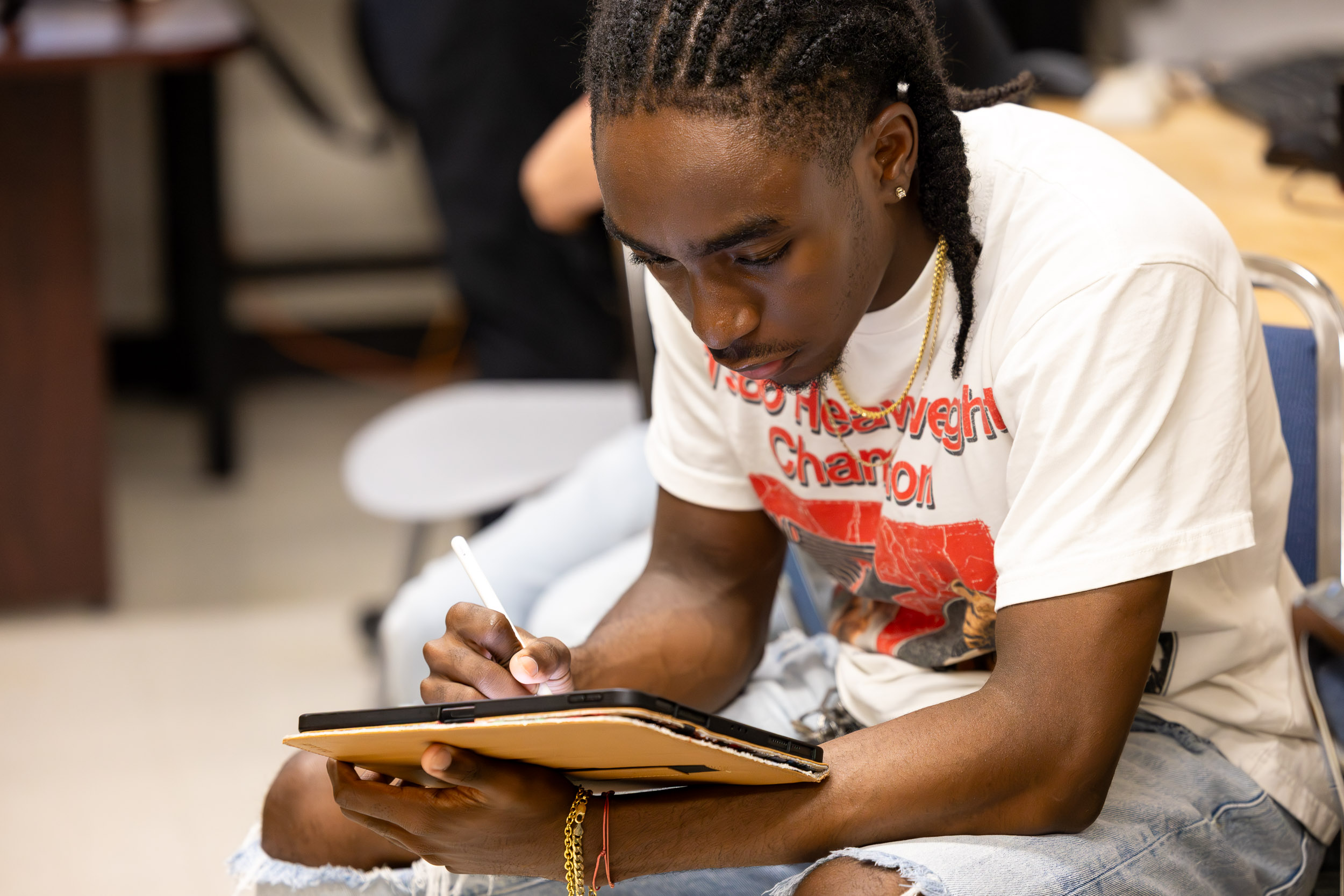
The payoffs are already showing up on résumés. Fourth-year computer engineering student Fozhan Babaeyian Ghamsari has presented research and earned campus recognition for her lab work with Morales-Ponce. And the bench keeps deepening, Liu said: “In the past three years, I have mentored more than 50 students,” including an undergrad who was admitted straight into a PhD program at the University of Notre Dame.
For students like Safu, who plans to pursue a master’s next, that trajectory matters.
“It always feels like I’m in a sci-fi movie,” he said of his time in the PACK Lab, turning futuristic ideas into fixes for real, complex problems that could make the world safer. “That’s what makes me feel like everything that I’m studying is worth it.”