At CSULB, Tony Baxter ’69 learned to imagine Disney’s future

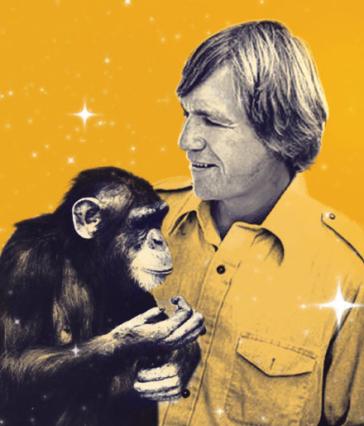
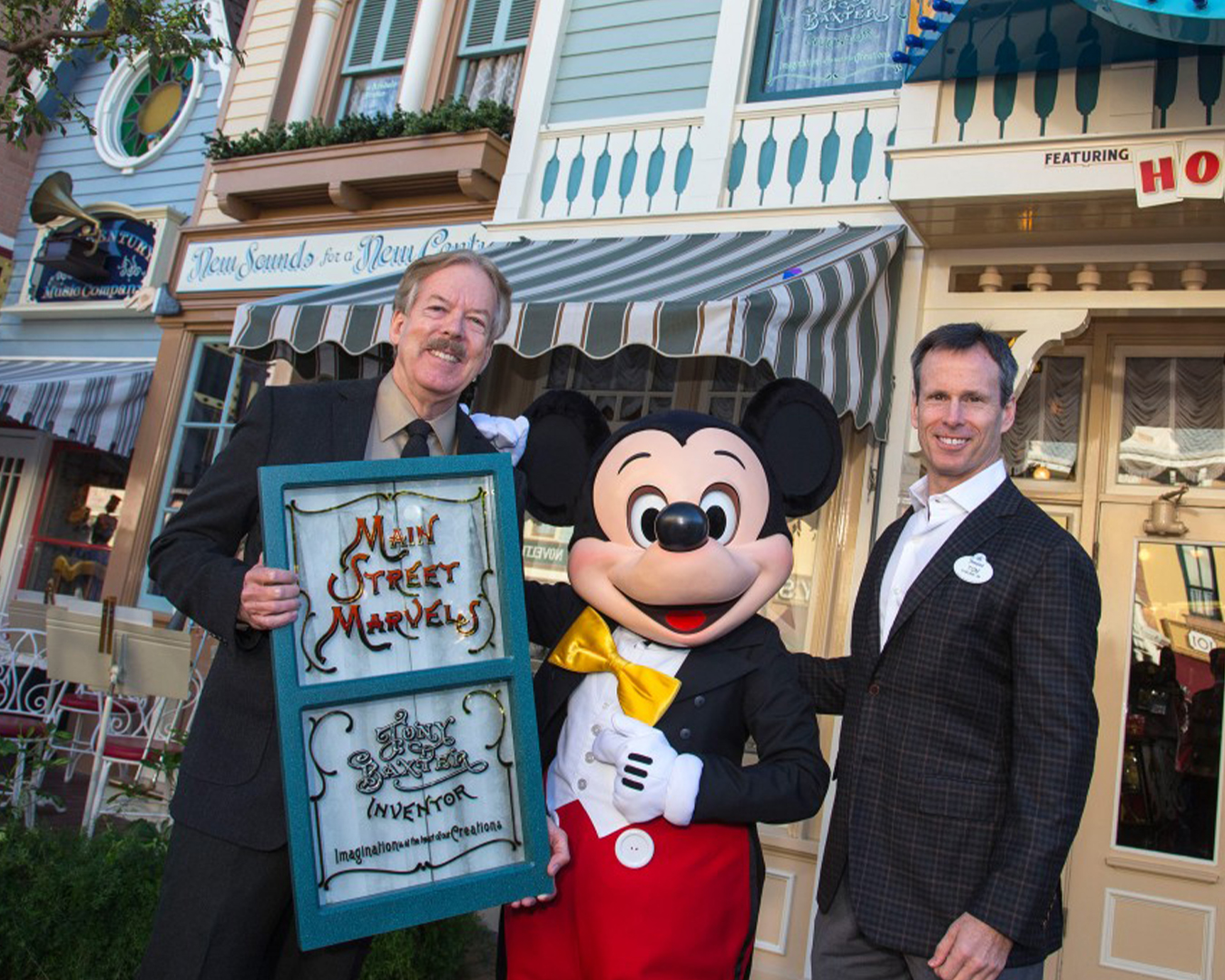
In November 2013, Tony Baxter ’69 stood beside Mickey Mouse on Main Street, U.S.A., as a velvet curtain slipped from a second-story window. Behind it was his name, over the words: "Inventor: Imagination is in the Heart of our Creations.”
By then, Baxter had spent 42 years bringing some of Disney’s most ambitious ideas to life. He'd co-designed Big Thunder Mountain Railroad, conceived Splash Mountain, developed Star Tours alongside George Lucas and led a team of 100 Imagineers in creating Indiana Jones Adventure. He'd also spearheaded EPCOT’s Journey Into Imagination and, later in his career, served as executive producer of Disneyland Paris.
Yet when he spoke that day, Baxter said little about his own accomplishments. Instead, he thanked the people who had helped him find his way there.
One was Claude Coats, the celebrated background artist whose work helped define the visual world of "Snow White and the Seven Dwarfs." The other was Maxine Merlino, his watercolor teacher at Cal State Long Beach.
The making of an Imagineer
Baxter grew up in Orange County in the 1950s to parents who no more understood their son’s obsession with Disneyland than they did his decision to pursue art at CSULB. But Baxter had been miserable during the two years he spent studying architecture and landscape architecture at other schools.
"It was only after getting over to Long Beach State that I saw a difference," he said.
In contrast to the psychedelic era's bastions of unrestrained self-expression, Professor Merlino required her students to master perspective, draftsmanship and classical technique. Baxter laughed as he described how she’d appoint sink monitors and inspect desks for paint stains.
"You can do whatever you want when you leave here," Baxter recalled her saying, "but you're going to come out of this class knowing perspective, knowing all these basics. And then if you want to draw abstractly, you know what you're abstracting from."
Merlino had always dismissed Disneyland as a carnival. But when Baxter, who had been working as a cast member at the park since he was 17, offered to take the class to a private after-hours screening of "Sleeping Beauty" in Fantasyland, she agreed — and came away a convert.
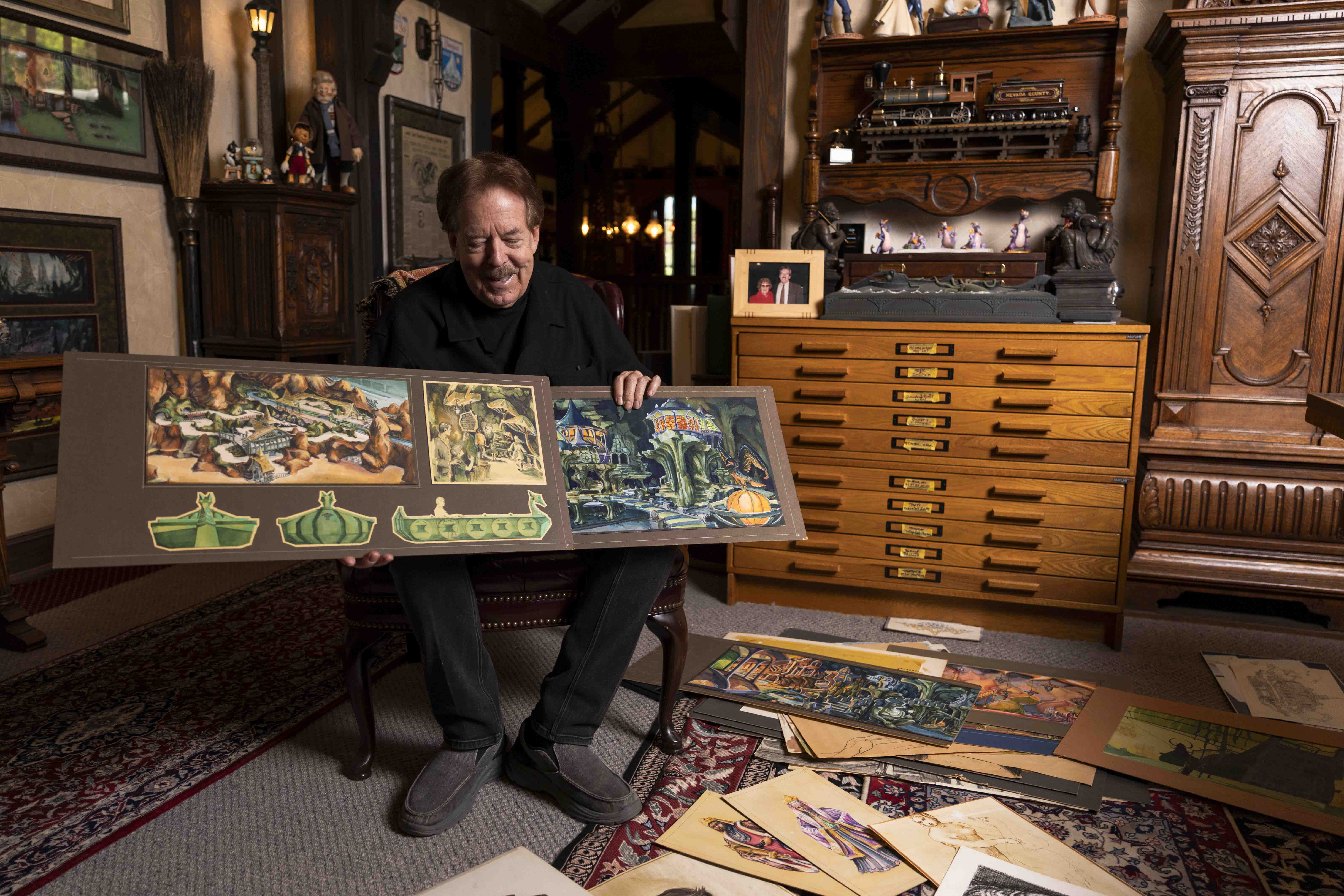
For his senior project, Baxter was allowed to design a conceptual boat ride through an undiscovered Arctic civilization, modeled on the capacity and logic of Pirates of the Caribbean.
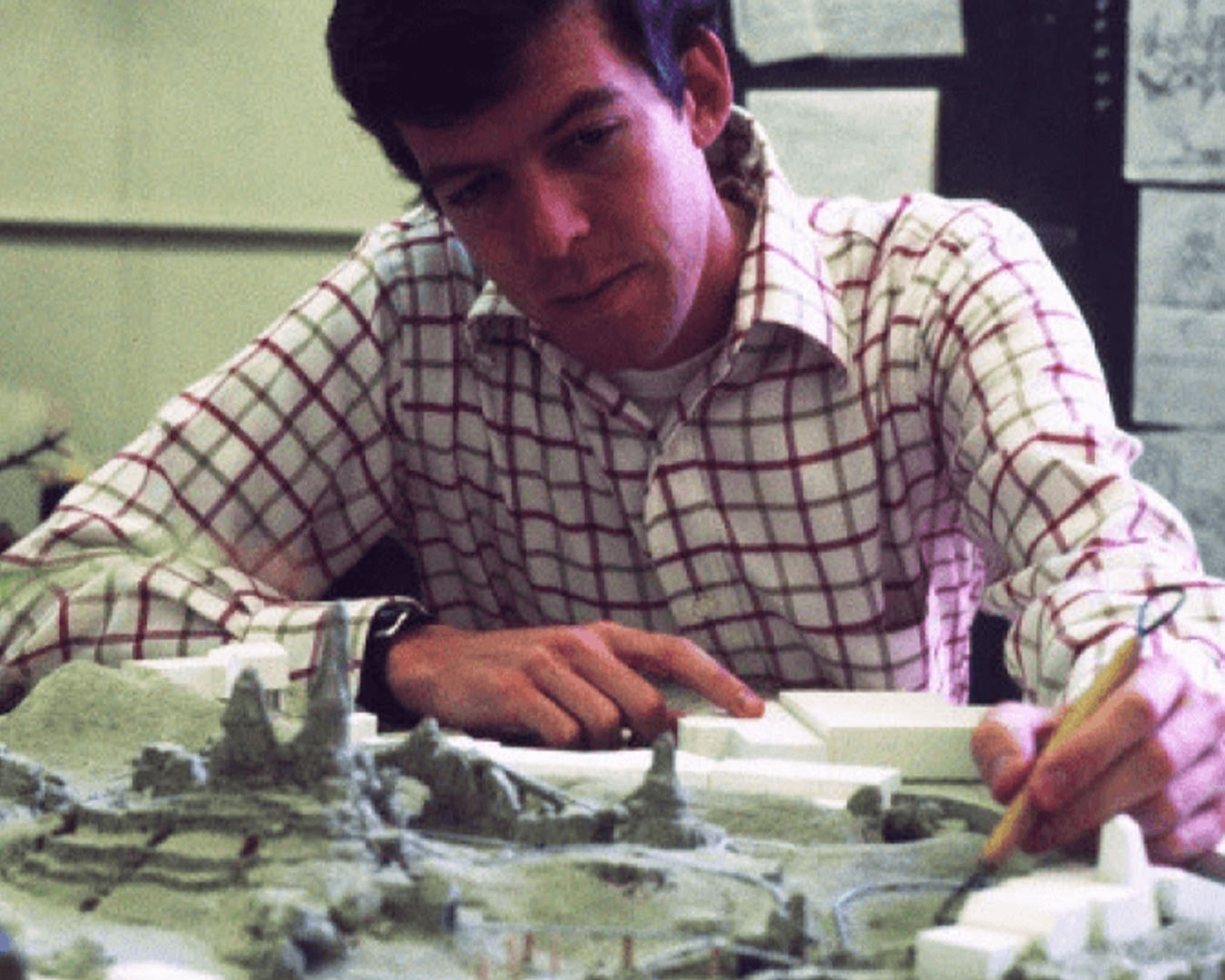
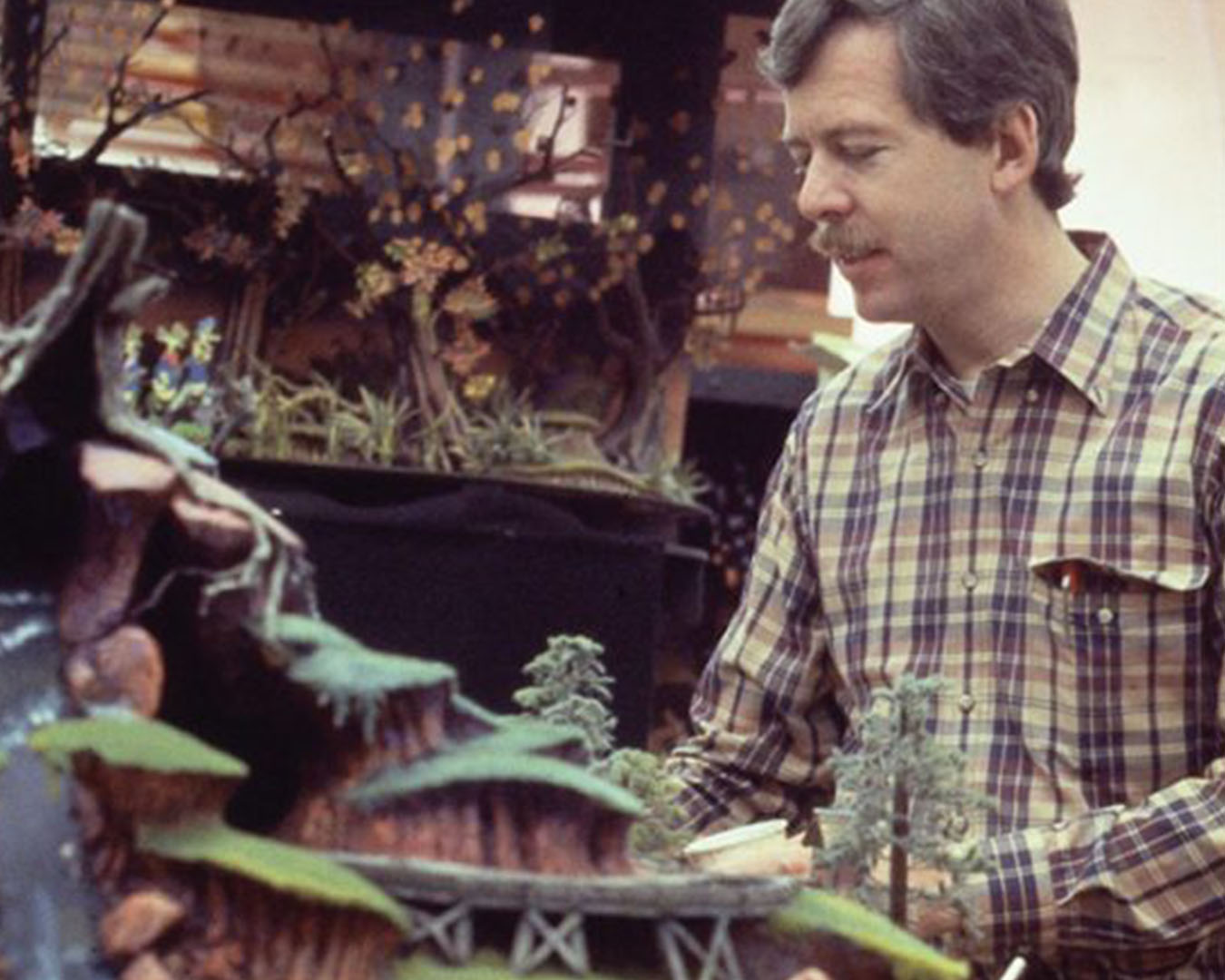
The renderings got him an A in Merlino's class — and then, six months later, they got him a job at Disney Imagineering. In the span of a single day, the Distinguished Alumnus had traded in his cast member costume for a model-making smock. He was 23.
The art of the pitch
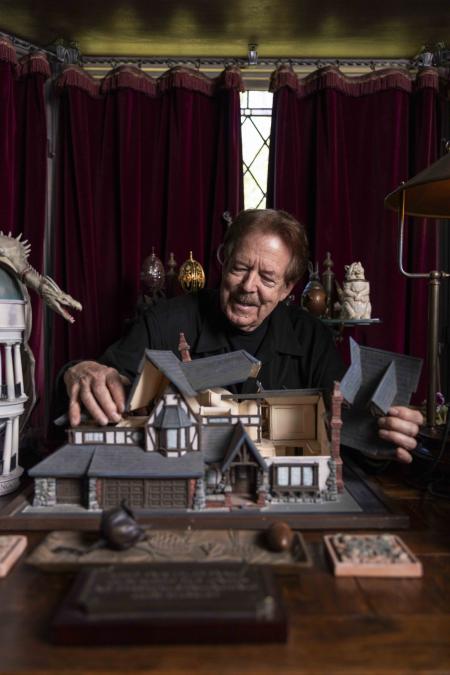
Over the next four decades, Baxter was never surprised by how much he relied on the art skills he'd honed at CSULB. What did surprise him was how much he’d rely on the advice he once received in a required speech class. The best speakers aren't the most polished, the professor had told him, but the ones who know their subject better than anyone else in the room and share it with enthusiasm.
"I cannot say how much that became as valuable as the art learning,” he said.
His communication skills drove one of his most consequential achievements.
It was the 1980s, and Disney was not making enough new films to keep supplying its parks with fresh stories. So Baxter pitched the daring idea that executives should look outside Disney's catalog for fresh stories — beginning, Baxter suggested, with "Star Wars."
Disney CEO Ron Miller arranged a picnic at Silverado Vineyards in Napa. George Lucas arrived in his BMW; Miller's wife, Walt Disney's daughter Diane, made the potato salad.
"We're all standing in this queue to get the potato salad," Baxter recalled, "and I'm going, what is going on here? This is crazy."
Before Baxter could describe the ride he envisioned — what would become Star Tours — Lucas agreed to collaborate. Flying home on the Disney plane, Baxter thought: "If it goes down, this was it. This was the day that changed my life."
The measure of a teacher
Meanwhile, Merlino became dean of CSULB's School of Art. In 2002, Baxter co-chaired a fundraiser to help create the Maxine Merlino Art Gallery — which still stands on campus today.
For its opening, she refused to display her own work. She insisted that the walls be filled with her students’ art instead.
"For a professor," she said at the time, "my whole validity is my students."
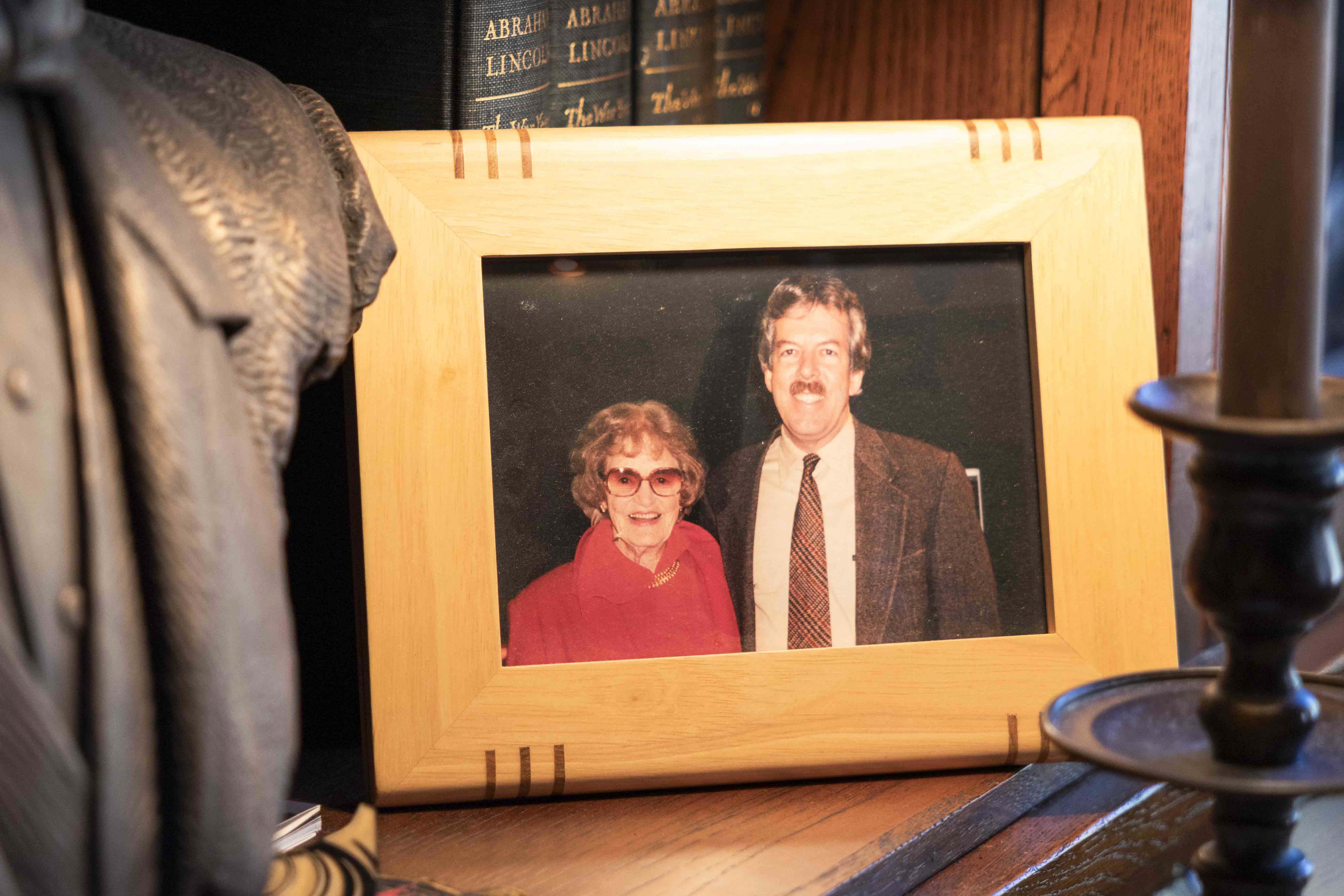
Baxter saw her once more, a decade later, in Spain. She was 100 years old and still climbing the stairs to her third-floor rooms several times a day.
The next year, Baxter announced that he would step down as senior vice president of Imagineering. Almost immediately, he was named a Disney Legend and told that he would receive a tribute window on Main Street — an honor reserved for those who have made an indelible mark on Walt Disney parks and resorts.
At the ceremony, Baxter singled out Merlino as an “amazing” influence on his career. He didn’t know that she was sick. But he knew what the tribute would mean to a professor who measured her worth by her students’ success: It was the validation of a lifetime.
Merlino died two days later. She was 101.
"I like to think that she knew," he said.