Built to Inspire
Across the CSULB campus, monumental sculptures and murals are a testament to the university’s appreciation of public art.
Far-Sited: California International Sculpture Symposium 1965/2015
Exhibition:
Sept. 8-Dec. 13, University Art Museum and campus-wide
Conference:
Far-Sited: Creating and Conserving Art in Public Places, Oct. 16-18 — www.far-sited.org
Sponsored by the UAM, Getty Conservation Institute and Museum of Latin American Art, guest speakers will examine trends in public art, new technologies and alternative practices, and the role of art conservation in the public realm.
The first 10 pieces originated in 1965 after art Professor Kenn Glenn learned about the sculpture symposium movement from artist Kosso Eloul during a sabbatical visit to Israel. They came up with an audacious idea — invite internationally renowned sculptors to install 75 new pieces on campus and across the city of Long Beach over five years that would put the area on the global art world map.
Thus began the first international sculpture symposium to be held at a college. In honor of its 50th anniversary, the University Art Museum will host “Far-Sited: California International Sculpture Symposium 1965/2015” from Sept. 8 to Dec. 13.
Cost overruns and logistical issues thwarted the citywide project, but what resulted on campus in just one summer is nevertheless impressive, said UAM Director Brian Trimble. Those initial pieces led to others created over the years in what is now called the CSULB Outdoor Sculpture Collection.
The college solicited community art lovers and industry donors to provide funding, materials, facilities and engineering support. The firms even learned a few things about material fabrication techniques.
“There are other reasons why we do this and one is that we see the value of these pieces on our campus as cultural assets to the entire campus.”
For instance, artist Piotr Kowalski collaborated with North American Aviation to use underwater dynamite blasts and even tested dropping a piece into the ocean to form the curved stainless steel work called Now, located on the east side of the University Student Union. The firm’s film of the processes will be part of the anniversary exhibition along with archival photos, models and documentation plus other loaned works by the original artists.
Time and weather deteriorated some of the sculptures, so as part of their Outdoor Sculpture Research Project, the Getty Conservation Institute in Los Angeles prioritized the conservation of several of the pieces through consultation, scientific analysis, treatment and funding. This year, in collaboration with Rosa Lowinger & Associates, they restored Robert Murray’s Duet — the steel panels near the University Bookstore — and will next begin work Robert Irwin’s Window Wall near the Fine Arts buildings.
“Here you have the Getty working in Herculaneum and places all across the world and they see this collection as significant enough for them to be involved in,” he added. Conservators discovered that Duet’s familiar orange color from recent years lay atop 12 other paint layers and restored its original lighter tone.
The UAM also received a $50,000 Navy Heritage Grant to conserve J.J. Beljon’s Homage to Simon Rodia and is seeking other grant and donor funding to conserve the remaining pieces and create a long-term care endowment.
This is a carousel. Use next and previous buttons to navigate or jump to specific slides with the numbered "go to slide" buttons.

“There are other reasons why we do this and one is that we see the value of these pieces on our campus as cultural assets to the entire campus,” Trimble said. “We want them to be represented that way and we want people to know about them so that the campus and community can take pride in this incredible collection that we have.”
Concept to Reality
The University Art Museum would like to hear from people who worked on the 1965 sculpture symposium. Contact Shefali Mistry, 562.985.4299.
Hal Lynch, a 1961 social science alumnus and former Cal State Long Beach assistant dean of development, will never forget summer 1965.
Working in the campus physical planning department, Lynch was asked to assist with symposium logistics and help with fundraising just as the event started. Lynch then brought in fellow alumnus John Roland to help get it done.
This is a carousel. Use next and previous buttons to navigate or jump to specific slides with the numbered "go to slide" buttons.
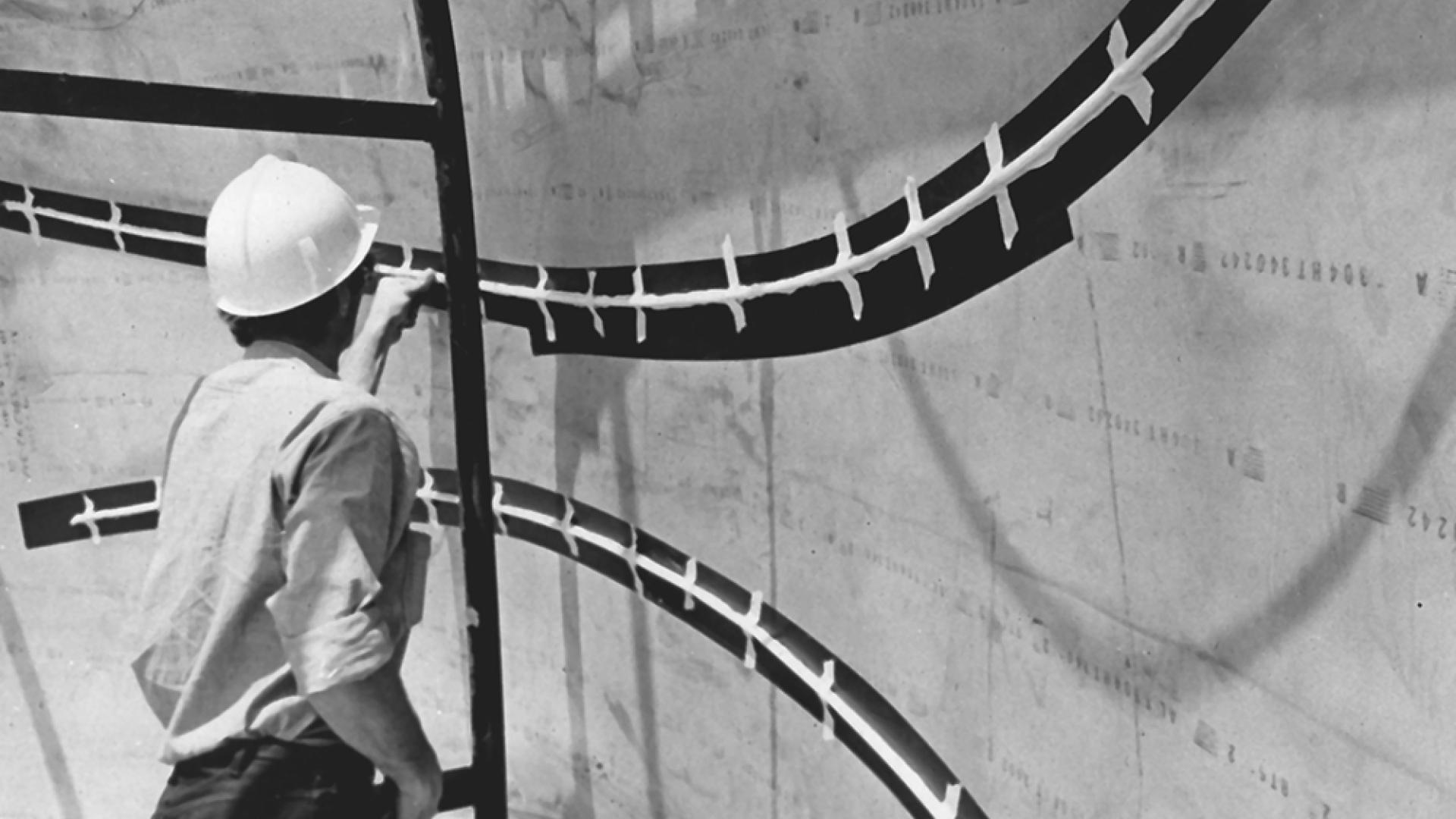


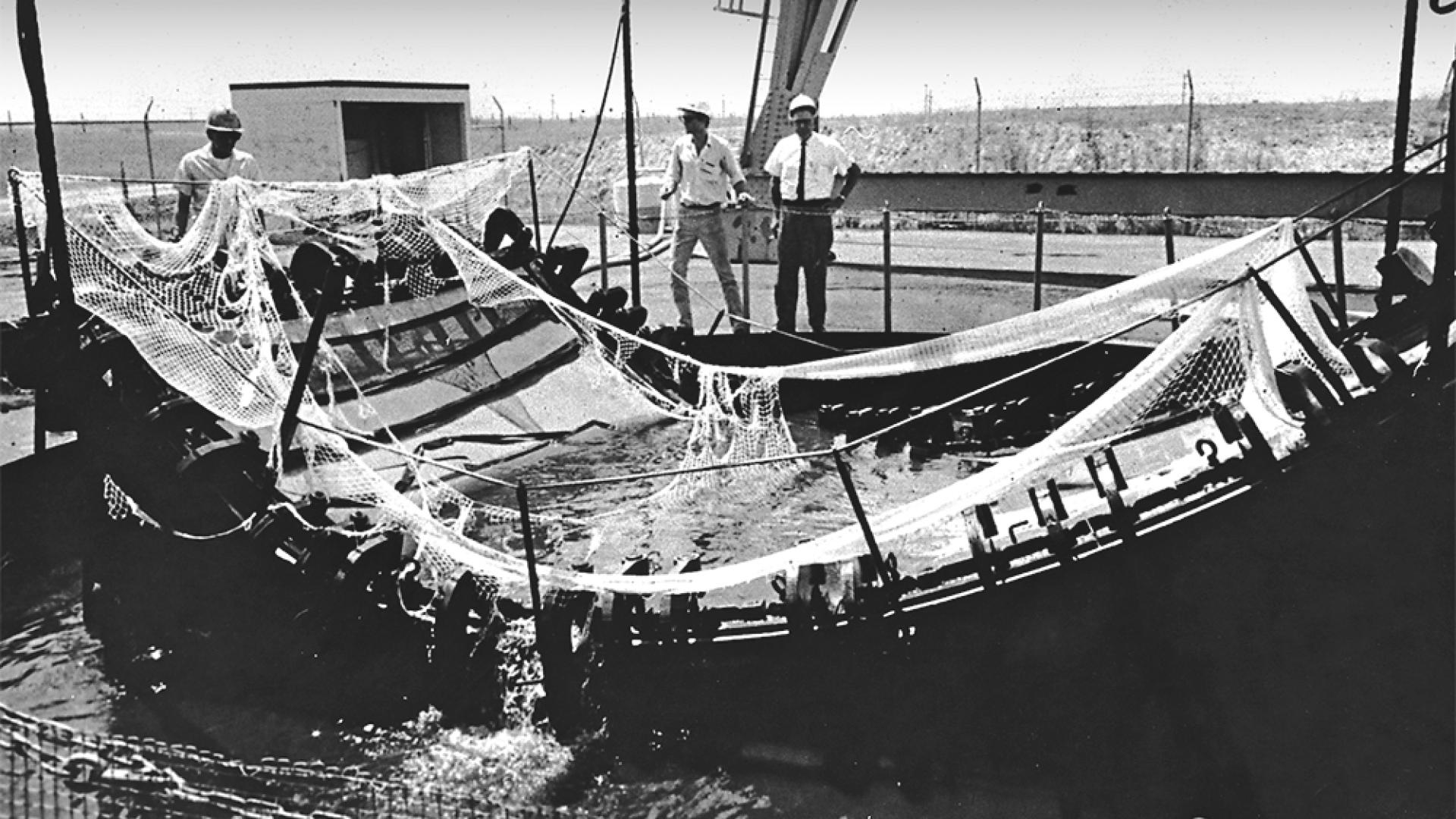
- Piotr Kowalski’s Now: “Kowalski was not too happy about what we were doing and it was in part my fault. I thought stainless steel came shiny, and it doesn’t; it comes very dull. I brought it back to the campus and put it up on some supports and hired a whole bunch of students to sand the thing smooth.”
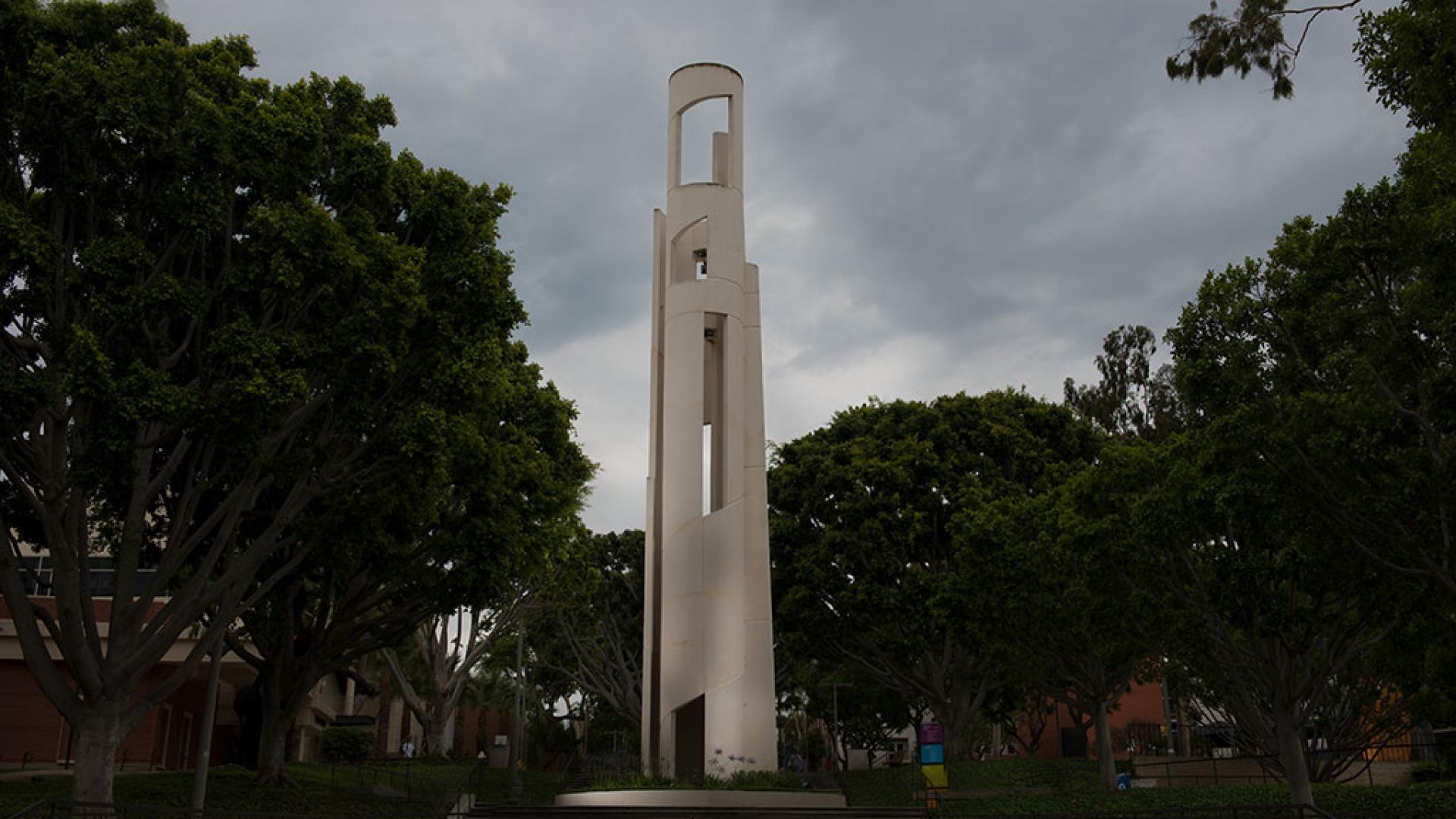
- Andre Bloc’s Carlson/Bloc Tower: The team had difficulty understanding the French-speaking Bloc’s instructions on how to pour the concrete to achieve the height and tapered appearance. “He was trying to tell us that it’s a slip form, which is a piece of rounded metal or wood. You can go straight up with it and pour the concrete in straight lines. He tapered all the edges so it didn’t look as if it were straight.”
- Kosso Eloul’s Hardfact: “This piece was a tough one for us to build. It collapsed on us once or twice because it goes down to a very narrow piece at the back portion of the mouth. But he was very easy to work with.”
- Claire Falkenstein’s “U” as a Set: “We gave her 20 or 30 students who wanted to work with her and we gave her a lot of copper tubing and she quietly went to work. She had some drawings; she knew where she was going and she was going to invent it as she went. They had to heat and bend the tubes with arc welders. The students did a beautiful job and then she wove it together in about six weeks.”
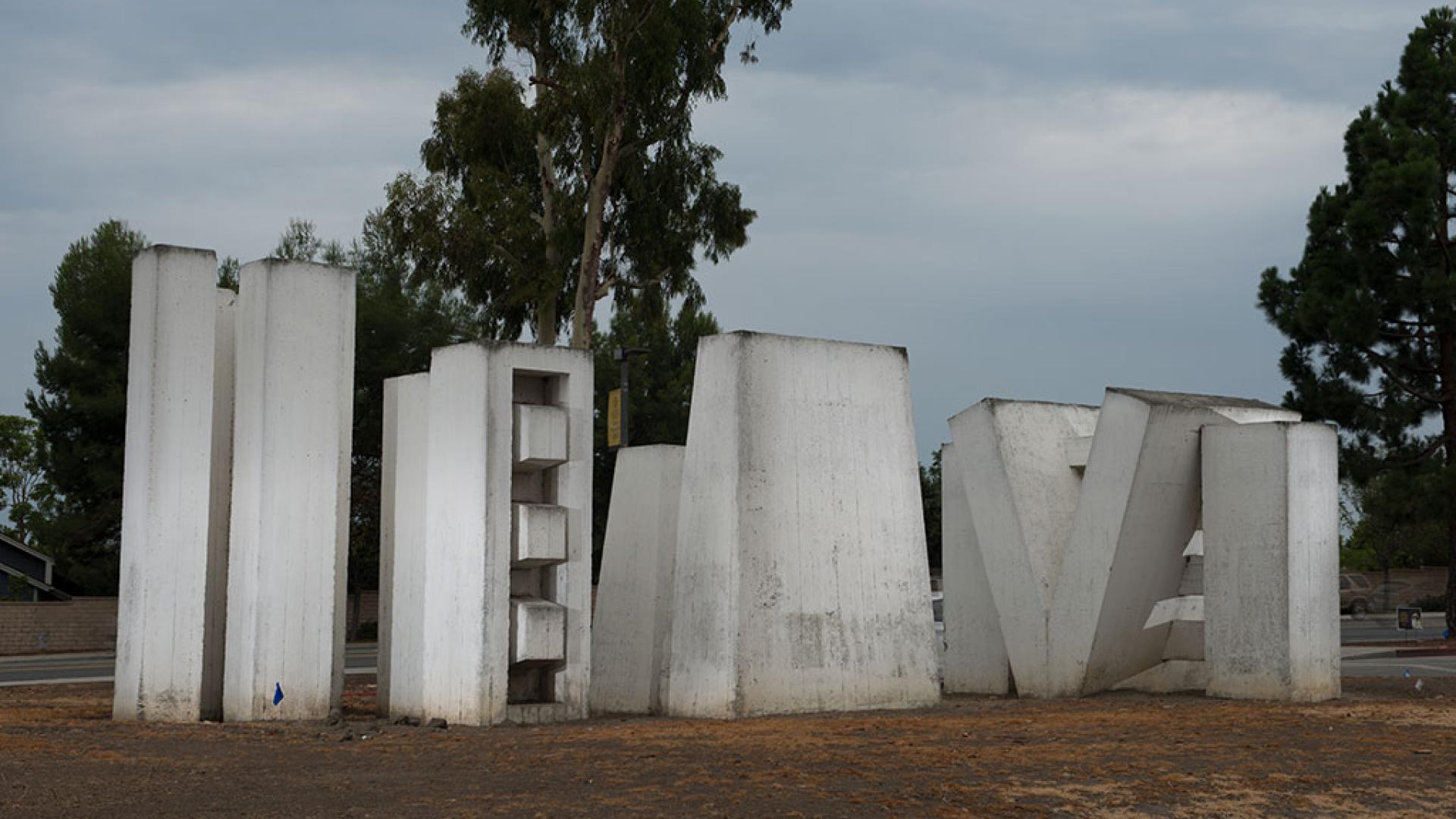
- J.J. Beljon’s Homage to Simon Rodia: “It may look rough but he had a very strong idea of how each one of them were going to be. For some of them, we let the boards have a very rustic look. They would be sandblasted and carved up on the inside and then we’d allow spaces so they wouldn’t come together. Then when we poured the concrete, a motorized piece of equipment in the middle would push it out these cracks to his liking.”
Far-Sited celebrates the 1965 invited artists’ work:
This is a carousel. Use next and previous buttons to navigate or jump to specific slides with the numbered "go to slide" buttons.

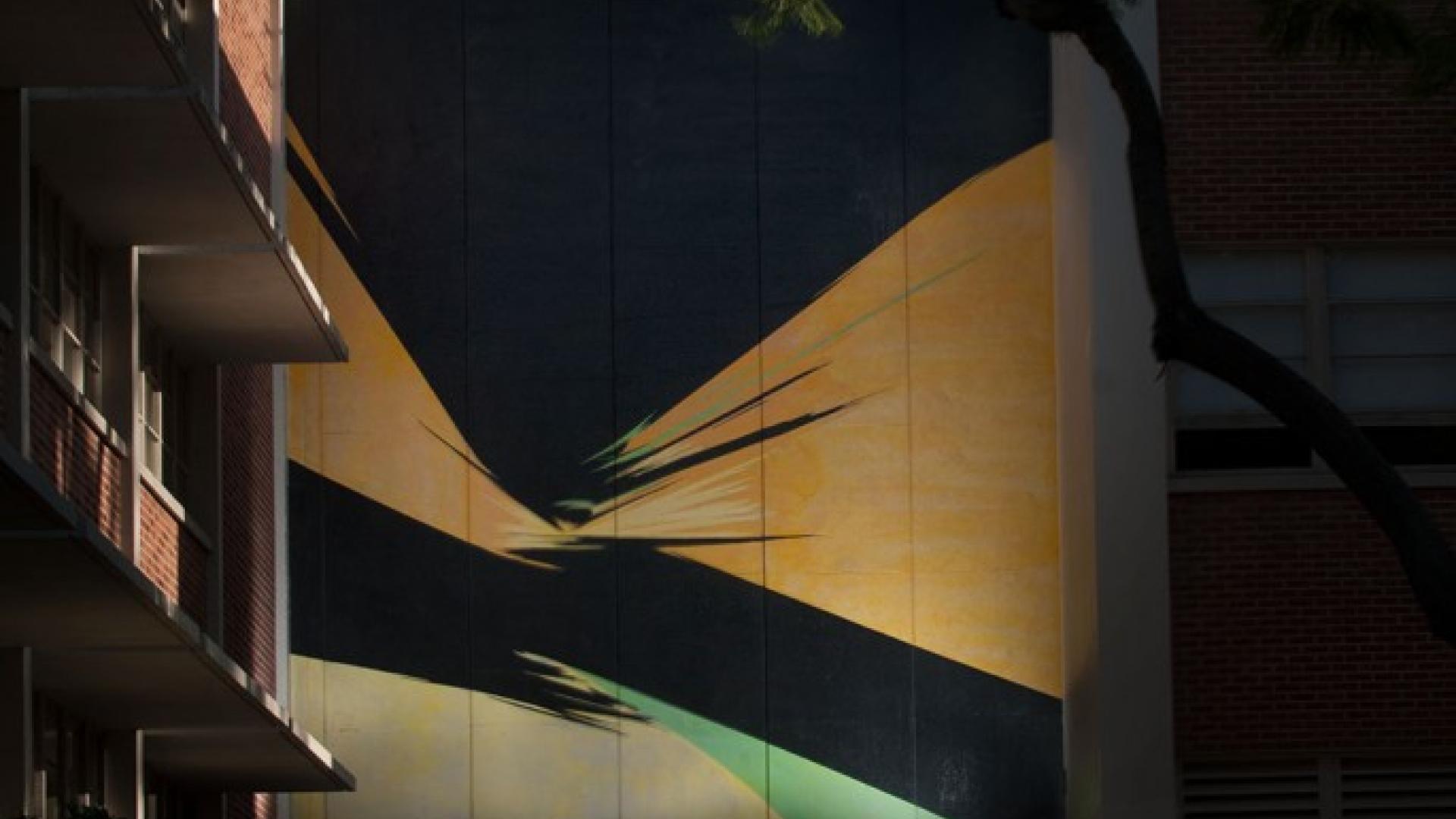


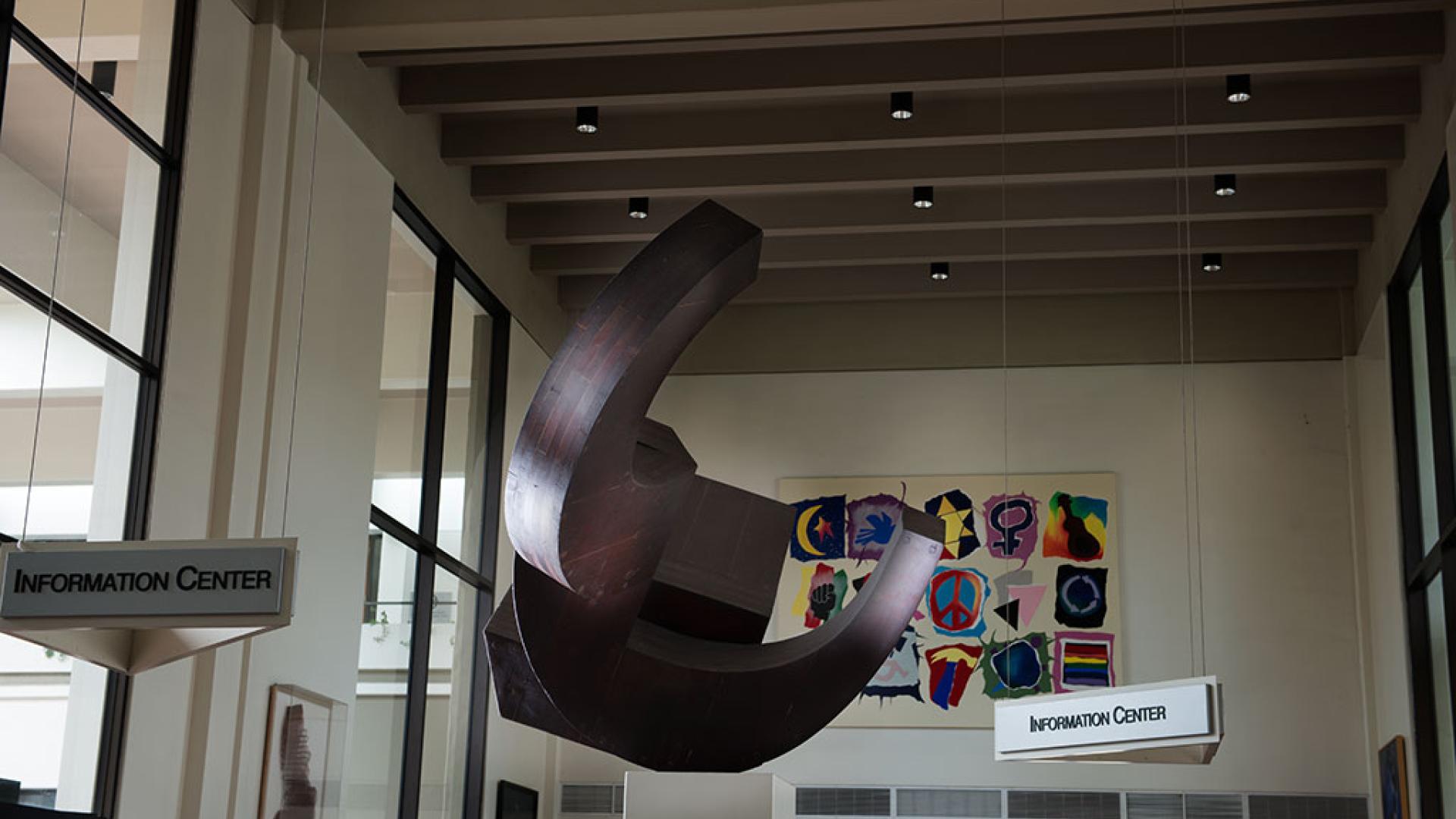

![Kosso Eloul, Hardfact; Concrete and stainless steel 175 x 74 x 1,539 inches. Co-organizer of the 1965 California International Sculpture Symposium, Eloul said, “The fusion of [steel and concrete] gave me something that I could not have achieved with either of them singly: the tension and the power of the metal—hard, clear, tense and dynamic—combined with the tremendous feeling of weight and stability of concrete](/sites/default/files/styles/slideshow_paragraph_landscape_1920x1080/public/images/2026-07/built_img4_0.jpg?h=199d8c1f&itok=ZWSF9vRM "Kosso Eloul, Hardfact; Concrete and stainless steel 175 x 74 x 1,539 inches. Co-organizer of the 1965 California International Sculpture Symposium, Eloul said, “The fusion of [steel and concrete] gave me something that I could not have achieved with either of them singly: the tension and the power of the metal—hard, clear, tense and dynamic—combined with the tremendous feeling of weight and stability of concrete")
Photos by Joseph Philipson, Michael Sullivan, Luke Lewison and Manfong Ieong. Historical photos courtesy of the CSULB University Art Museum.