Research
The Computational Fluid Structure Lab (CFSL) investigates Computational Fluid Dynamics (CFD) and fluid–structure interaction (FSI) through theoretical and numerical approaches.
Our research focuses on smart and adaptive propulsion, UAVs, morphing wings, biomedical devices, and energy conversion systems, integrating theoretical analysis and high-fidelity numerical simulations to improve performance, stability, and efficiency in complex engineering systems.
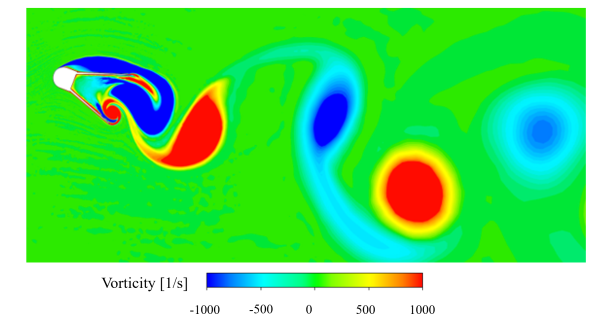
This research investigates bio-inspired morphing wings and adaptive structures that change their shape in response to different flight conditions. Inspired by natural flyers such as birds and manta rays, we combine CFD, fluid–structure interaction (FSI), structural modeling, and experiments to study aerodynamic performance, aeroelastic stability, and shape adaptation. The goal is to develop efficient and adaptive wing technologies capable of improving aircraft performance across a wide range of operating conditions. replace or remove this text

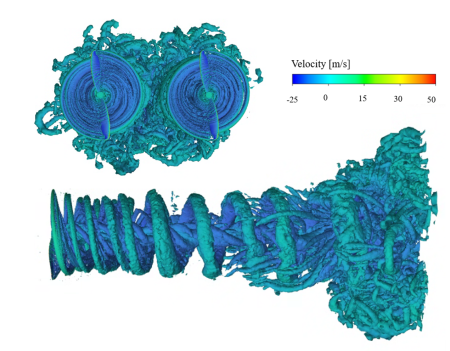
This research investigates aerodynamic interactions among multiple propellers in electric vertical takeoff and landing (eVTOL) aircraft using Computational Fluid Dynamics (CFD). We examine the effects of propeller spacing, blade configuration, Reynolds number, and flight conditions on rotor performance and wake interactions during both hovering and forward flight.
The goal is to better understand rotor–rotor aerodynamic interactions and identify design strategies that improve efficiency, stability, and overall performance for next-generation eVTOL aircraft.
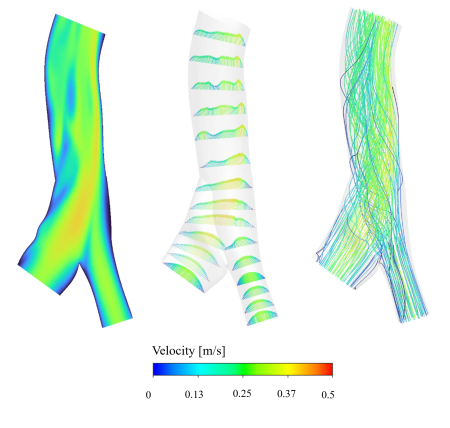
This research applies Computational Fluid Dynamics (CFD) and Fluid–Structure Interaction (FSI) to investigate complex blood flow and vessel deformation in the inferior vena cava (IVC). Current studies examine how patient-specific geometry and venous diseases, including IVC stenosis (IVCS) and deep vein thrombosis (DVT), affect hemodynamics.
By integrating biomechanics, CFD, and FSI, we aim to improve numerical models for predicting blood-flow behavior and vessel response, supporting the design and evaluation of vascular implants and improved understanding of venous disease progression.
This research develops a reduced-order aerodynamic model for high-lift multi-element wings, with applications including motorsport aerodynamics. The approach combines a viscous–inviscid differential boundary-layer solver and panel method with a surrogate correction trained on high-fidelity RANS simulations. The goal is to achieve near-CFD accuracy at significantly lower computational cost, enabling rapid design exploration and aerodynamic optimization.

This research investigates the fluid–structure response of rocket nozzle extensions during transient startup and shutdown conditions, where over-expanded flow can generate shock motion, asymmetric flow separation, side loads, and structural vibration.
Using CFD, structural analysis, and FSI, we examine transient pressure loads, deformation, stress, and vibration to better understand the interaction between nozzle flow separation and structural dynamics. The goal is to develop a validated simulation framework for predicting nozzle response to transient loading and geometric variations.

This research investigates droplet behavior and interactions on superhydrophobic surfaces using Computational Fluid Dynamics (CFD) with the Volume of Fluid (VOF) method. We examine the effects of freestream velocity, droplet size, spacing, and arrangement on droplet motion, coalescence, detachment, and flow-induced forces.
The study focuses on how flow separation, pressure gradients, and recirculation influence droplet interactions and adhesion. The goal is to better understand droplet dynamics and support the development of self-cleaning, low-friction, and water-repellent surfaces for applications in engineering, materials, and biomedical systems.

This research uses Computational Fluid Dynamics (CFD) to investigate unconventional Mars entry vehicle concepts designed to improve aerodynamic braking, stability, and landing performance in the thin Martian atmosphere. Current studies focus on shuttlecock-inspired configurations and compare their aerodynamic characteristics with more conventional entry vehicle designs.
The research examines lift-to-drag ratio, ballistic coefficient, aerodynamic forces and moments, and static stability over a range of flow conditions and angles of attack. The goal is to identify entry vehicle geometries that can provide improved deceleration and stability for future high-mass planetary entry and landing missions.