
Book Introduction
To book, You Can Choose To Be Happy: "Rise Above" Anxiety, Anger, and Depression
Tom G. Stevens PhDPsychologist/Professor Emeritus, California State University, Long Beach
Send Feedback/Questions to: Tom.Stevens@csulb.edu
You Can Choose To Be Happy:
Site dedicated to enhancing human happiness, self-development, and success
SITE MAP: All free Self-help resources includes online book, You Can Choose To Be Happy, and SHAQ
|
|||
| search engine by freefind |
From You Can Choose To Be Happy,
Tom G. Stevens PhD
Go to
Dr. Stevens' Home Page
Go to book contents
Book Introduction and Dedication
WHO IS THIS BOOK FOR?
It may be for you if you answer "yes" to any of the following questions:
- Do you want to discover the causes of happiness and unhappiness?
- Would you like to develop greater self-esteem?
- Do you want a more positive, but realistic, view of the world?
- Would you like to learn how to achieve mental control over emotions such as anxiety, anger, guilt, and depression?
- Do you worry too much about pleasing others or gaining others' approval?
- Are you too dependent on others for your happiness?
- Would you like to get more internal control of your life or become more assertive?
- Are you too codependent (take too much responsibility for others)?
- Do you want to improve your ability to motivate yourself, be more successful reaching your goals, and have a greater impact on the world?
- Would you like to feel less stress and make your time more productive?
- Would you like to advance in your journey to self-actualization (be more like one of Maslow's self-actualizing people, who were extremely happy and productive)?
- Do you want to maximize your happiness and your contribution to others' happiness?
ABOUT THIS BOOK:
Learn how to become more self-actualized. Dr. Abraham Maslow's concept of self-actualization is still one of the best descriptions of the healthy personality. Self-actualizing people are both extremely happy and productive. No matter what your background and personal history is, you can learn the basic beliefs and life skills it takes to be happy and more self-actualized.
Core beliefs, values, and life skills make the difference between happiness and unhappiness. The first thing I did before writing this book was to list the key beliefs and life skills for creating a happy life and becoming like Maslow's self-actualizing persons. My reading, clinical and personal experience, and my research with my Life Skills Questionnaire on over 4000 people and my recent research with The Success and Happiness Attributes Questionnaire (SHAQ) on 3400 more have helped me identify those key beliefs and life skills. They form the heart of this book.
Get mental control over harmonious functioning. Harmonious functioning is a state we can all achieve which is similar to what Maslow called "peak experience" or Csikszentmihalyi called "flow.” It is a more optimal state of being in which all of the cells in the mind and body seem to be functioning in harmony. The result is maximum learning, performance, and happiness. Understanding the causes of harmonious functioning can help you attain these natural highs.
My wife Sherry and I rarely do anything for each other out of obligation. We almost always do whatever we do because we genuinely want to. You can eliminate most of the obligation from your relationships, but you may need a new way of thinking. You may also need to learn better communication methods. Try the methods in this book that have worked for us and our clients. The result is a mutual feeling of freedom, love, and intimacy.
This is a comprehensive, advanced self-help book. It can be read, understood, and used successfully by almost anyone. I designed it for the type of people that I see most often in my classes, workshops, and psychotherapy. Many have already read one or more self-help books or have had previous counseling. Many are in recovery from alcoholism, drug addiction, abuse, or other problems. However, people ranging from 19-year-old freshmen to PhD psychologists have said that it was personally beneficial to them. My primary goal is that by reading this book you will be a happier, more productive person. If you are happier, you will radiate that happiness to others as well. A secondary goal is for you to say (as others have) that this is the best book you have found to help you learn how to be happy and self-actualized.
MY THANKS TO:
Too many people have contributed to my knowledge and indirectly to this book to mention. My first mentor was Charlotte May Stevens, my mother. My second mentor was Dr. W. McFerrin Stowe, an extraordinary Methodist minister, who was loved by the 10,000 members of his church for his great insights into life and his great preaching. He helped me get started.
At both the University of Oklahoma and Claremont School of Theology, I had a number of professors who were especially influential and beneficial to me. They introduced me to some of the great thinkers of our time--such as Drs. Carl Rogers, Abraham Maslow, George Kelly, R. B. Cattell, Paul Tillich, Teihard de Chardin, and others whose ideas are reflected in this book.
From my doctoral program in psychology at the University of Hawaii, I am especially grateful to Dr. Art Staats, my dissertation chair, and Dr. Roland Tharp for their knowledge and help. Both contributed to major advances in the field of psychology and both helped give me a foundation in cognitive-based human learning theory that even today is a fundamental part of my thinking and of this book.
In the years since my formal education, I have actively pursued new ideas in the field of psychology. Cognitive science and artificial intelligence have become a special interest in recent years. In those fields I have been influenced by the writings of Dr. John Anderson of Carnegie-Melon and Dr. Art Grossberg of Boston University--among many others. Self-help writers--especially Dr. Wayne Dyer--have also influenced my ideas.
To my many friends and family members who have given me so much over my lifetime–especially Jane Stevens and Ron Stevens–thank you. To Bobbe Browning, a wonderful friend, who spent many hours editing the final manuscript and finding many wording problems I could not see, I give a special thanks for your work as well as your friendship.
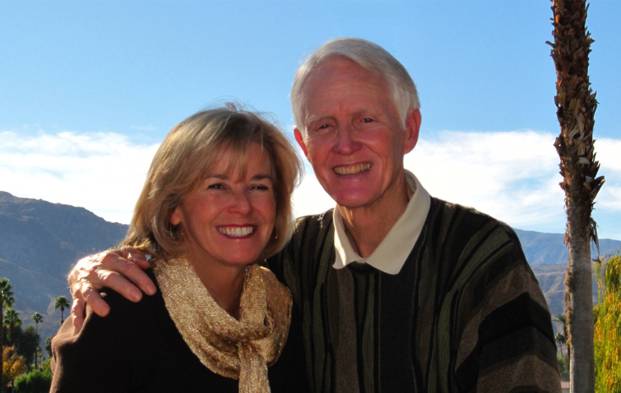
My wife, Sherry, who is a university counselor and therapist, has been a special inspiration, and has been my close collaborator and editor. Since we met, my own thinking has continued to develop through our interactions. In our relationship, we both started with ideas similar to those in this book, but needed time to "work out the details." The results have been wonderful! When we meet a difficult situation that upsets us--either alone or together--we can use our key phrase that we need to "rise above" the situation. We "rise above" it by thinking of the situation from a higher perspective (see Chapter 8). She is a constant joy and inspiration to me.
We are grateful for our children, Tracie, Spencer, and Tim; their spouses David, Christin, and Trina; and our grandchildren Savannah, Spencer, and Sean; Roxy and Charlie; and Aubrey and James. All seem happy and we are proud of them.
I also want to thank the hundreds of my clients who have shared some of their innermost secrets and parts of themselves with me. They have allowed me to know them at a depth few others ever see. My clients have helped me learn that there are "secrets of happiness and success" that seem to work for most people--even those with very different backgrounds and personalities.
These many people have given their enriching gifts of knowledge to me. My gift is to pass it on to you, and I hope this gift brings you as much happiness as it has me. I wish you a life filled with happiness.
Note for Revised Edition
I want to thank the many readers who have sent me emails after reading my first edition. A few reader comments include:
●"The book is a terrific combination of scholarship, superb information, and spirituality."
●”I have read your book and it was very helpful to me. You cannot even imagine how it changed my life. My life was lonely and now I have many good friends.”
●”I have just read your book, "You can choose to be happy.” Already I am more at peace and will never be the same again.”
●”Dr. Stevens, just wanted to let you know that I have found your book to be such an inspiration to me.”
●”From reading your book, day by day, I try to understand and instill in myself the lessons on the CHOICE of being happy. You've done a wonderful job, and I thank you for writing this easy to read book and for helping me through rough times.”
●”I have only been following your book’s advice for a few weeks but I have already noticed a great difference in my level of happiness.”
●”I am taking my Masters in Counseling. Your book is a very wonderful book. There are a lot of books on happiness but yours is a comprehensive one. Thank you very much for giving me such beautiful ideas.”
●”I have been so unhappy, angry, anxious, and insecure for too long! You gave me the greatest idea I ever heard-- to make happiness (for myself and others) my ultimate goal in life.”
●”I was trying very hard to be happy for decades, but I couldn’t. New problems come to the surface when I solve the old ones…I read your book about happiness and I found it what I wanted for years.”
Several hundred thousand people have read my book or visited my websites (http://www.csulb.edu/~tstevens). These websites contain hundreds of pages of free self-help information and my Success and Happiness Attributes Questionnaire (SHAQ). SHAQ is free, and was designed to test in detail the ideas in this book. SHAQ measures personal attributes such as self-worth, self-confidence, world view, internal control, core beliefs and values, emotional coping, self-management, and assertiveness discussed in this book. SHAQ also measures other factors important for success and happiness in relationships, careers, and academic pursuits.
I collected a great deal of research data with SHAQ. This data provides strong support for both the utility of SHAQ and the validity of ideas in this book. This book revision will summarize some of these research results. Most SHAQ research results are put into boxes you can easily omit if you prefer not to read them. However, even if you don’t read the data, you can be assured that my recommendations are supported by the research data, and I hope that the data will give you more confidence in trying these ideas. As far as I know, this is the only self-help book that has tested so many of its specific ideas so thoroughly and found such positive results. Visit my website to see the full SHAQ research article or to complete SHAQ (free).
I hope this book will help you make yourself and the world a little happier. That is my main goal and reward for writing it.
Tom G. Stevens PhD January, 2010
The BOOK (free download): Go to Contents of Dr. Stevens' book, You Can Choose To Be Happy: "Rise Above" Anxiety, Anger, and Depression.
SELF-HELP INFORMATION: FREE SELF-HELP materials available on this web site (click here to see list)
ORDERING the BOOK: How to ORDER You Can Choose To Be Happy
SHAQ QUESTIONNAIRE: Free Success and Happiness Attributes Questionnaire (SHAQ) to assess self on many factors including HQ-Happiness Quotient
EMAIL DR. STEVENS: Email feedback to Dr. Stevens tstevens@csulb.edu I welcome your comments about my web site or any of its contents.
Self-Help and other resources on this website (and site map)
Web site created and maintained by: Tom G. Stevens PhD Psychologist-Faculty Emeritus,
California State University, Long Beach Counseling and Psychological Services.
URL of this web site: http://home.csulb.edu/~tstevens
HOME PAGE: Return to Dr. Stevens' Home Page