Documentary films for regional geography courses, off-line classes, CSULB
(GEOG) --
Video Collection, the Department of Geography
(Library) -- Media Collection, the Main
Library
(MCC) --
MultiCultural Center
Availability/location:
-- Films from the Library
(the University Library, the Media Collection) as a
rule have their library codes copied here (click
to get a more detail library
record; the Library has been changing some of the codes
recently).
-- Videos from
Structure: Videos in each of the following
regional sections are ordered in the following way:
-- 2. the Main Library's
easiest
and shortest videos, most commonly used in our 100 level
intro classes
-- beyond that I include some exceptional feature motion pictures from the Library that are made as documentaries or have such the documentary quality; might be useful for individual projects.
NEW (Dec 22nd, 2017)
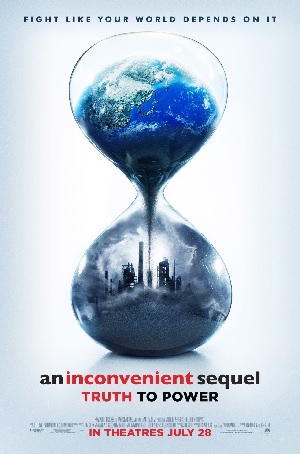 |
An Inconvenient Sequel: Truth to
Power (2017, 97 minutes) GEOG
Former Vice President Al Gore continues his tireless fight to educate the next generation of climate champions. Multiple locations |
 |
Becoming California: Environmental
Change on America's Western Edge (2014, 1 h 56 minutes) GEOG
Epic story of environmental change in California. California |
 |
Blue Gold: World Water Wars
(2010, 90
minutes) GEOG Wars of the future will be fought over water as they are over oil today, as the source of human survival enters the global marketplace and political arena. Multiple locations |
 |
Braving Iraq (2010, 60 minutes) GEOG
In the 1990s, the Mesopotamian Marshes were virtually destroyed by Saddam Hussein in an attempt to eradicate the Marsh Arabs who lived there. Once the richest wildlife habitat in the Middle East, this “Garden of Eden” was reduced to mile after mile of scorched earth. But Azzam Alwash is making an extraordinary effort to return life to the green paradise he remembers from his childhood. MENA, Iraq |
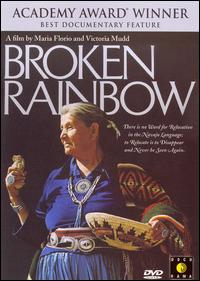 |
Broken Rainbow (1985, 70 minutes) GEOG
The history of Navajo Native Americans, focusing on the government enforced relocation of thousands from Black Mesa in Arizona after the 1974 Navajo-Hopi Land Settlement Act. According to the film, the Navajo were relocated to aid mining speculation in a process that began in 1964. US |
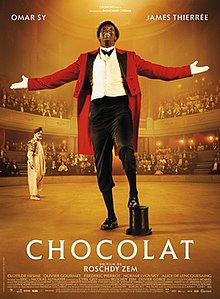 |
Chocolat (2016, 118 minutes, French language) GEOG (feature film) A French drama film directed by Roschdy Zem. The clown Chocolat (Omar Sy) becomes, in the end of the 19th century, the first black artist of the French scene. France. Europe |
 |
Ganges (2008, 150 minutes) GEOG
This sumptuous series tells the story of the most extraordinary river in the world - the Ganges. Human life and nature bustle along her river banks, in a kaleidoscope of color and energy in this dramatic BBC documentary. From man-hunting tigers to giant lizards, in Ganges the wildlife encountered is as diverse as the people. Traveling from the peaks of the Himalayas through frenetic cities to the teeming delta where the river meets the sea, this is a vibrant and colorful look at how the Ganges shaped the wildlife, culture and beliefs of India. South Asia |
 |
Ganges (2009, 93 minutes) GEOG
A true story, God's Outlaw is about international politics, church intrigue, cold-blooded betrayal, and false justice ending in a criminal's death. But it's also about victorious faith and spiritual triumph over some of the greatest political and religious forces known in the 16th century. Europe, UK |
 |
Human Footprint (2008, 90 minutes) GEOG
The National Geographic film will make you realize just what it takes to be you everyday. Have you ever thought about how much food, everyday products, and fuel you've consumed during the course of your life? In National Geographic's new program, HUMAN FOOTPRINT, you'll find out that it's a lot. From our cars to our clothes dryers to our disposable toothbrushes, our impact on planet Earth is astonishing. Whether you're a child who drinks milk or an adult who enjoys a bottle of wine, HUMAN FOOTPRINT takes a phase-by-phase journey through life to illustrate the enormous imprint every American makes during his or her time on Earth. Incorporating surprising facts with playful visuals, this enlightening portrait reveals our level of consumption and the simple changes we can all make to reduce our negative impact on the world. Multiple locations |
 |
Mayan Renaissance (2012, 68 minutes) GEOG
a feature length film which documents the glory of the ancient Maya civilization, the Spanish conquest in 1519, five hundred years of oppression, and the courageous fight of the Maya to reclaim their voice and determine their own future, in Guatemala and throughout Central America. This elegant, beautiful, and thought provoking film will share their vision for the future, their call for a long-foretold renaissance of Maya culture and wisdom, and their 100 year plan to lead humanity forward, from the year 2012 on. The film stars 1992 Nobel Peace Laureate and Maya leader Rigoberta Menchu Tum. All of the images, voices, expert commentary and music in the film come directly from Central America, from the heart of the Mayan world. Middle America |
 |
My Life as a Turkey (2011, 59 minutes) GEOG Biologist Joe Hutto was mother to the strangest family in the world, thirteen endangered wild turkeys that he raised from egg to the day they left home. For a whole year his turkey children were his only companions as he walked them deep through the Florida Everglades. Suffering all the heartache and joy of any other parent as he tried to bring up his new family, he even learnt to speak their language and began to see the world through turkey eyes. Told as a drama documentary with an actor recreating the remarkable scenes of Joe’s life as a turkey mum. Florida. US |
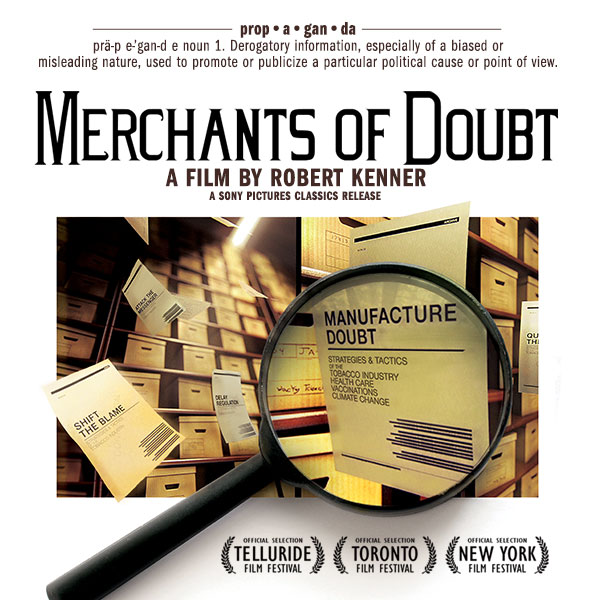 |
Merchants of Doubt (2014, 1 h 36 minutes) GEOG
A satirical documentary that looks at pundits-for-hire who present themselves as scientific authorities as they speak about topics like toxic chemicals, pharmaceuticals and climate change. US |
 |
My Nazi Legacy (2015, 1h 36 minutes) GEOG
A human-rights lawyer conducts conversations with two men whose fathers were indicted as war criminals for their roles in WWII - Nazi Governors and consultants to Adolf Hitler himself. Europe |
 |
Pop Aye (2006, 96 minutes) GEOG
On a chance encounter, a disenchanted architect bumps into his long-lost elephant on the streets of Bangkok. Excited, he takes his elephant on a journey across Thailand, in search of the farm where they grew up together. SE Asia |
 |
Rick Steve's The Holy Land
Israelis & Palestinians Today (2014, 60 minutes) GEOG
Filmed on location in 2013. In Israel, he travels from the venerable ramparts of Jerusalem to the vibrant modern skyline of Tel Aviv. In Palestine, he harvests olives near Hebron, visits a home in Bethlehem, and pops into a university in Ramallah. Weaving together narratives from both sides, Rick also learns about security walls, disputed settlements, and the persistent challenges facing the region. MENA |
 |
Rumi Returning (2007, 57 minutes) GEOG
The biography of Rumi and how it relates to his poetry. Turkey. MENA |
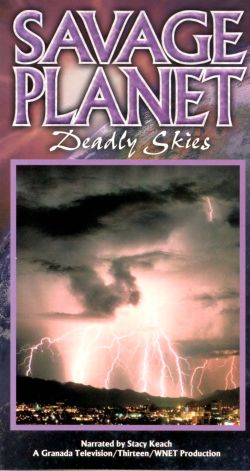 |
Savage Planet (2000, 57 minutes) GEOG
This film is one of a four-part series that looks at natural disasters around the world. This episode focuses on the sky and some of the strange phenomena in it. Sometimes, out of the blue, come lightning bolts, without any storm clouds or other signs that a strike is forming. The viewer sees the disastrous consequences of one such strike on some gliders. The viewer then goes to Peekskill, NY, where a 27-pound meteor crashed into a surprised motorist's car. There is also footage of the 1999 Sydney hailstorm, which destroyed thousands of houses. Interviews with scientists provide insight into the events, as well as revealing plans to harness the forces of nature for human welfare. Multiple locations |
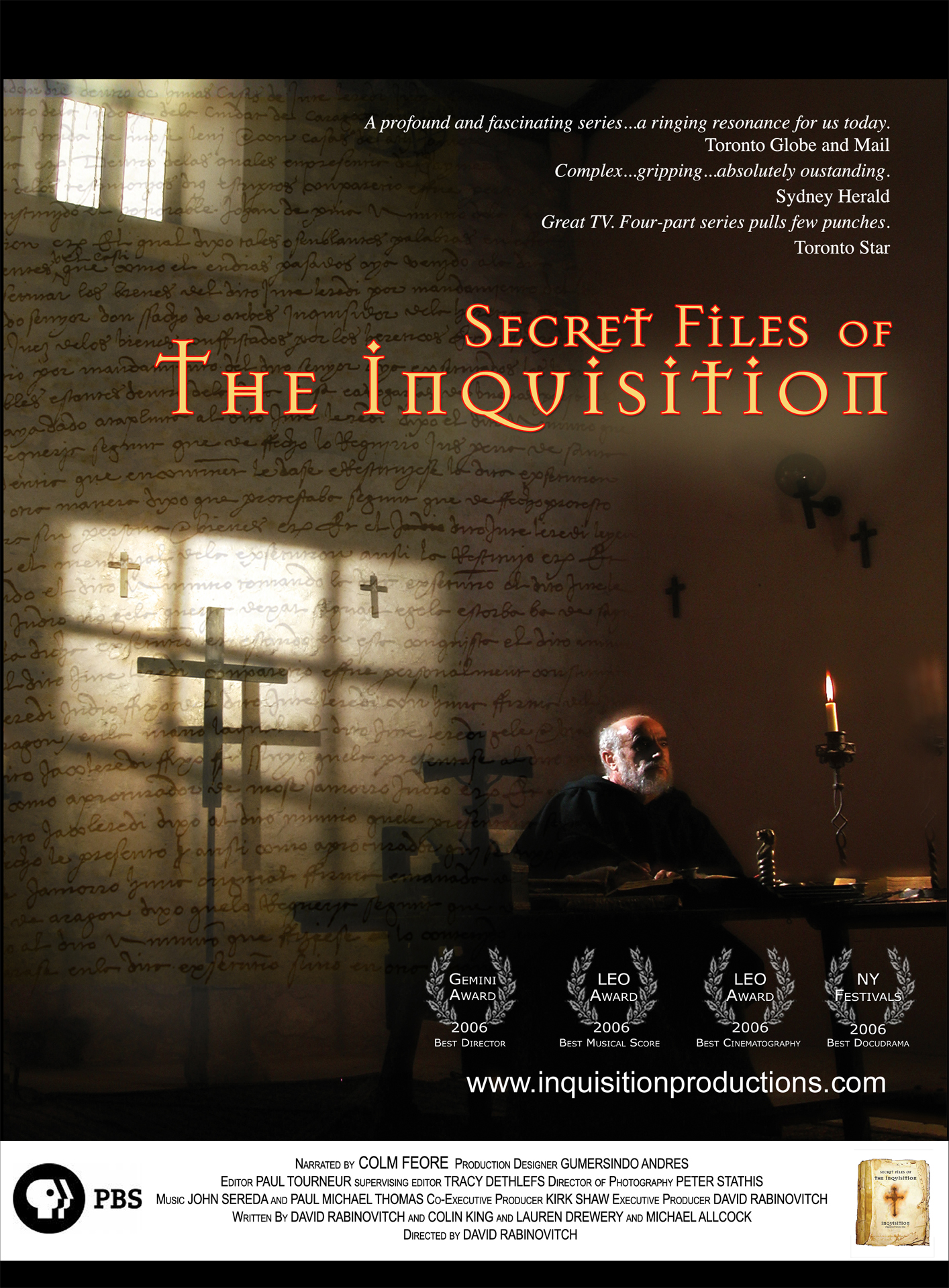 |
Secret Files of the Inquisition
(2014, 240
minutes) GEOG A story of epic proportions and powerful themes of Holy Wars and Crusades, of torture and terror, of the struggle for human rights and dignity. Based on previously unreleased secret documents from European Archives including the Vatican, Secret Files of the Inquisition unveils the incredible true story of the Catholic Church’s 500 year struggle to remain the world’s only true Christian religion. For over half a millennium a system of mass terror reigned. Thousands were subject to secret courts, torture and punishment. Europe |
 |
Stories We Tell (2012, 109 minutes) GEOG
A Canadian documentary film written and directed by Sarah Polley and produced by the National Film Board of Canada (NFB). The film explores her family's secrets—including one intimately related to Polley's own identity. Canada |
 |
Symphony of the Soil (2013, 104 minutes) GEOG
Drawing from ancient knowledge and cutting edge science, Symphony of the Soil is an artistic exploration of the miraculous substance soil. By understanding the elaborate relationships and mutuality between soil, water, the atmosphere, plants and animals, we come to appreciate the complex and dynamic nature of this precious resource. The film also examines our human relationship with soil, the use and misuse of soil in agriculture, deforestation and development, and the latest scientific research on soil's key role in ameliorating the most challenging environmental issues of our time. Filmed on four continents, featuring esteemed scientists and working farmers and ranchers, Symphony of the Soil is an intriguing presentation that highlights possibilities of healthy soil creating healthy plants creating healthy humans living on a healthy planet. Multiple locations |
 |
The Hidden Art of Islam
(2012, 60
minutes) GEOG The film explores Muslim belief and tradition which specify that there should be no depictions of God or the Prophet Muhammad. In religious contexts, this constraint on what artists can depict extends to human figures and other living creatures as well. These prohibitions have inspired a rich visual culture based on calligraphy, Arabesque floral designs, and geometry, all of which feature strongly in the art and design found throughout Islam. MENA |
 |
The Take (2004, 87 minutes) GEOG
The Take is a Canadian documentary film released in 2004 by the wife and husband team of Naomi Klein and Avi Lewis. It tells the story of workers in Buenos Aires, Argentina who reclaim control of a closed Forja auto plant where they once worked and turn it into a worker cooperative. Latin America |
 |
The Vietnam War: A Film by
Ken Burns and Lynn Novick (2012, 1003 minutes) GEOG
The Vietnam War, an immersive ten-part, eighteen hour documentary film series directed by acclaimed filmmakers Ken Burns and Lynn Novick, tells the epic story of one of the most divisive, consequential and misunderstood events in American history, as it has never before been told on film. SE Asia |
| Theeb (2016, 100 minutes) GEOG
(feature film) In the Ottoman province of Hijaz during World War I, a young Bedouin boy experiences a greatly hastened coming of age as he embarks on a perilous desert journey to guide a British officer to his secret destination. MENA |
|
| This Changes Everything
(2015, 89
minutes) GEOG Filmed over 211 shoot days in nine countries and five continents over four years, This Changes Everything is an epic attempt to re-imagine the vast challenge of climate change. Inspired by Naomi Klein's international non-fiction bestseller This Changes Everything, the film presents seven powerful portraits of communities on the front lines, from Montana's Powder River Basin to the Alberta Tar Sands, from the coast of South India to Beijing and beyond. Interwoven with these stories of struggle is Klein's narration, connecting the carbon in the air with the economic system that put it there. Throughout the film, Klein builds to her most controversial and exciting idea: that we can seize the existential crisis of climate change to transform our failed economic system into something radically better. Multiple locations |
|
 |
Theeb (2012, 27 minutes) GEOG
Experience Walden Pond through the words of Henry David Thoreau. As seen on PBS, this award winning visual ode to 19th-century philosophical writer Henry David Thoreau's beloved Walden Pond combines magnificent nature photography with highlights from Thoreau's timeless writings on the beauty and serenity of this New England retreat. Thoreau's Walden allows the viewer to walk in the solitude of Thoreau's footsteps and witness the idyllic wilderness of the famed Massachusetts pond as it might have appeared over 150 years ago. US |
|
|
Where to Invade
Next (2015, 2 hours) GEOG
Filmmaker Michael Moore visits various countries to examine how Europeans view work, education, health care, sex, equality, and other issues. Europe |
 |
Bakhita (2009, 190 min) GEOG
(feature film) Born in a village in Sudan, kidnapped by slavers, often beaten and abused, and later sold to Federico Marin, a Venetian merchant. MENA |
 |
World in the Balance (2004, 120 min) GEOG
It took all of human history until the year 1804 for our population to reach its first billion. Now a billion new people are added every dozen years. In the industrialized world Japan, Europe, and the United States birthrates are falling steeply while the senior citizen population is booming. In this two-hour Earth Day special, NOVA explores these and other trends in the relationship between people and the planet. Multiple locations |
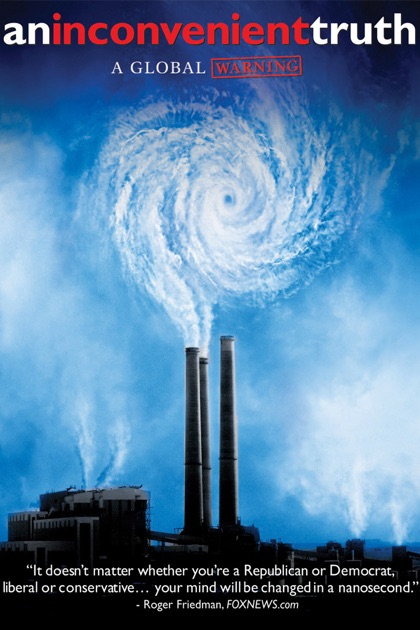 |
An Inconvenient Truth
(2006, 96
minutes) GEOG Former Vice President Al Gore presents a wake-up call about global warming as a real and present danger. Awards. Multiple locations |
| 00. Major Series | jump |
| 00. Multiple Locations / Globalization / Global geopolitics | jump |
| 00. Cities: general/global issues | |
| jump | |
| The regions: For convenience, the films are organized regionally into several blocks | |
| jump | |
| jump | |
| jump | |
| jump | |
| jump | |
The Power of Place: Geography for the 21st Century (2nd. ed.) (GEOG)
A staple series for any World Regional Geography class. Each video film is about 13-14 mins.
A video instructional series for high school and college classrooms; 26 half-hour video programs, coordinated books, and Web siteThe Power of Place: Geography for the 21st Century teaches the geographic skills and concepts that are necessary to understand the world. Geography educators and content experts from around the globe shed light on the physical, human, political, historical, economic, and cultural factors that affect people and natural environments. Maps, animation, and academic commentary bring into focus case studies from 50 sites in 36 countries. Originally produced in 1996, the entire series has been updated. Each case study features new interviews, maps, video footage, and graphics in order to reflect the geographic issues of our world in the 21st century. A coordinated Web site provides further content information and connection to the National Geography Standards. Produced by Cambridge Studios. 2003.
Video Visits: Europe (
(Films: Great Cities of Europe,
"SuperCities brings the world's best-loved cities to life in all their breathtaking grandeur and vibrant detail. The people, the history, the architecture are here; more than that, you can feel the pulse and passion that only truly great cities possess. Narrated by Kathy Tayler, the series transports the viewer to the very heart of each teeming metropolis, each one unique, absorbing, brimming with life and vigour."
Life GEOG (Life I series) VHS
30-part series that looks at the effect of globalization on individuals and communities around the world.
www.bullfrogfilms.com/catalog/ls.html
City Life GEOG (Life II City Life series) VHS
22-part series examining the effect of globalization on people and cities worldwide.
Life III GEOG (Life III series) VHS
A 12-part series about Globalization and its effect on ordinary people and communities around the world.
http://www.bullfrogfilms.com/catalog/l3.html
Soviets: The True Story of Perestroika GEOG VHS
This series represents an unparalleled documentary record.of the rapid and profound transformations within the U.S.S.R. that have reverberated throughout Eastern Europe and since led to the dissolution of the Soviet Union itself. The programs include accounts from survivors of Chernobyl and moving sequences of the survivors of the Armenian earthquake, and look at changing attitudes toward religion, disillusioned Afghan war veterans, and various nonconformist groups. "Only rarely do films attain a place in the history of the conflicts which they depict, and this achievement makes Soviets as close to a masterpiece as any documentary I have seen recently." —The London Observer. Winner, Prix Italia for best documentary. (5 x 58 minutes, color)
Glasnost Film Festival GEOG VHS
The Glasnost Film Festival is a 12-video collection featuring 22 Soviet documentary films produced in the "Glasnost Era." Many of the films remain definitive and timeless documents of previously unexplored aspects of Soviet history and culture. All were produced originally on 35mm film and are subtitled in English.
Tales from the Map Room GEOG VHS
Series which explored the nature and role of mapping in various historical and social contexts (six films).
"A six-part history of maps and map-making which is stunning to look at and fascinating to listen to." - The London Times
"Like many BBC projects, the six-segment series received wide acclaim when it was broadcast. It has a definite British slant...but it is intelligently presented and accessible to virtually all who have an interest in the way maps have mirrored and shaped our world...Each of the six half-hour episodes stands alone as a study of a particular aspect of mapping...Perhaps public networks around the world will one day consider rebroadcasting this delightfully informative series. Why not suggest it to your local public television station?" - Mecator's World
"This distinctive series with a decidedly international flavor is perfect for both high-school and community college students as well as history enthusiasts." - Booklist
X doesn't always mark the spot. Still maps can unlock the past and illuminate the present. This lively new BBC series explores the huge variety of maps, ancient and modern and the related themes of history and politics that dictate the map-maker's art.
The Shape of the World GEOG VHS
"These sophisticated, well-edited programs combine exploration, science, math, religion, economics, politics and philosophy in a manner that will intrigue both students and general audiences." - Booklist
"The most interesting presentation of the history of cartography you could ask for." - Washington Times
For thousands of years, man has searched for understanding by charting the lands, the seas, the skies, the story of how the world was mapped is the essence of discovery... in science, math, religion and philosophy.Now a major production from PBS and IBM provides an interdisciplinary series, aimed at science and social studies instructions. Beginning with ancient European, African, Egyptian and Asian civilizations, the story moves through time to today, and the minute mapping of the DNA in our bodies. (Six 55-min episodes)
We have a donated copy on 3 VHS tapes as well.
Empire
The Age of Reason saw science elevated to the level of art. At the center of this was France, where, for example the magnificent palace at Versailles was designed according to the new principles of perspective and geometry.
Heaven And Earth
This program reveals how our first ideas of the world emerged in contrasting and conflicting ways-sometimes from the imagination, sometimes from science, and sometimes from the more basic need for rulers to know their domain better.
Pictures of the Invisible
By the mid 19th century man had succeeded in mapping and measuring most of the Visible world-now the race was on to discover and map what had been invisible.
Secrets of the Sea
Seamen of many nations and civilizations had sailed long distances from their homes, but none had managed to grasp the link between all the different lands and seas. For whoever did succeed in charting the seas, though, the prize would be untold wealth, power and empire.
Staking A Claim
The race was now on to find an alternative route to the Spice Islands Via the West. Christopher Columbus left Spain in 1492, and landed on the coast of the New World, but it would be another 15 years before it was christened America.
The Writing On The Screen
Today maps are tools; they are not there simply to guide us, but to save lives, and to alert us to dangers and risks that threaten both man and the earth.
Fighting the Tide: Developing Nations and Globalization 2004 5-part series, 26 min. each. (GEOG) DVD
Long Search, The 676 min 2001 DVD, 5 disks GEOG
This sound and picture enhanced series has served as the basis of successful religious philosophy courses around the world. An American Film Festival Red Ribbon winner, the series gives a balanced treatment of a force that is sadly neglected in most educations, the basic beliefs of the major religions in the world today. Ronald Eyre takes the viewer on a pilgrimage beginning in London and spanning 150,000 miles including India, Japan, Israel, Rumania, Sri Lanka, Hong Kong, The United States, Egypt, and South Africa.
WorldFrontline: Stories from a small planet 57 min. each (Library) VHS 2002-3
Cambodia - Pol Pot's shadow; Romania - My old haunts; India - The hole in the wall; D857 .S767 2002 no.102
Iraq - Truth and lies in Baghdad; Colombia - Pipeline war D857 .S767 2002 no.103
North Korea-Suspicious Minds; Nigeria-The Road North; Iceland-The Future of Sound D857 .S767 2003 no.104
[a CD-ROM with 10 films from the series is provided to instructors adopting the Pulsipher's World Regional Geography textbook; the India, Nigeria, and Cambodia films are there too]
Power of place: world regional geography (Library) G128 .P69 1996 VHS
An older version of The Power of Place: Geography for the 21st Century series (see above). 13 videocassettes (ca. 60 min. ea.) Annenberg/CPB Project, c1996.
Produced by Cambridge Studies in collaboration with ABC-TV Open Learning, Australia ; series advisors, H.J. de Blij and Peter O. Muller.
Human geography: people, places and change (Library) GF41 .H86 1996
A BBC production for the Open University in association with the Annenberg/CPB Project at the Corporation for Public Broadcasting. 10 videocassettes (27 min. ea.) 1996
1. Imagining new worlds -- 2. Reflections on a global screen -- 3. Global firms in the industrializing East -- 4. Global tourism -- 5. Alaska: the last frontier? -- 6. Population transition in Italy -- 7. Water is for fighting over -- 8. A migrant's heart -- 9. Berlin: changing center of a changing Europe -- 10. The world of the dragon.
Engineering an empire (Library) DVD disc 1-6 (44 min. each film) D21.3 .E54 2006
disc 1 Greece: age of Alexander / The Aztecs /
disc 2 Carthage; China; Russia
disc 3 Britain: blood and steel; The Persians; The Maya: death empire
disc 4 Napoleon: steel monster; The Byzantines; Da Vinci's world
discs 5 & 6. Rome: engineering an empire; Egypt: engineering an empire (91 min. each).
1. One Earth, Many Scales GEOG (series The Power of Place: Geography for the 21st Century). [Older version in the Library: G128 .P69 1996 Prog. 1]
Lost in Space? Geography Training for Astronauts — Preparation for a NASA Shuttle mission provides context for introducing key issues in physical geography and human-environmental interaction.
Globalization and Revolt — Why do the forces of globalization seem to draw some places closer together and cause others to pull farther apart?
1. Life: The Story So Far - GEOG (Life I series)
How the globalized world economy affects ordinary people.
7. The Seattle Syndrome - GEOG (Life I series)
Were the WTO protesters right in their effort to protect workers and the environment from exploitation.
10. The Summit - GEOG (Life I series)
The UN General Assembly meets to review progress on social justice worldwide.
11. All Different, All Equal - GEOG (Life I series)
Examines progress in women's rights globally.
13. The Silver Age - GEOG (Life I series)
Growing population of elderly worldwide seeks purpose and care.
AIDS drugs unaffordable in developing countries.
30. The On-going Story - GEOG (Life I series)
Final episode examines the international community's commitment to linking social and economic development with human rights.
1. City Life - GEOG (Life II City Life series)
Explores Sao Paolo in introduction to series examining the effects of globalization on people and cities.
13. Patently Obvious - GEOG (Life II City Life series)
International patent regulations only protect multinationals.
1. The Road from Rio - GEOG (Life III series)
Questions the relevance and success of the World Summit on Sustainable Development in Johannesburg.
Isms (GEOG) VHS
From Colonialism to Communism, these seven programs offer valuable insight into the various governing styles/ideologies of the world. Students obtain an inside look as they compare and contrast the different forms of government and use the information to form their own opinions. Each program is about 19-minute long. .
Federalism
Facism
Capitalism vs. Interventionism
Communism & Socialism
Liberalism vs. Conservatism
Colonialism vs. Imperialism
Ground War: The Evolution of the Battlefield (2010, 4 hours) GEOG (donated by Unna L.)
Key tech advances in warfare through the ages. World
Sacred Journeys with Bruce Feiler (2014, 360 minutes) GEOG (donated by Unna L.)
Pilgrimages in France, Japan, Jerusalem, Mecca, India, Nigeria.
Around the World in 80 Treasures (2008, 59 minutes x 10 episodes) GEOG (donated by Unna L.)
Maccu Picchu, Easter Island etc. Multiple locations
Peace One Day Promotional Film (GEOG) 8 min. VHS
No details
Geography: A Voyage of Discovery (GEOG) VHS 42 min.
Produced by Todd A. Gipstein in collaboration with the National Geographic Society. 1987
Shape of the World series (GEOG) VHS
Blue Planet (GEOG) DVD
Originally filmed in the IMAX format, this video reveals the Earth to us as only few people have ever seen it: from space.
Mystery of the Megaflood 56 min DVD GEOG
Sand Wars (2013, 74 min) GEOG (donated by Unna L.)
Is sand an infinite resource? Can the existing supply satisfy a gigantic demand fueled by construction booms? What are the consequences of intensive beach sand mining for the environment and the neighboring populations?
Surviving Progress (2011, 86 min) GEOG (donated by Unna L.)
Humanity's ascent is often measured by the speed of progress. But what if progress is actually spiraling us downwards, towards collapse? Ronald Wright, whose best-seller, A Short History Of Progress inspired SURVIVING PROGRESS, shows how past civilizations were destroyed by "progress traps" - alluring technologies and belief systems that serve immediate needs, but ransom the future. As pressure on the world's resources accelerates and financial elites bankrupt nations, can our globally-entwined civilization escape a final, catastrophic progress trap? With potent images and illuminating insights from thinkers who have probed our genes, our brains, and our social behaviour, this requiem to progress-as-usual also poses a challenge: to prove that making apes smarter isn't an evolutionary dead-end. Global issues, development
The End of the Line (2009, 85 min) | Documentary GEOG (donated by Unna L.)
Documentary filmmaker Rupert Murray examines the devastating effect that overfishing has had on the world's fish populations and argues that drastic action must be taken to reverse these trends.
National Georaphic: World's Most dangerous Drug 52 min 2007 DVD GEOG
Methamphetamines affect the brain in numerous ways. The drug tricks the brain into thinking that extra dopamines are released. Eventually, the brain shuts down. Looks at the worldwide epidemic of methamphetamine abuse, including why it is so addictive and the problems it creates within society.
Read more: http://channel.nationalgeographic.com/series/explorer/2592/Overview#tab-Videos/05499_00#ixzz0zGN13kxG
Reflections on the Long Search (part of: Long Search, The, 2001, Disk 05, 156 min total; vol. 13), GEOG
In this episode Ronald Eyre asks himself some questions. It is not a film in which he hands out diplomas to believers of the religion that pleased him best. The search, for him, began long before this series got off the ground and will continue long into the future. There are no winners and no losers. There is an element of personal stocktaking, however, and before doing so, Eyre reveals his own background, the mental furniture that he of necessity packs whenever he goes on search.
The Ascent of Money: a Financila History of the World (DVD 2009, 240 min)
Among the places Ferguson visits are Bolivia, where Spain established vast gold and silver mines — still in operation — and enslaved the indigenous people to create so much currency for the Spanish crown that it eventually became worthless; Italy, where the Medici family transformed the sinful practice of usury into the banking system we know today and in the process became as powerful as monarchs; Paris, where Scotsman John Law created a Ponzi scheme tied to the Louisiana territory that brought France to its knees; London, where bonds trader Nathan Rothschild and his family nearly went bankrupt by helping to finance the British army’s war against Napoleon, then achieved enormous wealth through the buying and selling of war bonds; Scotland, where two ministers established the first life insurance fund, and New Orleans, where the shortcomings of their calculations would be demonstrated to tragic effect in the wake of Hurricane Katrina; and New York, where Ferguson interviews financial wizard George Soros about the concept he introduced of short selling derivatives based on a prediction that they will lose value.
Urbanized 85 min (2011) DVD GEOG
Urbanized is a feature-length documentary about the design of cities, which looks at the issues and strategies behind urban design and features some of the world’s foremost architects, planners, policymakers, builders, and thinkers. Over half the world’s population now lives in an urban area, and 75% will call a city home by 2050. But while some cities are experiencing explosive growth, others are shrinking. The challenges of balancing housing, mobility, public space, civic engagement, economic development, and environmental policy are fast becoming universal concerns. Yet much of the dialogue on these issues is disconnected from the public domain.
Who is allowed to shape our cities, and how do they do it? Unlike many other fields of design, cities aren’t created by any one specialist or expert. There are many contributors to urban change, including ordinary citizens who can have a great impact improving the cities in which they live. By exploring a diverse range of urban design projects around the world, Urbanized frames a global discussion on the future of cities.
The Yes Men Fix the World (2009, 87 min) | Documentary, Comedy GEOG (donated by Unna L.)
Troublemaking duo Andy Bichlbaum and Mike Bonanno, posing as their industrious alter-egos, expose the people profiting from Hurricane Katrina, the faces behind the environmental disaster in Bhopal, and other shocking events.
The World According to Monsanto "Le monde selon Monsanto" (original title) (2008,108 min) TV Movie | Documentary GEOG (donated by Unna L.)
You do not have to believe that God exists, but you will after this movie know that the devil poster! Monsanto is the largest global company that produces agricultural products: pesticides, hormones in raising animals, and genetically modified soybean seeds, corn and other crops. Monsanto has made some of the toxins that are responsible for many diseases, cancer, dementia and the rules are and say Napalm was used in the Vietnam War or PCB oils of which turned out to be a carcinogen as a small atomic bomb.
Flow: For Love of Water (2008, 93 min) GEOG (donated by Unna L.)
Water is the very essence of life, sustaining every being on the planet. 'Flow' confronts the disturbing reality that our crucial resource is dwindling and greed just may be the cause. World
Workingman's Death (2005, 122 min.) HD4901 .W6755 2008
A look at what people from different countries endure in order to have a job. Includes a coal miner in Ukraine, a slaughterhouse worker in Nigeria, a sulfur miner in Indonesia, a steel worker in China, and a ship-breaker in Pakistan.
Bag it: is your life too plastic? (2010, 65/45 min) TP1120 .B334 2010
Our story follows Jeb Berrier, an average American guy -- admittedly not a 'tree hugger' -- who makes a pledge to stop using plastic bags. This simple action gets Jeb thinking about all kinds of plastic. He embarks on a global tour to unravel the complexities of our plastic world. Contents: Original 65-minute version -- 45-minute educational version of film ; Bonus scenes: Jeb in the Netherlands (ca. 2 min.) -- Bioplastic pros and cons (ca. 2 min.).
From Harmony to Revolution: The Birth and Growth of Socialism 58 min. 2006 (Library) DVD HX36 .M873 2006 Part 1 of Heaven on earth: the rise and fall of socialism 3 disk set
As a movement, socialism thrived in Europe—but America was its cradle. This program explores the origins of socialist principles and how they evolved into military revolution in Russia and political strife in the United States. Recounting Robert Owen’s New Harmony experiment, the program details the intellectualization of socialism by Marx, Engels, and Bernstein, followed by the rise of Lenin and the creation of the U.S.S.R. The video also dissects Marx’s predictions about when and where revolution could be expected, studying the careers of Samuel Gompers and Eugene Debs and the successes and failures of American socialism. (57 minutes)
Unstable Utopias: The Global Spread of Socialism 58 min. 2006 (Library) DVD HX36 .M873 2006 Part 2 of Heaven on earth: the rise and fall of socialism 3 disk set
At the end of the 19th century, socialism was an idyllic dream among intellectuals. Sixty years later it had become a reality for much of the world. This program describes the expansion of socialist and Communist rule into Asia, Africa, the Middle East, and western Europe—showing the weaknesses that developed in the practice of socialism even as it reached the apex of its popularity. Documenting the ascendancy of Clement Atlee in Britain and the challenges of democratic socialism, the program also surveys Mao’s brutal reign in China, Julius Nyerere’s slide into dictatorship in Tanzania, and a problematic socialist experiment in Israel. (58 minutes)
Tearing Down the Wall: The Decline of Socialism 58 min. 2006 (Library) DVD HX36 .M873 2006 Part 3 of Heaven on earth: the rise and fall of socialism 3 disk set
Did the Soviet Union collapse under external pressure or its own weight? What enabled free market forces to assert themselves in China? Is socialism dead, or has it simply evolved? This program addresses these and other questions, focusing on the political, cultural, and economic factors behind the fall of the iron curtain regimes. Outlining the Cultural Revolution and its consequences, the emergence of the Reagan and Thatcher administrations, and the backfiring of the Soviet coup in 1991, the program demonstrates in detail how governments across the world abandoned socialism—some entirely, while others have maintained a tenuous façade. (58 minutes)
2. Reflections on a global screen 27 min. (Library) GF41 .H86 1996 Human Geography series.
The rapid globalization of the media is a trend that some countries fear will homogenize culture, forcing out programs that reflect their own values to make room for Hollywood's. But globalization is a two-way street; Hong Kong stations can transmit their local broadcasts to Chinese populations in Europe and the U.S. just as CNN can offer worldwide coverage from Atlanta.
Journey of man 120 min. (Library) DVD GN281.4 .J68 2002
How did the human race populate the world? A group of geneticists have worked on the question for a decade, arriving at a startling conclusion: the "global family tree" can be traced to one African man who lived 60,000 years ago. Dr. Spencer Wells hosts this innovative series, featuring commentary by expert scientists, historians, archaeologists, and anthropologists. The Namibian Bushmen, the Kyrgyz nomads, the Chukchi reindeer herders of the Russian Arctic, Native Americans (Navajo) and Australian Aborigines.
Free trade slaves 58 min. (Library) HF1418 .F6 1999
Film discusses free trade zones and the accompanying human problems that have arisen with human rights, exploitation of workers and environmental degradation. Filmed on location in
Muslims 120 min.DVD (Library) DS25.62 .M87 2003
Looks at what it means to be a Muslim in the 21st century. Filmed in Egypt, Malaysia, Iran, Turkey, Nigeria and the United States, this program explores the influence of culture and politics on religion, looks at the political forces at work among Muslims around the world, emphasizes Islam's kinship with Christianity and Judaism, and examines the diverse interpretations of Islam among the Muslim people. Special features: Basic tenets of Islam; bibliography; weblinks; DVD-ROM content
Remote sensing 56 min. (Library) HQ117 .R35 2001
The sex industry has become a business without borders. As sex industries expand, they seek out new global markets, and often new and younger victims. This video essay discusses the routes and reasons women travel across the globe for work in the sex industry.
Describes how the global economy has forced people to leave their home countries, focusing on three stories of immigrants from the
No Logo DVD (Library) 42 min. HD2755.5 .N646 2003
Using hundreds of media examples, No Logo shows how the commercial takeover of public space, destruction of consumer choice, and replacement of real jobs with temporary work (the dynamics of corporate globalization) impact everyone, everywhere. It also draws attention to the democratic resistance arising globally to challenge the hegemony of brands.
Especially useful is Ch. 1, 12 min segment "No Space: New Branded World"
Lost Boys of Sudan
The journey of two teenage Sudanese boys, orphaned by their war torn country, who traveled to America looking for a safer environment and learning to cope with the unfamiliar complexities of contemporary American society. Globalization, refugees, assimilation, American culture.
Toxic sludge is good for you
Tracks the development of the PR industry from early efforts to win popular American support for World War I to the role of crisis management in controlling the damage to corporate image. The video analyzes the tools public relations professionals use to shift our perceptions including a look at the coordinated PR campaign to slip genetically engineered food past public scrutiny.
Sections: The PR industry; Roots in conflict; Not local, not news; Third party advocacy; Selling wars; Controlling damage & managing crisis; Silencing debate -- Extra features: Public relations vs. journalism; More on video news releases; More on genetically modified food; Co-opting movements; Astroturf; Perception management; Democracy in a PR world.
Useful for discuss of media and places, constructedness of places, and corporate manipulation of mass perceptions of public issues.
Globalization is good 50 min.
"Controversial writer Johan Norberg argues forcefully for one side of the globalization debate. In this program he examines three developing countries and how they fit into that debate, building a case for deregulation, the abolishment of subsidies and tariffs, and a long-term view of industrialization. He frankly defends the use of sweatshop labor, through which Taiwan has cultivated a vigorous, targeted manufacturing sector and transformed agrarian poverty into affluence. Praising Vietnam for following the same path and criticizing Kenya as an unfortunate example of isolationism, Norberg's assertions compose a powerful catalyst for classroom discussion."
Explaining globalization 56 min.
experts from the U.S. and abroad speak their minds on a shrinking world and an expanding global economy. Episodes include…
• Globaphobia—One World, One Market: Is globalization good or bad for Americans? Paul Solman takes a walk around his neighborhood with Harvard University’s Robert Lawrence, one of the world’s top trade economists, to think it through.
• Gergen Dialogue—Thomas L. Friedman and the World Market: David Gergen, editor-at-large of U.S. News & World Report, talks with New York Times columnist Thomas L. Friedman, author of The Lexus and the Olive Tree: Understanding Globalization.
• Conversation—The Mystery of Capital: Elizabeth Farnsworth and Peruvian economist Hernando de Soto discuss his book The Mystery of Capital: Why Capitalism Triumphs in the West and Fails Everywhere Else. Segment also sold as a part of Microeconomics in the Global Marketplace.
• A World Without Borders: Ray Suarez is joined by Thomas L. Friedman, author of The World Is Flat,and Moisés Naím, author of Illicit: How Smugglers, Traffickers, and Copycats Are Hijacking the Global Economy, to examine globalization and resulting changes in economics.
• Conversation—The Effects of Globalization: Jeffrey Brown moderates a debate between Senator Byron Dorgan (D-ND), author of Take This Job and Ship It: How Corporate Greed and Brain-Dead Politics Are Selling Out America, and Thomas L. Friedman, author of The World Is Flat, on the effects of a globalized economy.
Scream
Bloody
Murder
DVD 123 min MCC
CNN's Christiane Amanpour traveled to the world's killing
fields to understand the world's indifference, even as
courageous voices tried to "Scream Bloody Murder." A
worldwide investigation and two-hour documentary on
CNN. Genocides around the world.
00. Cities: general/global issues
The
City
and the Environment
23
min DVD GEOG
c/o Dmitrii
This program focuses on three facets
of the urban ecosystem: the underground infrastructure that
enables a city to function; traffic and the increasingly
complex technologies required to manage it; and the trees in
the city and the ongoing effort to protect city trees from the
effects of urban pollution.
Metropolis
(GEOG) 30 min.
VHS
Cities have an insatiable appetite for maps.
Transportation, building maps, fire risk maps, they preserve
history amid an ever-changing scene. Part of
Tales from the Map Room series.
Mega-Cities:
Innovation
for Urban Life (GEOG) 56
min.
VHS
Mega-Cities illustrates nine
different creative solutions for urban problems, led by the
Planning Group of the Los Angeles Mega-Cities Project. By the
year 2000 more than half of the world¹s population will live
in cities. It is projected that 23 of these cities will be
"mega-cities" with more than 10 million people each. Despite
their varying political, economic, social and cultural
characteristics, all of them face a common problem. Cities
must be viable for the predicted unprecedented numbers of
citizens, yet live within limited budgets and severe
environmental constraints.
Urban Leadership Programs enable
innovative neighborhood leaders to replicate their approaches
in other neighborhoods, expand them to serve a larger area,
share them with their peers in other cities, or incorporate
them into urban policy. Megacities has fieldsite teams set up
in twenty cities on five continents and is a leader in
innovative solutions to urban problems. 1999.
Explores Sao Paolo in introduction to series examining
the effects of globalization on people and cities.
Ancient splendors
59 min. (Library)
N5334
.A525
1996
Filmed on location at
Understanding
cities
VHS 51 min. (Library)
HT151
.U52
1997
Babylon
to Bombay, the city through time
Trouble
in Utopia (v. 4 of Shock of the New)
8 videocassettes (416 min.)
Other films in the series: No. 1. The
mechanical paradise -- no. 2. The powers that be -- no. 3. The
landscape of pleasure -- no. 4. Trouble in Utopia
-- no. 5. Threshold of liberty -- no. 6. The view from the
edge -- no. 7. Culture as nature -- no. 8. The future that
was.
Designing
for Disaster VHS 26 min. 1993 (Library)
1988 Yellowstone Fires 1 hr GEOG VHS
1988 Hazards, Phys./Environ.
Clean Beaches Clean Ocean 5 min GEOG VHS
Environment Phys./Environ. 2001
Clouds Messengers of Weather 22 min GEOG VHS
Climate, Phys./Environ.
Conjunctive Use: A Comprehensive Approach to Water Planning 11 min GEOG VHS
1999 Water Issues, Phys./Environ.
Data for Decision (ESRI) 22 min GEOG VHS
GIS, Geospatial
Earth Revealed: Earthquakes 3 hrs GEOG VHS
(in Educational Video Network Box) Hazards, Phys./Environ
Explore Your World (ESRI): GIS in K-12 Education 17 min GEOG VHS
1998 GIS Geospatial
GIS (URISA): Government's Information Solution GEOG VHS
GIS Geospatial
GIS in Libraries (ESRI): Public Access to GIS, 17 min GEOG VHS
1998 GIS Geospatial
Groundwater Quality: Managing the Resource 15 min GEOG VHS
1999 Water Issues Phys./Environ.
Lost at Sea: The Search for Longitude 60 min GEOG VHS
Before global positioning systems, modern map making--even before America was America--finding longitude was just a dream. Without its guidance, navigation in the 1700s was both unpredictable and deadly... until one man solved the mystery. Richard Dreyfuss narrates this dramatic recreation of longitude's difficult discovery, and the remarkable history-making life of a humble, ingenious country carpenter named John Harrison. (NOVA). 1998 Mapping Geospatial
Luna: The Stafford Giant Trees 20 min GEOG VHS
1998 Environment Phys./Environ.
Modern Marvels: Map Making 50 min GEOG VHS
1999 Mapping Geospatial
Planet Earth: 1: The Living Machine 58 min GEOG VHS
1996 Plate Tectonics Phys./Environ.
Planet Earth: 7: Fate of the Earth 57 min GEOG VHS
1995 Environment Phys./Environ.
A Tissue of Lies (ser. Tales from the Map Room: Volume 1) 30 min GEOG VHS
1993 Mapping Geospatial
Mapmakers, can never show it exactly as it is, if only to overcome the difficulty of representing the earth's curved surface on a flat sheet of paper. A look at the confines and conventions, as well as the imagination and politics employed in mapping.
Plumb Pudding in Danger (ser. Tales from the Map Room: Volume 2) 30 min GEOG VHS
1993 Mapping Geospatial
A famous cartoon shows France and Britain carving up the plumb pudding of the world. Similar maps were popular throughout the Victorian era.
Paths of Glory (ser. Tales from the Map Room: Volume 3) 30 min GEOG VHS
1993 Mapping Geospatial
In war, maps mean the difference between Victory and defeat. From Machiavelli to Windsor Castle, the great war maps of the world.
On the Road (ser. Tales from the Map Room: Volume 4) 30 min GEOG VHS
1993 Mapping Geospatial
From medieval pilgrims to car atlases, travelers rely on maps. Also, how parents can help their children with map reading skills.
Metropolis (ser. Tales from the Map Room: Volume 5) 30 min GEOG VHS
1993 Mapping Geospatial
Cities have an insatiable appetite for maps. Transportation, building maps, fire risk maps, they preserve history amid an ever-changing scene.
On the Rocks (ser. Tales from the Map Room: Volume 6) 30 min GEOG VHS
1993 Mapping Geospatial
Even if X doesn't always mark the spot, maps can illuminate both the past and the present. This series explores the enormous variety of maps both ancient and modern, and includes the related history and politics that shaped mapmaking. Each of the six half-hour programs focuses on a single theme. For centuries navies lost more ships on the rocks offshore than they did to enemies. In Normandy before D-Day there was a plot to chart the beaches of this vital coastline. Maritime maps are still vital as the sea continually shifts its beds and shorelines.
The American Experience: Rachel Carson's Silent Spring 1 hr GEOG VHS
1992 (PBS) Environment Phys./Environ.
The Great Ships: High Tech, High Seas, Navigation 50 min GEOG VHS
1998 Navigation Geospatial
The Greening of Planet Earth N/A 27 min GEOG VHS
N/A Environment Phys./Environ.
Heaven and Earth (ser. The Shape of the World: 1) 55 min GEOG VHS
1991 Mapping Geospatial
This program reveals how our first ideas of the world emerged in contrasting and conflicting ways-sometimes from the imagination, sometimes from science, and sometimes from the more basic need for rulers to know their domain better.
Secrets of the Sea (ser. The Shape of the World: 2) 55 min GEOG VHS
1991 Navigation/Mapping Geospatial
Seamen of many nations and civilizations had sailed long distances from their homes, but none had managed to grasp the link between all the different lands and seas. For whoever did succeed in charting the seas, though, the prize would be untold wealth, power and empire.
Staking a Claim (ser. The Shape of the World: 3) 55 min GEOG VHS
1991 Mapping Geospatial
The race was now on to find an alternative route to the Spice Islands Via the West. Christopher Columbus left Spain in 1492, and landed on the coast of the New World, but it would be another 15 years before it was christened America.
Empire! (ser. The Shape of the World: 4) 55 min GEOG VHS
1991 Mapping Geospatial
The Age of Reason saw science elevated to the level of art. At the center of this was France, where, for example the magnificent palace at Versailles was designed according to the new principles of perspective and geometry.
Pictures of Invisible (ser. The Shape of the World: 5) 55 min GEOG VHS
1991 Mapping Geospatial
By the mid 19th century man had succeeded in mapping and measuring most of the Visible world-now the race was on to discover and map what had been invisible.
The Writing on the Screen (ser. The Shape of the World: 6) 55 min GEOG VHS
1991 Mapping Geospatial
Today maps are tools; they are not there simply to guide us, but to save lives, and to alert us to dangers and risks that threaten both man and the earth.
The Wonderful Planet 45 min GEOG VHS
1991 World Phys./Environ.
The World in a Box: Geographic Information Systems 1 hr GEOG VHS
2001 GIS Geospatial
Tracks in the Sand: Saving the Catalina Island Fox 28 min GEOG DVD
2002 Wildlife Issues Phys./Environ.
What's Up with the Weather? (NOVA) 2 hrs GEOG VHS
2000 Climate Phys./Environ.
There Are Worse Things Than Earthquakes
Why Geography? GEOG
Puts the viewer in the passenger seat for a twelve-day field trip throughout the American Southwest. Places included:
Plate Tectonics and Continental Drift 20 min GEOG
EVN video
Intro to Remote Sensing 1996 30 min GEOG
UCSD program
Soils: Profiles and Processes 1992 20 min color GEOG
This program looks at the way soils can vary within a small area of a forest
Water of Ayole GEOG
UN Development Programme
Planet Earth: 1. Plate Tectonics. 2. Blue Planet. 3. Climatology. GEOG
First 20-25 min – on plate tectonics
Earthquakes: Understanding the Hazards GEOG
Excellent content; terrible copy quality
Power of Water (except) GEOG
Water in the West –
Power of Water (complete video) GEOG
Watershed 1996 Conference 1 of 2 GEOG
Several case studies of watershed management
Watershed 1996 Conference 2 of 2 30 min GEOG
County Sanitation Districts “Water for a Dry Land” 9:53 GEOG
Global Change 83 min GEOG
Scientific Overview a National Videoconference
Sanitation Districts of
Sanitation Districts of
Commerce Refuse-to-Energy 9:48 1992 GEOG
Green Means Part I 1993 GEOG
A series of television mini-documentaries (3-6 minutes each) featuring inspiring solutions to environmental problems around the world (e.g., Prairie Prophet; Salmon Habitat; Big City Greens)
Green Means Part II 1993 GEOG
A series of television mini-documentaries (3-6 minutes each) featuring inspiring solutions to environmental problems around the world (e.g., 46:42 – 50:30 The Recyclers of Cairo; Tackling Texas Toxics; Seattle Spokes; The Buffalo Return)
TLC video: Storm Force: Tsunami 1999 GEOG
Discovery Channel
The City and the Environment 23 min DVD GEOG c/o Dmitrii
This program focuses on three facets of the urban ecosystem: the underground infrastructure that enables a city to function; traffic and the increasingly complex technologies required to manage it; and the trees in the city and the ongoing effort to protect city trees from the effects of urban pollution.
Security threat : terrorism, surveillance, and civil liberties 45 min (Library) DVD HV6432 .S438 2004
"This program weighs the pros and cons of real-time profiling systems, closed circuit cameras in public places, smart ID cards, thermal imaging polygraphs, and other anti-terror technologies." Last 5 min -- discussion of how GPS could be used for surveillance and restrict civil liberties.
Altered oceans 36 min.
A five-part series originally published July 30-August 3, 2006 in the Los Angeles Times. A primeval tide of toxins -- Sentinels under attack -- Dark tides, ill winds -- Sea preserves a plastic plague -- A chemical imbalance.
South Africa: This Land Is My Land — South Africa continues to face many challenges in redressing the land inequities under apartheid.
Kenya: Medical Geography — AIDS has become one of the biggest killers in Kenya. How can geography help understand disease?
20. Developing Countries GEOG (series The Power of Place: Geography for the 21st Century) [Older version in the Library: G128 .P69 1996 Prog. 19]
Cote d’Ivoire: Cocoa and Change — Cote d’Ivoire has long been the world’s largest producer of cocoa, but has recently faced economic downturns and loss of its historically stable government.
Gabon: Sustainable Resources? — In one of Africa's wealthiest countries, oil revenues have declined, putting new pressure on the country's timber resources.
4. An Act of Faith: The Phelophepa Health Train - GEOG (Life I series)
A group of health professionals tours the most deprived regions of South Africa providing care.
8. The Right to Choose - GEOG (Life I series)
Women are denied human rights in Ethiopia and northern Nigeria.
Bushmen fight to live on ancestral land in South Africa.
25. Educating Lucia - GEOG (Life I series)
The odds are against girls getting an education in Zimbabwe and throughout much of Africa.
Examines prospects for Vitamin A distribution programs in Guatemala and Ghana necessary for children's health.
Uganda seeks external debt relief and fights internal corruption.
8. My Mother Built This House - GEOG (Life II City Life series)
Large homeless contingent in South Africa has organized to build houses for each other.
15. The Miller's Tale: Bread Is Life - GEOG (Life II City Life series)
Efforts are underway in Egypt and Yemen to fortify flour with iron to wipe out needless malnutrition.
17. Missing Out - GEOG (Life II City Life series) Anemia threatens the population of Niger and Tanzania.
20. Lines in the Dust - GEOG (Life II City Life series) In revolutionary programs in Northern Ghana and India, gender roles are challenged, and illiterate adults educated.
21. Paying the Price - GEOG (Life II City Life series) Pharmaceutical companies block generic drugs, threatening the lives of millions of Africans with AIDS.
3. The Trade Trap - GEOG (Life III series) Ghanaian farmers struggle to get a foothold in the international market.
5. The Perfect Famine - GEOG (Life III series) Examines the causes of, and solutions to, severe famine conditions in Malawi.
7. Seeing is Believing - GEOG (Life III series) Zambia begins a nationwide program to deliver Vitamin A to its population.
11. Sowing Seeds of Hunger - GEOG (Life III series) The AIDS epidemic in sub-Saharan Africa has crippled the agricultural community while forcing children to undertake the responsibilities of farming.
12. Up in Smoke - GEOG (Life III series) Dependence on tobacco crops and manipulation by the tobacco industry has stunted the economy of Malawi.
Milking the Rhino (2008, 83 minutes) GEOG (donated by Unna L.)
Milking the Rhino examines the deepening conflict between humans and animals in an ever-shrinking world. It is the first major documentary to explore wildlife conservation from the perspective of people who live with wild animals. Shot in some of the world’s most magnificent locales, Rhino offers complex, intimate portraits of rural Africans at the forefront of community-based conservation: a revolution that is turning poachers into preservationists and local people into the stewards of their land. Sub-Saharan Africa
Virunga: The Heart of Africa (1996, 60 min, VHS) GEOG (donated by Unna L.)
A National Geographic video, volcanoes. Sub-Saharan Africa, DR Congo
Angels in the Dust (2007, 95 min) GEOG (donated by Unna L.) http://www.imdb.com/title/tt0494203/
Marion Cloete, a university-trained therapist, along with her husband and two daughters, fearlessly walked away from a privileged life in a wealthy Johannesburg suburb to establish Boikarabelo (formerly Botshabelo), an extraordinary village and school that provide shelter, food, and education to more than 550 South African children. South Africa
Johannesburg -
'Touristy' profile of the city.
Nigeria: The Road North [Video Anthology for Pulsipher’s textbook] c/o Dmitrii
What the Miss World riots reveal about a divided country
Dichotomies of Wealth and Poverty in South Africa 7:56 DVD [Video Set for Rowntree’s textbook] Ask Dmitrii, Christine or Angela
Rich and poor in the post-apartheid
Diamond Protocols and Miners 10:32 DVD [Video Set for Rowntree’s textbook] Ask Dmitrii, Christine or Angela
A BBCW Production. Corporate greed and vestigial colonialism are
Malawi: A Nation Going Hungry (Fighting the Tide: Developing Nations and Globalization series) 2004 26 min. (GEOG) DVD
Vintage African Safari Travel Films (1936) Total 48 min 2007 DVD GEOG
The storied history of Africa is rich with culture and beauty. The Wheels Across Africa travelogue documents an African safari during the 1930's. An exciting adventure that covers almost the entire map of African geography, this historically important piece of work offers an inside look at the beautiful landscape of the continent of Africa. This film does contain some nudity.
AIDS in Africa, Part I - The Depth of the Crisis (ABC NEWS/Prentice Hall Video Libary, Cassette 2) 2000 VHS 19:37 min GEOG
African Religions: Zulu Zion (part of: Long Search, The, 2001, Disk 04, 156 min total; vol. 10), GEOG
The Zulu Independent Churches in South Africa. When Christian missionaries took the Gospel to Africa they also tried to suppress African religion and subvert African culture with their own. But since World War I, and with increasing vigor in the last 20 years, Africans have been rediscovering their lost religious identity and have been forming independent churches with their own festivals, prophets and rituals and greater or lesser devotion to Christ.
African World (part pf Wonders of the World with Henry Louis Gates, Jr.) 3set VHS 120 min each GEOG
Join Henry Louis Gates, Jr. as he takes you on a journey to discover a wealth of African history and culture in Wonders of the African World. Click on an icon above to explore each episode, or explore specific themes by using the menus at left or below. Films:
Black Kingdoms of the Nile - The term "Nubia" means many things to many people. In America it has come to be virtually synonymous with blackness and Africa. To ethnographers and linguists, it refers to a specific region straddling southern Egypt and northern Sudan, where black-skinned Nubians have traditionally lived. To archaeologists in the 1990s it is an ever-widening area of the Middle Nile Valley and surrounding deserts that extends approximately from Aswan in Egypt south to modern Khartoum, Sudan, and beyond.
The Swahili Coast -- The Swahili Coast, an 1,800-mile stretch of Kenyan and Tanzanian coastline, has been the site of cultural and commercial exchanges between East Africa and the outside world - particularly the Middle East, Asia, and Europe - since at least the 2nd century A.D.
The Road to Timbuktu - It is perhaps surprising that a place as comparatively close to Europe as West Africa should remain more or less unknown long after the colonization of the Americas. Indeed, it was not until 1828 that the first European saw Timbuktu and lived to tell the tale.
Lost Cities of the South - When European settlers discovered ruins of great civilizations at Mapungubwe in South Africa and Great Zimbabwe in Zimbabwe (then the British colony Rhodesia), they concluded that these marvelous stone cities could not have been built by black Africans. In order to justify their oppression of the black majority population, the white imperialists created a grossly distorted history that denied African civilization and culture
The Slave Kingdoms - Historically, West Africa is associated with the slave, gold and ivory trades, perhaps most often the former. West Africa is also the place of origin of vodou, the only indigenous African religion to survive the trans-Atlantic slave trade and remain in practice in the Americas today. The historical roots of racial discrimination in the United States today can be traced back to North American slavery and the kidnapping of more than 20 million Africans.
The Holy Land - For over 3,000 years Ethiopia has been a land of mystery and fascination. The Greek poet Homer thought that the Ethiopians had been blessed by the gods, while the historians and dramatists who came after him described a people of immense piety who lived beside the fountain of the sun.
Benda bilili!: look beyond appearances 2012 85 min. ML421.S73 B46 2012
Follow an unlikely group of musicians in Kinshasa, capital of the war-torn Democratic Republic of Congo, from the streets to the world's stages. The band, Staff Benda Bilili, is a group of street musicians composed of four paraplegics and three able-bodied men. The core of the group is four singer/guitarists who use customized tricycles to get around. French film directors Florent de la Tullaye and Renaud Barret document the band's struggles to survive through music in the volatile city.
Life expectancy: geography as destiny DVD 31 min (Library) HB1335 .L533 2005
Rivers of sand DVD 85 min. (Library) DT380.4.H36 R58 2008
Portrays the people called the Hamar who live in the scrubland of southwestern Ethiopia. Points out that in this society, men are masters and women are slaves. Shows how this sexual inequality affects the mood and behavior of the people.
The devil came on horseback DVD 85 min. (Library) DT159.6.D27 D48 2007
This powerful and original film exposes the tragedy taking place in Darfur as seen through the eyes of an American witness, former U.S. Marine Captain Brian Steidle, who has since returned to the U.S. to take action to stop it
God sleeps in Rwanda DVD 28 min. (Library) HQ1797.5 .G64 2004
Five women struggle to rebuild their lives and redefine women's roles in a country torn apart by war.
WorldFrontline: Stories from a small planet 57 min. (Library) D857 .S767 2003 no.104 VHS 2003
North Korea-Suspicious Minds
Nigeria-The Road North
Iceland-The Future of Sound
Because the white settlers of
Their brothers' keepers DVD 56 min. (Library) HV1351.5 .T43 2005
Looks at two child-headed families living in Chazanga Compound, a shantytown in Lusaka, Zambia. Orphaned by AIDS, they must scramble for necessities and education. Local aid workers and the community try to help, but they also have meager resources. Includes excerpts from a speech given by Stephen Lewis, the UN Special Envoy for HIV/AIDS in Africa.
Jaguar 99 min. (Library) DT471 .J338 1980
Portrays a condition and state of mind that existed in
Female circumcision: human rites 41 min. (Library) Video Cassette 11090
Documents the ritual of female genital mutilation (female circumcision), practiced among some African groups. This video also explores its roots in myth; and discusses movements underway to ban the practice.
Masai Women 52 min. (Library) DT433.545.M33 M372 2003 DVD
An ethnographic view of Masai culture and society, focusing on the preparation of young Masai girls for marriage and life in their society. Probes, through a candid interview with an older woman, the feelings of the Masai women about polygamy and their inability to own property.
The Diamond Life (part of Ammo for the info-warrior DVD) ~ 6 min. HQ799.2.M35 A456 2002
This DVD is a collection of nine news videos created by Guerilla News Network (GNN), an independent news organization devoted to exposing young people to global news and information. The videos cover a range of stories, from the diamond trade in Sierra Leone to the public relations industry practices to spoken word poetry about the business of hip-hop. The Diamond Life is a brutal look at the atrocities committed by Sierra Leone rebels and the complicity of the international diamond cartels, cut to the haunting music of Peter Gabriel.
Lagos/Koolhaas 55 min. (Library) PN1997 .L33413 2003 DVD
A film that follows Rem Koolhaas, winner of the Pritzker Architecture Prize, during his research in Lagos over a period of two years as he wanders through the city, talking with people and recognizing the problems of urban life. Lagos is expected to reach 24 million people by 2020, which would make it the third largest city in the world. Instead of judging the city to be doomed, Koolhaas is able to interpret this 'culture of congestion' positively. Urban
The price of aid 56 min. DVD (Library) HV696.F6 P75 2004
This video discusses U.S. donations of food for famine relief in foreign countries through a case-study in Zamibia, and the complex relationships between international aid, international media, American business and politics, and the impact on local agriculture, public health and international trade relations.
Darfur diaries 55 min DVD (Library) DT159.6.D27 M375 2006
A brutally honest inside look into the current tragedy befalling the Darfur region. This film seeks to provide space for the victims of atrocities to speak and to engage with the world. Amnesty International will use the film to educate its members. Geopolitics
Abouna = Our Father (Chad/France 2003) 81 min. (Library) PN1997 .A245 2005 DVD
Feature film: After two young Chadian boys discover their father has abandoned them, they embark on a desperate quest to bring him home. The film allows to see landscape of this remote area of the world, esp. useful for showing the settlement there (it is next to impossible to find any film showing Sub-Saharan settlements).
Darwin's nightmare (DVD) 107 min (Library) DT448.2 .D37 2005
"Darwin's nightmare is an essential documentary on the perverse aspects of globalization. Enter the Nile Perch, a voracious predator implanted into Lake Victoria in Africa in the '60's which extinguished native fish species and multiplied so fast that its fillets are today exported worldwide - predominantly in exchange for the countless weapons used to wage war in the dark centre of the continent".--Container.
The Ethiopia Project (DVD) Multicultiural Center
Visit 10 villages in need of clean drinking water. From wineforwater.org
Darfur Now
(DVD) 98 min. Multu-Cultural Center
Acclaimed documentary
follows the story of six people who are determined to end
the sufferings in Sudan war-ravaged Darfur.
17. Sacred Space, Secular States? GEOG (series The Power of Place: Geography for the 21st Century) [Older version in the Library: G128 .P69 1996 Prog. 17]
Jerusalem: Capital of Two States? — Can the historical and political geography of this holy city provide clues to a peaceful resolution between Jews and Palestinians?
Turkey: Fundamental Change — At the edge of Europe, Turkey hopes to take economic advantage of its proximity to the western world.
18. Oil and Water GEOG (series The Power of Place: Geography for the 21st Century) [Older version in the Library: G128 .P69 1996 Prog. 18]
Egypt: Gift of the Nile — This program investigates Egypt's limited natural resources, focusing on that nation's dependence on the Nile River.
Oman: Looking Beyond Oil — Having benefited greatly from its relatively modest oil reserves, Oman looks to diversify its economy for future growth
21. In the Name of Honour - GEOG (Life I series)
Kurdish women fight for their rights in Northern Iraq.
23. Without Rights - GEOG (Life I series)
Palestinians are denied human rights.
10. Gaza Under Siege - GEOG (Life II City Life series)
The Gaza Strip has been a virtual prison for Palestinians for over fifty years.
11. Waiting to Go - GEOG (Life II City Life series)
Palestinian refugees in Lebanon are denied human rights.
Offside (2006, 93 min) GEOG (donated by Unna L.)
Struggle of Women in a country that excludes them from entering the stadiums. Iran, gender issues, sport
Marrakesh/Fez -
Istanbul -
Cairo -
World Geography 1: North Africa 2002 26 min GEOG
“
In this program, three teenagers use the Internet to discuss the poor living conditions in their home cities of Manila, Beirut, and Fortaleza, Brazil, and what is being done to improve them. Among the challenges being faced are extreme pollution, severe war damage, and urgent housing shortages. As a result of their chat sessions, they go into their communities to investigate the problems firsthand. With more than half the world’s population now living in urban centers, the need for creative city planning and citizen participation in community issues is greater than ever before. A United Nations production.
Vintage Middle East Films (1930s - 1950s) 2006 DVD GEOG
Desert Venture (1948) - 28 minutes
- Desert Venture may be the greatest oil propaganda film ever made. This film explains why venture capital in Saudi Arabia is crucial to the fuel America's "nation on wheels."
Iran: Between Two Worlds (1954) - 14 minutes
- Iran is portrayed immediately before the 1953 coup d'etat. This film covers some great aspects of the history of Iran, including art, religion and day-to-day life. There's great historical footage of weaving, silver plate making and food preparation.
Screen Traveler: Damascus (1936) - 11 minutes
- This is a 1930s travelogue of Damascus, Palestine and Jerusalem with terrific footage of the markets and streets of these holy cities. Included in the film is footage of the Wailing Wall, the Church of the Holy Sepulcher, the Jaffa Gate, Mount of Olives and more...
Labor of Thy Hands (1950s) - 14 minutes
- This 1950s film is aimed toward American audiences, and tries to link the similarities between Israel and the United States. It's an informational piece focusing on how Israel is a democracy, so the ideals of the country match up with those of the US.
Amateur Film: Middle East (1933) - 17 minutes
- This movie is a collection of amateur footage taken of Israel (much of it in Bethlehem) during the 1930s. Excellent first-hand historical documentation!
Vintage Israel Films (1930s - 1950s) Total App. 1 hour 5 minutes 2006 DVD GEOG
(1) Five Newsreels (1955 - 1957) - Variety of (5) newsreels with footage about Israel, including footage of Israel's war and entry into Egypt and a Tel Aviv protest. Length: 00:05:29
(2) Amateur Footage (1933) - Rare film footage of Israel from the early 30's full of street scenes and landmarks, including the wailing wall. Length: 00:16:30
(3) Labor Of Thy Hands (1950s) - Sponsored by an America Zionist Women's Organization, this propaganda film aims to build support among Americans for Israel by showing all the similarities between the US and Israel. Length: 00:14:07
(4) Sands Of Sorrow (1950) - Produced by The Council for Relief of Palestinian Arab Refugees, an American organization, this film contains some of the first footage of Palestinian refugees and refugee camps in Israel & The Gaza Strip. Length: 00:28:32
Historic Iran Film Length: 00:14:03 2006 DVD GEOG
1) Iran: Between Two Worlds (1954) - This wonderful travelogue discusses the daily life and history of the citizens of Iran with visits to Tehran, Isfahan, Shiraz, the Iranian countryside and amazing scenery of The Persian Mountains. The film also touches on Iranian architecture and the intricate art created by Iranian artists which include, metal smiths, weavers, rug makers, and painters. Industrial development, economic development and daily life are also explored.
Iraq: The Road to Kirkuk [Video Anthology for Pulsipher’s textbook] Ask Dmitrii
After Saddam's terror, can Kurds and Arabs live together?
Ramadan and Its Rituals 3:59 DVD [Video Set for Rowntree’s textbook] Ask Dmitrii, Christine or Angela
The Life of Mohammad (2011, 180 minutes) GEOG (donated by Unna L.)
Islam's prophet. Middle East
Losing Iraq (2014, 90 minutes) GEOG (donated by Unna L.)
How and why Iraq is now coming undone. Middle East
The Battle of Algiers (1994, 117min, b/w, VHS) GEOG (donated by Unna L.)
Feature film on the fight for independence. MENA
Syria (Globe Trekker) (2011, 110 minutes) GEOG (donated by Unna L.)
MENA
A Jihad for Love (2007, 81 minutes) GEOG (donated by Unna L.)
A documentary on gay, lesbian, and transgender Muslims across the Muslim and Western worlds. Middle East
The Light in Her Eyes (2011, 86 minutes) GEOG (donated by Unna L.)
Shot right before the uprising in Syria erupted, the film is an exclusive look at a social movement thriving in a country controlled by a repressive regime. Middle East
Bam 6.6 (2006, 55 minutes) GEOG (donated by Unna L.)
Bam 6.6 is a documentary about the 2003 Bam earthquake in Iran. The film, subtitled "Humanity has no Borders", was produced and directed by Jahangir Golestanparast. Iran
Islam: There is no God but God (part of: Long Search, The, 2001, Disk 03, 156 min total; vol. 5), GEOG
It is said in Islam that every child is born Muslim by nature: he has the belief in his heart of one God. Over 400 million people profess Islam, and its numbers are said to be growing. In this program we travel to Egypt to explore the Islamic experience in an oasis village 50 miles from Cairo at a wedding, in the market town of El Fayoum for dawn prayers, and in Cairo itself.
Judaism: The Chosen People (part of: Long Search, The, 2001, Disk 03, 156 min total; vol. 7), GEOG
What is it that makes a Jew a Jew? In New York, Elie Wiesel, author and survivor of the concentration camps, tries to define it. In London, Nobert Brainin and the Amadeus Quartet carry the argument further, both in words and music. Inevitably the search takes us to Jerusalem, where Dr. Pinchas Peli, tenth generation rabbi and fourth generation Jerusalemite, explains the meaning of prayer and acts as our guide through the religious schools, the synagogues and a museum for the survivors of the Holocaust. We also see Western (Wailing) Wall, a place of prayer and pilgrimage sacred to the Jewish people.
Keeping the Kibbutz (DVD 2010 54 min) GEOG
Chronicling the changing kibbutz through the eyes of some of its most devoted members, Keeping the Kibbutz examines the challenges faced by a community in transition
Jerusalem: Center of the World (DVD 120 min 2007) GEOG
Explores the founding of the city, and the birth and convergence of the world's three major monotheistic religions.
Through the Eastern Gate (DVD 2007 52 min) GEOG
A documentary film about the aspirations, practices and beliefs of three young Westerners who follow three different eastern spiritual traditions. Filmed in the gorgeous countryside and ancient cities of India and Turkey, this intimate and compelling film delves into the worlds of people who have turned their backs on the material to find new transcendent meaning in their lives.
The Edge of Heaven "Auf der anderen Seite" (original title) (2007, 116 min) drama GEOG (donated by Unna L.)
A Turkish man travels to Istanbul to find the daughter of his father's former girlfriend.
To Die in Jerusalem DVD 76 min 2007 MultiCultural Center
After two 17-year old girls - one an Israeli, the other a Palestinian suicide bomber - die in a Jerusalem market, their mothers confront each other, revealing a microcosm of the Palestinian-Israeli conflict and the complexity of reconciliation. Through the personal stories of the two families' losses and by contrasting the lives and deaths of these two teenage girls, TO DIE IN JERUSALEM offers a personal human perspective that is all too often eclipsed by the political issues.
Witness: a world in conflict through a lens / HBO 187 min. Professor Chahinian, T.
A four-part series that follows three combat photographers into conflict zones in Mexico, Brazil, Libya, and South Sudan.
Byzantium: the lost empire 120 min. (Library) DF531 .B993 2007
For more than 1,000 years, the Byzantine Empire was the eye of the entire world. The origin of great literature, fine art, and modern government, it was also the first Christian empire. Pass through the gates of Constantinople, explore the magnificent mosque of Hagia Sophia and see the looted treasures of the empire now located in St. Marks, Venice
Jerusalem: center of the world 120 min. (Library) DS109.9 .J456 2009
The story of the world's most incredible city, capturing the rich mosaic of the city's Christian, Jewish and Muslim communities. Covering a history of over 4,000 years, the film explores the founding of the city, and the birth and convergence of the world's three major monotheistic religions, and the key events in Jerusalem's history as described in the Hebrew and Christian Bibles, the Talmud, the Hagaddah, the Koran, and the Hadith. Highlights include: Mount Moriah, the site of the First and Second Temples; the Church of the Holy Sepulcher; the Dome of the Rock; and the Western Wall
Incredible Turk, 1958 28 min. (Library) DR592.K4 I63 2008
Explains how, after the close of World War I, Mustapha Kemal took over the government in Turkey and started to Westernize the country. Discusses the various projects he untertook, including the introduction of modern farming methods and the establishment of steel mills and textile plants
Mystic Iran: the unseen world 85 min. (Library) BL2270 .M97 2008
Aryana Farshad's quest in her native Iran to explore the religious rituals and traditions that have fascinated the Western world for centuries. Includes rare glimpses of the women's chamber at the Great Mosque, the fire rituals in Zarathustra, and the dance of the Dervishes in Kurdistan. Iran
WorldFrontline: Stories from a small planet 57 min. (Library) D857 .S767 2002 no.103 VHS 2002
Iraq - Truth and lies in Baghdad
Colombia - Pipeline war
Promises 102 min. DVD (Library) PN1997 .P772 2004
A portrait of seven Palestinian and Israeli children. Follows the journey of a filmmaker who meets these children in and around Jerusalem, from a Palestinian refugee camp to an Israeli settlement in the West Bank. Although they live only 20 minutes apart, these children exist in completely separate worlds, divided by physical, historical and emotional boundaries. Explores the nature of these boundaries and tells the story of a few children who dared to cross the lines to meet their neighbors. [Excellent film!]
Ancient splendors 59 min. (Library) N5334 .A525 1996
Filmed on location at
A report on current conditions in
Remembering History
Remembering History
Gillo Pontecorvo, the maker of The Battle of Algiers, revisits the
Driving an Arab street DVD (Library) DT107.87 .D748 2002
Driving an Arab street takes the viewer on a journey along the "Arab street," a monolithic term pundits use to describe Arab sentiment, to find out what people are actually saying about the West and America. The film follows Egyptian taxi drivers as they navigate the streets of Cairo and share their diverse perspectives on American and Egyptian society, culture, politics and the relationship between these two civilizations.
Iraq in fragments 2 DVD disks 225 min (Library) DS79.769 .I737 2007
Documentary in three parts. Offers a series of intimate, passionately-felt portraits: A fatherless 11-year-old is apprenticed to the domineering owner of a Baghdad garage; Sadr followers in two Shiite cities rally for regional elections while enforcing Islamic law at the point of a gun; a family of Kurdish farmers welcomes the U.S. presence, which has allowed them a measure of freedom previously denied. American director James Longley spent more than two years filming in Iraq to create this stunningly photographed, poetically rendered documentary of the war-torn country as seen through the eyes of Sunnis, Shiites and Kurds.
Saudi solutions DVD 77 min (Library)
Profiles several professional Saudi women in order to understand what it means to be a modern woman in a fundamentalist Islamic society. Saudi Arabia, feminism.
My head is mine: Women in Istanbul DVD 40 min (Library)
"Kemal Atatürk, the father of modern Turkey, proclaimed the republic in 1923 and wanted to completely westernize his country. Thus the religious turban for men and the veil for women were prohibited. These clothing regulations are still vadlid today for female students and civil servants. Using portraits of a variety of women, the current discussion about headscarves in Turkey is shown from many standpoints."
The Syrian bride 2004 97 min. (Library) DVD PN1997 .S9923 2006
Feature film: Mona's wedding day may be the saddest day of her life. Once she crosses the border between Israel and Syria to get married, she will never be allowed back to her family in the Golan Heights. Keywords: Feminist geography; geopolitics; social/cultural geography; identities; transnational marriage; borders; arranged marriage; Golan Heights
Yellow Asphalt 82 min (Library) PN1997 .Y414 2005 DVD
Feature Film: At the edge of modern Israel and the ancinet Bedouin way of life, three dramatic encounters between two very different societies are brought forth. The tales are of the human condition - of passion and deceit, carelessness and love, courage and selfishness, in which no one culture has a monopoly on virtue or vice. Globalization and its discontents. A very moving film.
In This World 88 min (UK 2003) (Library) PN1997 .I48185 2004 DVD
Turtles can fly 98 min (Library) PN1997 .T826 2005
Battle for Haditha DVD 97 min. (Library) PN1997 .B3485 2008
Standard operating procedure DVD 116 min. (Library) DS79.76 .S68 2008
First revealed to the world through impromptu photographs taken by U.S. soldiers stationed within the facility, this documentary investigates the story and causes behind the Abu Ghraib prison scandal. Involving apparent wide-scale abuse and torture of prisoners, the photos forced attention on the decisions and actions that turned the once-notorious Iraqi prison into an even more notorious U.S.-run detainment center. One of the most dramatic moments in recent U.S. military history is examined through interviews with participants and dramatic reenactments. Iraq
Paper Dolls DVD 80 min. MultiCultural Center
Paper Dolls (Hebrew: בובות נייר, Bubot Niyar) is a 2006 documentary by Israeli director Tomer Heymann, which follows the lives of transgender migrant workers from the Philippines who also perform as drag queens during their spare time. It also delves into the lives of societal outcasts who search for freedom and acceptance. Gender, Israel
Strasbourg: Symbol of a United Europe — The city of Strasbourg is one locus of power in an increasingly supranationalist Europe.
Slovakia: New Sovereignty — Since Czechoslovakia separated into the Czech Republic and Slovakia, how have the Slovaks fared?
4. East Looks West GEOG (series The Power of Place: Geography for the 21st Century) [Older version in the Library: G128 .P69 1996 Prog. 4]
Berlin: United We Stand — Berlin is now capital of a reunified Germany and a symbol of a more unified Europe. But the integration of East Berlin requires urban reorganization and economic expansion.
Poland: Diffusion of Democracy — Strategies for spreading democracy through Poland required a decidedly spatial approach.
5. The Transforming Industrial Heartland GEOG (series The Power of Place: Geography for the 21st Century) [Older version in the Library: G128 .P69 1996 Prog. 5]
Liverpool: A Tale of Two Cities — Can European Union investment and the growth of service industries turn the tide of economic decline? Liverpool
Randstad: Preserving the Green Heart — Small, crowded Netherlands strives to maintain its transportation connections while preserving dwindling green space.
6. Challenges in the Hinterlands GEOG (series The Power of Place: Geography for the 21st Century) [Older version in the Library: G128 .P69 1996 Prog. 6]
Andalucia: Developments in the Hinterlands — Spanish Andalucia struggles to move beyond tourism and agriculture to integrate with Europe’s heartland.
Iceland: Edge of the Habitable World — At the borders of the habitable world, Iceland must balance sustainable fish harvests with social costs.
28. The Outsiders - GEOG (Life I series)
Explores the moral and economic dilemmas that adolescents face in the Ukraine today.
9. Barcelona Blueprint - GEOG (Life II City Life series)
Barcelona today is a model of urban planning that may prove sustainable.
Assesses the success of UN efforts in rebuilding Kosovo.
Great Cities of Europe - GEOG ( Video Visits: Europe series
London - GEOG ( Video Visits: Europe series)
The Towers of London - GEOG ( Video Visits: Europe series)
Paris - GEOG ( Video Visits: Europe series
Italy - GEOG ( Video Visits: Europe series)
Sweden - GEOG ( Video Visits: Europe series)
Norway - GEOG ( Video Visits: Europe series)
Finland - GEOG ( Video Visits: Europe series)
Denmark - GEOG ( Video Visits: Europe series)
Amsterdam
Barcelona -
Berlin
Berne/Lucerne -
Budapest
Florence -
Lisbon -
London -
Madrid -
Munich -
Paris -
Prague -
Rome -
Stockholm -
Venice -
Vienna -
The Class "Entre les murs" (original title) (2008, 128 min) | Drama GEOG (donated by Unna L.)
Teacher and novelist François Bégaudeau plays a version of himself as he negotiates a year with his racially mixed students from a tough Parisian neighborhood. France
4 months, 3 weeks, and 2 days (2007, 113 min) GEOG (donated by Unna L.)
A woman assists her friend in arranging an illegal abortion in 1980s Romania. Communism, gender politics, body
Amélie "Le fabuleux destin d'Amélie Poulain" (original title) (2001, 122 min) | Comedy, Romance GEOG (donated by Unna L.)
Amelie is an innocent and naive girl in Paris with her own sense of justice. She decides to help those around her and, along the way, discovers love.
Ella es el Matador (2009, 62 min) GEOG (donated by Unna L.)
Ella es el Matador (She is the Matador) is a character driven documentary about two women who choose the profession of bullfighting. Eva Florencia is a novice originally from Italy and Maripaz Vega is the only active professional female matador in the world. Following these women over the span of seven years, the viewer gains rare insights into their world. While these women pursue the same dream as their male counterparts - the glory of dominating the beast - they are forced to fight not only against the bull but also against decades of legal prohibition and prejudice. The historical struggle, from the beginning of the 20th century to the present, is shown through archival footage and brief interviews with historians and background female matadors. Spain
The Rape of Europe (2006, 1 h 57 minutes) GEOG (donated by Unna L.)
The story of Nazi Germany's plundering of Europe's great works of art during World War II and Allied efforts to minimize the damage. Europe
Germinal (1994, 2 h 50 min, VHS) GEOG (donated by Unna L.)
An ex-mechanic (Renaud) finds work in an 1870s French mine, then fuels a strike for better working conditions. Europe
Carbon Crooks (2013, 58 minutes) GEOG (donated by Unna L.)
The EU's first carbon credit was put on sale in 2005. The idea was that the trading of carbon would reduce CO2 emissions and thereby curb global warming. But the system has collapsed and instead Denmark became the centre of one of the world's fastest growing scams. Experts and Europol estimate that the European treasuries lost some 10 billion EURO to hackers and VAT fraudsters from around the world. The carbon credit system has collapsed and prices have dropped by 90 percent. It has never been cheaper to pollute than today and carbon emissions have never been higher in the history of mankind. Europe
Sinking City of Venice 60 mins. GEOG VHS
Is the city of romance destined for disaster? Overwhelmed by picturesque canals, handsome gondolas and breathtaking architecture, 15 million annual visitors don’t realize that Venice is in deep trouble. Built on a spongy salt marsh 1200 years ago, Italy’s renowned romantic city is not only sinking, but also facing rising sea levels that are rapidly destroying ancient bricks, flooding historic landmarks and eroding the city’s very foundation. Since a cataclysmic storm and raging floodwaters submerged the entire city in 1966, the debate about how to save Venice has been fierce; with environmental opponents, confusion and old-fashioned Italian politics stalling nearly every rescue proposal. If something isn’t done, Venice may become a modern-day Atlantis. NOVA travels to the storied city of canals and explores the many problems facing Venice as well as a number of intriguing solutions. Tour the magnificent city and wade through flooded St. Mark’s Square and 900-year-old St. Mark’s Basilica. Examine the natural and manmade forces causing the city to sink and the water to rise. And see why the controversial plan to hold back the sea with massive floodgates has been hotly debated for over 30 years. Those who love Venice and its captivating beauty are holding their breath, hoping a city that has withstood time and the elements for so many centuries will somehow manage to endure.
Berlin: Journey of a City -- VHS GEOG
Modern political history of the city.
Our cities are gripped by fear, the streets increasingly seen as dangerous, with inadequate security for their citizens. The all-seeing eye of the surveillance camera seems to offer an answer. But are there hidden dangers to the rapid rise of mass surveillance? This program follows an innovative prison warden, Dr. David Wilson, as he traces the implications of the rise of surveillance cameras in our communities. From a maximum security prison in England, the program travels to Los Angeles and London, confronting us with harrowing real-life violence as we explore whether the city itself is increasingly becoming a prison.
London (We Built This City) 46 min DVD GEOG c/o Dmitrii
War, destruction, fire, disease—London has fallen victim to numerous crises over its 2,000-year history. At the center of it all is the River Thames, whose tidal dangers threaten flooding even to this day. But thanks to phenomenal feats of engineering and construction, the city has consistently been able to return to top form. This program examines how devastation in London has inspired people of vision to revolutionize the city’s architecture, from Roman settlement to the center of the British Empire…and beyond. London-based engineering designer Chris Wise and architecture historians Simon Thurley and Vaughan Hart, among others, reveal how great edifices helped this small island nation become a world power. A Discovery Channel Production.
Paris (We Built This City) 46 min DVD GEOG c/o Dmitrii
This program investigates the crucial role engineering has played in the 2,000-year history of the French capital. Eugene Houseman spearheaded the evolution of Paris in the late 18th century, producing the infrastructure, wide boulevards, and grand buildings that give the city its singular charm. Top French historians, engineers, and archaeologists analyze his work as well as the complex feats of the pre-Houseman years, from the construction of King Philippe’s wall and the innovative methods of purifying the Seine in the 13th century to the "revolt of the dead" in 1785. The program also examines the existing Parisian structures at the time of the French Revolution. A Discovery Channel Production.
Central City 20 min DVD GEOG c/o Dmitrii
This program provides an overview of the unique characteristics and the complexities of the center city and of the central business district. A comparison is made between Los Angeles, California, and a much older and very different kind of urban center, Manchester, England. Despite their differences, these cities share important, basic features.
Aspects of Central Place 20 min DVD GEOG c/o Dmitrii
This program studies how one small city with a population of 100,000 functions as a regional center and provides goods and services to that regional center and to a tourist population of 3 million annual visitors. The program focuses on the medieval English university town of Cambridge and its surrounding areas: industrialization in an agricultural area and the resulting population influx.
Understanding Cities 53 min DVD GEOG c/o Dmitrii
For the first time in civilization’s history, more people live in cities than outside of them. This program goes around the world to look at cities past and present with a focus on issues of transportation, electricity, light, water, sewage, and trash. The program examines differences between cities that have evolved over time and planned cities, such as Brazil’s capital and utopian experiment, Brasília, and Mexico’s ancient Teotihuacán, the first planned city in Mesoamerica. Cameras explore the construction of a new line in London’s Underground and a new aqueduct in New York City. Portland is presented as a paradigm of modern urban planning. A Discovery Channel Production.
The City 53 min DVD GEOG c/o Dmitrii
Early cities emerged from trading posts and fortresses; they were generally accessible by water and easily defended. This program examines the metamorphosis of the city from fort and trading post to cultural epicenter and beyond. Ancient cities are discussed and Athens and Rome are compared. Modern cities including New York and Paris are also presented, with a focus on Paris’ attempt to re-create itself in the 19th century by razing slums to build monuments and boulevards. City planning and public services are examined as well, along with the middle-class exodus from, and recent return to, many American cities.
Politicized Space: Florence and Milan 51 min DVD GEOG
Filmed on location and divided into three sections, this program examines how civic planning was tailored to suit the varying political agendas of Republican Florence, Ducal Milan, and Ducal Florence. By taking the viewer on a detailed tour of urban plazas and buildings, including the Piazza and Palazzo della Signoria in Florence and the Castello Sforesco in Milan, the program shows how architecture, heraldic imagery, commissioned artworks, and even religious iconography can be used to reinforce the public status of governing parties. (51 minutes)
Spain: The
Lawless Sea [Video
Anthology for Pulsipher’s textbook]
Ask Dmitrii
Investigating a notorious shipwreck
Turkish
Germany
3:23 DVD [Video Set for Rowntree’s
textbook] Ask Dmitrii, Christine or Angela
Clash
between
two cultures
Classic Germany Travelogue Film Length: 00:20:37 DVD (1980's) GEOG
(1) Permanent Change Of Station-Germany (1980's) - This film
is Germany
travelogue from the perspective of the U.S. Army.
Features great footage of Germany mixed with information
about the amenities the Army offers its soldiers, from
education to transportation to art and culture to household
appliances.
Historic
City
of London Films
(1920's)
Length: 00:25 DVD GEOG
(1) Seeing
London (1920) - Amazing silent film featuring the
sites of London, including Big Ben, St. Paul's Cathedral, The
Tower Bridge, The Tower of London,
Westminster Abbey, Fleet Street, Downing Street, St. James
Park, Cleopatra's Needle, Bank Of England, A Baseball game,
Londoners, and the First Big American store in London.
Length: 00:13:55
(2) Stillman
Fires
Collection: London Fire Services (1928) - This
vibrant silent collection features London firefighters as they
try to put out a fire in downtown London. Length: 00:11:37
The Brooklyn Connection - How to Build a Guerilla Army (2005) 00:25 DVD GEOG
A film festival
favorite, THE BROOKLYN CONNECTION takes a gripping look at the
world of "gun running" through the story of Florin Krasniqi
and the guerrilla army he built by transporting weapons from
the United States to Kosovo. The owner of a successful roofing
company in Brooklyn, NY, Krasniqi was focused on the immigrant
dream and making a successful life for his family in America.
Everything changes, however, when his cousin, Adrian, is
killed in an attack on the Serb-dominated Yugoslav army. And
as the conflict between Kosovo’s Albanian majority and its
Serbian rulers descends further into war, terrorism and ethnic
cleansing, Krasniqi decides to take matters into his own
hands. THE BROOKLYN CONNECTION reveals how this sta8unch
Kosovar nationalist raised over $30 million to arm and supply
the upstart Kosovo Liberation Army (KLA), acquired weapons and
uniforms, and smuggled them into Kosovo via Albania.
Dedicating himself to bringing about the Kosovo Albanians’
long-frustrated dream of self-determination, the film explores
how Krasniqi used America’s civil liberties--especially
liberal gun laws--to attain his goal. Based on Stacy
Sullivan’s book Be Not Afraid, For You Have Sons in America,
THE BROOKLYN CONNECTION is a remarkable behind-the-scenes
examination of global
politics, U.S.
http://www.amazon.com/Brooklyn-Connection-Build-Guerilla-Army/dp/B000AYEIYU/ref=sr_1_2?ie=UTF8&s=dvd&qid=1284244705&sr=1-2-spell
Catholicism: Rome, Leeds and
the Desert
(part of: Long Search, The, 2001,
Disk 02, 104 min total; vol. 4), GEOG
Catholicism, especially since
Vatican II, has undergone many changes. In this episode
filmed in Rome, Spain and
England, we discover the diversity and the unity of
the religious experience labeled the Holy Catholic Church.
Orthodox Christianity: The
Rumanian Solution
(part of: Long
Search,
The, 2001, Disk 03, 156 min total; vol. 6), GEOG
The Orthodox churches in
Eastern Europe seem to be bound to the Communist states in
essentially loveless marriages, except in Rumania. The Rumanian
Orthodox Church is still seen as an important aspect of Rumania's cultural
heritage and ethnic identity. The Orthodox liturgy is one of
the oldest and longest in Christendom, and the spirituality
of the services intensified by the Byzantine splendor of the
setting and the beauty of some of the most inspiring choral
music to be heard in any church in the world.
Judaism: The Chosen People
(part of: Long Search, The, 2001,
Disk 03, 156 min total; vol. 7), GEOG
What is it that makes a Jew a
Jew? In New York,
Elie Wiesel, author and survivor of the concentration camps,
tries to define it. In London,
Nobert Brainin and the Amadeus Quartet carry the argument
further, both in words and music. Inevitably the search
takes us to Jerusalem,
where Dr. Pinchas Peli, tenth generation rabbi and fourth
generation Jerusalemite, explains the meaning of prayer and
acts as our guide through the religious schools, the
synagogues and a museum for the survivors of the Holocaust.
We also see Western (Wailing) Wall, a place of prayer and
pilgrimage sacred to the Jewish people.
The Infidel (feature
film! DVD 2010) GEOG
An
identity crisis comedy centred on Mahmud Nasir, successful
business owner, and salt of the earth East End Muslim who
discovers that he's adopted - and Jewish. Based in a London suburb.
Martin Luther
(DVD 110 2002) GEOG
The epic tale of the great
Protestant revolutionary whose belief in his faith would
overthrow the all-powerful Catholic Church and reshape
Medieval Europe. Join Luther as he recalls his life, from
his initial crisis of faith in a storm-wracked forest that
led him to become a monk, to his heady confrontation with
the great powers of Europ
Lodz Ghetto (1989) DVD black
and white/color, 118 mins. Directed by Alan
Adelson. History Department
collection, c/o Jeff Blutinger
This innovative documentary about the Nazi occupation of
a populous enclave of Jews in Eastern Europe weaves archival
footage with material shot in the 1980s to evoke the spirit of
the trapped inhabitants and their desperate struggle to
survive. The Polish city of Lodz held the second largest
Jewish community in Europe, and the invading Nazis ringed the
Jewish neighborhood with barbed wire. All Jews in the area,
nearly a quarter million people, were forced into what soon
became known as the Lodz Ghetto. The inhabitants of the ghetto
steadfastly endured hunger and other great hardships, and
valiant efforts were made just to maintain normal lives.
Factories were kept in operation under an audacious plan for
the ghetto to survive economically, and to keep some semblance
of cultural life, classical music concerts were held. But as
survivors of the ghetto movingly relate in the narration, the
community was doomed. Deportations to the concentration camps
began, and this film presents the drama in heartbreaking
fashion as photographs of ghetto children are shown against a
voiceover of one of the ghetto's leaders painfully explaining
that the Nazis are demanding that the community must hand over
20,000 people. This is a brilliantly conceived film that does
a fine job of making history that should be known come to life
in very human terms.
Toward a livable city (2005,
28 min) DP402.B27 T6 2005
This program looks at the development of Barcelona, a
city dating to pre-Christian times, which grew slowly until
the advent of the Industrial Revolution. Shows how the results
of research can be applied to improve the allocation of scarce
resources in housing, transportation, fuel consumption, air
quality control, and waste disposal.
Urban renewal, urban planning, Spain, Barcelona
Cave of forgotten dreams 2011 90
min. N5310.5.F8 C38 2011
A breathtaking new documentary
from the incomparable Werner Herzog, follows an exclusive
expedition into the nearly inaccessible Chauvet Cave in France, home to the most
ancient visual art known to have been created by man. An
unforgettable cinematic experience that provides an unique
glimpse of pristine artwork dating back to human hands over
30,000 years ago, almost twice as old as any previous
discovery.
Shift
change 2013 70 min. HD5650
.S55
2013
"...visits the
50-year-old network of cooperative
businesses in Mondragon, Spain,
and thriving examples of such businesses in U.S. The film
shares on-the-ground experiences, lessons, and observations
from the worker-owners on the front lines of the new economy."
Chasing ice (2013, 75
min) GB2514.S65 C495 2013
Chronicles the efforts of nature photographer
James Balog to document the receding of the Solheim glacier in
Iceland, a consequence of climate change and global
warming, in which strategically placed cameras would take one
picture every hour for three years.
The Rape
of Europe DVD 117 min, 2008. (Library) N8795.3.G47 R37
2008
Imagine
the world without our art masterpieces. Interviews with eyewitnesses
and historians and newsreel footage show how heroic
Europeans, Russians, and Americans worked to save the art of
Europe during World War II.
Cities of light: the rise and fall of
Islamic Spain DVD 116 min. (Library) PN1997 .C575 2007
Traces the history
of Islamic Spain.
Tells how in Southern Spain the Muslims, Christians and Jews
lived together and thrived, and the seeds of the Renaissance
were sown, but within a few centuries the fragile union
of these people dissipated and the time of tolerance was
lost forever.
London: the Post-imperial city
26 min. (Library) DA676.9 .A3
2005
Travels London's increasingly
cosmopolitan neighborhoods, interviewing citizens offering
different perspectives on immigration and resistance to it,
including Islamophobia, and the frustration with foreigners
who refuse to conform. A tour of the city's food markets
reflects an astonishing diversity that is a source of newfound
civic pride.
"This monumental and dynamic resource on CD-ROM includes nearly 900 images from sites in Greece and Turkey (ancient Asia Minor) illuminating the religious and civic lives of peoples encountered by Paul and other leaders in the earliest churches."--P. [4] of cover.
Direct
democracy in Switzerland DVD 54 min. (Library) JN8788
.D573
2004
DVD-ROM content: Interactive animation "The political system in Switzerland" -- The various popular rights -- Federalism and direct democracy -- Elections and their importance -- The effect of direct democracy on society, the economy and those actively involved -- What will the future bring? -- Well-known figures and experts talk about their experience.
6. Population Transition in Italy
27 min. (Library) GF41
.H86
1996 v.6 Human geography: people, places
and change series
Although Italy is the spiritual
center of the Roman Catholic Church, which opposes artificial
means of contraception, the country has experienced the
fastest and most extreme decline in fertility ever recorded.
Some attribute the decline to consumer materialism; others
blame the underdeveloped welfare system. Whatever the cause,
the consequence is an aging population with fewer young people
to support it.
8. A Migrant's Heart 27 min. (Library)
GF41
.H86
1996 v.8 Human geography: people, places
and change series
Jatinder Verma, a man of Indian descent who
was born in East Africa and came to England at the age
of 14, explains through a trip back to India how he is caught
between two worlds, struggling to preserve his cultural
heritage while being acculturated into his adopted country.
His story demonstrates how migrants think about their sense of
place in relation to where they have come from.
9. Berlin: changing center of a
changing Europe
27 min. (Library)
GF41
.H86
1996 v.9
Human geography: people, places and change
WorldFrontline: Stories from a small planet
57 min. (Library) D857
.S767
2002 no.102 VHS 2002
Cambodia - Pol Pot's shadow
Romania - My old haunts
India - The hole in the wall
WorldFrontline: Stories from a small planet
57 min. (Library) D857
.S767
2003 no.104 VHS 2003
North Korea-Suspicious Minds
Nigeria-The Road North
Iceland-The Future of Sound
Ancient splendors 59 min. (Library) N5334 .A525 1996
Filmed
on location at
Target for tonight
total 150 min but consists of conveniently short
films (Library)
DVD D785
.T373
2004
The Road to nowhere 50 min. (Library) DR1313 .R63 1994
Using an untraveled highway built by Tito to connect Croatia and Serbia as a metaphor, this documentary examines the breakup of Yugoslavia into heavily armed and contentious ethnic camps, run by demagogic war lords, and the bleak prospect for peace to return there.
Presents
historical background and shows views of Athens, the
Acropolis (including Parthenon frieze from the British
Museum), Eleusis, Delphi, and related points of interest
Athens: the Golden Age
29 min. (Library)
DF285
.A733
1982 VHS
Greece: a moment
of excellence 48 min
The Fall of the Berlin Wall
49 min. (Library)
VHS DD881
.F35
1990
Berlin, symphony of a great
city 62
min. (Library) DVD DD860
.B47
1999
Visually
overwhelming, this film is a cross section of life in
Berlin from dawn to midnight on a late spring day in 1922.
Uses montage, cutting, and editing to capture the pulse and
tempo of this city.
Place de la republique (1974, 95
min) (Library) DVD DC415
.V58
2007
A
documentary
by Louis Malle: An entertaining snapshot of the comings and
goings on one street corner in Paris.
Videograms
of
a revolution (Library) 107 min DVD PN1993.5.G3
F3287 2006
An
analysis
of the revolution in Romania
in 1989, covering events in the first five days, from
December 21 when Ceaucescu made his last speech to December
26, the day the dictator was executed. Material from
Romanian television broadcasts and footage taken by amateur
videographers provide multiple perspectives of events.
Czech dream = Český sen DVD 90
min HF5821 .C47 2007
Documents the
largest consumer hoax the Czech
Republic has ever seen. Filip Remunda and Vit
Klusack, two of Eastern Europe's most promising young
documentary filmmakers, set out to explore the psychological
and manipulative powers of consumerism by creating an ad
campaign for a super store that didn't exist.
Byzantium:
the
lost empire DVD DF531 .B993
2007 2 videodiscs (208 min.)
For
more than 1,000 years, the Byzantine Empire was the eye of
the entire world. The origin of great literature, fine art,
and modern government, it was also the first Christian
empire. Pass through the gates of Constantinople, explore
the magnificent mosque of Hagia Sophia and see the looted
treasures of the empire now located in St. Marks, Venice
7. Northwest Contrast GEOG (series The Power of Place: Geography for the 21st Century) [Older version in the Library: G128 .P69 1996 Prog. 7/8]
St. Petersburg: Russia’s Window on the West — What challenges continue to face this Russian port in post-Soviet society?
Vologda: Russian Farming in Flux — How have previously state-owned collective farms changed with privatization?
8. Holding the Hinterlands GEOG (series The Power of Place: Geography for the 21st Century) [Older version in the Library: G128 .P69 1996 Prog. 7/8]
Dagestan: Caucuses Disconnect? — The ethnically diverse, Islamic republic of Dagestan contrasts with neighboring Chechnya where rebels fight for independence.
Bratsk: The Legacy of Central Planning — Communist ambitions create the world’s largest hydroelectric project followed by a Russian city in the middle of Siberia.
8. Cheated of Childhood - GEOG (Life III series)
The International Labor Organization tries to rescue and rehabilitate the street children of St. Petersburg.
Russia
Baltic States
St. Petersburg -
Russia is home to a diverse mixture of cultures, traditions, art, and architecture. This program takes you on a visual odyssey across Russia, from the palaces of St. Petersburg to the rugged wilderness of Kamchatka. 1999.
A land of gargantuan size, Siberia extends from the Ural mountains to the shores of the Pacific. It is a land of reindeer herders, Buddhist monks, farmers, and endless forests. Learn more about the region in this introduction to Siberia's land and its people. 1999. Learning Objectives:
1) Students will become familiar with the geography of Siberia.
2) Students will be introduced to the various cultures that co-exist in Siberia and they'll learn about the people who contribute to Siberia's diversity.
3) Students will be given some background information about Russian and Soviet history, and they'll learn about changes in government that have occurred in recent years.
Vladimir Ilyich Lenin 13 min.
This visionary who dreamed of a government by the workers was a product of the Russian middle class and the political conflicts of this period in history. While recounting the details of Lenin’s life, this program presents an outline of Marxist socialism and the historical forces that brought the workers’ government to power and reduced Imperial Russia to ashes. Lenin was studying to become a lawyer when his brother was assassinated for revolutionary activities. Dismissed from the university, Lenin began to read the writings of Karl Marx. Lenin was arrested by the Tsar, sentenced to exile, and, after his release, he moved to Switzerland where he joined other Russians in their socialist activities during World War I. When the Tsar’s forces crumbled on the Eastern Front, Lenin’s group outlasted democratic rivals to seize and hold power for the Communist Party. (13 minutes, color)
The October 1917 Revolution and After 26 min.
A documentary presentation of the events of the October Revolution, from the defeat of the czarist armies and famine in Russia, to the overthrow of Nicholas and the assumption of power by the Communists, drawn from Russian and Western newsreel footage and from the famous Soviet propaganda films that dramatized some of the events of the Revolution. The program also shows the effects of the Revolution in Western Europe: innocents and idealists cynically goaded and provoked to marches, protests, and strikes that were—inevitably—met with brutal repression. (26 minutes, b&w)
Against the Current 27 min. (The Glasnost Film Festival series)
A film about ecological crime and how the residents of Kirishi protest a local chemical plant.
The Wood Goblin 17 min. (The Glasnost Film Festival series)
For 15 years a former WW II tank commander lived alone in the woods after a smear campaign removed him from his Communist party position.
The Temple 58 min. (The Glasnost Film Festival series)
A strikingly beautiful film about the 1000th anniversary of Christianity in Russia and the role of religion in Soviet society.
The Tailor 50 min. (The Glasnost Film Festival series)
A sobering look at the spiritual void and disillusionment of middle-aged Soviet adults, many of whom became aged before their time.
Early on Sunday 16 min. (The Glasnost Film Festival series)
A wonderful portrait of old village women, whose unpretentious observations about life, love and perestroika evoke laughter and compassion.
Chernobyl: Chronicle of Difficult Weeks 54 min. (The Glasnost Film Festival series)
Shevchenko's film crew was the first in the disaster zone following the meltdown of the Chernobyl nuclear power plant in 1986, documenting both the disaster and the heroic and horrifying attempts to clean up.
The Bam Zone 19 min. (The Glasnost Film Festival series)
The uncompleted Baikal-Amur Mainline (BAM) Railroad in Siberia is a powerful symbol of the stagnation of the Brezhnev years.
Scenes at a Fountain 28 min. (The Glasnost Film Festival series)
Dramatically portrays the bold, yet primitive efforts to cap the world's largest natural gas fire on the shores of the Caspian Sea.
The Limit 15 min. (The Glasnost Film Festival series)
A horrifying look at the personal catastrophe of alcoholism on the lives of a number of people young and old.
And the Past Seems But a Dream 87 min. (The Glasnost Film Festival series)
A 50-year reunion of former residents of Igarka reveals a time that was a painful nightmare, and the complicated attitudes of people towards Stalin.
Theatre Square 28 min. (The Glasnost Film Festival series)
Without any narration or interviews, this film presents the images and sounds of a hunger strike staged over the Nagorno-Karabahk dispute.
Black Square 56 min. (The Glasnost Film Festival series)
The story of Russia's artistic avant-garde from the 1950's to the 1970's, when their works were condemned or destroyed.
Dialogues 28 min. (The Glasnost Film Festival series)
A bacchanal of rock-jazz and new wave music erupts in an abandoned Leningrad palace, a demonstration of free musical expression.
This Is How We Live 30 min. (The Glasnost Film Festival series)
A shocking look at young homegrown fascists and self-styled "punks", revealing the growing alienation among young people.
Homecoming 17 min. (The Glasnost Film Festival series)
In words reminiscent of Vietnam veterans, Soviet veterans of the Afghan War describe their anguish upon their return from the battlefield.
Marshall Blucher: A Portrait Against the Backdrop of an Epoch 70 min.
A sweeping look at the excesses of the Stalin era through the story of a top Red Army commander, who in 1938 was declared an "enemy of the people" and perished in Stalin's torture chambers.
Adonis XIV 9 min. (The Glasnost Film Festival series)
A "Judas" goat serenely leads a herd of animals to the slaughterhouse in this short parable which was banned for 9 years.
The Trial 55 min. (The Glasnost Film Festival series)
A collective meditation on the past and future of the Soviet Union, including a testament from the wife of Nikolai Bukharin.
Final Verdict 68 min. (The Glasnost Film Festival series)
An intense personal examination of the motivations of a young man sentenced to death for killing two people.
The Evening Sacrifice 18 min. (The Glasnost Film Festival series)
An experimental film that attempts to capture the spirit of a crowd.
Are You Going to the Ball? 28 min. (The Glasnost Film Festival series)
An unprecedented look at the hardships young girls, including Olga Korbut, endured to be a part of the famous Soviet Olympic gymnastics team.
Tomorrow is a Holiday 19 min. (The Glasnost Film Festival series)
Young women workers reveal their alienation over poor working and living conditions and show their inner strength.
Red Hot (Soviets series) 51 min.
This program includes richly emotional scenes of the survivors of the Armenian earthquake; interviews with angry workers in a Yaroslavl engine factory where one of the first strikes in decades took place; a visit to Chernobyl, where people are illegally returning to their homes in the still-radioactive zone around the nuclear reactor; and footage of the bloody unrest among the Mhesks in Uzbekistan. (51 minutes, color)
Awakening (Soviets series) 52 min.
This program chronicles the Soviet Union’s faltering steps toward political pluralism. There are startling, shocking images in this program: Andrei Sakharov, speaking at a meeting of the Supreme Soviet, cut off in mid-phrase while talking about the effects of Stalinism on the Soviet conception of truth; an Armenian video samizdat showing the killings in Sumgait in 1988, an indifferent soldiery watching Moslem vigilantes carrying out a pogrom. The program also looks at the re-emergence of Christianity in the Soviet Union, and talks to an orthodox priest who blames the unrest in the nation to the destruction of the church; it also examines the fate of the Baltic states. (52 minutes, color)
Do you hear us?
Young Afghan war veterans talk about life on the front line during the war in which 60,000 Soviet troops (the official number) died and many more were maimed. Now they demonstrate because they feel their sacrifices were not justified and not appreciated by Soviet society. The program also talks to other nonconformist groups—Latvian hippies, the literary admirers of the controversial novelist Bulgakov, and the sinister Pamyat (Memory) movement, whose leader mutters darkly against the Western press, the Masonic movement, against America. (52 minutes, color)
The infamous Soviet bureaucracy continues to flourish. In Uzbekistan, a young Moslem bride attempts to fight corrupt officials to gain legal redress against her husband’s accusation that she was not a virgin at marriage. Outside Leningrad, local people risk losing their jobs when they protest against the pollution caused by an artificial eggwhite factory. Boris Yeltsin also appears in this program, talking in a tone of amiable despair of a "hungry bureaucracy...like a huge wheel. The rust had to be removed. Somebody had to give the first push," he says. (53 minutes, color)
Face-to-Face (Soviets series) 53 min.
This program revisits the Baltic states to meet the leaders of the Latvian People’s Front who are fighting to preserve their national identity. The program features an interview with the revolutionary leader of the Green Movement, filmed shortly before he felt compelled to leave the country for his own safety. The program concludes with footage of demonstrations, strikes, and riots, as the people take politics into their own hands. (53 minutes, color)
Privatizing Soviet Collective Farms 26 min.
In this timely documentary, the difficulties involved in Russia’s attempt to privatize its collective farms are seen through the eyes of a young Canadian volunteer. Archival footage traces the brutal history of collectivization under Stalin in the 1920s. Interviews with a farmer opposed to the breakup of the collective outline the difficulties involved in reeducating farmers reared under Communism. A farmer who has prospered under privatization talks about the benefits of land ownership. This is a fascinating summary of the struggles facing post-Soviet Russia. (26 minutes, color)
Post-Soviet Russia: Promises Deferred 55 min.
This program examines how the Russian city of Gorky has adapted to a free-enterprise system. We see public reaction to the auction of government property and the opening of private markets. Class divisions become apparent in interviews with the Russian nouveau riche, the Mafia, and average citizens. Ordinary people, tired of waiting for economic benefits promised through privatization, support Communist political candidates who promise renewed state control and a return to traditional Russian values. The city is shown as being torn apart by violent tensions and antagonisms that exist between advocates of reform and neo-Communists. (With English subtitles, 55 minutes, color)
Russia Today: Ten Years After the Fall of the Soviet Union 2-part series, 61-71 minutes each..
A decade after the disintegration of the Soviet Union, what are the true costs of sexual freedom and a free press in contemporary Russia? What is the new threat posed by Russia’s powerful nuclear arsenal? Will business corruption ever be stamped out? And have politics really changed all that much? This incisive two-part series—hosted by ABC News anchor Ted Koppel and featuring interviews with Vladimir Putin and Boris Berezovsky—travels to Russia to search for the answers.
I. Russian Revolutions: Sex, Lies, and Nuclear Weapons
Marina Goldovskaya's film,
Lucky to be Born in Russia (1994) 58 min.
Marina Goldovskaya's film, a sequel to Shattered Mirror, relates the human story behind the October 1993 armed confrontation in Moscow, when the future of the Russian nation hung in the balance. Rather than chronicle political events, Goldvskaya uses her personal style of filmmaking to take the viewer deep into the "inner life" of Russian society during this extraordinary period. We visit and watch with many of her friends and acquaintances as the momentous events unfold. Unable to remain inside while violent confrontations rage, Goldvskaya boldly takes her camera into the streets to film dramatic street demonstrations and the attempted rebel seizure of a television station where she worked for many years.But the film is more than the story of this confrontation of political forces. It is the story of a nation searching for a new way, a moral center, as it moves rapidly towards an unknown future, creating great pain and social division. Yet, as the title reflects, Goldvskaya's view remains a hopeful one.
The House With Knights (1993) 58 min.
Marina Goldovskaya's film. The story of the people who lived in the House with Knights is the story of Russia in the 20th Century. Built in the early 1900's, this grand apartment building on Arbat Street at first was the residence of rich and privileged families. Then, after the revolution of 1917, it was turned into a collective housing unit. People from all backgrounds were brought in and told, "From now on you will have to cram together." Through historical footage and the reminiscences of former residents, some now 98 years old, the incredible story of the House with Knights comes alive. One resident describes how "every day you could hear doors banging: they had come to arrest someone." Another muses: "Today I am sure of nothing. There was so much hypocrisy and lying that everything I thought to be good was perhaps no more than an illusion. The only truly real thing was the people." The narrator remarks, "For 70 years all of Russia was like this building - a strange family indeed."
A Taste of Freedom (1991) 46 min.
Marina Goldovskaya's film. The film starts at the beginning of spring in 1990. It was the dawning of a new era, a time of burgeoning change which could not be stopped in a country freshly awakened by perestroika. Although Communist leadership was still clinging to its stranglehold on the country's fate, the people wanted otherwise. The people wanted to revoke the sixth section of the Constitution, which consolidated the Communist Party's monopoly on power. At the heart of the film is a young family of journalists –Sasha Politkovsky, his wife Anna, their children, and even their dog. Sasha was a prominent TV journalist who was the head anchor on "The View" (the most topical and least censored TV show of the time). Anna was destined to become a journalist of truly international fame, proving her courage, and her journalistic integrity, during her coverage of the Chechnyan conflict. (NOTE: she was murdered in October 2006). Journalism is a profession which is most keenly involved in the political life of a nation. By 1990, perestroika had begun to change the Soviet Union, letting people get a taste of freedom, like a gulp of fresh air. But it was no longer enough for most people to have this small measure of Gorbachev's reforms. People wanted to live in a country free from communism. The film is a unique glimpse into a time which is already fading from people's memories, a time of amazing change and urgency as Russia took its first steps after the fall of a 75-year old totalitarian regime
Solovky Power
Marina Goldovskaya's film.
The Jewish Steppe (2001) black and white, 16 mins (DVD)
This historical video documents the tragic history of an agrarian commune established in the Soviet Union during the Twenties. Although the 1917 Russian Revolution abolished many previous restrictions on Jewish life, Jews remained the victims of pogroms and other violence during the ensuing Civil War. In 1924, 30,000 Jewish families decided to become farmers but the only land the new government could make available to them was on the Crimean steppe, an area notorious for its hot, arid summers, unfertile soil, and slight rainfall, with the only water located deep underground. Nevertheless, entire Jewish families, including the elderly and children, made heroic efforts to settle the area, build housing, and engage in collective farming. Within two years the area was recognized as the Soviet Union’s first Jewish District, complete with its own schools and colleges. This unusual social experiment came to an end due to Stalinist repression in the late Thirties and, following the devastation of WWII, the Jewish settlements were never reconstructed. Directed by Valery Ovchinnikov. We are grateful to the Jewish Studies program for this copy.
Hermitage masterpieces (DVD, 8h 18 min N3350 .H465 2004)
After a brief history of the founding of St. Petersburg and a biographical sketch of Peter the Great, the viewer is taken on a tour of the galleries of the Hermitage Museum housing masterpieces from ancient China, Egypt, Greece, and Rome through the Middle Ages and the Renaissance to the 20th Century.
Inside the
Made for celebration of the 60th anniversary of the October Revolution, this ambitious film documents the history of the
Russian around
“The Standard Deviants, an exciting troupe of young actors and comedians, will be your guides for this enjoyable learning adventure.”
World Geography 2:
“
Portrait of the Soviet Union 1980s 3 volumes 2-3 hour long each
As the first U.S./Soviet animated co-production, Stereotypes blends full-cell animation and live action in a witty parody of the superpowers' traditional views of one another.
Sotsgorod: Cities For Utopia 1995 92 min.
In the late 1920s and early 30s, well-known Western European architects were invited to create the workers' paradises in Siberia. The film visits four of the cities that were built: Magnitogorsk, Orsk, Novokuznetsk and Kemerovo. The success of these Sotsgorods ("Socialist Cities") is examined by following a resident in each city as he goes to work, shops, eats dinner. Nothing spectacular, but by looking at the quality of day-to-day lives, the film tries to measure the success of the once robust ideals of the architects.
The Moscow Region (The New Russia series) (20 minutes) GEOG VHS
Moscow and its surrounding region represent the largest population center in Russia. This program looks at what makes this city of ten million distinctive as a great capital city, and examines Moscow’s role as the center of urban and economic development in the new Russia. Three-dimensional graphic simulations of the city allow viewers to "fly" across the landscape and into Moscow to understand its network of roads, railroads, and suburbs. In addition to looking at Moscow’s role as the seat of the government, the program visits several local businesses, including a factory, a bank, and the biggest McDonald’s in the world.
The Kuzbass (The New Russia series) 20 min 1995 GEOG VHS
This program travels on the Trans-Siberian Railway nearly 1,000 miles east of Moscow to Novokuznetsk, in the center of the Kuzbass. The Kuzbass is a region deep in Siberia, with bone-chilling winters, bordered by forests and marshes on one side and mountains on the other. It is also at the heart of Russia’s heavy industrial heartland. The program explores the town of Novokuznetsk, which is dominated by a huge steel mill that can be seen and smelled from anywhere in town. We look at the old Stalinist center of town and its high-rise suburbs, and visit a country house (dacha) in the surrounding wooded mountains. The program also interviews local residents who describe what life is like in the region.
The Volga River (The New Russia series) 20 min 1995 GEOG VHS
This program explores the characteristics of a great river system as we travel its length, from its source between Moscow and St. Petersburg to its delta on the Caspian Sea. The program examines many of the river’s characteristics, from the reservoirs formed by a series of huge hydroelectric dams to the concentration of heavy industry on the river and the resulting pollution, and explores the river’s vital importance to commerce. Boatmen, ecologists, marine biologists, and sturgeon fishermen also contribute their impressions of life on and around the Volga.
The Steppes of North Caucasus (The New Russia series) 20 min 1995 GEOG VHS
This program joins a small group of farmers for the wheat harvest on the vast plains of the Russian Steppes. It is some of the best farmland in the country—flat, fertile, and very hot in the summer—and it’s about as far south as one can go in the new Russia. The program explores the impact on farming methods and the way of life for Russian farmers, as the giant collective farms of the Communist era have given way to farmers who now own their own land. Using three-dimensional graphics and aerial photography, the program flies over the region to allow us to see the region’s geographical relationship to the rest of Russia.
Noril'sk: Life in the Arctic (The New Russia series) 20 min 1995 GEOG VHS
Although northern Russia is one of the most inhospitable places on earth, over 200,000 people live in the city of Norilsk, which lies inside the Arctic Circle. This program explores this extraordinary city and its surrounding tundra. The area is rich in minerals and the program focuses on how its delicate ecology is affected by open cast mining, nickel smelting, and oil pipelines. The region can only be reached by air or through a nearby port. The program visits in midwinter and observes as an icebreaker clears a channel. The program also travels into the arctic wilderness to meet the nomadic native peoples and experience their way of life and to understand the impact that the industrialization of the area has had on them.
Reveals the spiritual ideas that have animated Russia for 1,000 years, witnesses recent restorations of churches and monasteries from Kiev to the Kremlin, and looks at icon painting, the first Russian art form.
The Facade of Power (Part II of The Face of Russia series) 60 min. GEOG VHS
Explores the advance of Russian music and cinema, including the great composer Musorgsky, director Sergei Eisenstein, and looks at how new media forms are shaping Russia during its current time of change.
Examines Russian architecture, from the Eastern-inspired onion domes on churches to the Western-type palaces of unparalleled splendor. Also looks at the writings of Gogol, including Dead Souls, which still influences Russian artists today.
A brave new world of young capitalists and tycoons
Volga: The Soul of Russia 5:16 DVD [Video Set for Rowntree’s textbook] Ask Dmitrii, Christine or Angela
Uncontrolled pollution of the river during the Soviet period.
Silk Road journey: from China through Central Asia 47 min. DVD (Library) DS10 .S555 2007
A very basic, descriptive, touristy intro to the the area. Retraces the route of the Silk Road from China through Central Asia. China (Beijing, the Great Wall, Xian).
Steeped in history, colored by centuries of lore, a journey along the ancient route of the Silk Road is the ultimate travel experience.This exciting program follows the historic Silk Road across the mountains, oases, and deserts of western China and Central Asia.Join us on a journey along one of the most famous routes of history and experience these extraordinary places:
# Starting from the modern Chinese capital of Beijing, we travel to the ancient Chinese capital of Xian, head of the Silk Road.
# Dunhang at the edge of the Gobi Desert, where ancient Buddhist treasures dazzled 19th century European explorers.
# The western most remnants of the Great Wall, and the low, hot Turpan Oasis, where ancient mud-brick cities are returning to the sands.
# Across the fearsome Taklamakan Desert to Urumqi to Hotan to Kashgar, where silk is still processed in the centuries old traditional manner.
# Kyrgyzstan, a country where nomadic herders spend the summer in yurts. Bishkek to Osh.
# Fergana Valley. The Uzbek cities of Tashkent, Samarkand, Bukara and Khiva noted for their stunning Islamic architecture, hand woven carpets and lively markets.
# Remote and extraordinary Turkmenistan.
Travels across Central Asia in the footsteps of Marco Polo and the silk merchants' caravans from Beijing to Samarkand, past Magao Cave dwellings, through the Taklamaken desert and wild mountain passes into Kyrgyzstan, and onward to Uzbekistan.
The Russians: a film about Oleg Videnin (2011, 52 min) TR140.V53 R87 2011
The film accompanies Oleg Videnin as he photographs people on the streets of Bryansk, as well as in Russia's empty villages and along Russia's roads. He also provides a deep insight into his working methods in the darkroom and the methods he uses when photographing people. The film includes several sequences of Oleg Videnin's outstanding and moving photography. --From Amadelio website.
Tokyo and Moscow (2009, 111 min) DS10 .T65 2009
Travelogues on Moscow (Russia) and Tokyo (Japan). Series "Capital cities of the world"
My perestroika: a nation's history is personal 2012 88 min. HC336.27 .M9 2012
Follows five ordinary Russians living in extraordinary times, from their sheltered Soviet childhood, to the collapse of the Soviet Union during their teenage years, to the constantly shifting political landscape of post-Soviet Russia.
The Silk Road: music, art, and poetry from Istanbul to Samarqand 33 min. DVD (Library) DS33.1 .S556 2006
This is not a video film, rather still image based presentation with local music; the geography is also incomplete as China is excluded. "Traces the Silk Road through Turkey, Iran, Afghanistan, and Central Asia, where Islam flourished after the 7th century with an artistic renaissance that reflected the beauty of Persian culture. The legendary journey of the caravans forms a backdrop for this region's exquisite legacy of music, poetry, and visual arts. The DVD features six selections of Persian classical music and Sufi music recorded up to 40 years ago, with 140 photos of Islamic art and architecture in historic Silk Road cities of western Asia. From Istanbul, a choir performs Persian poetry in its traditional form, through song. Persian classical music of the 6th century unfolds as the expression of a moment in time, or a state of being. A Sufi call to prayer is performed on the ney, a reed flute whose tone is the symbol of the ecstatic, in an order of Dervishes founded in the 13th century by the poet Jallaludin Rumi. A Sufi melody is performed on the ney in the mode of nostalgia, bringing the past and present together in a timeless rhythm. A flute solo from Samarqand improvises on a Sufi theme, evoking the mystical feeling of this ancient land"--www.silkroadmusicandart.com
Ukraine: Birth of a Nation DVD 4 disks (Library) DK508.12 .U573 2008
Four films by a Polish director (Jerzy Hoffman) dedicated to the cultural and political history of Ukraine.
Crossroads: Ukraine and the triumph of democracy DVD 62 mins (Library) JN6639.A15 C86 2007
Bereza Kartuzka 1934-1939 55 min DVD (Library) DK4409.5 .B47 2008
"Bereza Kartuzka tells the story of the infamous Polish concentration camp in which thousands of Ukrainian patriots were imprisoned between 1934 and 1939. Former camp prisoners filmed in Canada, United States, Belarus, Poland and Ukraine provied first-hand accounts."
Okradena zemlya = Genocide revealed 75 min DVD (Library) DK508.833 .G46 2009
Genocide Revealed is a historical feature documentary focusing on the 1932-1933 forced famine in Soviet Ukraine engineered by Stalinʼs regime. The film depicts a human tragedy of unparalleled proportions. Up to to 12 million starved to death. Based on moving testimonies of survivors; commentaries by historians and writers; rare historical film and photos of the period; Soviet archival documents; this feature documentary by award-winning filmmaker, Yurij Luhovy, examines the genocidal intent in the efforts to destroy Ukrainians as an independent nation.
Life expectancy: geography as destiny DVD 31 min (Library) HB1335 .L533 2005
Give students a context in which to study the world’s widely varying life expectancy statistics. Focusing discussion on economic and cultural factors, this program examines dramatic discrepancies between life spans in the United States, Japan, Russia, and the developing nation of Sierra Leone—where a high infant mortality rate creates the lowest life expectancy in the world. The video presents alarming findings at the opposite end of the economic spectrum as well—in Okinawa and West Virginia, where links between obesity and mortality rates are growing, and in Moscow and its suburbs, where the pressures of rapid social change are lowering life expectancy.
Russia land of the tsars
From the first settlement of Russe Vikings to the brutal murder of Tsar Nicholas II and his family, this epic program encompasses nearly a thousand years of despair and rebellion, innovation and conflict. Explores the tumultuous lives of figures like Ivan the Terrible, Peter the Great, and Catherine the Great. Events include the December Revolution and Napoleon's ill-fated invasion and how they changed history. Russia
Why we fight V. 5. The Battle of Russia (Library) D743.23 .W49 1998 v.5
In these films, Frank Capra directed a series to explain the necessity of the Second World War to the American people. Often using film footage from enemy sources, the series is a compelling contemporary document of how motion pictures can be used as propaganda for the purpose of arousing a nation to fight. Russia/USSR
Genghis Blues 90 min. (Library) DVD ML3680.7.T9 G45 2000
The story of a blind blues singer, Paul Pena, and his triumpant trek to the forgotten
Central Asia: markets at the crossroads 21 min. (Library) DVD DS328.2 .C46 2006
Travel the ancient Silk Road and meet descendants of Alexander the Great, Genghis Khan, and Tamerlane. Retrace the paths taken by caravans of camels carrying silks, paper, and gunpowder to the what has been the greatest trade route in history. Central Asia, slide show with commentaries by an independent traveller.
[Legko li byt molodym? (romanized form)] = Is it easy to be young? 85 min. (Library) HQ799.L3 I8 1988
Originally released in the
Power trip 85 min. DVD (Library) HF1413 .P6947 2006
A comic clash of cultures that combusts when AES, an American energy company, tries to transform the dysfunctional electric system in the former Soviet Republic of Georgia. The tragedy of the Soviet Union collapse.
Twin Cities, Divided Lives — A single Mexican mother’s daily struggle for survival introduces us to concepts of relative location and geographic regions.
Operation Hold the Line — The U.S.-Mexico borderlands form a unified cultural and economic region with qualities of both nations.
21. Population Geography GEOG (series The Power of Place: Geography for the 21st Century) [Older version in the Library: G128 .P69 1996 Prog. 14]
Mexico: Motive To Migrate — A geographer's research reveals a major source of Mexican migration: the North-Central “Hollow Core.”
Guatemala: Population and Conquest — Every year a greater number of Maya Indian victims of “continuing conquest” must share inadequate agricultural resources.
Young male looks to escape Mexican poverty by becoming a boxer in the United States.
26. A-OK? - GEOG (Life I series)
Examines prospects for Vitamin A distribution programs in Guatemala and Ghana necessary for children's health.
14. The Other Side - GEOG (Life II City Life series)
Poor Mexicans attempt perilous border crossing to US, often at the expense of family, traditional culture, and their lives.
2. Danger: Children at Work - GEOG (Life III series)
Guatemalan agencies try to discourage child labor and fireworks production by poor families.
Mexico City -
In this program, scientist and environmentalist Dr. David Suzuki examines the social, economic, and environmental implications of "sprawl," the low-density development that spreads out from the edges of cities and towns. For decades suburban housing has carried the promise of paradise, but the need for continuous infrastructure development and the intensification of sprawl-related ecological issues, which are eroding health and quality of life, are making the true impact of suburbia painfully clear in the areas surrounding Los Angeles, Mexico City, and Vancouver, British Columbia. However, Portland, Oregon, has become a model of what can be accomplished when administrators, businesses, and residents commit themselves to slowing sprawl and reestablishing the amenities that make for a happy and healthy community.
Understanding Cities 53 min DVD GEOG c/o Dmitrii
For the first time in civilization’s history, more people live in cities than outside of them. This program goes around the world to look at cities past and present with a focus on issues of transportation, electricity, light, water, sewage, and trash. The program examines differences between cities that have evolved over time and planned cities, such as Brazil’s capital and utopian experiment, Brasília, and Mexico’s ancient Teotihuacán, the first planned city in Mesoamerica. Cameras explore the construction of a new line in London’s Underground and a new aqueduct in New York City. Portland is presented as a paradigm of modern urban planning. A Discovery Channel Production.
Chapter 3 Middle and
Can fair trade save the farm?
Factory Work in Juarez, Mexico 3:00 DVD [Video Set for Rowntree’s textbook] Ask Dmitrii, Christine or Angela
Maquiladora, young worker
Nicaragua: Turning Away from Violence (Fighting the Tide: Developing Nations and Globalization series) 2004 26 min. (GEOG) DVD
Guatemala: The Human Price of Coffee (Fighting the Tide: Developing Nations and Globalization series) 2004 26 min. (GEOG) DVD
Coffee is second only to oil as the world’s most valuable traded commodity, but small-scale producers rarely profit from it. This program reveals the hardship and uncertainty faced by coffee farmers in Guatemala, and how many are taking steps to obtain better prices and build better lives. Analyzing the country’s traumatic history and the lingering effects of its civil war, the video sheds light on the reluctance of some citizens to organize for fear of persecution and murder. The video clearly demonstrates that behind every pound of coffee lies a story of human struggle.
US-Cuban relations 7 months after Elian Gonzalez (ABC NEWS/Prentice Hall Video Libary, Cessette 1) 1999 VHS 20:01 min (GEOG)
Classic Mexican American Culture Films DVD (1930s - 1960s) 58 min DVD GEOG
(1) A Street Of Memory (1937) - Features the sights and sounds of daily life from Olvera Street in Los Angeles during the late 30's. Length: 00:08:44
(2) Why Braceros? (1959) - Propaganda film about immigrant Mexican laborers, the bracero program, and the impact on California's working class and economy. Length: 00:18:53
(3) Good Friday Through Cuernavaca (1960s) - Classic travelogue film through Cuernavaca, Mexico. Length: 00:015:19
Vintage Guatemala Films (1930s - 1960s) 10 min DVD GEOG
(1) Guatemala Training Base Newsreel Footage From April 19th, 1961, that discusses the possibility of Cuban Soldiers training in Guatemala. Length: 00:00:45
(2) Menace of Guatemala (1934) - Beautiful black and white travelogue about Guatemala, which for some reason is focused on the threat of volcanoes. Features great footage of Guatemalan culture, people, and places, including weaving, fishing, dress, food preparation, and more. Length: 00:08:53
Panama: A Man, a Plan, a Canal (2004, 60 min.) VHS GEOG
A 30-year dream. A 50-mile shortcut. A timeless achievement.
A 50-mile shortcut to the Pacific lying just north of the equator is one of the most extraordinary human achievements ever. The building of the Panama Canal was a massive feat of engineering and ingenuity that cost millions of dollars and thousands of lives. NOVA offers a unique opportunity to explore the mind-boggling undertaking through historic film footage, rare archival photographs and insightful narration from author David McCullough.
Get an unprecedented look at the Canal's dangerous 30-year construction and wondrous present-day operation. Meet the persevering pioneers whose vision and determination overcame tremendous physical—and fiscal—obstacles. Understand why France abandoned the project after ten years and 20,000 deaths. Work alongside the builders who turned a fantastic dream into a fascinating reality. See immense steamshovels carve the earth. View the amazing "water elevators" that lift huge vessels 85 feet. Watch high-speed photography capture a lock passage. And much more!
Witness: a world in conflict through a lens / HBO 187 min. Professor Chahinian, T.
A four-part series that follows three combat photographers into conflict zones in Mexico, Brazil, Libya, and South Sudan.
Tell Me Cuba 88 min, 2006 DVD (Library) E183.8.C9 T45 2010
Beginning with a summary of Cuban history from the island's 16th-century subjugation by Spanish conquistadors tot he 20th-century communist revolution, this program scrutinizes the current state of U.S./Cuba relations through the eyes of progressives, who want to put the past behind them for the benefit of Cubans still suffering from the decades-long U.S. embargo, and the anti-Castro expatriate community, which sees normalization of relations as a victory for despotism and a repudiation of their deeply held convictions. The political standoff between America and its communist neighbor has consistently defied remediation, and filmmaker Megan Williams does not pretend there is a universally acceptable solution.
1. Imagining new worlds 27 min. (Library) GF41 .H86 1996 v.1 Human Geography: people, places and change series.
Cancun, Mexico, looks remarkably different to the international tourists who come to get away, to the Mayan descendants who farm their fathers' land, to the Mexicans who find employment at resorts, and to the global corporations that see opportunity for investments. These contrasting experiences of different people in the same region are what geographers call "geographical imaginations."
Mexico City: the impossible city 26 min DVD (Library) HT330 .M48 2005
Defines Mexico City's globalization in terms of winners and losers, examining how, in the world's largest metropolis, immigration challenges are linked to poverty and population influx from surrounding rural areas. Contrasting the high-tech facilities and fashionable neighborhoods with its sprawling slums and struggling inhabitants, the program outlines the relationship between foreign investment and the worldwide need for cheap labor, which Mexico and its indigenous peoples readily supply. Glimpses into a tech-savvy youth culture and the persistent Zapatista movement reinforce the capital's nickname: City of Contrasts.
Ancient splendors 59 min. (Library) N5334 .A525 1996
Filmed on location at
Examines the 30 year rebellion and conflict between the Mexican government and the indigenous population in
Todos Santos: the survivors 58 min. (Library) F1477.A1 T6 1989
Documents the changes wrought by guerrilla warfare and government reprisal in the Indian
Wetback: the undocumented documentary 139 min.DVD (Library) HD8081.N52 W47 2005
Follows several migrants from Central America and Mexico on their journey to North America. The film begins in Nicaragua and takes the viewer through five borders. Border control tightens as the migrants move North. Gangs in Mexico and vigilante groups in the USA are some of the perils the migrants might have to face on their way to the American Dream. Features include director interview.
Maquilapolis = City of factories DVD 68 min. (Library) HD6101.Z6 T55 2006
Explores the environmental devastation and urban chaos of Tijuana's assembly factories and the female laborers who have organized themselves for social action. Maquiladora workers produce televisions, electrical cables, toys, clothes, batteries and IV tubes, they weave the very fabric of life for consumer nations. They also confront labor violations, environmental devastation and urban chaos -- life on the frontier of the global economy. Carmen and her colleague Lourdes reach beyond the daily struggle for survival to organize for change: Carmen takes a major television manufacturer to task for violating her labor rights. Lourdes pressures the government to clean up a toxic waste dump left behind by a departing factory. Incorporates video diaries by the women. URBAN
4. Together Against Violence - GEOG (Life II City Life series)
Poor Jamaican community overcomes violence.
Historic Puerto Rico History Films 31 min DVD GEOG
(1) Democracy At Work In Rural Puerto Rico (1940) - Propaganda piece showing how democracy has brough peace and prosperity to Puerto Rico. Full of scenes of the life and times of Puerto Rican farmers and laborers with excellent footage of agricultural landscapes, hand made products, and the wonderful scenery of Puerto Rico. Length: 00:20:03
(2) Report On Puerto Rico (1955) - Another propaganda film about how industry and agriculture are thriving in Puerto Rico and bringing good jobs to the masses. More great footage of manufacturing, mining, and farming from across the island. Length: 00:11:41
Vintage Haiti Films 9 min DVD GEOG
Introduction to Haiti (1942)
Belize Coral Reef 5:07 DVD [Video Set for Rowntree’s textbook] Ask Dmitrii, Christine or Angela
The Greening of Cuba 38 min. DVD (Library)
This video profiles Cuban farmers and scientists working to reinvent a sustainable agriculture, based on ecological principles and local knowledge rather than imported agricultural inputs. In their quest for self-sufficiency, Cubans combine time-tested traditional methods with cutting-edge biotechnology. Cuba
Vieques: worth every bit of struggle 55 min. DVD (Library) F1981.V5 V55 2005
Discusses the people's protest against the U.S. Navy's controversial use of Vieques, a municipality of Puerto Rico, as a military training, exercise and deployment base. Uses interviews with residents, military spokespeople and leaders, scenes of military maneuvers, naval bombings and protest demonstrations to explore what the naval presence has meant for Vieques and its people. It looks at the issues that led up to the referendum on the future of U.S. involvement on Vieques.
Great day in
A vibrant celebration of artists and musicians in
Life and debt 86 miin (Library) VHS HC154 .L54 2001
Set in
Life and debt 86 min. DVD (Library) HC154 .L54 2003
Jamaica became an independent country from Great Britain in 1962. It is the land of sea, sand and sun ... but it is also a prime example of the complexities of economic globalization on the world's developing countries. Effectively portrays the relationship between Jamaican poverty and the practices of international lending agencies while driving home the devasting consequences of globalization.
An unlikely trio - filmmaker Michael Rubbo, Geoff Stirling, a millionaire Canadian broadcaster and higher consciousness seeker - and Joey Smallwood, a former Premier of Newfoundland, travel to Cuba in a private jet. Their goal is to meet with Fidel Castro and create a dialogue between him and the United States. But Fidel never shows up. Michael Rubbo records each step of this wayward quest to meet the leader of Cuba, Fidel Castro. A groundbreaking film, inspired Michael Moore (Roger and Me).
Of men and gods 52 min. DVD (Library) HQ76.2.H3 O35 2002
Through
interviews with several openly gay Haitian men, this film
examines Haitian society's attitude towards homosexuality.
Although homosexuality is considered taboo, gay culture is
allowed to flourish within the context of the Vodou
religion. As "children of the Gods" gay men find an outlet
for theatrical expression through exhilarating
performances in which they embody the gods. The film also
deals with how the daily lives of gay men in Haiti are
affected by AIDS. Haiti
22. Dynamic Pacific Rim GEOG (series The Power of Place: Geography for the 21st Century) [Older version in the Library: G128 .P69 1996 Prog. 15/16]
Ecuador: Orange Alert — When scientists monitoring the Tungurahua Volcano see dangerous signs, they have to advise the government: evacuate or remain? Ecuador
Chile: Pacific Rim Player — Bordered to the east by the towering Andes Mountains and to the west by the Pacific Ocean, Chile enjoys continued economic growth.
23. Brazil: The Sleeping Giant GEOG (series The Power of Place: Geography for the 21st Century) [Older version in the Library: G128 .P69 1996 Prog. 15/16]
Sao Paulo: The Outer Ring — The sprawling mega-city of Sao Paulo is evidence that Latin America is among the most rapidly urbanizing regions.
A Second Chance for Amazonia? — An American scientist discovers new possibilities for sustainable development in the Amazon basin.
Globalized economy affects Brazilian factory worker.
15. The Posse - GEOG (Life I series)
Rap group in Sao Paulo, Brazil, expresses social problems.
Explores the success of new initiative to reduce widespread poverty. Bolivia?
1. City Life - GEOG (Life II City Life series)
Explores Sao Paolo in introduction to series examining the effects of globalization on people and cities.
7. Doing the Right Thing - GEOG (Life II City Life series)
Porto Alegre, Brazil has benefited from urban revitalization.
6. Pavements of Gold - GEOG (Life II City Life series)
Increase in urban poverty and population, caused by globalization, threatens Peruvians.
16. Brazil: Winning Against AIDS - GEOG (Life II City Life series)
Brazil has developed generic antiretroviral drugs to care for those afflicted with HIV/AIDS.
Rio de Janeiro -
In this program, three teenagers use the Internet to discuss the poor living conditions in their home cities of Manila, Beirut, and Fortaleza, Brazil, and what is being done to improve them. Among the challenges being faced are extreme pollution, severe war damage, and urgent housing shortages. As a result of their chat sessions, they go into their communities to investigate the problems firsthand. With more than half the world’s population now living in urban centers, the need for creative city planning and citizen participation in community issues is greater than ever before. A United Nations production.
Slum Cities 46 min DVD GEOG c/o Dmitrii
Each week, in countries around the globe, nearly a million people say goodbye to their homes in impoverished rural regions—and move to even worse conditions in cities. This program explores the tragic results: illegal slums filled with some of the poorest people in the world, lacking water, sanitation, and other resources needed to support exploding populations. Viewers are shown the lives and homes of those who struggle in the slums of Mumbai, India, and Rio de Janeiro, Brazil, and who face the threat of eviction, the spread of disease, and rampant drug dealing and gang violence on a daily basis. Slum residents, as well as those who have broken out of the cycle of poverty, share their personal insights and frustrations regarding this urgent international issue. (46 minutes)
Colombian War on Cocaine 8:24 DVD [Video Set for Rowntree’s textbook] Ask Dmitrii, Christine or Angela
Ecuador: Divided over Oil (Fighting the Tide: Developing Nations and Globalization series) 2004 26 min. (GEOG) DVD
`This program contrasts indigenous, community-based culture with market economics driven by multinational corporations. The film assesses the growing conflict between Burlington Resources, an American oil company licensed to prospect in regions of Ecuador, and the self-sufficient Achuar people of that country, who believe the oil industry will destroy their environment and non-materialistic way of life. Underscoring the Ecuadorian government’s tendency to accommodate U.S. interests, the video portrays a country divided by incompatible definitions of wealth and happiness. (Portions have English subtitles)
Andes: The Dragon's Back (2007, 60 minutes) GEOG (donated by Unna L.)
Mountain range, Latin America
Cuba: The Accedental Eden (2010, 60 min) GEOG (donated by Unna L.)
This small island's priceless varied and isolated landscapes are about to face a tourist onslaught as the US trade embargo ends. Latin America, Cuba
Understanding Cities 53 min DVD GEOG c/o Norm
For the first time in civilization’s history, more people live in cities than outside of them. This program goes around the world to look at cities past and present with a focus on issues of transportation, electricity, light, water, sewage, and trash. The program examines differences between cities that have evolved over time and planned cities, such as Brazil’s capital and utopian experiment, Brasília, and Mexico’s ancient Teotihuacán, the first planned city in Mesoamerica. Cameras explore the construction of a new line in London’s Underground and a new aqueduct in New York City. Portland is presented as a paradigm of modern urban planning. A Discovery Channel Production.
Historic Uruguay Films DVD GEOG
(1) Uruguay (1949) - This is a solid educational film about the culture, agriculture and lifestyles of people in Uruguay and includes good vintage footage of the country, its landscape, and its inhabitants.
(2) Young Uruguay (1943) - This quaint video from the 1940s shows a slice of life for a young person in Uruguay. It explores many different topics and offers great footage.
Historic Chile Films 58 min DVD GEOG
(1) Housing in Chile: One Government's Plan to Provide Better Homes (1943) - A spectacular film about life, poverty, urban growth and government in Santiago, Chile. This documentary film follows, Emanuel Blanco, a barber and father of three, whose family is forced to live in a slum due to a lack of affordable housing. The film focuses on housing developments and the importance of affordable housing in developing a healthy and happy working class society. The Office of the Coordinator of Inter-American Affairs and Julien Bryan presented this film, which was the eight in a series of films on Latin America. Length: 00:18:11
(2) South Chile (1945) - This beautiful film features the magic and mystique of The Andes, Patagonia and the mountainous lake district of southern Chile. Documenting Chile's rich cultural history this film focuses on the agricultural and sheep industry which is vital to Southern Chilean life. The film also appears to have an obsession with the idea that there is so much uncultivated and unexplored land in Patagonia, seemingly drooling over the possible tourist opportunities. This film was produced by the Office Of The Coordinator Of Inter-American Affairs directed by Julien Bryan. Length: 00:20:18
(3) Fundo in Chile (1949) - "This is a story about the fertile central valley of Chile. It is a tale of contrasts, of the old life and of the new." This film documents fundo, or plantation farm culture in Chile, where most land is owned by a small wealthy minority, while being worked by the poor minority. The film follows two sons, whom recently inherited pieces a fundo from their father. One son chooses to take an active role in farming and developing his land and largely increases yields. The second son stays with conventional practice of letting the laborers do all the work. This propaganda film lobbies for a move to smaller farms and more owners to improve the lives of the workers and the production of Chilean farms. This film was produced by the Office Of The Coordinator Of Inter-American Affairs. Length: 00:20:07
Historic La Paz, Bolivia Films Length: 00:16:39 min DVD GEOG
(1) La Paz (1943) - A beautiful look at the city and citizens of La Paz, Bolivia. This film presents the culture and people of La Paz and then the narration switches to focus on the development of La Paz's natural resources and economy. Features amazing footage of landscape scenery, streets markets, industrial factories, food preparation, sports, and architecture.
Historic Peru Films Length: 33 min DVD GEOG
(1) Lima Family (1944) - Explores a day in the life of a wealthy Peruvian family that resides in an upper-class neighborhood in Lima. Length: 00:18:09
(2) Lima (1944) - In depth look at the capital of Peru, Lima. Length: 00:15:21
Historic Venezuela Films 24 min DVD GEOG
(1) Assignment: Venezuela (1956) - This film follows an American oil executive and his family as they relocate to Venezuela. What a great historical film about the Venezuelan oil industry in general and how it was built from the ground up. A Sound masters production. Length: 00:24:18
Nostalgia for the Light (2010) 90 min DVD GEOG
In Chile's Atacama Desert, astronomers peer deep into the cosmos in search for answers concerning the origins of life. Nearby, a group of women sift through the sand searching for body parts of loved ones, dumped unceremoniously by Pinochet's regime.
Ghosts of Machu Picchu 2010 56 min. F3429.1.M3 G46 2010
"In the years since Machu Picchu was discovered by Hiram Bingham in 1911, there have been countless theories about this Lost city of the Incas, yet it remains an enigma... NOVA joins a new generation of archaeologists as they probe areas of Machu Picchu that haven't been touched since the time of the Incas and unearth burials of the people who built the sacred site"--Container. Peru
Witness: a world in conflict through a lens / HBO 187 min. Professor Chahinian, T.
A four-part series that follows three combat photographers into conflict zones in Mexico, Brazil, Libya, and South Sudan.
Cocalero PN1995.9.D6 C6335 2006 94 min DVD 2006. (Library)
An Aymara Indian coca leaf grower named Evo Morales travels through the Andes and Amazon in jeans and sneakers, leading a historic bid to become Bolivia's first indigenous president. The filmmakers capture the intimate moments and Morales' rise to power.
Understanding cities VHS 51 min. (Library) HT151 .U52 1997
WorldFrontline: Stories from a small planet 57 min. (Library) D857 .S767 2002 no.103 VHS 2002
Iraq - Truth and lies in Baghdad
Colombia - Pipeline war
Provides a portrait of rural communities in Brazil that were founded by runaway slaves or begun from abandoned plantations. This type of community is known as a "Quilombo", from an Angolan word that means "encampment." As many as 2,000 quilombos exist today.
Bride service 10 min. (Library) Video Cassette 10144
A film about the Yanomamö Indians near the headwaters of the
Bus 174 120 min. DVD (Library) HV6604.B7 B87 2004
A powerful, award-winning examination of the tragic series of events that followed a desperate bus hijacking in Rio de Janeiro in 2000 that turned deadly when a SWAT team took evasive action against the drug-addled hijacker.
Favela rising 80 min. (Library) HV4075.R53 F38 2006
Favela Rising is a documentary about the slums of Rio, the favelas, specifically the most violent one, Vigário Geral. A real-life version of City of God. Brazil, Rio de Janeiro favelarising.com
Shanghai: Head of the Dragon — Shanghai enters the 21st century on a wave of development, ready to reclaim its legacy as China’s commercial center.
Sijia: Small Town, Big Change — The steady growth of a township enterprise illustrates three great contrasts in modern China: rural vs. urban, agricultural vs. industrial, coastal vs. interior.
10. The Booming Maritime Edge GEOG (series The Power of Place: Geography for the 21st Century) [Older version in the Library: G128 .P69 1996 Prog. 24]
Guangdong: Globalization in the Pearl River Delta — This program explores globalization and the effects of modernization on Chinese society.
Taiwan: High-Tech Tiger — What factors contributed to Taiwan’s emergence as a high-tech powerhouse?
11. A Challenge for Two Old Cities GEOG (series The Power of Place: Geography for the 21st Century) [Older version in the Library: G128 .P69 1996 Prog. 22]
Lanzhou: Confluence of Cultures — We travel to the frontiers of Han and Muslim China in the city of Lanzhou.
Shenyang: Hope for China’s Rust Belt? — A previously dynamic industrial city continues to struggle with modernizing its manufacturing infrastructure. China
12. Small Farms, Big Cities GEOG (series The Power of Place: Geography for the 21st Century) [Older version in the Library: G128 .P69 1996 Prog. 12]
Northern Japan: Protecting the Harvest — Japanese rice farmers battle destructive weather in order to save their crops.
Tokyo: Anatomy of a Mega-City — The continuing expansion of the Tokyo megalopolis leads to ever-longer commutes and demand for suburban housing.
19. Because They're Worth It - GEOG (Life I series)
Micro-credit, education, health information, and hope provided to impoverished Chinese.
2. The Long March - GEOG (Life II City Life series)
Community in Chengdu, China has organized to clean-up polluted river.
Please Vote for Me (2007, 58 min) GEOG (donated by Unna L.)
Democracy in China exists, that is, in a primary school in Wuhan where a grade 3 class can vote who they want as class monitor. China, democracy
Up the Yangtze DS793.Y3 U7 (2007, 93 min.) DVD (Library) + GEOG (donated by Unna L.)
Life surrounding the Yangtze is changing due to the Three Gorges Dam. Filmmaker Yung Chang goes on a farewell cruise that traverses the gargantuan waterway. China, water
Hong Kong -
Trying to stop the deadly SARS epidemic. Hong Kong
Mongolian Traditions 2:30 DVD [Video Set for Rowntree’s textbook] Ask Dmitrii, Christine or Angela
Nomads of
Basketball Diplomacy: From Mao to Yao 7:57 DVD [Video Set for Rowntree’s textbook] Ask Dmitrii, Christine or Angela
The transition of
To Have and to Have Not: Wealth and Poverty in the New China 2002 56 min GEOG DVD
To Live (1994, 2 h 12 minutes, VHS) GEOG (donated by Unna L.)
Feature film, China.
China’s Prosperity: Behind the Scenes of Progress 31 min DVD GEOG
China may be the world’s next superpower, but its wild economic growth doesn’t tell the whole story. This program reveals the widening gap between Chinese urban and rural lifestyles and the escalating pressure for government action to increase educational and career opportunities in remote areas. Interviews with city dwellers whose affluence surprises even them—and with villagers struggling for basic necessities—combine with data-mapped GDP analysis to create an accurate economic portrait of the country. Abstaining from political judgment, the video raises questions about competing in the global marketplace without adequate domestic support systems. (31 minutes)
Imagining the Pacific: Global Trade and Geopolitics 30 min DVD GEOG
The decades since the Vietnam War have been a time of economic growth in the Far East, as freer trade and shared goals bring East and West closer together. Shot on location in the Asia-Pacific region, this insightful program explores key issues and events in the area’s transition from 18th-century isolation to integration within the global community. The Pacific Rim’s encounters with Captain Cook and Commodore Perry and the impact of World War II are presented as a historical springboard for understanding the region’s postwar dynamism, its growing sense of identity, and its strengthening alignment with the West. (30 minutes)
China from the Inside 4 episodes, 4 hours DVD GEOG
(1) Power and the People This episode films patrols along China's border with Kazakhstan, Party meetings, officials in Tibet trying to impose authority at the grass-roots, a village election, and a corrupt embezzler in prison, reprieved from a death sentence. Chinese people throughout, from farmer to Minister, speak frankly about the problems the country faces and the ways forward.
(2) Women of the Country Xiao Zhang has lived in Beijing for 14 years, cooking and cleaning. This episode follows her home to her village 600 miles away for Chinese New Year, where she is reunited with the children she hasn't seen for a year. The film also explores the discrimination suffered by Xinjiang's Muslim women, the hardships of life in Tibet, and China's tragic suicide figures: China has one of the highest suicide rates for women in the world: 150,000 a year. One every four minutes.
(3) Shifting Nature Along the Huai's main tributary, 50,000 people suffer from cancer. In one village alone, 118 people have died. The Deputy Minister of the Environment accepts that many cancer cases are related to environmental pollution, but says he is powerless to shut down polluting companies. Other stories explore northern China's dire water shortage, which is being remedied by channelling water from the south in what will be the biggest hydraulic project in world history. A project in the arid Ningxia region has benefited nearly half a million people, but elsewhere relocation from dam areas, like the Three Gorges, is causing huge social upheaval.
(4) Freedom and Justice Tibetan Buddhism has long been feared as a rallying point and cover for Tibetan independence. Worship is permitted on the Party's strict terms -- neither government employees nor students are allowed to practice. A study in contrasts, official Catholicism -- administered not by the Vatican but by the Communist Party -- is far from China's unofficial churches with 40 million adherents who want nothing between them and their God. The film also explores Falun Gong and the threat it posed to the Chinese government as well as examining the limits on the right to assembly and press freedom. The second half looks at popular grievances: forced evictions, government cover-up of the AIDS problem, corruption and land grabbing.
Discovery Atlas: China Revealed 120 min DVD GEOG
In one of the few times in its 5,000-year history, the oldest, most populous nation on earth has opened its doors to the rest of the world. Coupling insightful storytelling with spectacular and groundbreaking photographic techniques, Discovery Atlas: China Revealed brings to life the fascinating and complex contemporary life of this extraordinary country. In today's China, the economics of feudalism and communism are out, while capitalism is in ... with a Chinese twist. Old walls are being torn down, and a futuristic landscape of glass and steel is shooting up in their place. Leading the construction frenzy is Vincent Lo, China's answer to Donald Trump. Exploring where tradition meets modernity, viewers will follow the dreams of a 12-year-old Olympic hopeful, then join rice farmers tilling land their ancestors have worked for 18 centuries and monks teaching a 500-year-old discipline. Discovery Atlas: China Revealed promises to be a visual delight, delving deep into the people and places of the oldest civilization on the planet.
Vintage Chinese Culture Films (1920s - 1960s) 50 min DVD GEOG
(1) Red Chinese Battle Plan (1964) - This American propaganda film shows the rise of the communist party in China starting around 1920 and has a lot of material, footage and information about Mao Tse-Tsung. Despite the negative light it casts on the Chinese communist powers, this film has wonderfully valuable documentary of China and its citizens in the early 20th century. Length: 26 minutes
(2) Parade Celebrating Chinese Republic (1912) - This is a short collection of footage from 1912 San Francisco, where some were celebrating the new Chinese Republic. Length: 3 minutes
(3) People of Western China (1940) - This film is centered around the life and work of a community in Western China, and shows how advancements in technology and science are both changing and intermixing with many of the ancient ways of China. Length: 11 minutes
(4) Chinese Lion Dance: Marysville, California (1925) - This is awesome footage from a Chinese New Year Bok Kai festival, with lots of shots of the parade dragon and fireworks. An interesting slice of immigrant life in early 20th century California. Length: 10 minutes
China in the Red (120 min) 1983-2004 VHS GEOG
China in the Red is a compelling documentary that explores the country's economic reforms, the decline and problems of state-owned enterprises, and unemployment in the city and countryside. Through the eyes of families in Beijing, Shenyang, and rural areas, viewers will see how a modified socialism blended with capitalism allows some people to become very successful while others fall into poverty.
Activities/questions: http://www.pbs.org/wgbh/pages/frontline/teach/red/
Buddhism: The Buddhism: The Land of the Disappearing Buddha-Japan (part of: Long Search, The, 2001, Disk 04, 156 min total; vol. 9), GEOG
If the Buddha of India met the Buddha of Japan, would they recognize each other? To find out, this program talks to the staff in a Tokyo restaurant who keep regular Zen meditation schedules as part of their job, then on to the classical Zen calligraphy, swordfighting, archery and tea ceremony.
Taoism: A Question of Balance-China (part of: Long Search, The, 2001, Disk 05, 156 min total; vol. 11), GEOG
In our search for Chinese religious experience, we go to Taiwan. A whole pantheon of gods both local and imported from the mainland are worshipped in thousands of Buddhist and Taoist temples. Several strands make up the religious life of the village: a Confucian respect for past and the ancestors, the cosmic pattern of the Tao that permeates all levels of existence and manifests itself through oracles, the local gods who dispense justice and favors, and the hungry ghosts of the dead who have to be placated.
Tokyo and Moscow (2009, 111 min) DS10 .T65 2009
Travelogues on Moscow (Russia) and Tokyo (Japan). Series "Capital cities of the world"
Up the Yangtze DS793.Y3 U7 (2007, 93 min.) DVD (Library) GEOG (donated by Unna L.)
Life surrounding the Yangtze is changing due to the Three Gorges Dam. Filmmaker Yung Chang goes on a farewell cruise that traverses the gargantuan waterway.
Silk Road journey: from China through Central Asia 47 min. DVD (Library) DS10 .S555 2007
A very basic, descriptive, touristy intro to the the area. Retraces the route of the Silk Road from China through Central Asia. China (Beijing, the Great Wall, Xian).
Steeped in history, colored by centuries of lore, a journey along the ancient route of the Silk Road is the ultimate travel experience.This exciting program follows the historic Silk Road across the mountains, oases, and deserts of western China and Central Asia.Join us on a journey along one of the most famous routes of history and experience these extraordinary places:
# Starting from the modern Chinese capital of Beijing, we travel to the ancient Chinese capital of Xian, head of the Silk Road.
# Dunhang at the edge of the Gobi Desert, where ancient Buddhist treasures dazzled 19th century European explorers.
# The western most remnants of the Great Wall, and the low, hot Turpan Oasis, where ancient mud-brick cities are returning to the sands.
# Across the fearsome Taklamakan Desert to Urumqi to Hotan to Kashgar, where silk is still processed in the centuries old traditional manner.
# Kyrgyzstan, a country where nomadic herders spend the summer in yurts. Bishkek to Osh.
# Fergana Valley. The Uzbek cities of Tashkent, Samarkand, Bukara and Khiva noted for their stunning Islamic architecture, hand woven carpets and lively markets.
# Remote and extraordinary Turkmenistan.
Travels across Central Asia in the footsteps of Marco Polo and the silk merchants' caravans from Beijing to Samarkand, past Magao Cave dwellings, through the Taklamaken desert and wild mountain passes into Kyrgyzstan, and onward to Uzbekistan.
The Silk Road: music, art, and poetry from Istanbul to Samarqand 33 min. DVD (Library) DS33.1 .S556 2006
This is not a video film, rather still image based presentation with local music; the geography is also incomplete as China is excluded. "Traces the Silk Road through Turkey, Iran, Afghanistan, and Central Asia, where Islam flourished after the 7th century with an artistic renaissance that reflected the beauty of Persian culture. The legendary journey of the caravans forms a backdrop for this region's exquisite legacy of music, poetry, and visual arts. The DVD features six selections of Persian classical music and Sufi music recorded up to 40 years ago, with 140 photos of Islamic art and architecture in historic Silk Road cities of western Asia. From Istanbul, a choir performs Persian poetry in its traditional form, through song. Persian classical music of the 6th century unfolds as the expression of a moment in time, or a state of being. A Sufi call to prayer is performed on the ney, a reed flute whose tone is the symbol of the ecstatic, in an order of Dervishes founded in the 13th century by the poet Jallaludin Rumi. A Sufi melody is performed on the ney in the mode of nostalgia, bringing the past and present together in a timeless rhythm. A flute solo from Samarqand improvises on a Sufi theme, evoking the mystical feeling of this ancient land"--www.silkroadmusicandart.com
Marco Polo's Silk Road 30 min. DVD (Library) G370.P9 M37 2006
The explorer Marco Polo traveled the Northern and Southern Silk Road (also known as the Tea Road). This travel video follows in his footprints through China.
Marco Polo's Shangri-La 90 min. 2006 DVD (Library) G370.P9 M373 2006
The famous, Venetian explorer, raved about the exotic beauty of the imaginary, remote idyllic hideaway, where life approaches perfection. Yunnan remains an enigma to many and China is doing everything to preserve the epic culture.
Confucius, Confucianism, and Confucian Temples 30 min. DVD (Library) G2306.E635 C346 2006
v.1 Series Chinese Archives of World Heritage Sites
Great Wall 30 min. DVD (Library) G2306.E635 C346 2006
v.1 Series Chinese Archives of World Heritage Sites
Forbidden City 30 min. DVD (Library) G2306.E635 C346 2006
v.3 Series Chinese Archives of World Heritage Sites
A state of Mind ca. 94 min. DVD (Library) GV464 .S7384 2006
Following a strict routine, which involved several hours of daily workouts and gymnastic instruction, two young girls practice through exhaustion for the 2003 Mass Games, the world's largest choreographed performance. This spectacle, which takes place twice a day for 20 days, is a mass celebration of nationalism, athleticism and ideological unity. North Korea!
Life expectancy: geography as destiny DVD 31 min (Library) HB1335 .L533 2005
Give students a context in which to study the world’s widely varying life expectancy statistics. Focusing discussion on economic and cultural factors, this program examines dramatic discrepancies between life spans in the United States, Japan, Russia, and the developing nation of Sierra Leone—where a high infant mortality rate creates the lowest life expectancy in the world. The video presents alarming findings at the opposite end of the economic spectrum as well—in Okinawa and West Virginia, where links between obesity and mortality rates are growing, and in Moscow and its suburbs, where the pressures of rapid social change are lowering life expectancy.
3. Global firms in the industrializing East 27 min. (Library) GF41 .H86 1996 v.3 Human Geography series.
Singapore has transformed itself into an economic powerhouse along the Pacific Rim. In the early 1960s, multinational companies attracted by a highly skilled and cheap labor force turned Singapore into a major manufacturing center. Just a generation later, companies in Singapore delegate labor-intensive work to Malaysia and Indonesia while bringing in new business in research, development, and finance.
What is happening in the East today, especially in China and Japan, disrupts simple notions of East vs. West and challenges Western accounts of globalization. This concluding program draws attention to developments in the East that have potential consequences for the West and examines the role that "overseas Chinese" play in the transnational network of the Chinese business world.
WorldFrontline: Stories from a small planet 57 min. (Library) D857 .S767 2003 no.104 VHS 2003
North Korea-Suspicious Minds
Nigeria-The Road North
Iceland-The Future of Sound
Japan
Describes the rise and fall of the Japanese economic miracle which has triggered a financial crisis which has global ramifications. Examines the factors that will shape
Makiko's new world 57 min. (Library) Video Cassette 10010
Portrays the changes largely due to western influences in the urban lifestyle of early 20th century
Tibet 48 min. (Library) CB311 .T55 1995 v.10
Isolated by the
Tibet: cry of the snow lion 103 min. (Library) DVD DS786 .T494 2004
A snow lion is a mythic beast of Tibetan legend. As a protector of the nation, the snow lion is emblazoned on the Tibetan flag. Today the Tibetan flag is outlawed in its own homeland. Ten years in the making, filmed during a remarkable nine journeys throughout Tibet, India and Nepal, the dark secrets of Tibet's recent past are powerfully chronicled through riveting personal stories and interviews, and a collection of undercover and archival images never before assembled in one film. Special features: Sakya masked dances; journey to Lhasa; Khamba horse races; another year in exile; Nagchu festival; additional interviews with the Dalai Lama and Robert Thurman; music video; theatrical trailer.
Red capitalism
This documentary focuses on the municipality of Shenzhen which was turned into a special economic zone in Southern China. Cheap labor and liberalized trading practices attracted a myriad of western corporations eager to do business in this future third largest consumer market in the world. Making money became an obsession with the growing population. Professionals from other parts of China were flocking to this booming economic zone looking for better paid manufacturing jobs.
Koppel on Discovery: the People's Republic of capitalism
Join Ted Koppel and his team of producers as they take an in-depth look at modern-day China in Koppel: The People's Republic of Capitalism. In the wake of the catastrophic earthquake in Sichuan province and on the eve of the Beijing Olympics, this comprehensive two-disc, four-part series explores America's economic relationship with China as well as capitalism's effect on the Chinese people.
The story of the weeping camel DVD 87 min PN1997 .S735 2005
Mongolia. In the Gobi Desert, a family of nomads, who assist in the birth of its camel herd, face a crisis when one white calf is rejected by its mother. With all hope lost, the family sends its two young boys on a journey to a far-off village to fetch a musician capable of performing a magical ceremony.
Hutong: alleyways of change in contemporary Beijing DVD 53 min. PN1995.9.D6 H87 2004
"As Beijing prepares for the 2008 Olympics, most of the hutong -- the city's small traditional dwellings and the network of lanes and alleys formed by them-- are being demolished to make room for skyscrapers. This program explores social and cultural changes in historical Beijing, as seen in the life of a few ordinary citizens who still live in the hutong. The program includes computer models of the designing of ancient Beijing City." China
Transnational tradeswomen DVD 62 min. (Library)
Former construction worker Vivian Price spent years documenting the current and historical roles of women in the construction industry in Asia. She discovered that women in many parts of Asia have been doing construction labor for centuries, but development and the resulting mechanization are pushing them out of the industry. Beijing, Taiwan, Thailand, Singapore, India, Pakistan
16. Urban and Rural Contrasts GEOG (series The Power of Place: Geography for the 21st Century) [Older version in the Library: G128 .P69 1996 Prog. 21]
Delhi: Bursting at the Seams — The ever-expanding capital of India continues to act as a magnet, pulling millions of Indians away from the hardships of the rural countryside. Delhi
Dikhatpura: Help Through Irrigation — In rural India, creating sustainable agricultural development proves a challenging proposition.
3. From Docklands to Dhaka - GEOG (Life I series)
English MD travels to Bangladesh to improve community health.
9. At the End of a Gun: Women and War - GEOG (Life I series)
The devastating effect that the civil war in Sri Lanka is having on women
12. India Inhales - GEOG (Life I series)
Activists combat tobacco companies that target India.
Micro-credit organization in Bangladesh provides loans to village poor.
18. Untouchable? - GEOG (Life I series)
The caste system and bonded labor are still alive and well in India.
Poor health and poverty condemn people in India to sub-standard lives.
Health care advocates demand universal health care for the world's population at international convention in Dhaka.
Protein deficiency threatens generations of children in Nepal.
In revolutionary programs in Northern Ghana and India, gender roles are challenged, and illiterate adults educated.
6. It Takes a Village - GEOG (Life III series)
A cyclone in Bangladesh results in the construction of an experimental community health center.
India battles HIV/AIDS using generic drugs.
10. The Doctor's Story - GEOG (Life III series)
The US debate over abortion has severe consequences for health care in rural Nepal.
From Dust (2005, 1 h 10 minutes) GEOG (donated by Unna L.)
Filmed in Sri Lanka FROM DUST is a cinematic expose that takes an incisive look at a government's response to a natural disaster. Shot in the aftermath of the Asian tsunami this documentary brings us into close contact with three people and questions why survivors in Sri Lanka weren't allowed to rebuild their homes along Sri Lanka's coastline. Sri Lanka
Drawned Out (2004, 87 minutes) GEOG (donated by Unna L.)
Fight against a dam-created destruction of a village in Central India.
Dharm (2007, 105 m) GEOG (donated by Unna L.)
The movie is about a Hindu priest Pandit Chaturvedi (Pankaj Kapur) who is one of the most highly respected priests in the entire city of Varanasi. India
Bangladesh (2011, 60 m) GEOG (donated by Unna L.)
Bangladesh presents the story of a couple who can not find a way to give a hard new to her 7 year old daughter. Everything changes when she is the one who surprises them, giving a twist to the situation.
Born Into Brothels: Calcutta's Red Light Kids (2004, 85 min) | Documentary VHS GEOG (donated by Unna L.)
Two documentary filmmakers chronicle their time in Sonagchi, Calcutta and the relationships they developed with children of prostitutes who work the city's notorious red light district.
1996 Films for Humanities. Bangladesh.
Simi Sir (2006, 55 minutes) GEOG (donated by Unna L.)
An American Peace Corps Volunteer in Nepal
The Other Side of Outsourcing 44 min. DVD GEOG (c/o Christy Jocoy)
Why are so many high-tech jobs going to India? You might be surprised at what started it all. Join New York Times columnist Thomas Friedman as he explores the growing trends of outsourcing American jobs. The film is mostly located the city of Banghalore, showing its glass-and-steel high-rises and squatters. The very end -- the Untouchables. Discovery Channel.
Opening the door to cyberspace
Bhutan: The Last Place [Video Anthology for Pulsipher’s textbook] Ask Dmitrii
Television arrives in a Buddhist kingdom
Afghan
Education 3:25 DVD [Video Set for Rowntree’s
textbook] Ask Dmitrii, Christine or Angela
Water Shortages in India 4:03 DVD [Video Set for Rowntree’s textbook] Ask Dmitrii,
Christine or Angela
The Rock
Star and the Mullahs: Cultural Tensions within
India: Working to End
Child Labor (Fighting the Tide: Developing
Nations and Globalization series) 2004 26 min. (GEOG)
DVD
Slum Cities 46 min
DVD GEOG c/o Dmitrii
Each
week, in countries around the globe, nearly a million people
say goodbye to their homes in impoverished rural regions—and
move to even worse conditions in cities. This program explores
the tragic results: illegal slums filled with some of the
poorest people in the world, lacking water, sanitation, and
other resources needed to support exploding populations.
Viewers are shown the lives and homes of those who struggle in
the slums of Mumbai, India, and Rio de Janeiro, Brazil, and
who face the threat of eviction, the spread of disease, and
rampant drug dealing and gang violence on a daily basis. Slum
residents, as well as those who have broken out of the cycle
of poverty, share their personal insights and frustrations
regarding this urgent international issue. (46 minutes)
Partition of India (personal video of Vin / GEOG
In 1947, Pakistan became a separate Muslim nation amid the bloodshed following the partitioning of India.
Hinduism: 330 Million Gods
(part of: Long Search, The, 2001, Disk 01, 104 min
total; vol. 2), GEOG
Traces the Indian religious
experience in two highly contrasting locations: the bustling
city of Benares where millions come to bathe in the holy
waters of the Ganges,
and the small village of Bhith Bhagwanpur, unvisited except
by professional story tellers and itinerant priests. The
film concentrates its attention on the Hindu approach to
God. But which God? For there are 330 million of them.
Buddhism:
Footprint
of the Buddha-India
(part
of: Long Search, The,
2001, Disk 02, 104 min total; vol. 3), GEOG
To Sri Lanka (Ceylon) and India to discover the
type of Buddhism practiced throughout southeast Asia. Among
those we meet are Buddhist monks-including one American,
school children, novices and housewives. Each offers
something from his own experience to help us come to grips
with a religion that has high moral standards but does not
believe in God.
Jesus
in
India (DVD 97 min.)
GEOG
Quest
across 4000 miles of India in search of answers about where
Jesus was during the “Hidden Years” from ages 12 to 30.
Through the
Eastern Gate (DVD 2007 52 min) GEOG
A
documentary film about the aspirations, practices and beliefs
of three young Westerners who follow three different eastern
spiritual traditions. Filmed in the gorgeous countryside and
ancient cities of India
and Turkey, this intimate and compelling film delves into the
worlds of people who have turned their backs on the material
to find new transcendent meaning in their lives.
Forest of
bliss 215 min. (Library)
DS486.B4 F67 2008
A
film without voiceover commentary, involves the viewer in an
intense encounter with daily life in Benares, India's most holy city,
from one sunrise to the next. It looks at specifics, and but
also opens itself to larger concerns such as the eternal
cycles and metamorphoses of water, earth, flesh wood and fire,
wind and the spirit. Originally released in 1985.
Awarded 1st prize Florence Film Festival, 1st prize USA
Festival and numerous other prizes.
WorldFrontline: Stories from a small planet
57 min. (Library) D857
.S767
2002 no.102 VHS 2002
Cambodia - Pol Pot's shadow
Romania - My old haunts
India - The hole in the wall
Holy city of life and
death: Varanasi, India
DVD 53 min. (Library)
BL1214.72
.H65
2004
Situated
by the bank of the holy Ganges, Varanasi, also
known as Kashi or Benares, is one of the oldest living cities
in the world. Founded approximately 3,000 years ago, the city
is the religious and cultural capital of India - considered by
many to be the holiest place on earth. Every year Hindus in
great numbers go there to die, believing that cremation in
that place of renewal provides an immediate entry to heaven.
Shot on location, this program celebrates life and death,
examines the Hindu beliefs and rituals about life and death,
and discusses how those forces have sustained Varanasi
through history. India
A Living Goddess in
Kathmandu
DVD 53 min. (Library)
BL1226.17.N46
L58
2004
The
Kumari, a flesh-and-blood goddess, is revered by both Hindus
and Buddhists in Nepal as a protector of the land and defender
of all living beings. This program traces the mythological
underpinnings of the Kumari and presents the living tradition
of Kumari worship, including the Kumari selection, the secret
preparation rituals, and kumari related festivals and
ceremonies. It also discusses the relationship between the
Kumari and the King. Nepal
Ancient futures: learning from Ladakh 59 min. Video Cassette 10412
Ladakh, in the
western
The courtesans of
A
documentary film about the
Nalini by day,
Nancy by night 52 min. DVD
(Library)
HF5415.1265
.N35
2005
A
documentary about the outsourcing of American jobs to India.
From the perspective of an Indian immigrant living in the
United States, using humor and satire to capture the lives of
Indian telemarketers who undergo voice and accent training to
speak to US customers with an American accent. A complex look
at life as per Eastern Standard Time in India. Globalization.
1-800-INDIA
DVD
53 min.
HD9696.67.I42
A115
2005
Transnational
tradeswomen DVD 62 min. (Library)
Former
construction worker Vivian Price spent years documenting the
current and historical roles of women in the construction
industry in Asia.
She discovered that women in many parts of Asia have been
doing construction labor for centuries, but development and
the resulting mechanization are pushing them out of the
industry. Beijing, Taiwan, Thailand, Singapore, India, Pakistan
Calcutta:
réalisation,
Louis Malle
"When he
was cutting PHANTOM INDIA, Louis Malle found that the footage
shot in CALCUTTA was so diverse, intense, and unforgettable
that it deserved its own film. The result, released
theatrically, is at times shocking - a chaotic portrait of a
city racked with social and political turmoil"
L'Inde
fantome: réflexions sur un voyage DVD 363 min. (Library)
DS414 .P436 2007
"Louis Malle called his gorgeous and
ground-breaking PHANTOM INDIA the most personal film of his
career. And this extraordinary journey to India, originally
shown as a miniseries on European television, is infused with
his sense of discovery, as well as occasional outrage,
intrigue, and joy
Sita, a
girl from Jambu DVD 47 min. (Library)
PN1997
.S59945 2007
Calcutta
Calling 17 min DVD (Library) HF5438.3.I42 C35 2005
A
snapshot of globalization at work in the 21st century. This
documentary follows Vikeel Uppal, a young man who works in a
busy calling center, as he
gets tutored in the English language, learns pronunciation
from commercials and movies, and watches English soccer
matches to gain insight into the people he calls on a daily
basis. India,
globalization
13. The Mainland GEOG (series The Power of Place: Geography for the 21st Century) [Older version in the Library: G128 .P69 1996 Prog. 25]
Laos: Isolated Heart — Laos is emerging from isolation to join the global economy as an exporter of hydroelectric power.
Vietnam: Fertile Dreams — As the world’s second largest rice exporter, Vietnam’s booming economy is evident in the explosive growth of Ho Chi Minh City.
14. The Maritime Connection GEOG (series The Power of Place: Geography for the 21st Century) [Older version in the Library: G128 .P69 1996 Prog. 26]
Indonesia: Tourist Invasion — Their culture once imperiled by hordes of tourists, Balinese residents have developed strategies to profit from the tourist industry while maintaining cultural integrity.
Multi-Cultural Malaysia — Amidst growing pressures from Islamic militants, social and economic programs seek to build tolerance among Malaysia’s diverse cultures.
15. Global Interaction GEOG (series The Power of Place: Geography for the 21st Century) [Older version in the Library: G128 .P69 1996 Prog. 13]
Singapore: Gateway to Southeast Asia — High-tech infrastructure, a well-educated workforce and strict government repression have all helped Singapore become a pre-eminent port and one of the wealthiest cities in the world.
Australia: New Links to Asia — Australia shifts its trade from Europe to the Asian “economic tigers.”
20. For a Few Pennies More - GEOG (Life I series)
Iodine deficiency causes health problems in Indonesia.
18. Stop the Traffick - GEOG (Life II City Life series)
Investigates horror of child sex industry in Cambodia.
19. My Hanoi - GEOG (Life II City Life series)
Tour of rapidly urbanizing Hanoi, and the effect on citizens and culture.
Buddhist monks lead anti-tobacco campaign in Cambodia.
Bangkok -
In this program, three teenagers use the Internet to discuss the poor living conditions in their home cities of Manila, Beirut, and Fortaleza, Brazil, and what is being done to improve them. Among the challenges being faced are extreme pollution, severe war damage, and urgent housing shortages. As a result of their chat sessions, they go into their communities to investigate the problems firsthand. With more than half the world’s population now living in urban centers, the need for creative city planning and citizen participation in community issues is greater than ever before. A United Nations production.
Illegal logging in a Borneo national park (
A
hub of trade for centuries,
DAT KHO -
Land of Sorrows 102 min 2007 DVD
This foreign, English-subtitled film
dramatizes the effect of the Vietnam War on a single South
Vietnamese family, the inner conflict of decisions by each
member of the family whether to remain in Vietnam or leave
with the imminent advance and fall of Hue and eventual fall of
Vietnam. Dat Kho,
who's cast includes the beloved Vietnamese inconic anti-war
songwriter/poet/artist Trinh Cong Son (1939-2001) who
posthumously won the World Peace Music Award in 2004, is a
story of the love of family, love of homeland, love of the
culture and language of Vietnam and the ethereal love of the
ingenue daughter for her fiance, foiled by the antagonistic
forces of the ever-present war. A thought-provoking film.
http://www.amazon.com/DAT-KHO-Trinh-Cong-Son/dp/B000P2A5AS/ref=sr_1_1?s=dvd&ie=UTF8&qid=1284244542&sr=1-1
S21 The
Khmer Rouge Killing Machine 101 min 2007 DVD GEOG
In 1975-79, almost two million Cambodians lost their
lives to murder and famine when the Khmer Rouge forced the
urban population into the countryside to fulfill their ideal
of an agrarian utopia. The notorious detention center
code-named 'S21' was the schoolhouse-turned prison where
17,000 men, women and children were tortured, interrogated and
executed, their "crimes" meticulously documented to justify
their execution. In this award-winning documentary and
astonishing historical document, Rithy Panh and his team
undertook a three year investigation involving not only the
survivors, but also their former torturers. They persuaded
both groups to return to the actual site of what was formerly
S21, now converted into a Genocide Museum, to face their past.
One survivor, Vann Nath confronts his captors, some of whom
were as young as 12 years old when they committed their
atrocities. Human Rights Watch, widely regarded as one
of the most influential and important human rights
organizations in the world, and First Run Features, which for
25 years has distributed films that confront human rights
issues, formed a collaboration to bring awareness to films
that shed light on human rights abuses throughout the world.
S21: The Khmer Rouge Killing Machine is the first title in the
HUMAN RIGHTS WATCH SELECTS DVD series.
http://www.amazon.com/S21-Khmer-Rouge-Killing-Machine/dp/B0007TKORS/ref=sr_1_1?s=dvd&ie=UTF8&qid=1284244857&sr=1-1
Stolen Generations: Genocide and the Aborigines (personal copy of Vin / GEOG
Starting in the 1930s, thousands of children across Australia were forcibly taken from their families simply because they were Aboriginal. In this award-winning program, the tragic story is told of a state-sanctioned attempt to assimilate and, thereby, eradicate a race by segregating its full-blooded members and marrying its “half-castes” into the white population for “biological absorption.” Fueled by eugenics theories, the Australian government transported “half-caste” children to far-flung missions for eventual adoption, leaving those behind to die out. Personal accounts, along with newsreel footage, provide a history of one of the 20th century’s most shameful legacies.
Trading women GEOG DVD 2003 77 min http://www.der.org/films/trading-women.html
Trading Women enters the worlds of brothel owners, trafficked girls, voluntary sex workers, corrupt police and anxious politicians. Filmed in Burma, China, Laos, and Thailand, this is the first film to follow the trade in women in all its complexity and to consider the impact of this 'far away' problem on the gobal community. Narrated by Oscar-winning actress Angelina Jolie, the documentary investigates the trade in minority girls and women from the hill tribes of Burma, Laos and China, into the Thai sex industry. Filmed on location in China, Thailand and Burma, Trading Women follows the trade of women in all its complexity, entering the worlds of brothel owners, trafficked girls, voluntary sex-workers, corrupt police and anxious politicians. The film also explores the international community's response to the issue.
Bendum GEOG DVD 29 min 2001
This documentary is about the homeland and daily life of an indigenous tribal community in the tropical uplands of central Mindanao, Philippines. In this small village called Bendum, the local community has successfully struggled, after decades of commercialized logging and deforestation, to gain control over their ancestral lands. Suitable for teaching Anthropology, Globalization, Environmental Studies, Economics and Asian Studies. http://www.der.org/films/bendum.html
Mercy (med-dah) GEOG DVD 50 min 2002
Filmed over two years at a community hospice in Klong Toey, Thailand, the story unfolds as a thirteen-year-old girl, Luk Nam, recalls the loss of her family to AIDS. Mercy is an unsettling document of another side to the growing AIDS crisis – the future of the children whose parents are HIV-positive or have died from AIDS-related illnesses. Surrounded by orphaned children who have inherited the disease, the filmmakers witness both Luk Nam’s sister and her best friend gradually fade away. Despite the horror of their circumstances, young Luk Nam and the hospice patients and workers show incredible compassion, strength, and hope. Luk Nam’s brave composure is as admirable as it is distressing, as when she assures the viewer: “Right now, I’m alive.” http://www.der.org/films/mercy.html
The Diplomat: José Ramos Horta and East Timor’s Fight for Independence GEOG DVD 58 min 2004
For 24 years, José Ramos Horta, winner of the Nobel Peace Prize, campaigned to secure independence for East Timor, a Portuguese colony invaded by Indonesia in 1975. This program takes up Ramos Horta’s story in the final dramatic stages of his journey, including the fall of President Suharto, the referendum to determine East Timor’s future, the overwhelming vote for independence, the carnage that ensued, the intervention of UN peacekeepers, and Ramos Horta’s triumphant return to his beloved homeland. An in-depth interview with Ramos Horta, a detailed examination of the independence movement, and extensive war footage enhance this comprehensive retrospective. (58 minutes) http://ffh.films.com/id/1703/The_Diplomat_Jose_Ramos_Horta_and_East_Timors_Fight_for_Independence.htm
Uncle
Boonmee Who Can Recall His Past Lives (2010, 114 min) | Drama,
Fantasy GEOG (donated by Unna
L.)
On
his deathbed, Uncle Boonmee recalls his many past lives.
SE Asia
Religion In Indonesia: The Way
of the Ancestors
(part of: Long Search, The, 2001,
Disk 04, 156 min total; vol. 8), GEOG
There are almost 200 million
people scattered across the world who belong to tribal
religions that are local, exclusive and frequently animist -
i.e., they believe that inanimate objects and natural
phenomena possess a soul. Though no single group can be
chosen as typical, this episode is devoted to primal
religion-that of the Torajas who live in a mountain fortress
on an Indonesian
island.
4. Global tourism
WorldFrontline: Stories from a small planet
57 min. (Library) D857
.S767
2002 no.102 VHS 2002
Cambodia - Pol Pot's shadow
Romania - My old haunts
India - The hole in the wall
Ancient splendors 59 min. (Library) N5334 .A525 1996
Filmed
on location at
In the shadow of
Angkor Wat 55 min. VHS
(Library)
DS554.98.A5
S48
1997
Highlights
the ancient ruined city of Angkor and the nearby temple of
Angkor Wat. Details the architecture, emphasizing the
extensive bas reliefs found on the temple.
Merciful kingdom in the
heart of Java: Jogjakarta, Indonesia 53
min. (Library) DVD DS646.29.Y63
M47
2004
"The
Sultan of Jogjakarta,
regarded by his people as the divine representative and
intermediary between themselves and the supreme being, rules
one of the last remaining kingdoms in Asia. This program
explores the emotional bond between the sultan and the people
as well as the cultural and religious traditions in Java
through history" Indonesia
[An
independent filmmaker,] Dr. Blake Kerr investigates the
genocide of the Cambodian people by Pol Pot and the Khmer
Rouge government of Cambodia from 1975-1979. He interviews
both survivors of the torture and Khmer Rouge soldiers and
officials.
Former construction worker Vivian Price spent years documenting the current and historical roles of women in the construction industry in Asia. She discovered that women in many parts of Asia have been doing construction labor for centuries, but development and the resulting mechanization are pushing them out of the industry. Beijing, Taiwan, Thailand, Singapore, India, Pakistan
Burma: a forgotten war DVD 27 min. (Library) DS530.65 .B87 2008
"Armed with a spy camera and posing as a school teacher, filmmaker Lea Rekow secretly crossed the border of Thailand into Burma to document the startling resilience of the Burmese people who live under the rule of a corrupt junta. Burma: A Forgotten War documents the impact of landmines and the government's use of forced labor, torture, rape and drugs on the various ethnic minorities that continue to survive in the South East region of Burma. Traveling through the jungle, sometimes perilously close to enemy fire, Rekow has collected the stories of everyday people inside Burma - an all but lost people who are rarely able to talk to the ouside world"
15. Global Interaction GEOG (series The Power of Place: Geography for the 21st Century) [Older version in the Library: G128 .P69 1996 Prog. 13]
Singapore: Gateway to Southeast Asia — High-tech infrastructure, a well-educated workforce and strict government repression have all helped Singapore become a pre-eminent port and one of the wealthiest cities in the world.
Australia: New Links to Asia — Australia shifts its trade from Europe to the Asian “economic tigers.
5. Paradise Domain - GEOG (Life II City Life series)
Pacific islanders are not benefiting from digital windfall or World Wide Web.
Gharu Tree 5:18 DVD [Video Set for Rowntree’s textbook] Ask Dmitrii, Christine or Angela
The Diplomat: Jose Ramos Horta and
Cane Toads: an unnatural history ca. 47 min. (Library) QL668.E227 C36 1987
Documents the history of the Cane Toad in
Whale rider 101 mins. DVD (Library) PN1997 .W4588 2003
A feature film but with the documentary qualities. New Zealand, maori people. The Whangara people believe their ancestor Paikea was saved from drowning by riding home on the back of a whale. The tribal group has since granted leadership positions to the first-born males, believing them to be descendants of Paikea. But then a young mother dies in childbirth along with her newborn male son. His twin sister survives and the little girl, Pai, is brought up by her grandparents. Learning the skills of chiefdom from her uncle, Pai shows that she possesses a natural leadership ability.
March of the penguins 80 min. DVD (Library) QL696.S473 .M37 2005
In the Antarctic, every March since the beginning of time, the quest begins to find the perfect mate and start a family. This courtship will begin with a long journey - a journey that will take them hundreds of miles across the continent by foot, one by one in a single file. They will endure freezing temperatures, in brittle, icy winds and through deep, treacherous waters. They will risk starvation and attack by dangerous predators, under the harshest conditions on earth, all to find true love. Special features: "Crittercam: Emperor penguins" documentary; "Of men and penguins" documentary; "8 ball Bunny": a classic WB animation short with Bugs Bunny and a penguin.
24. Cityscapes, Suburban Sprawl GEOG (series The Power of Place: Geography for the 21st Century) [Older version in the Library: G128 .P69 1996 Prog. 9]
Boston: Ethnic Mosaic — How has federal empowerment zone funding helped Boston's diverse but poor neighborhoods?
Chicago: Farming on the Edge — As in many areas of the U.S., suburban Chicago just keeps expanding into the surrounding countryside.
25. Ethnic Fragmentation in Canada GEOG (series The Power of Place: Geography for the 21st Century) [Older version in the Library: G128 .P69 1996 Prog. 10]
Vancouver: Hong Kong East — Prior to the Chinese takeover of Hong Kong, thousands of wealthy businessmen moved their families to Vancouver, causing a collision of cultures. What has happened since 1997?
Montreal: An Island of French — Trying to preserve their culture, Quebec welcomes immigrants and pays to teach them French.
26. Regions and Economies GEOG (series The Power of Place: Geography for the 21st Century) [Older version in the Library: G128 .P69 1996 Prog. 11]
Oregon: A Fight for Water — Native Americans and farmers compete for a scarce resource: water. Oregon
U.S. Midwest: Spatial Innovations — In the U.S. Midwest, an influx of Japanese automakers has brought more than just new factories to this once-declining manufacturing region.
Fracking. Colorado, Wyoming, Utah, and Texas, among others. USA
America Revealed (2012) GEOG (c/o Angela)
A TV series that explores the hidden patterns and rhythms that make America work. USA. http://www.pbs.org/show/america-revealed/
Hurricane Katrina: The Storm That Drowned a City (2005, 56 minutes) GEOG (donated by Norman C.)
New Orleans
America by the Numbers (2012) GEOG (c/o Angela)
A TV series that explore America's changing demographics and the stories behind them. USA
http://www.americabythenumbers.org/
Globalized economy affects American jobs.
6. The Boxer - GEOG (Life I series)
Young male looks to escape Mexican poverty by becoming a boxer in the United States.
22. God Among the Children - GEOG (Life I series)
Community organization works with at-risk youth in Boston.
14. The Other Side - GEOG (Life II City Life series)
Poor Mexicans attempt perilous border crossing to US, often at the expense of family, traditional culture, and their lives.
New York -
Beyond the Border: Mas Alla de la Frontera 57 min GEOG VHS
(Dir. Ari Luis Palos, 2001, Documentary, USA). Over the past decade, thousands of Latinos seeking a better life have migrated to Kentucky, finding low-paying jobs in the tobacco, manufacturing and horseracing industries. However, as these Latino communities have swelled, so too has the xenophobia and discrimination they face. BEYOND THE BORDER - Más Allá de la Frontera traces the painful transition made by four sons in a Mexican family as they leave behind their parents and sisters and struggle to overcome cultural, class and language barriers in Kentucky. By following the Ayala brothers as they leave their home in Michoacan, Mexico, and relocate to the Bluegrass Region, the story explores a range of complexities surrounding the immigration experience, including responsibility to family, community and culture. The documentary traces each man's individual and collective journey. Initially, the film focuses on the two younger brothers, Marcelo and Horacio, and their adjustment to living in Kentucky. The second part focuses on Gonzalo, the eldest, who has had what he calls "a very hard life" and whose sense of self-worth has been strained by alcoholism. The documentary is rounded out by Juan, who left at age14 in order to support his parents and younger brothers and sisters, and now has his own children. Avoiding pathos and victimization, BEYOND THE BORDER humanizes the immigrant experience. The way the U.S.-Mexico border is policed and the effects of economic and racial discrimination on Mexican immigrants are other themes explored in the program.
Latin America Human/Cultural 2001
In this program, scientist and environmentalist Dr. David Suzuki examines the social, economic, and environmental implications of "sprawl," the low-density development that spreads out from the edges of cities and towns. For decades suburban housing has carried the promise of paradise, but the need for continuous infrastructure development and the intensification of sprawl-related ecological issues, which are eroding health and quality of life, are making the true impact of suburbia painfully clear in the areas surrounding Los Angeles, Mexico City, and Vancouver, British Columbia. However, Portland, Oregon, has become a model of what can be accomplished when administrators, businesses, and residents commit themselves to slowing sprawl and reestablishing the amenities that make for a happy and healthy community.
Reinventing the City: New York and Los Angeles 50 min DVD GEOG c/o Norm
On the surface, New York and Los Angeles are quintessentially American cities, and although each is recognizable by its media image, both are little understood. This program transcends that superficial imagery through the fascinating story of how both cities responded to, and were reshaped by, the pervasive forces of economic and social change that characterized late-20th-century America. The program explores both cities’ major urban redevelopment projects during the early 1990s and seeks to provide a balanced investigation of the complex interaction between those local and global forces of change that were involved in the restructuring and the reinvention of both cities.
Building Chicago: The First Hundred Years 30 min DVD GEOG c/o Norm
Using maps, diagrams, paintings, rare photographs, and archival film clips, this program examines the settlement and growth of Chicago during the 19th and early 20th centuries. Monumental projects designed to offset the city’s high water table, remedy the chronic traffic congestion of the Loop, divert sewage to the Mississippi River, and beautify the waterfront areas are discussed by Robert Bruegmann, of the University of Illinois at Chicago; Harold Platt, of Loyola University Chicago; and William Cronon, of the University of Wisconsin—Madison.
Housing America: Demographics and Development 64 min DVD GEOG c/o Norm
As the 21st century unfolds, how are Americans adapting to urgent issues involving sustainable growth, quality of life, and community planning? Segment one of this NewsHour program examines the effect of urban sprawl on Atlanta’s population, job and housing markets, the environment, and commuters. Segment two addresses the need for affordable housing in Burlington, Vermont, where the disparity between wages and real estate prices is on the rise. Segment three assesses urban renewal efforts in the old neighborhoods of Philadelphia. And segment four studies an experimental community system in Virginia known as co-housing.
The Good Society: Atlanta 60 min DVD GEOG c/o Norm
The groundbreaking book by sociologist Robert Bellah, The Good Society, forms the backbone for this two-part program with Bill Moyers, which looks at two American cities uniquely struggling to make a better society. The first program looks at Atlanta. Often cited as America’s most livable city, it is also one of the poorest cities in the nation. In spite of the divisions within the city—rich and poor, black and white—Atlanta is a place where people are coming together to work for a better community. Among those appearing in the program are former President Jimmy Carter, Mayor Maynard Jackson, as well as civic and community leaders.
The City 53 min DVD GEOG c/o Dmitrii
Early cities emerged from trading posts and fortresses; they were generally accessible by water and easily defended. This program examines the metamorphosis of the city from fort and trading post to cultural epicenter and beyond. Ancient cities are discussed and Athens and Rome are compared. Modern cities including New York and Paris are also presented, with a focus on Paris’ attempt to re-create itself in the 19th century by razing slums to build monuments and boulevards. City planning and public services are examined as well, along with the middle-class exodus from, and recent return to, many American cities.
Decaying Cities: Reclaiming the Rust Belt 31 min DVD GEOG
This program features data-mapping techniques that shed light on inner-city conditions in America and England. With an overview of manufacturing declines that took place during the 20th century and their effect on densely populated urban centers, the video compares and contrasts situations in Philadelphia and Birmingham, England. Studying these cities from a human angle, the program delves into Philadelphia’s struggling urban core and showcases Birmingham’s grassroots and municipal efforts to assist the elderly, the unemployed, and the victims of crime. The result is an informative catalyst for class discussions on severe economic shifts and how cities cope with them. (31 minutes)
It’s a Mall World 47 min DVD GEOG
An ideal discussion-launcher for sociology courses, this program examines cultural and psychological aspects of what is now an archetypal suburban experience: shopping at the mall. Visiting “cathedrals of consumerism” throughout North America—from the Southdale, Minnesota, progenitor of the enclosed retail mall to the absurdly spectacular Grand Canal Shoppes and Desert Passage in Las Vegas—the video raises fundamental questions about consumer identity and diversity. Evoking “experience retail” as a conceptual counterpoint to Internet-driven home shopping, the program also catalyzes inquiry into the relationship between economics, architecture, and human interaction. (47 minutes)
World Geography 3: The
“
Hoover/Boulder Dam Construction & History Films DVD (1930s) 1 h 10 min DVD GEOG
(1) Boulder Dam (1931) - Three part film that follows the beginning stages of construction of the Hoover Dam. This is a Silent Film with picture boards. Length 00:34:30
(2) Boulder Dam - Amateur Documentary with excellent narration that follow the construction of the Hoover Dam. Length 00:34:50
Historic Columbia River Films DVD (1940-50s) 30 min DVD GEOG
(1) The Mighty Columbia River (1947) - This documentary explores the importance of the Columbia River the economy of the Northwestern United States. The Columbia River is home to several dams, namely the Grand Coulee Dam and Bonneville Dams. The film details the rivers importance to the shipping industry and salmon fishing industry, as the river produced a majority of the salmon caught in America at the time. This film was produced by Coronet and Clifford M Zierer Ph.D. (UCLA Professor of Geography). Length: 00:09:58
(2) Rivers of the Pacific Slope (1947) - This film documents The Columbia, Sacramento, San Joaquin and Colorado river systems of the Western United States. The film discusses the economic importance of rivers to farming and fishing industries as well as major sources of electricity generation. Length: 00:10:38
(3) Hanford Science Forum (1957) - A fascinating scientific discussion with Dr. Richard F. Foster, manager of the Aquatic Biology Division at the Hanford plant, about the effects of effluent on aquatic plant and fish life in the Columbia River. This film was produced by General Electric and The United States Energy Commission in Richland, Washington. Length: 00:09:46
Mardi Gras Parade & Float Films DVD (1941) DVD GEOG
This is a terrific compilation of amateur film captured from Mardi Gras in 1941, during the WWII era. Included is approximately 10 minutes of rare footage from the Parade of Nor and approximately 10 minutes of footage from the Parade of Krewe of Rex. There is no sound with these recordings, as the amateur equipment of the day did not record sound. This is a great look at how the New Orleans Carnival Week has changed over the last 65 years. See how New Orleans partied right before WWII! Mardi Gras enthusiasts, Carnival historians, educators around the world and those who love to learn with appreciate this rare documentation of the festival events.
Historic Southwest US Films DVD (1940 - 1952)
Brief Synopsis of DVD: This is a special DVD compilation of five great films focusing on the Southwestern United States. Included are two Southwestern Native American films, two Southwest travelogues and a classic fashion film all about Southwestern fashion.
#1: The Southwestern US. This educational film characterizes the lifestyles of the people who live in the southwestern states of the U.S., including their history, farming techniques, and more. Date: 1942 Running Time: 10 minutes
#2: The Pueblo Heritage. This is a fantastic film about the history of the Pueblo people. There is wonderful, invaluable footage of Indian jewelry, pottery, weavings and other crafts being produced. There is also footage of a Native American celebration and ceremonial. Date: 1950. Time: 10 minutes
#3: Navajo Canyon Country. Glorious footage of Navajo Nation country in New Mexico and Arizona abounds in this movie, including great shots of the daily life of the Native Americans inhabiting the area. Date: 1954 Time: 12 minutes
#4: Fashion Horizons. An interesting fashion and travelogue film that shows some beautiful women and their clothes as they vacation. Date: 1940 Time: 19 minutes
#5: Roads to Romance: The Santa Cruz Trail and Land of the Giant Cactus. This quant little travelogue shows a slice of Southwestern life, including first-hand footage of the Santa Cruz Trail and the many reasons to vacation in the great state of Arizona. Date: 1950 Time: 3 minutes
Protestant Spirit USA (part of: Long Search, The, 2001, Disk 01, 104 min total; vol. 1), GEOG
In the 1100 churches of Indianapolis, we see bewildering multiplicity of Protestantism. Churches with the seating and styling of deluxe first-run theaters. Services conducted with the professionalism of television spectaculars. And congregations that occupy every seat at four staggered services every Sunday. All are features of the US church-going boom. We discover that religion is not in a state of apathy in America; in some quarters it is decidedly big business.
Judaism: The Chosen People (part of: Long Search, The, 2001, Disk 03, 156 min total; vol. 7), GEOG
What is it that makes a Jew a Jew? In New York, Elie Wiesel, author and survivor of the concentration camps, tries to define it. In London, Nobert Brainin and the Amadeus Quartet carry the argument further, both in words and music. Inevitably the search takes us to Jerusalem, where Dr. Pinchas Peli, tenth generation rabbi and fourth generation Jerusalemite, explains the meaning of prayer and acts as our guide through the religious schools, the synagogues and a museum for the survivors of the Holocaust. We also see Western (Wailing) Wall, a place of prayer and pilgrimage sacred to the Jewish people.
Immigrants to the US 5:00 DVD [Video Set for Rowntree’s textbook] Ask Dmitrii, Christine or Angela
An overview of immigration to the
New Orleans is Sinking (ABC NEWS/Prentice Hall Video Libary, Cessette 1) 1999 VHS 4:03 min GEOG
Understanding Cities 53 min DVD GEOG c/o Norm
For the first time in civilization’s history, more people live in cities than outside of them. This program goes around the world to look at cities past and present with a focus on issues of transportation, electricity, light, water, sewage, and trash. The program examines differences between cities that have evolved over time and planned cities, such as Brazil’s capital and utopian experiment, Brasília, and Mexico’s ancient Teotihuacán, the first planned city in Mesoamerica. Cameras explore the construction of a new line in London’s Underground and a new aqueduct in New York City. Portland is presented as a paradigm of modern urban planning. A Discovery Channel Production.
Arranged (feature film! DVD 2007) GEOG
This feature film centers on the friendship between an Orthodox Jewish woman and a Muslim woman who meet as first-year teachers at a public school in Brooklyn. Over the course of the year they learn they share much in common - not least of which is that they are both going through the process of arranged marriages.
Flag Wars 86 min (DVD 2007) GEOG
Flag Wars is a 2003 American documentary film about the conflict between two communities during the gentrification of a Columbus, Ohio neighborhood. Filmed in a cinéma vérité style, the film is an account of the tension between the two historically oppressed communities of African-Americans and gays in Columbus' Olde Towne East neighborhood.
The Pruitt-Igoe Myth 83 min (DVD 2011) GEOG
Once a sign of hope for the underprivileged, the Pruitt-Igoe housing complex in St. Louis fell into disrepair and was eventually demolished. In this documentary, archival footage and interviews shed light on the legacy and meaning of the project. One of the most famous urban decline cases.
The Adirondacks 120 min (2008) DVD GEOG
The Adirondack Park sprawls across six million acres in upstate New York. Bigger than Yellowstone, Yosemite, Glacier and Grand Canyon National Park combined, it is by far the largest park in the lower 48 states. Yet it is the only one on the continent in which large human populations live and whose land is divided almost evenly between protected wilderness and privately owned tracts. This patchwork pattern of land ownership has created an utterly unique place.
Frederic Law Olmstead: Designing America (2014, 30 minutes) GEOG (donated by Unna L.)
Biography of the man who created some of the best America's parks. USA
Leave It to Beavers: For Love of Water (2014, 60min) GEOG (donated by Unna L.)
Fascinating story of beavers in North America.
Great Plains: America's Lingering Wild (2013, 120 min) GEOG (donated by Unna L.)
The Great Plains, a fragile ecosystem. USA
The Last Mountain (2011, 95 min) | Documentary GEOG (donated by Unna L.)
A coal mining corporation and a tiny community vie for the last great mountain in Appalachia in a battle for the future of energy that affects us all. USA
The End of Suburbia: Oil Depletion and the Collapse of the American Dream (2004, 78 min) | Documentary, War GEOG (donated by Unna L.)
The modern suburbs have ultimately become an unsustainable way of living. They were originally developed in an era of cheap oil, when the automobile became the center of the way people lived and an era when people wanted to escape the inner city to a more pastoral or rural way of life. However the suburbs quickly evolved into a merely a place to live that had neither the benefits of rural or urban life, and where one was reliant on an automobile both to travel elsewhere and even travel within the neighborhood. The suburbs are not only dependent upon cheap energy, but also reliable energy. The reliability of energy is becoming less so as demonstrated by the multi-day blackout of the North American Eastern Seaboard starting on August 14, 2003. Part of the problem of getting out of the suburban mentality is that a generation has grown up believing it to be a normal way of life, and a life of entitlement, which they will not give up without a fight. But many developers and planners and some of the general public understand the want and need to make the way the collective we live in a more walkable and humanistic manner.
Mr. Miami Beach (1998, 60 min) | Documentary, History VHS GEOG (donated by Unna L.)
The story of Carl Graham Fisher, an Indiana entrepreneur who created Miami Beach out of the Florida swamps.
The Pill (2003, 56 min) | Documentary, History GEOG (donated by Unna L.)
A documentary recounting the development of the birth control pill.
LaLee's Kin: The Legacy of Cotton (2001, 89 min) TV Movie GEOG (donated by Unna L.)
This documentary follows a Mississippi Delta school district and a single Delta family as they struggle against the crippling effects of poverty in the wake of more than one hundred years of slavery. USA
King Corn (2007, 88 min) Documentary GEOG (donated by Unna L.)
King Corn is a feature documentary about two friends, one acre of corn, and the subsidized crop that drives our fast-food nation. In King Corn, Ian Cheney and Curt Ellis, best friends from college on the east coast, move to the heartland to learn where their food comes from. With the help of friendly neighbors, genetically modified seeds, and powerful herbicides, they plant and grow a bumper crop of America's most-productive, most-subsidized grain on one acre of Iowa soil. But when they try to follow their pile of corn into the food system, what they find raises troubling questions about how we eat-and how we farm. USA
Into the Deep: America, Whaling & the World (2010, 60 min) TV Episode GEOG (donated by Unna L.)
The American Experience looks at the history of American whaling from its off-shore origins in the 17th century to the golden age of deep water whaling and the eventual decline in the decades after the Civil War. USA
Ingredients (2009, 73 min) Documentary GEOG (donated by Unna L.)
American food is in a state of crisis. Obesity and diabetes are on the rise, food costs are skyrocketing, family farms are in decline and our agricultural environment is in jeopardy. INGREDIENTS explores a thriving local food movement as our world becomes a more flavorless, disconnected and dangerous place to eat. Discovering better flavor and nutrition, INGREDIENTS is a journey that reveals the people behind the movement to bring good food back to the table and health back to our communities. USA
If a Tree Falls: A Story of the Earth Liberation Front (2011, 85 min) GEOG (donated by Unna L.)
A rare behind-the-curtain look at the Earth Liberation Front, the radical environmental group that the FBI calls America's 'number one domestic terrorist threat.' USA
Windfall (2010, 83 min) GEOG (donated by Unna L.)
Wind power... It's green... It's good... Or is it? Windfall exposes the dark side of wind energy development when the residents of a rural upstate New York town consider going green.
Las Vegas (2005, 180 min) GEOG (donated by Unna L.) // F849.L35 L47 2005
Trace the city's development from its humble beginnings as a remote frontier way station to its mid-century florescence as the gangster metropolis known as 'Sin City' to its recent renaissance as the fastest growing city in the United States. Las Vegas
New York (1999, 10 hours, 7 VHS tapes) GEOG (donated by Unna L.) // F128.3 .N595 1999
Chronicles the history of New York from its founding in 1624 as a Dutch trading post to its continuing pre-eminence in the culture and economy of the world. Episode one [1609-1825]. The country and the city -- episode two [1825-1865]. Order and disorder -- episode three [1865-1898]. Sunshine and shadow.-- episode four [1898-1918]. The power and the people -- episode five [1919-1931]. Cosmopolis. episode six [1929-1941]. City of tomorrow. -- episode seven [1945 to present] The city and the world.
Chicago (2003, 345 min, 4 VHS tapes) GEOG (donated by Unna L.) // F548.3 .C55 2003
"City of the century tells how in just 60 years Chicago grew from a remote, swampy frontier town into one of the most explosively alive cities in the world". -- [v.1.] Mudhole to metropolis / (edited by Bill Lattanzi) -- [v.2.] The revolution has begun / (edited by Bill Lattanzi, Jon Neuburger) -- [v.3.] Battle for Chicago / (edited by Jon Neuburger). -- [v.4.] Chicago by 'L': touring the neighborhoods / (produced by Kelly Luchtman ; written by Geoffrey Baer) and additional interviews.
White like me: race, racism & white privilege in America 2013 68 min. E185.615 .W463 2013
Based on the work of Tim Wise, the film explores race and racism in the United States through the lens of whiteness and white privilege. In a reassessment of the American ideal of meritocracy and claims that we've entered a post-racial society, Wise offers a look back at the race-based white entitlement programs that built the American middle class, and argues that our failure as a society to come to terms with this legacy of white privilege continues to perpetuate racial inequality and race-driven political resentments today.
The queen of Versailles 2012 100 min. HC102.5.A2 Q44 2012
The Queen of Versailles is a character-driven documentary about a billionaire family and their financial challenges in the wake of the economic crisis. The film follows two unique characters, whose rags-to-riches-to-rags success stories reveal the innate virtues and flaws of the American Dream. Florida, urban, housing
We were here: the AIDS years in San Francisco 2012 90 min. RA643.84.C2 W49 2012
Explores the impact of the AIDS crisis in San Francisco during the 1980s.
The dust bowl: a film by Ken Burns 2012 2 videodiscs (ca. 240 min.) F595 .D89 2012
Ken Burns documents the worst human-made ecological disaster in American history, when a frenzied wheat boom on the southern Plains, followed by a decade-long drought during the 1930s, nearly swept away the breadbasket of the nation. Vivid interviews, dramatic photographs, and seldom-seen movie footage bring to life incredible stories of human suffering and perseverance.
The Pruitt-Igoe myth 2012? HD7304.U52 S2464 2012
Traces the creation and demise of the Pruitt-Igoe housing project in Saint Louis, Missouri. Built in 1956, Pruitt-Igoe was heralded as a marvel of modernist architecture and a milestone in public assistance and urban redevelopment, but in the years that followed it devolved into a haven for drug-related crime, and ended up stigmatizing the population it was intended to help. Urban
American empire: an act of collective madness 2012 95 min. HB3722 .A447 2012
"American Empire: an indictment on the country that has supposedly nurtured us, but is slowly destroying us. Beginning with the founding of the Federal Reserve our economy is controlled by a system of debt and inflation. It has become an economic empire that is destroying our planet and all its natural resources driven by a relentless need to amass money and power. How can we let this happen! How can we as a people, let these so called officials get away with it? Who is benefiting and why? Their actions have affected our food, our health, and our very freedom! We have become both the enablers and sadly, the victims! This no-holds-barred documentary dares to lay bare the real truth behind the American empire!"--imdb.com.
Harvest of empire: the untold story of Latinos in America 2012 93 min. E184.S75 G6552 2012
This powerful documentary exposes the direct connection between the long history of U.S. intervention in Latin America and the immigration crisis we face today. From the territorial expansionist policies that decimated the young economies of Mexico, Puerto Rico, and Cuba, to the covert operations that imposed oppressive military regimes in the Dominican Republic, Guatemala, Nicaragua, and El Salvador, Harvest of Empire provides an unflinching look at the origins of the growing Latino presence in the United States. Adapted from the landmark book written by journalist Juan Gonzalez, the film tells the story of an epic human saga that is largely unknown to the great majority of citizens in the U.S., but must become part of our national conversation about immigration. "[The film] takes an unflinching look at the role that U.S. military actions and corporate interests played in triggering unprecedented waves of migration from Mexico, the Caribbean and Central America"--Container.
The last mountain 2011 95 min. QH104.5.A6 L37 2011
The fight for the last great mountain in America's Appalachian heartland pits the mining giant that wants to explode it to extract the coal within, against the community fighting to preserve the mountain and build a wind farm on its ridges instead. Robert Kennedy Jr. joins the fight to preserve the mountain.
The City dark: a search for night on a planet that never sleeps 2011 84 min. QB51.3.L53 C58 2011
"After moving to New York City from rural Maine, filmmaker Ian Cheney asks a simple question, "Do we need the stars?" Blending a humorous tone with cutting-edge science and poetic footage of the night sky, Cheney unravels the myriad implications of a globe glittering with lights--including increased breast cancer rates, disrupted ecosystems, and a generation of kids without a glimpse of the universe above. ... [This film] is the definitive story of earth's disappearing night sky."--Container.
The uprising of '34 2011 88 min. HD5325.T42 1934 .U67 2011
This films tells the story of the General Strike of 1934, a massive but little-known strike by hundreds of thousands of southern textile workers. After three weeks the strike was stopped, the strikers denied jobs. Sixty years later this strike is virtually unknown, and union representation in the South still suspect.
Urban rez 2013 57 min. E98.U72 U73 2013
Documentary on the legacy and modern-day effects of the federal government's voluntary urban relocation program that relocated American Indians from reservations to urban areas.
Picturing a metropolis: New York City unveiled (152 min.) disk 5 of Unseen cinema: early American avant-garde film, 1894-1941 DVD (Library) PN1995.9.E96 U674 2005 v.5
Avant-garde films from 1894 to 1941. The DVD depicts dynamic images of New York City and scenes of New Yorkers among the skyscrapers, streets, and night life of America's greatest city during a half century of progress, while at the same time showing changes in film style and the history of cinema experiments. Avant-garde moments pop up in the most unlikely of places including turn-of-the-twentieth-century actualities, commercial and radical newsreels, and Busby Berkeley's "Lullaby of Broadway" from Gold Diggers of 1935. Included are spectacular prints of Charles Sheeler and Paul Strand's Manhatta (1921), Robert Flaherty's Twenty-four-Dollar Island (c. 1926), Robert Florey's Skyscraper Symphony (1929), Jay Leyda's A Bronx Morning (1931), and Rudy Burckhardt's Pursuit of Happiness (1940).
26 FILMS:
The Blizzard (1899)-creators unknown
Lower Broadway (1902)-Robert K. Bonine
Beginning of a Skyscraper (1902)-Robert K. Bonine
Panorama from Times Building, New York (1905)-Wallace McCutcheon
Skyscrapers of NYC from North River (1903)-J.B. Smith
Panorama from Tower of the Brooklyn Bridge (1903)-G.W. "Billy" Bitzer
Building Up and Demolishing the Star Theatre (1902)-Frederick Armitage
Coney Island at Night (1905)-Edwin S. Porter
Interior New York Subway 14th Street to 42nd Street (1905)-G.W. "Billy" Bitzer
Seeing New York by Yacht (1902)-Frederick Armitage & A.E. Weed
2 Looney Lens: Split Skyscrapers (1924) and Tenth Avenue, NYC (1924)-Al Brick
4 Scenes from Ford Educational Weekly (1916-24)-creators unknown
Manhatta (1921)-Charles Sheeler & Paul Strand
Twentyfour-Dollar Island (c. 1926)-Robert Flaherty
Skyscraper Symphony (1929)-Robert Florey
Manhattan Medley (1931)-Bonney Powell
A Bronx Morning (1931)-Jay Leyda
Footnote to Fact (1933)-Lewis Jacobs
Seeing the World (1937)-Rudy Burckhardt
Pursuit of Hapiness (1940)-Rudy Burckhardt
Gold Diggers of 1935 - "Lullaby of Broadway" (1935)-Busby Berkeley (excerpt)
Autumn Fire (1930-33)-Herman Weinberg
Brick city (2 DVD disks) 260 min (Library)
A provocative and eye-opening documentary that fans out around the city of Newark, New Jersey to capture the daily drama of a community striving to become a better, safer, stronger place to live.
America's immigration debate DVD 26 min (Library) E184.A1 A6385 2005
Examines the pro and con views of the American immigration debate. Studies the isolation of ethnic communities, the shifting of racial definitions, and America's lack of an infrastructure to support immigrant integration.
Trouble the water DVD 96 min (Library) HV636 2005 .N4 T76 2009
"This astonishing powerful documentary takes you inside Hurricane Katrina in a way never seen on screen. Incorporating remarkable home footage shot by Kimberly Rivers Roberts-an aspiring rap artist trapped with her husband in the 9th ward-directors/producers Tia Lessin and Carl Deal weave this insider's view of Katrina with a devastating protrait of the hurricane's aftermath. Trouble the Water takes audiences on a journey that is by turns heart-stopping, infuriating, inspiring and empowering. It's not only about the tragedy of Hurricane Katrina, but about the underlying issues that remained when the flood waters receded-failing public schools, record high levels of incarceration, poverty, structural racism and lack of government accountability"--Container. New Orleans
The Civil War in four minutes DVD 4 min. (Library) E470 .C58 2008
To inform and illustrate the scale, scope and tragedy of the Civil War. It is a large animated map which plays out the progress of the war with continuously shifting battle lines and flare-ups that mark specific major battles.
Welcome to poverty, USA!: the 51st state DVD 60 min. (Library) HC110.P6 W44 2008
"Combining scholarly analysis with a human-centered approach, this two-part series looks at the causes and effects of economic hardship in the United States while suggesting ways for society to combat the cycle of poverty. Situational, multigenerational, elder, and child poverty are all addressed through conversations with those who know hunger or homelessness firsthand. Leading socioeconomic experts and frontline activists are also interviewed, including David Broder of the Washington Post, Alan Berube of the Brookings Institute, and Jessica Bartholow, a community food bank administrator. The United States continue to be the wealthiest country in the world, yet one in eight Americans--approximately 37 million people--live below the poverty line. This program analytically and sympathetically discusses the effects and implications of poverty, examining factors such as illiteracy, insufficient job skills, substance abuse, and crime. The phenomenon of multigenerational poverty is also addrressed underscoring the disturbing pattern of poverty begetting poverty. Interviews with impoverished people and those who reach out to them put a human face on a demographic group that lives below the radar of wealthy and middle-class Americans"--Container.
Understanding cities VHS 51 min. (Library) HT151 .U52 1997
Mohawk girls DVD 53 min. (Library) E99.M8 M64 2005
Quebec province, social conditions of Mohawk girls. In English with option of English/French subtitles.
Far from home DVD 40 min. LC214.523.B67 .F37 2005
Kandice is an African-American teenager who participates in METCO, a voluntary school integration program in Boston. Ever since kindergarten she has been bused to the public schools of Weston, a predominately white and affluent neighborhood. She shares her conflicted feelings about traversing these two different worlds.
5. Alaska: The Last Frontier? 27 min. (Library) GF41 .H86 1996 v. 5 Human Geography series.
Those who don't call Alaska home often perceive the 49th state as a pristine wilderness, not considering the indigenous peoples who have inhabited the area for centuries. Ongoing conflicts in Alaska highlight the difficulties of balancing the needs of indigenous peoples and the wilderness with economic development and modern life.
Give students a context in which to study the world’s widely varying life expectancy statistics. Focusing discussion on economic and cultural factors, this program examines dramatic discrepancies between life spans in the United States, Japan, Russia, and the developing nation of Sierra Leone—where a high infant mortality rate creates the lowest life expectancy in the world. The video presents alarming findings at the opposite end of the economic spectrum as well—in Okinawa and West Virginia, where links between obesity and mortality rates are growing, and in Moscow and its suburbs, where the pressures of rapid social change are lowering life expectancy.
Oil on ice DVD 90 min (Library) HD9567.A4 O55 2005
A documentary connecting the fate of the Arctic National Wildlife Refuge to decisions America makes about energy policy, transportation choices, and other seemingly unrelated matters. Caught in the balance are the culture and livelihood of the Gwich'in people and the migratory wildlife in this fragile ecosystem. Discusses the conflict between the oil industry and environmentalists over the future of the Arctic National Wildlife Refuge. Alaska
7. Water Is for Fighting Over 27 min. (Library) GF41 .H86 1996 v. 7 Human Geography series.
Along the parched California-Nevada border, various groups with compelling yet competing interests claim the water of the Truckee River Basin. The burgeoning Reno-Sparks area needs water to sustain the community, but high levels in a local reservoir are destroying the cui-ui fish of a local Paiute tribe. Farmers need irrigated water for crops, but the government seeks water further downstream for a wetlands area. These conflicts illustrate how scarce natural resources can shape a community.
"City of the century tells how in just 60 years
The aesthetics of urban places 27 min. (Library) NA9052 .A32 1994
A conversation with Henry G. Cisneros,
The Social life of small urban spaces 60 min. (Library HT153 .S63 1988
A small group of observers, the "Street Life Project", sets out to study how people use the parks and plazas of the city. With the help of time-lapse filming they find that what makes a place work are the basics--a place to sit, for example, food, sun, a passing show. New York City and elsewhere
Broken rainbow 70 min. (Library) E99.N3 B764 1986
Academy award winning documentary about the forced relocation of 12,000 Navajo Indians currently taking place in
Cadillac desert: water and the transformation of nature 4 videocassette (250 min.) (Library) Video Cassette 10107
Cadillac desert relates the story of the epic quest for water and the role it has played in the vast transformation of the American West and many parts of the world. Contents v.1. Mulholland's dream (85 min.) -- v. 2. An American
The cruise 76 min. (Library) Video Cassette 9917
Join Timothy "Speed" Levitch as your guide through
Trouble behind 54 mins. (Library) E185.61 .T768 1990
Uncovers the origins of today's racism in the history of a seemingly typical American small town,
The West 9 videocassettes (732 min.) (Library) F591 .W47 1996a
"...the definitive account of the hope, heartbreak and mythic adventure of
Grey Gardens 95 min. (Library) DVD E843 .G739 2001
Portrait of the relationship between Edith Bouvier Beale and her grown daughter, Little Edie, once an aspiring actress in New York who left her career to care for her aging mother in their East Hampton home, and never left again. The aunt and cousin of Jacqueline Kennedy Onassis feed their cats and raccoons and rehash their pasts behind the walls of their decaying mansion, Grey Gardens.
Our daily bread 74 min. (Library) DVD PN1997 .O86 2005
The main film on this disk is a depression-era feature drama in which a young couple leads a group of unemployed people in making a communal farm succeed. Includes an introduction to the movie by King Vidor. However, the disk contains also a number of documentary filks of the period, such as a notorious fake newsreels, California Election News; a documentray about the stripping of the Mississippi River Basin and the effort to restore the region; a film about the ecological and human tragedy of the Dust Bowl; electricity effects on Ohio.
The Architecture of Frank Lloyd
Wright
(75 min.)
New York. Episode eight:
1946-2003. The center of the
world
F128.3
.N595
2003
Food, Inc. DVD 91 min 2008 (Multi-Cultural Center) http://www.foodincmovie.com/
In Food, Inc., filmmaker Robert Kenner lifts the veil on our nation's food industry, exposing the highly mechanized underbelly that has been hidden from the American consumer with the consent of our government's regulatory agencies, USDA and FDA. Our nation's food supply is now controlled by a handful of corporations that often put profit ahead of consumer health, the livelihood of the American farmer, the safety of workers and our own environment. We have bigger-breasted chickens, the perfect pork chop, herbicide-resistant soybean seeds, even tomatoes that won't go bad, but we also have new strains of E. coli—the harmful bacteria that causes illness for an estimated 73,000 Americans annually. We are riddled with widespread obesity, particularly among children, and an epidemic level of diabetes among adults. USA
In this program, scientist and environmentalist Dr. David Suzuki examines the social, economic, and environmental implications of "sprawl," the low-density development that spreads out from the edges of cities and towns. For decades suburban housing has carried the promise of paradise, but the need for continuous infrastructure development and the intensification of sprawl-related ecological issues, which are eroding health and quality of life, are making the true impact of suburbia painfully clear in the areas surrounding Los Angeles, Mexico City, and Vancouver, British Columbia. However, Portland, Oregon, has become a model of what can be accomplished when administrators, businesses, and residents commit themselves to slowing sprawl and reestablishing the amenities that make for a happy and healthy community.
Reinventing the City: New York and Los Angeles 50 min DVD GEOG c/o Dmitrii
On the surface, New York and Los Angeles are quintessentially American cities, and although each is recognizable by its media image, both are little understood. This program transcends that superficial imagery through the fascinating story of how both cities responded to, and were reshaped by, the pervasive forces of economic and social change that characterized late-20th-century America. The program explores both cities’ major urban redevelopment projects during the early 1990s and seeks to provide a balanced investigation of the complex interaction between those local and global forces of change that were involved in the restructuring and the reinvention of both cities.
Our cities are gripped by fear, the streets increasingly seen as dangerous, with inadequate security for their citizens. The all-seeing eye of the surveillance camera seems to offer an answer. But are there hidden dangers to the rapid rise of mass surveillance? This program follows an innovative prison warden, Dr. David Wilson, as he traces the implications of the rise of surveillance cameras in our communities. From a maximum security prison in England, the program travels to Los Angeles and London, confronting us with harrowing real-life violence as we explore whether the city itself is increasingly becoming a prison.
Central City 20 min DVD GEOG c/o Dmitrii
This program provides an overview of the unique characteristics and the complexities of the center city and of the central business district. A comparison is made between Los Angeles, California, and a much older and very different kind of urban center, Manchester, England. Despite their differences, these cities share important, basic features.
Classic Mexican American Culture Films DVD (1930s - 1960s) 58 min DVD GEOG
(1) A Street Of Memory (1937) - Features the sights and sounds of daily life from Olvera Street in Los Angeles during the late 30's. Length: 00:08:44
(2) Why Braceros? (1959) - Propaganda film about immigrant Mexican laborers, the bracero program, and the impact on California's working class and economy. Length: 00:18:53
(3) Good Friday Through Cuernavaca (1960s) - Classic travelogue film through Cuernavaca, Mexico. Length: 00:015:19
(1) Red Chinese Battle Plan (1964) - This American propaganda film shows the rise of the communist party in China starting around 1920 and has a lot of material, footage and information about Mao Tse-Tsung. Despite the negative light it casts on the Chinese communist powers, this film has wonderfully valuable documentary of China and its citizens in the early 20th century. Length: 26 minutes
(2) Parade Celebrating Chinese Republic (1912) - This is a short collection of footage from 1912 San Francisco, where some were celebrating the new Chinese Republic. Length: 3 minutes
(3) People of Western China (1940) - This film is centered around the life and work of a community in Western China, and shows how advancements in technology and science are both changing and intermixing with many of the ancient ways of China. Length: 11 minutes
(4) Chinese Lion Dance: Marysville, California (1925) - This is awesome footage from a Chinese New Year Bok Kai festival, with lots of shots of the parade dragon and fireworks. An interesting slice of immigrant life in early 20th century California. Length: 10 minutes
Sin, Fire and Gold: The Days of San Francisco Barbary Coast (66 min, 2001) VHS GEOG
Since its beginnings, San Francisco has been home to an eclectic array of characters drawn not only to the city's spectacular surroundings but also to the vibrant spirit of independence the area seems to foster. San Francisco can boast of both striking physical beauty and a colorful history replete with swashbuckling drama and Gold Rush fever. Much of this history seems to have been largely forgotten, buried with the rubble of the great 1906 earthquake. KQED's new documentary, broadcast in HDTV, celebrates the people, places and events that have shaped the city over the years. Host Greg Sherwood joins tour guide and historian Daniel Bacon (BarbaryCoastTrail.org) in sifting through the present to uncover some of San Francisco's fascinating past.
Alternative Lifestyles in California: West Meets East (part of: Long Search, The, 2001, Disk 05, 156 min total; vol. 12), GEOG
The spiritual impulse of the time steps beyond the boundaries of religious tradition - so wrote Theodore Roszak, spokesman for the counter-culture, who is Ronald Eyre's guide to the new religious concerns of people living in the San Francisco Bay area. Here religious ideas and life styles of East and West mingle and people brought up in a largely Christian cultural climate look East to Taoism and Hinduism for inspiration.
A Better Life (Feature Film!) (DVD 2011) GEOG
A gardener in East L.A. struggles to keep his son away from gangs and immigration agents while trying to give his son the opportunities he never had.
Something Resembling a River (1997, 26 min, VHS) GEOG (donated by Unna L.)
The Los Angeles river, dir. by Gerard Dawson, a USC student film project. LA
Mosquita y Mari (2013) PN1997.2 .M67 2013
An exquisitely crafted coming of age tale following a pair of Latina teens who fall gradually in love against the backdrop of East L.A. Los Angeles
Crips and Bloods: made in America 99 min. (Library) DVD HV6439.U7 L717 2009
A cluster of neighborhoods lies in the heart of Southern California, streets that form a grid between concrete ribbons of freeway. Nearly a quarter of its young men will end up in prison. Many other will end up dead. These neighborhoods in South Los Angeles are home to two of the most infamous African-American gangs, the Crips and the Bloods. On these mean streets over the past 30 years, more than 15,000 people have been murdered in an ongoing cycle of gang violence that continues unabated. Here is where America's most bloody and costly outbreaks in civil unrest erupted - not once, but twice, 27 years and just three miles apart. Combines archival footage with in-depth interviews.
The new Los Angeles 55 min. (Library) DVD F866.2 .C337 2005 (MultiCultural Center also has a copy)
Paints a racially, economically, and politically complex portrait of Los Angeles from 1973 through 2005.
Examines the renovation of an ethnically, culturally, and economically diverse neighborhood (City Heights) in San Diego.
7. Water Is for Fighting Over 27 min. (Library) GF41 .H86 1996 v. 7 Human Geography series.
Along the parched California-Nevada border, various groups with compelling yet competing interests claim the water of the Truckee River Basin. The burgeoning Reno-Sparks area needs water to sustain the community, but high levels in a local reservoir are destroying the cui-ui fish of a local Paiute tribe. Farmers need irrigated water for crops, but the government seeks water further downstream for a wetlands area. These conflicts illustrate how scarce natural resources can shape a community.
The lost village of Terminal Island 27 min. DVD (Library) F869.L89 L67 2007
The story of the Japanese American nisei of Terminal Island in Los Angeles Harbor during the decades prior to World War II. The nearly 3000 Japanese immigrants and their families prospered as pioneers in the California fishing industry.
Las Vegas [videorecording] : an unconventional history 180 min. (Library) DVD F849.L35 L47 2005
Trace the city's development from its humble beginnings as a remote frontier way station to its mid-century florescence as the gangster metropolis known as '
Special features: Making-of '
Farmingville 78 min. (Library) DVD F128.9.M4 F37 2004
Documentary film about the next group of immigrants, the Mexicans, that are following in our long history of immigration. It looks at the people of Farmingville, New York, and at how they are dealing with the influx of about 1,500 Mexican workers. An excellent film for discussion on globalization's effects on American cities/communities.
Mixed feelings DVD 26 min., 46 sec. (Library) HT384.M49 M59 2003
A documentary about the San Diego/Tijuana region and its inevitable transnational future. Conversations with scholars, planners and architects from both cities open a window into an unprecedented dialogue now occurring on the U.S./Mexican border. The film reaches into issues including architecture, urbanism and rapid globalization. It also offers a rare and insightful meditation on the future impact that Latino civilization will have on
Colors straight up (Library) VHS 10714
"In the ghetto of South Central,
Concert of wills (Library) VHS 9786
This program traces the building of the
Culture Clash's bowl of beings VHS 10369
Humorous presentation of the situation of Mexican Americans in modern society.
Fear and learning at Hoover Elementary (Library) VHS8064
A documentary by
First Interstate fire (Library) VHS6469
Shows films of the First Interstate Bank high-rise building fire in
From Sleepy Lagoon to Zoot suit (Library) VHS8061
A profile of the life and work (in civil rights) of Alice Greenfield McGrath, including interviews with McGrath herself, with emphasis on her work in defending the rights of young Mexican American men in the Los Angeles area, who were often (and, in many cases, mistakenly) perceived as tough gangsters and hoodlums, in the early 1940's.
Going to school (Library) VHS 10606
A documentary film about empowering children with disabilities in
The Great
Presents the accounts of people who lived in
GV2 (Library) VHS 10464
A follow-up film to the award winning documentary Graffiti Verite. Includes interviews with more graffiti artists and street scenes with over 400 tags, throw-ups and pieces of "street art" all presented to a backdrop of Hip Hop music. Includes coverage of the winning artwork of the First International Graffiti Art Competition.
The
Panel discussion held October 28, 1999 at a meeting of University 300I, a course given as part of the California State University, Long Beach Odyssey theme year project for 1999-2000: The Community - Spatial, Cultural, and Virtual.
Imagenes de Los Angeles Mexicano (Library) VHS 7230
Describes the history of Mexican
In her own time (Library) VHS 6537
Focuses on cultural anthropologist Barbara Myerhoff's study of the community of Hasidic Jews in
International logistics (Library) VHS 11102
An introduction to the importance of logistics to global trade. Examines the operation of the American President Lines Terminal in
Join the Los Angeles Police Department (Library) VHS 7663
Shows how to get started in a career as an LAPD officer.
Judy Baca (Library) VHS 7352
Judy Baca, muralist, discusses her work, including "The Great wall of
L.A. disaster preparedness (Library) Odyssey Series
Lecture given October 4, 1999 at a meeting of University 300I, a course given as part of the California State University, Long Beach Odyssey theme year project for 1999-2000: The Community - Spatial, Cultural, and Virtual.
The last stand: the struggle for the Ballona wetlands 56:46 min. (Library) HD266.C22 L67 1999
"A spirited film which covers the controversial land use struggle near LAX related to the Playa Vista development which includes the proposed DreamWorks Studio"--Container.
The least remembered city (Library) VHS 10791
Features the critic and historian of mass culture, Norman Klein, who leads viewers on an "anti-tour" of the hidden, forgotten, and completely erased
Living on the edge:
Video footage and interviews with scientists and coastal homeowners illustrate the problems and possible solutions to storm damage and erosion on
Living with earthquakes (Library) Odyssey Series
Lecture given
Los Angeles history project (Library) VHS 6313 guide
Explores the history of
Lost Angeles (Library) VHS 6195
Discusses an area set up for the homeless in
The Perception of the American city:
Lecture given Sept. 10, 1996, at a meeting of University 300I: The American City, a course given as part of the California State University, Long Beach Odyssey theme year project 1996-97: The City.
Por la vida (Library) VHS 7831
Some 7,000 street vendors in
Racial conflict in the modern city (Library) Odyssey Series
Lecture given
The Rodney King incident (Library) VHS 9965
Presents the unedited version of the Rodney King videotape as well as new evidence ignored by the major media at the time. All of the key participants are interviewed, including Rodney King, the police officers, the state trial prosecutor, and former L.A. Police Chief Daryl Gates. All parties offer their divergent points of view about these tumultuous events.
Sa-i-gu (Library) VHS 7937
Explores the embittering effect the Rodney King verdict and riot had on Korean American women shopkeepers who suffered more than half of the material losses in the conflict. Film underscores the shattering of the American dream while taking the media to task for playing up the "Korean-Black" aspect of the rioting.
A sad flower in the sand (Library) VHS 10904
A Sad flower in the sand is a documentary based on John Fante's masterpiece, Ask the dust, which illustrates Fante's deep-rooted love of the city of
South
Discusses the
A vivid portrait of
Violence by and against Latinos (Library) VHS 7260
Looks at a recent drive-by shooting and the subsequent efforts to help young school-age victims of crime to learn to understand their fear and insecurity in their often unpredictable surroundings. Traces the effects of the
Why riots happen (Library) VHS 11085
"On
The wonderful Towers of Watts (Library) VHS 7694 no.111
Describes how an Italian immigrant built three unusual towers in his backyard in the
Zoot Suit Riots (Library) VHS 10971
Racial tensions between the Anglo and Mexican American communities in
Building safer communities: community oriented policing and problem solving 17 min. (Library) AT10 B2
California Department of Justice, Office of the Attorney General. Host Ron Jones explores how various communities throughout
Butterfly 80 min. (Library) VHS 9875
Julia "Butterfly" Hill, a twenty-four year old has spent two years living in a tree. She's protesting lumbering of redwood forests in
Dollar a day, ten cents a dance: a historic portrait of Filipino farmworkers in
An historic portrait of Filipino migrant farmworkers in
The Exiles 72 min. (Library) E98.U72 E944 1983
An account of the problems that are encountered by American Indians who live in urban areas and are caught between two conflicting cultures, by showing 12 hours in the lives of a group living in
A Sea of trouble 33 min.(Library) VHS 10846
This is a dramatic and fascinating documentary on the rise and fall of the West Coast tuna fishing industry in
South Central Farm: oasis in a concrete desert 24 min. DVD 2007 (Library) SB457.3 .S68 2007
"The true story of the high profile controversy involving poor farmers and their supporters, celebrity tree sitters, the developer and the city of Los Angeles over the South Central Farm, the largets and most bio-diverse urban farm in the U.S."