

The Gharakhanian Lab: A Research Laboratory in Cell Biology

Principal Investigator:
Editte Gharakhanian, PhD
Professor, Department of Biological Sciences, MLSC, Room 231
Contact: E.Ghara@csulb.edu
The Gharakhanian Lab Studies Lysosomal Trafficking, Biogenesis, and Function.
We find the field of trafficking just fascinating! How do cells know which cargo to take to different organelles? What are the proteins responsible for delivering specific proteins to specific locations in the cell? These are interesting questions of cell biology. Furthermore, when normal trafficking of cargo breaks down in cells, it leads to different diseases.
In our laboratory, we use the latest cell and molecular approaches to dissect the cellular machinery involved in trafficking of cargo to the lysosome and the correct functioning of the lysosome. The lysosome is the degradative organelle of the cell. As such, it is responsible for degrading internalized toxins and toxic cellular byproducts, old organelles, and unwanted macromolecules. It is also responsible for the maintenance of pH and ion homeostasis and for stress survival. To carry these functions correctly, cells must not only deliver the components that need to be degraded, but they also need to deliver the enzymes responsible for their degradation. Therefore, trafficking of cargo and enzymes to the lysosome is tightly regulated. Defects in trafficking and lysosomal function are associated with deadly and debilitating diseases. These include a class of diseases called lysosomal storage diseases which include Tay Sachs. The ability of cancer cells to metastasize and invade other tissues is also linked to correct lysosomal trafficking. Most recently, correct lysosomal trafficking and function have been linked to different neurodegenerative diseases including Alzheimer's Disease.
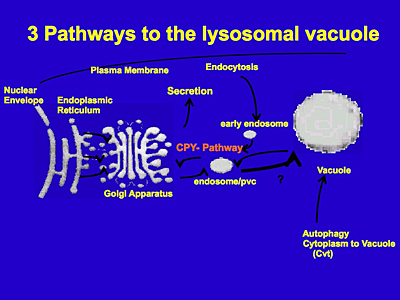
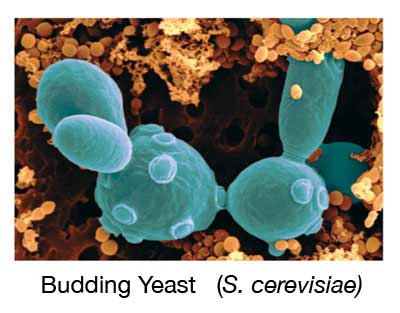
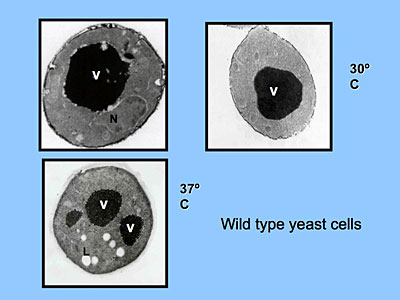
We use the elegant model system of baker's yeast, Saccharomyces cerevisiae, to identify genes involved in the final stage of trafficking to the lysosome and lysosomal function. We have used novel genomic screen to identify in lysosomal function and morphology. You can see how our mutants are different from normal cells in the pictures.
Please note that Dr. Gharakhanian is no longer accepting new students.
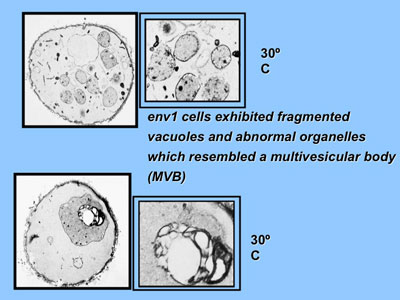
Current research in the laboratory is funded by National Science Foundation and National Institutes of Health.
