7
The Bourgeoisie in Triumph and Decay
The classic Marxian model of modern social change has a dual aspect. On the one side are the growing productivity and the deepening contradictions of the bourgeois social order; on the other, the growing strength of the proletariat. "What the bourgeoisie produces, above all," the Communist Manifesto states, "are its own grave-diggers," the proletariat (Marx and Engels 1848:24). As the workers become aware of themselves as a class, they organize as a class to wrest state power from the capitalists. Eventually, the upward trajectory of the proletariat's growing strength will intersect with the downward trajectory of the decline of the capitalist system. At this point, the proletariat will seize state power and build a social order in their own interest, socialism.
From one point of view, the events of the twentieth century have indeed verified the explanatory power of the Marxian model. World War I, the Great Depression of the 1930s, and World War II are all manifestations of the profound crisis of capitalism in the first half of the twentieth century, while the Russian and Chinese revolutions serve to illustrate the growing strength of the international proletariat.
Viewed from another perspective, however, the twentieth century has been most cruel to the optimism of classic Marxian theory. On the one hand, where the working class has indeed taken power and placed communist parties in power, the results, according to many, have been less than satisfactory. On the other hand, the American bourgeoisie emerged from the general crisis of the first half of the twentieth century and was able to build a new world order that has proved remarkably viable since 1946.
We shall deal with the rise of socialism in the next section. In this section we shall look at the causes and consequences of the apparent triumph of the bourgeoisie.
By the beginning of the twentieth century, the European bourgeoisie was in complete control of the world. The feudal nobilities were no longer serious contenders for power, and the proletariat had not yet seriously challenged bourgeois rule. Capitalism, it would appear, was here to stay. But no sooner had the bourgeoisie triumphed than the system it established began to decay. In the twentieth century, the irrationalities and contradictions of capitalism took new and even more inhumane forms as the system has matured.
Marx would have been impressed with the achievements of twentieth century capitalism but not surprised at the sufferings and misery that capitalism still entails. Marx would have been impressed with our automobiles, airplanes, and computers, but not surprised that one half of humanity lives in poverty. Marx would have been impressed with the achievements of modern medicine, but not surprised at the millions who lack elemental health care. Marx would have been impressed with our placing a man on the moon, but not surprised at our inability to provide full opportunities for African Americans, Latinos, and other minorities. Capitalism is no less contradiction ridden in the twentieth century than it was in the nineteenth, but these contradictions have taken new forms. Our task in this chapter is to analyze twentieth century capitalism.
The fundamental nature of capitalism has not changed: the motive force is still profit, this profit still comes from the exploitation of the working class; unemployment continues to be an essential tool for continuing this exploitation; the system continues to be run by and for the capitalist class; and the fundamental contradiction, between the increasing productive potential of the system and its inability to meet the basic human needs of the majority of humanity, remains. But there have been two fundamental changes which require discussion. First, the competitive capitalism of Marx's time has been replaced by monopoly capitalism, and second, capitalism can no longer be analyzed as a national system but is rather an international system of imperialism. Each of these features has additional ramifications.
By the beginning of the twentieth century, the competitive capitalism analyzed by Marx had transformed itself into monopoly capitalism and imperialism, an international system of exploitation and oppression that exists in perpetual crisis, resulting in what Raymond Aron called, "the century of total war" (1954). It is out of this general crisis of capitalism that the world revolutionary process is unfolding.
7.I. Capitalism or "Post-Capitalism?"
It has been widely argued that as capitalism matures it changes in character and is no longer dominated by the drive for profits (see, e.g., Bell 1973, Galbraith 1963, 1967). Consequently, it is asserted, the dreaded "inner contradictions" of capitalism have been resolved. Modern society should no longer be described as "capitalist," but rather as "post-capitalist," "post-industrial," or even "post-Marxist." Such ideas are seductive but have little intellectual substance. Capitalism has clearly changed, but its underlying character and inner dialectic remain the same. The triumph of the bourgeoisie has only permitted capitalism's inner contradictions to ripen and the bourgeois social order to decay. Before elaborating on this Marxist view, however, it may be well to examine more closely three aspects of the "post-capitalist" argument, the "managerial revolution" thesis, the "affluent worker" thesis, and the idea of "pension fund socialism."
7.I.1. The Managerial Revolution Thesis
The managerial revolution thesis, originally proposed by Berle and Means (1932), holds that, as a result of the dispersal of stock ownership and the need for technical expertise, actual control of the modern corporation has passed out of the hands of the capitalists and into a neutral elite of managers and technocrats. This elite runs the corporation by balancing a number of conflicting social claims, those of employees, of consumers, and of the general public, as well as those of the owners and the managers themselves. Consequently, it is argued, the so called "laws of motion" of capitalism no longer operate, and the new system has eliminated the worst abuses of the old.
There have been a variety of criticisms of this view (see, for example, Baran and Sweezy 1966:20-51, Domhoff 1967:38-62), which have not been answered by its proponents. These criticisms include the following:
1. Although there has been some dispersal of stock ownership, this has only extended to a small portion (less than 20%) of the population, and the majority (80%) of stock continues to be held by less than 2 percent of the population.
2. Many firms continue to be controlled by particular families, and there are clearly defined interest groups that dominate the economy.
3. Top management tends to be drawn from the capitalist class, so that management does not form a neutral elite but is rather the most active and influential segment of the bourgeoisie itself. Managers who are not bourgeois in their class origins are rapidly assimilated into the bourgeois class.
4. The managers and technocrats who make decisions about the day to day running of the corporation are in fact paid functionaries of the capitalist class, and "he who pays the piper calls the tune." If the decisions of management do not promote the interests of capital, management can and will be replaced.
5. Most importantly, the nature of capitalism does not flow from the psychological quirks or avarice of the capitalists, but vice versa. The owner-capitalist is simply the creature of capital. Even after the "managerial revolution," the force of capitalist competition (between the giant corporations for market shares and on the stock market) lays down the same law for the corporate manager as for the entrepreneurial capitalist: "Accumulate, accumulate! That is Moses and the prophets!" (Marx 1867:595).
There is thus no conflict of interest between the managers and owners of capital since in most cases they are the same. If anything, the managers are more efficient servants of capital, since they have greater technical expertise at their disposal. To the extent that there has been a "managerial revolution," then, this has in no way altered the fundamental character of capitalism.
7.I.2. The Affluent Worker Thesis
It is often said that the worker in mature capitalism has become "affluent," that wages have risen to the point where the working class now has a stake in the system so that a socialist revolution would no longer serve the workers' interest. Again, this is a half-truth. It is certainly true that workers in the United States have higher incomes than do the masses of workers in Africa, Asia, and Latin America. But, as the statistical analysis earlier indicated, in 1983 the average pay for all production workers, organized and unorganized, was only $17,400, just above what the Bureau of Labor Statistics computes as the bare minimum for an urban family of four. In short, as Sexton notes,
the myth of the "middle class" worker is kin to the negro of folklore who "lives in the slums but drives a big Cadillac." He's there all right, but his numbers are grossly exaggerated. (Sexton 1970:194)
Available statistics, discussed in Chapter One, indicate that as many as one fourth of all workers live in poverty, and the overwhelming majority must struggle just to get along. It is true that a significant minority of workers (largely white male Anglos) are living rather well, but as we shall discuss below, the overwhelming majority of workers in the United States would still benefit from the transition to socialism.
Further, it should never be forgotten that capitalism is an international system. The "underdeveloped" world is not "pre-industrial," as Bell (1973:117) and many others would have us believe, but is rather an integral part of the world industrial system. The relative affluence of the white male worker in the United States must be set against the grinding poverty of workers and peasants in Asia, Africa, and Latin America, for they are all parts of a single economic system.
7.I.3. Pension-Fund Socialism?
Another widespread misconception is that the workers, by virtue of the fact that the pension funds they own in turn own stock in the major corporations, now control the corporations themselves. Socialism, according to Peter Drucker, has come to America through "pension fund socialism," rather than revolution:
If
"socialism" is defined as "ownership of the means of production
by the workers"—and this is both the orthodox and the only rigorous
definition—then the United States is the first truly "Socialist"
country.
Through
their pension funds, employees of American business today own at least 25
percent of its equity capital, which is more than enough for control. The pension funds of the self employed,
of the public employees, and of school and college teachers own at least
another 10 percent, giving the workers of America ownership of more than
one-third of the equity capital of American business.… well before the turn of the century,
their holdings should exceed around two-thirds of the equity capital (that is,
the common shares) plus a major portion—perhaps 40 percent—of the debt capital
(bonds, debentures, and notes) of the American economy.…
In other
words, without consciously trying, the United States has "socialized"
the economy but not "nationalized" it. America still sees herself, and is seen elsewhere, as
"capitalist"; but if terms like "socialism" and
"capitalism" have any meaning at all, the American system has
actually become the "decentralized market socialism" which all the
Marxist church fathers, saints, and apostles before Lenin had been preaching
and promising, from Engels to Bebel and Kautsky, from Viktor Adler to Rosa
Luxemburg, Juares, and Eugene Debs.
Socialism
came to America neither through the ballot box nor through the class struggle
let alone a revolutionary uprising, neither as a result of "expropriating
the expropriators" nor through a "crisis" brought on by the
"contradictions of capitalism."
Indeed, it was brought about the the most unlikely revolutionary of them
all—the chief executive of America's largest manufacturing company, General
Motors. Twenty-six years ago,
Charles Wilson, then GM's president, proposed the establishment of a pension
fund for GM workers to the United Automobile Workers Union. The UAW was at first far from
enthusiastic … The union leaders
saw clearly that Wilson's proposal aimed at making the pension system the
business of the private sector.…
Wilson's major innovation was a pension fund investing in the
"American economy"—in other words, the free enterprise system. (Drucker 1976:1-2, 4-5)
Although it is difficult to believe that Drucker is serious here, it is clear that pension funds are very important. As Ghilarducci notes, "Pension fund assets now equal $1.7 trillion and, before the October 1987 stock market crash, were growing by more than 15% per years since the later 1970s" and "own almost 23% of all outstanding equity in American firms and 50% of corporate bonds" (Ghilarducci 1988:25). This is impressive, but before thinking that it constitutes movement toward socialism, one needs to consider several points.
First of all, less than half (44.87%) of the U.S. work force is covered by pensions (aside from social security), and even fewer (21.43%) are vested, that is, have worked long enough to be eligible for benefits. Coverage also varies with ethnicity and gender. White coverage was 45.2% while nonwhite coverage was 41.9%. Male coverage was 52.9% while female coverage was only 33.3%. Among actual beneficiaries of private, state, and local pension plans, nearly 94% are white, and over 60% are male. Further, pension funds tend to be concentrated among higher wage-earning and salaried workers (Kotlikoff and Smith 1983:4-5). Clearly, it is only a privileged sector of the working class that benefits from the pension plans.
Secondly, the capital accumulated in pension plans is not controlled by their beneficiaries. Of the $916 billion held by pension funds in 1979, only $245 billion was held by funds that had any union representation among the trustees (Ghilarducci 1988:27). Typically, these funds are administered by the firms themselves, or by banks or insurance companies that are required by law to administer them according to established fiduciary principles.
The basic requirement … is that the investment provide growth, security of principal, and yield. There are of course, ancillary or secondary concerns for the prudent investor of pension funds, such as diversity, liquidity, etc. (Levin and Brossman 1982:5)
The interests of pensioners, of course, is the same as that of any other owner of capital, maximization of yield. Pension funds are clearly important in providing a measure of security and dignity for some workers, but they do not challenge the capitalist system. Indeed, pension funds
function as a low-cost pool of capital for American firms. The system also enriches the growing pension fund management industry. So far, capital has been accumulating into pension funds on terms favorable to corporations and flows to retirees on terms favorable only to the highest income elderly. (Ghilarducci 1988:27)
There has been some concern among progressives that perhaps these funds can be used to further social and environmental concerns (Ghilarducci 1988, Levin and Brossman 1982, Rifkin and Barber 1978). In some cases, such investment can also be profitable. In 1972, the Dreyfus Corporation formed the Third Century Fund, "a mutual fund aimed at selecting stocks of socially responsible companies" which "proved an excellent investment," growing 384% from 1975 to 1980, compared with 140% for the Standard and poor's 500 (Levin and Brossman 1982:15). The difficulty arises, of course, when socially responsible investments do more poorly than ordinary investment, e.g. when hospital bonds pay 6% and the company trading with South Africa and violating health and safety guidelines pays 8% (Levin and Brossman 1982:5). By and large, however, the pension funds are operated according to standard capitalist principles. There is no evidence that pension funds have been used to further the struggle for socialism.
Pension funds, owned by only a segment of the working class and operated according to capitalist principles, then, do not constitute socialism, or even a move in that direction. Rather, pension funds tie a privileged segment of the working class to the capitalist system. They thus constitute a very important aspect of the aristocracy of labor, which we will discuss more fully below. (For addition discussion of the role of pension funds in modern capitalism, see Darby 1976, Harbrecht 1959, Minns 1980, Zeitlin 1978).
The idea that contemporary capitalism has become "post-capitalist," then, is simply untenable. Both the underlying motive force and the laws of motion of the system remain as capitalist as ever. The Robber Barons may have gone, but the financial swindles have not disappeared, as the Savings and Loan crisis demonstrates. This is not to say, of course, that capitalism has not changed in the twentieth century. It has, and we need to understand these changes. We shall examine the changes involved with the emergence of monopoly capitalism and then look at the internationalization of the capitalist system.
7.II. Monopoly Capitalism
The relatively small firm of the competitive era has given way to the giant multinational corporation that exerts a degree of control over its market. Prices are no longer set by supply and demand to approximate values, but instead are set by the corporation itself at a level designed to maximize profits. Monopolization, then, provides superprofits to the giant corporation.
Monopolization of the economy is associated with what has been called the "Second Industrial Revolution" of the second half of the nineteenth century (Magdoff 1969:24-30, Mandel 1968:II, 393-394). The development of new productive processes, such as the Bessemer process in steel production, and the emergence of new spheres of production, such as railroads and automobiles, tremendously increased the scale of industry and industrial corporations. The effect of this was, first, to increase the investment-absorbing potential of the system (see below on "epoch making inventions").
Second, with the Second Industrial Revolution, the scale of production increased to the point where further refinements and new machinery cost no more than the old. Consequently, the tendency for the organic composition of capital to rise is no longer operative. Just as increases in productivity led to a decline in the value of labor power (v), so continued increases lead to a decline in the value of capital goods (c), and the ratio c/v, which is the organic composition of capital (o) no longer rises but begins to fall. Thus, the organic composition of capital in the United States rose continuously until about 1923, when it stood at 4.2. Since then, it has been falling, to 3.6 by 1952. At the same time, the rate of surplus value (s') has been increasing, from 121 in 1923, to 132 in 1952 (Sweezy 1974:47, citing Gillman 1957).
Now, as discussed earlier, a rising organic composition of capital leads to a systemic tendency for the rate of profit to fall, and many Marxists saw this as the fatal contradiction of the capitalist system. But a declining organic composition of capital, coupled with increasing rates of surplus value, causes the rate of profit to rise. But this does not resolve the contradictions of the capitalist system. Why not?
As will be recalled, capitalists only produce commodities in order to make profits. But they only make profits in order to reinvest them. These are the dual aspects of the realization problem: 1. capitalists must sell commodities in order to realize surplus value in its money form; and, 2. capitalist must re-invest these profits in order to make more profits. Both of these aspects become more intense as capital accumulates and productivity increases, leading to a systemic tendency toward crisis and stagnation.
The first problem, that of selling commodities in order to realize a profit, has already been discussed. As relative wages fall, the workers can no longer buy back what they produce. The capitalist system must therefore expand, geographically into new markets or technologically into new spheres of production, or collapse into itself.
The second problem, that of re-investing profits in order to make more profits, becomes more intense with accumulation and monopolization. With accumulation and increasing rates of profit, capitalists have more profits to re-invest. But monopolization of the economy tends to choke off additional investment opportunities. During the period of monopoly capitalism, therefore, there is a tendency toward stagnation resulting from the inability of capitalists to find investment opportunities for their increased profits.
Monopoly capitalism, then, even more than competitive capitalism, is characterized by a profound tendency toward stagnation since the superprofits of the monopolists cannot be reinvested. The clearest manifestation of this tendency may be seen in the Great Depression of the 1930s, but it may also be seen in the periodic recessions of the postwar period.
Although it may be temporarily offset by expansion of the system, this systemic tendency toward stagnation in monopoly capitalism leads to new forms of capitalist irrationality. As Gilman observes,
in the monopoly period the conditions which block the realization of surplus-value combine to drive surplus-value increasingly into channels of unproductive expenditures. (Gillman 1957:110)
In their seminal work, Monopoly Capital, Baran and Sweezy argue that the monopolistic system would continue to stagnate as in the 1930s were it not for offsetting factors which serve to absorb the surplus which otherwise could not be invested. These factors include: epoch making inventions; the export of capital; the sales effort; government spending, especially military spending; wars and their aftermath; and the Cold War (1966). Let us examine each of these in turn.
7.II.1. Epoch Making Inventions
Baran and Sweezy argue that three epoch making inventions, the steam engine, the railroad, and the automobile, stand out because they opened up new areas of investment opportunity. The significance of these inventions lies not only in the opportunities they provide within new sphere of production, but also in the related opportunities they provide. Thus, the development of the automobile provided new investment outlets not just in automobiles but also in the oil, steel, rubber, and glass industries, in spending on highways, and in permitting the suburbanization of the population with new subdivisions, shopping centers, and so on. Other inventions, such as television, may have a profound effect on cultural life, but they do not provide the same opportunity for investment and profit making and thus their purely economic impact is not as great.
These epoch making inventions have served to define entire periods of economic history. By their capacity to provide profitable investment opportunities they absorb surplus and permit the capitalist system to expand and prosper.
7.II.2. The Export of Capital
As capital fails to find profitable investment opportunities within its own nation, it seeks them elsewhere. The historic tendency for capital to seek the highest profit led, in the late nineteenth century, to the export of capital to colonial nations. This was the period analyzed by Lenin as "the highest stage of capitalism," imperialism.
Capitalism, of course, has always been imperialist, from the Crusades and the conquest of America, through the African slave trade and the conquest of Asia, to the modern period of neocolonialism. Such imperialism, however, was frequently simply the plunder of non-Western societies by the West. The new imperialism of the nineteenth century, by contrast, was marked by the export of capital, by the complete partition of the globe among the imperialist powers, and by the conflict between imperialist powers for the re-division of the world, a conflict resulting in WWI and WWII.
The export of capital has accelerated during the "Pax Americana" following WWII. The international operations of United States business have not only been very profitable abroad, they have also, in the form of runaway shops, served to undercut the working class at home.
7.II.3. The Sales Effort
Although modern capitalists can easily enough produce all they can sell, they cannot sell all that they produce. Unlike competitive capitalist firms, giant corporations do not compete with one another in terms of price. Instead, they compete for market shares through the sales effort. Advertising makes little sense in a situation where there are a large number of small producers, each of which has only a small share of the total market. Advertising comes into its own, however, in monopoly capitalism, where a few firms dominate the market and it is easy to emphasize brand names and minor differences between products. Consequently, concomitantly with the rise of monopoly capitalism, there has been a fantastic growth in advertising. In 1857, only $51,000,000 was spent on advertising. In 1890, this had increased to $360,000,000; in 1929, to $3,426,000,000; and in 1962, to over $12,000,000,000! Additional millions are spent on re-tooling for periodic style changes, commercial design, market research (Baran and Sweezy 1966:118-119). The entire effort devoted to sales by the corporations may be essential from their standpoint, but from any human standpoint, it is simply waste. Such waste, however, is essential to the capitalist system.
7.II.4. Government spending
The Great Depression drove home to the capitalist class a clear message, that private enterprise itself could not lift the capitalist system out of stagnation. As the English economist John Maynard Keynes stressed, government spending was essential to preserve the capitalist system. Such spending need not involve any socially beneficial purpose other than maintaining capitalist prosperity:
If the Treasury were to fill old bottles with banknotes, bury them at suitable depths in disused coal mines which are then filled up to the surface with town rubbish and then leave it to private enterprise on the well-tried principles of laissez-faire to dig up the notes again (the right to do so being obtained, of course, by tendering for leases of the note-bearing territory), there need be no more unemployment and, with the help of the repercussions, the real income of the community, and its capital wealth also, would probably become a good deal greater than it actually is. It would, indeed, be more sensible to build houses and the like; but if there are political and practical difficulties in the way of this the above would be better than nothing. (Keynes, as quoted in Lekachman and Loon 1981: 95)
During the period of monopoly capitalism, the role of government spending has steadily increased, rising from 7.4% of Gross National Product (GNP) in 1903 and 9.8% in 1929, to 19.2% in 1939, and 28.8% in 1961 (Baran and Sweezy 1966:146).
But there are indeed "political and practical difficulties in the way" of using government spending as an instrument of promoting the economic well-being of the working class within the capitalist system. For example, public spending on such things as mass transit and public housing conflicts with powerful private interests in the automobile and oil industries and in the real estate business. Worst of all, spending on welfare tends to undercut the role of the Industrial Reserve Army as an enforcer of labor discipline on the working class.
Military spending, by contrast, does not conflict with any entrenched private interests. Consequently, such spending is an ideal solution to the problem in increasing aggregate demand, and 60% of the increase in government spending from 1929-57 has been on the military. This is not to suggest, of course, that such spending is purely for the purpose of floating the monopoly capitalist economy. The military is also essential in preserving United States imperialism and protecting the capital that has been exported abroad.
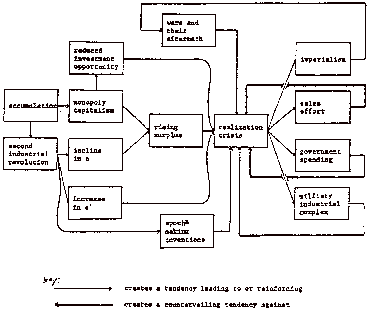
Figure 7.1. Contradictions of Monopoly Capitalism.
This chart diagrams some of the interrelationships discussed in the text. Monopoly and the decline in the organic composition of capital lead to a tendency for the surplus to rise. The resulting realization crisis is offset by imperialism, the sales effort, and government spending, especially military spending.
7.II.5. Wars and their aftermath
Baran and Sweezy divide the effects of war into two phases (1966:222-225). The first is the combat phase, in which the military machine creates a tremendous demand, re-organizing the economy for military purposes, and causing normal consumer demand to be curtailed. The second is the aftermath phase, in which the pent-up consumer demand is released, the economy has to be reoriented to peacetime pursuits and absorb returning veterans, and the destruction of war rebuilt.
The nineteenth century was a period of relative peace, and the colonial wars exerted a relatively slight direct economic impact (although their indirect impact in opening new markets was crucial in preserving the expanding capitalist system). The "total wars" of the twentieth century, by contrast, have exerted a tremendous economic influence, comparable to that of epoch making inventions such as the railroads and the automobile.
7.II.6. The Cold War
The underlying causes of the Cold War lie in the needs of imperialism to attack the emerging socialist system in the Soviet Union. The Cold War also has a powerful economic effect in providing investment opportunities for capital, thereby serving as an important counterbalance to the tendency toward stagnation. This was recognized quite early by spokesmen for the capitalist system. In 1949, U.S. News and World Report enthused:
Government planners figure they have found the magic formula for almost endless good times. . . . Cold War is the catalyst. Cold War is an automatic pump primer. Turn a spigot, the public clamors for more arms spending. Turn another, the clamor ceases. . . . Cold War demands, if fully exploited, are almost limitless. (as quoted by Baran and Sweezy 1966:212)
In 1954, after the U.S. had exploded the first Hydrogen Bomb, this conservative magazine became even more enthusiastic:
What H-bomb means to business. A long period . . . of big orders. In the years ahead, the effects of the new bomb will keep on increasing. As one appraiser put it: "The H-bomb has blown depression-thinking out the window." (as quoted by Baran and Sweezy 1966:213)
Now, it is quite true that Cold War spending has maintained the U.S. economy on a high plane of economic prosperity and stability for a long time. But for a generation that grew up in fear of thermonuclear destruction, the world the H-bomb made is scarcely an unmixed blessing. As President Kennedy (who himself was willing to initiate a nuclear war during the Cuban Missile Crisis) remarked:
Every man, woman, and child lives under a nuclear sword of Damocles hanging by the slenderest of threads, capable of being cut at any moment by accident or miscalculation, or by madness. (as quoted by Galbraith 1967:325)
Can anyone imagine a more chilling confirmation of the Communist Manifesto's claim that the bourgeoisie can only overcome one crisis "by paving the way for more extensive and more destructive crises" (Marx and Engels 1848:13)?
The stagnation of the U.S. economy is considerable indeed, even with the counterbalance of the Cold War. In 1970, there were 8.1 million unemployed workers. But another 7.1 million were either in the U.S. armed forces (2.9), employed by the Defense Department (2.1), or employed making war material (3.0). In addition, another 7.1 million were employed as an indirect result of military expenditures, in producing goods and providing services to those employed by the military (Sweezy and Magdoff 1971). In short, a total of 22.3 million workers, or fully 25.1% of the total labor force, would be unemployed were it not for military spending. In addition, the existing productive plant was operating at only about three-quarters capacity in 1970. All of this is comparable to the unemployment and underutilization of productive plant that characterized the Great Depression of the 1930s. In short, were it not for military spending, the United States would be in the throes of a depression comparable to the worst days of the Great Depression.
7.III. Capitalism as a World System.
One aspect of the hegemony of bourgeois ideology is our tendency to view the nation state as the unit of social, economic, and political analysis. Capitalism is frequently seen as an economic system that exists within particular nation states and is more highly developed in some than others. Thus, we hear that British capitalism is more highly developed than German capitalism, etc., etc. This view is particularly effective in causing workers to identify with "their" nationality rather than their class. Whatever it's commonsense appeal, and whatever it's utility to the bourgeoisie, this view of the nation state as the basic unit of social analysis is misleading. Capitalism has always been an international system, and must be analyzed as such.
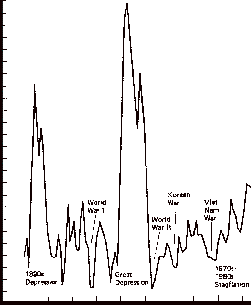
Figure 7.2. History of Monopoly Capitalism.
This chart shows the historical tendency of monopoly capitalism toward stagnation, represented by the rate of unemployment. Low rates of unemployment are seen during WWI, WWII, the Korean War, and the war in Vietnam, while high rates are seen in the Great Depression of the 1930s and the 1890s. Military spending is thus the primary force to offset the profound tendency toward stagnation in monopoly capitalism.
7.III.1. Modern Social Change: Unilineal or Multilineal?
The major defect of both the Marxist and the orthodox bourgeois views of modern social change is their unilineal character. All societies are seen as developing through essentially the same stages: from feudalism to capitalism, and then, in the Marxist view, to socialism. They do so at different rates, and the possibility of skipping stages has been discussed, as has the possibility of backward motion, from a more advanced to a less advanced stage.
Such unilinealism is a severe impediment to understanding the actual processes of change in the modern world. Important advances in our understanding of modern social change have been made by writers such as Amin (1974), Baran (1957), Frank (1967), and Wallerstein (1974). This newer view is multilineal rather than unilineal.
This newer multilineal world system view may be summed up as follows. Contemporary underdeveloped nations do not represent a stage of development through which Europe passed several centuries ago. These are not "premodern," "feudal, or "traditional" societies without a history of their own. Instead, they have had their own histories, histories of being plundered and colonized by the Euro-American nations. These histories have been linked with the histories of the imperialist nations, for it was precisely this colonial plundering that facilitated the development of capitalism in Europe and the United States, in what Marx called the "primitive accumulation of capital."
On the one hand, this process facilitated the decisive changes in economy and social structure that characterize the Euro-American nations. On the other hand, it led to what Frank called "the development of underdevelopment." Through colonialism, the social structures of the non-Western world were transformed to facilitate the extraction of economic surplus by the imperialist powers. Underdevelopment, in this newer view, is simply the other side of development, produced by the same modern socioeconomic forces.
Capitalism, then, is an international, rather than a national, system. As Lenin remarked in 1920:
Capitalism has grown into a world system of colonial oppression and of the financial strangulation of the overwhelming majority of the peoples of the world by a handful of the "advanced" nations. (as quoted by Huberman and Sweezy 1964)
Within this world imperialist system, then, there are not one but two types of modern society: Overdeveloping Capitalist Nations and Underdeveloping Capitalist Nations.
The Overdeveloping Capitalist Nations of Europe, North America, and Japan have, on the basis of their centuries of imperialist looting of the Third World, developed the forms of bourgeois affluence and irrationality criticized by Marxists and non-Marxists alike.
The Underdeveloping Capitalist Nations of Latin America, Africa, and Asia show the reverse side of world capitalism, the poverty and irrationality created by centuries of imperialist oppression. These are not products of backwardness as bourgeois development and modernization theorists would have us believe (and as some Marxists seem to agree), but products of modern capitalism.
Underdevelopment and overdevelopment are thus the twin forms of capitalism in the modern world. These are not stages in a unilineal sequence, but interdependent trajectories of change within the modern world capitalist system. Marx himself noted that capitalism takes a different form in Underdeveloping Capitalist Nations than in Overdeveloping Capitalist Nations:
The profound hypocrisy and inherent barbarism of bourgeois civilization lies unveiled before our eyes, turning from its home, where it assumes respectable forms, to the colonies, where it goes naked. (Marx 1853b:137)
in fact the veiled slavery of the wage-workers in Europe needed, for its pedestal, slavery pure and simple in the new world. (Marx 1867:759-760)
Now, as Frank has stressed, different policy recommendations flow from these different views (1967). In the unilineal view, the "backward" nations should follow the tutelage of the "advanced," borrow money to finance industrialization, and maintain strong military establishments to control irrational revolutionaries who are seduced by Communist Totalitarianism. In the multilineal view, by contrast, the Underdeveloping Capitalist Nations must break free from imperialist control and embark upon roads of independent national development. Revolutionary movements of national liberation are not only rational from the standpoint of this multilineal approach, they are essential.
Since 1917, as portions of the formerly colonial or semicolonial world have broken free from imperialist control, they have embarked on a third developmental trajectory. Under the leadership of Communist Parties associated with the Third International, the Soviet Union, China, Cuba, and other nations have embarked on independent courses of development which are no longer capitalist but not yet socialist. There are few more important questions for Marxists or for humanity in general than the understanding of these Protosocialist Nations, both their internal laws of motion and their place in the global transition to socialism. These questions will be discussed in the next chapter.
7.III.2. Underdeveloping Capitalist Nations
The Underdeveloping Capitalist Nations are the nations of Latin America, Africa, and Asia that have been subjected to centuries of imperial domination and looting. Each of these nations has their own culture and their own history, but Underdeveloping Capitalist Nations share a number of features in common: a history of colonial or semi-colonial conquest; a "dual economy," with a "traditional" sector made up of a largely agrarian population using essentially traditional productive techniques and a "modern" sector largely based in the cities and linked into, and dependent upon, the world economy; trade relations characterized by the import of finished goods and the export of raw materials; a class structure composed of a peasant majority, a smaller working class in the "modern" sector, the "traditional" ruling classes usually allowed to maintain a degree of power and privilege, but real power in the hands of the imperialists and the comprador classes who are tied to, and benefit from, imperialism; and finally, poverty. The populations of the Underdeveloping Capitalist Nations suffer from low per capita incomes, low standards of living, poor health conditions, with high rates of infant mortality and low life expectancies, restricted access to educational and social benefits and extremes of poverty, ignorance, and disease.
Within this common pattern, of course, there are significant differences. The history of Latin America, conquered by the Spanish and Portuguese in the sixteenth century, is quite different than that of Africa, which was devastated by the slave trade before colonization began. The history of India, conquered by England and made an integral part of the British Empire, is quite different from that of China, which remained a semi-colony, never losing its nominal political independence.
Although they are all oppressed by the imperialist nations and share a number of characteristics, they each have their own histories and particular conditions of oppression. They fall into four categories (World Bank 1983:148-201).
The Low Income Oppressed Nations in Africa and Asia (e.g. Chad, Bangladesh, Burma, Zaire, Uganda, India, Madagascar, Niger, Pakistan, and Sudan) account for over 26% of the world's population, but only 2.2% of world GNP. The average GNP per capita is $240. Rates of literacy are low (40%). Life expectancy is low (50 years). Rates of infant mortality are high (124 per thousand).
The Low Middle Income Oppressed Nations in Africa, Asia, and Latin America (e.g. Kenya, Indonesia, Egypt, El Salvador, Thailand, Philippines, New Guinea, Guatamala, Peru, Ecuador, and Turkey) account for about 14% of the world's population and 4.3% of world GNP. Rates of literacy are better (69%), as are life expectancy (57 years), and rates of infant mortality (95 per thousand)
The Upper Middle Income Oppressed Nations (e.g. Iran, Iraq, Malaysia, Panama, Mexico, Portugal, and Venezuela) account for nearly 10% of the world's population and nearly 8% of world GNP. Average GNP per capita is $2490. Rates of literacy average 87%, life expectancy is 63 years, and rates of infant mortality at birth average 97 per thousand.
The High Income Oil Exporting Oppressed Nations (Libya, Saudi Arabia, Kuwait, United Arab Emirates) have 0.5% of the world's population and 1.6% of the world's GNP. The average per capita GNP are among the highest in the world, averaging $13,460, but rates of literacy are low (averaging 32%), life expectancy is low (57 years), and infant mortality is high (96 per thousand).
In general, the oppressed nations are characterized by underdevelopment: dependence on exporting one or a few raw materials and importing finished goods. This is unequal trade which results in a transfer of wealth to the imperialist nations. Increasingly, the land and natural resources are owned by foreign corporations. The majority of the population lives in rural areas, but increasingly they are moving into urban slums, as the land is bought up by foreign corporations.
A small minority of the population enjoys the benefits of modern civilization, but for the vast majority:
100,000,000 people have no shelter whatsoever.
770,000,000 do not get enough food for an active working life.
500,000,000 suffer from iron-deficiency anemia.
1,300,000,000 do not have safe water to drink.
800,000,000 live in "absolute poverty," unable to meat minimal needs.
880,000,000 adults cannot read or write.
10,000,000 babies are born malnourished every year.
14,000,000 children die of hunger-related causes every year. (Sivard 1987:25)
The inequality and oppression of the oppressed nations is maintained by what has been called "Third World Fascism:" military dictatorships, state-sponsored torture, death squads, and other forms of repression. Most of this is financed and directed by the United States.
There are also differences in terms of levels of poverty and per capita income. We may distinguish between: the poorest Underdeveloping Capitalist Nations such as Bangladesh, India, Pakistan, Zaire, and Uganda; the middle Underdeveloping Capitalist Nations such as Egypt, Syria, the Philippines, Ecuador, and El Salvador; the better-off Underdeveloping Capitalist Nations, such as Mexico, Argentina, Brazil, Greece, and Singapore; and the oil-rich, high-income nations such as Kuwait and the United Arab Emirates.
Finally, it must be recognized that Underdeveloping and Overdeveloping Capitalist Nations are, in a sense, polar types. Just as their are differences within these categories, the categories themselves sometimes overlap. Thus, Tsarist Russia was an imperialist power in its relations with Central and East Asia, but was itself the object of French and British imperialism. Similarly, Portugal was an oppressor nation towards its own colonies, Mozambique and Angola, but was underdeveloped in its relations with Great Britain.
These complexities are important and must be understood in
concrete detail in each instance.
However, neither the gradations, differences within categories, or
overlapping of categories negates the reality of the fundamental opposition
between underdevelopment and overdevelopment as manifestations of capitalism.
7.III.3. Overdeveloping Capitalist Nations
These are the nations of Western Europe, North America, Japan, Australia, and New Zealand, which, on the basis of their plunder of Latin America, Africa, and Asia have built "modern" industrial systems which are threatening the very survival of our species.
As a group, they account for about 16% of the world's population but nearly 64% of world GNP. As of 1985, GNP per capita was $11,120, literacy rates are high (99%), life expectancy about 75 years, infant mortality 11 per thousand births (World Bank 1983:148-201).
The average (or "middle class") citizen of the imperialist nations enjoy life styles, with economic affluence and personal and political freedoms, which are the envy of the rest of the world. This life style, however, is characterized by consumerism, alienation, and irrationality, and is ecologically destructive.
The poorest fifth of the population of the imperialist nations, however, live in conditions that resemble those of the oppressed nations.
The ruling bourgeoisie (the Rockefeller, DuPont, Mellon, Ford, Rothschild, Krupp, Mitsui, Mitsubishi, and other bourgeois families) enjoy levels of wealth and power that can only be described as obscene.
The Overdeveloping Capitalist Nations are the seat of the tremendous power of the international bourgeoisie. This power is economic, technological, military, and ideological. In order to maintain secure in their power, the bourgeoisie must use some of their resources to bribe a portion of the working class within the Overdeveloping Capitalist Nations. This bribery takes the form of both material benefits and national chauvinism.
The Overdeveloping Capitalist Nations are those nations which, on the basis of centuries of imperialist exploitation, have developed high levels of affluence, high levels of productivity, and distinctive forms of bourgeois irrationality. These nations are usually called "advanced capitalist nations," "advanced industrial nations," or simply "advanced nations." Such terms presuppose a developmental framework which does not reflect the realities of the modern world. The opposite of "underdevelopment" is not "advanced," but "overdevelopment."
Overdevelopment is characteristic of the nations of Western Europe (England, France, Germany, Holland, Sweden) and of Western European peoples who have migrated elsewhere (the United States, Australia, New Zealand). Japan has the distinction of being the only non-Western nation to have successfully overdeveloped, and it did so on the basis of its own imperial exploits. As Lenin observed,
by their colonial looting of Asian countries the Europeans managed to harden one of them—Japan—for great military exploits that assured it of an independent national development. (as quoted by Baran 1957:161)
These Overdeveloping Capitalist Nations are, viewed from the perspective of the majority of their citizens, probably the most humane nations in the world. This is particularly the case with certain nations which are favorably situated within the total system of world imperialism. Nations such as Sweden, Switzerland, and New Zealand have well developed social welfare systems, are non-militaristic, and are, no doubt, decent places to live. Although they may thus appear to be models for other nations to emulate, the very nature of the capitalist system is such that other nations cannot emulate them. Clearly, the Underdeveloping Capitalist Nations cannot simply choose to become like the Overdeveloping Capitalist Nations without themselves becoming imperialist (following the example of Japan), a road which is impossible in the present world situation. And the leading imperialist nations, such as the United States, and to a lesser extent, England, France, Germany, and Japan, must maintain their military establishments to maintain their control over the underdeveloping world and keep the emerging socialist world at bay.
A characteristic feature of the Overdeveloping Capitalist Nations is that described by Lenin, that the national bourgeoisie of these nations can, on the basis of their centuries of imperialist exploitation, bribe a portion of the working class and thereby gain their support in their imperialist ventures. This scientific concept of an aristocracy of labor thus provides a more suitable framework for understanding the empirical data upon which the erroneous ideas of the "affluent worker" and "pension fund socialism" are based. The bribery of workers includes not only high wages, but also retirement benefits and pension plans, thus forcing the workers to "buy into" the capitalist system. It also includes such social benefits as unemployment insurance, social security, and health and welfare system. Such social reforms are frequently misunderstood as constituting socialism, especially when they are provided under a government run by a socialist or social democratic party. Since the underlying economic power of the capitalists has not been broken and the means of production continue to be privately owned, they are better regarded as socialistic frosting on a capitalist cake. Clearly, such socialistic reforms are better than a completely unreformed capitalism, but they should not be confused with socialism in the scientific sense of the term.
In evaluating these socialistic reforms, it is necessary to bear two points in mind. First, such reforms are only possible in the Overdeveloping Capitalist Nations; the Underdeveloping Capitalist Nations lack the material resources for such reformism. Second, these reforms provide the material base for the opportunism of the working classes in the imperialism nations, as Lenin argued in his theory of the aristocracy of labor.
There has been considerable debate over this notion, as will be discussed below. There can be no denying, however, the reality of the dramatic difference in living standards between the workers in the imperialist nations and workers and peasants in the oppressed nations.
Each of the Overdeveloping Capitalist Nations have their own distinctive national characteristics, but certain general characteristics may be noted. First, these are industrial nations, with highly developed productive plants. The Overdeveloping Capitalist Nations typically import raw materials from the underdeveloping world and export finished goods. The productive resources are developed, however, not with the aim of satisfying the human needs of society in an ecologically sound manner, but rather from the standpoint of maximizing profits for the giant corporations. The result is an environmentally and socially destructive productive system that cannot endure for the thousands of years that agrarian systems have endured, much less the millions of years of the hunting and gathering mode of production. Thus, overdeveloped industry concentrates on non-renewable and environmentally destructive resources such as coal, oil, and atomic energy rather than solar power. Dependence on the energy-expensive private automobile is fostered at the expense of energy-conserving public transportation, such as railroads and subways. The highly productive agricultural system is heavily dependent upon chemical fertilizers, pesticides, and the use of fossil fuels, with potentially disastrous consequences.
These features are not inevitable concomitants of the industrial mode of production, per se, but rather of the capitalist drive for profits.
Sociologically, the Overdeveloping Capitalist Nations are heavily urbanized, with upwards of 80 per cent of the population living in cities. The urban areas themselves far exceed anything in the earlier agrarian civilizations. The term megalopolis has been proposed for the huge urban complexes which may incorporate tens of millions of people, such as Boswash, the megalopolitan area stretching from Boston to Washington, D.C., Sansan, the Southern California complex running from San Diego to Santa Barbara, and Chipitt, stretching from Chicago to Pittsburgh.
The concept of overdevelopment has important implications both for understanding the modern world and for our own personal lives. I use the term in preference to "advanced capitalist nation" since it seems a more logical opposite of underdeveloping capitalist nation (Ruyle 1987). The term "advanced capitalist nation" implies that the Western nations, especially the United States, is in some ways the norm towards which all other societies are tending. Too frequently, even Marxists err in regarding the "advanced" capitalist nations as the norm by which "primitive," "backward," and even the emerging socialist societies are judged, the sun around which they revolve. We need, as Clastres suggests, a Copernican revolution in social science:
ethnology until now has let primitive cultures revolve around Western civilization in a centripetal motion, so to speak. . . . It is time to change suns, time to move on. (Clastres 1977:17)
It is beyond the scope of this discussion to explore fully what this moving on must entail, but it may be noted that the concept of overdevelopment provides a framework for the incorporation of the Green and Third World critiques into the corpus of historical materialism. As Bodner remarks:
In a world economic context, living responsibly can be part of an approach to curing a worldwide combination of overdevelopment and underdevelopment that can be called "mal-development." The symptoms of overdevelopment—dependence of complex bureaucratic technologies and institutions, overconsumption, industrial pollution, and interpersonal alienation—are most apparent in countries like our own. The outward signs of underdevelopment are most apparent in poor countries. However, both aspects of mal-development can be found in most nations of the world. Mexico City is often smoggier than Los Angeles, and underdevelopment can be found in several neighborhoods of every major city in the United States. (Bodner 1984:4-6)
In short, the imperialist nations, on the basis of their centuries of past and present exploitation of Latin America, Africa, and Asia have built systems of bourgeois affluence and irrationality which, however, attractive, cannot endure.
7.III.4. Phases of World Imperialism
The development of the world imperialist system over the past five hundred years may be divided into four distinct, but overlapping, phases: 1. a phase of mercantilist imperialism, of colonial looting and plunder, through the eighteenth century, 2. a phase of "competitive" capitalism, during the nineteenth century, 3. an early phase of monopoly capitalist imperialism, in the late nineteenth and early twentieth centuries, to WWII, 4. a late phase of monopoly capitalist imperialism, or neocolonialism, since WWII ( cf. Szymanski 1981:95-121).
During the earliest phase, of mercantilist imperialism, Europe was primarily interested in luxury goods: precious metals, spices, quality textiles, tea, coffee, tobacco, and sugar. These were obtained through plunder, forced labor, or, when necessary, trade. During this period, the imperialist nations granted private trading companies monopoly rights to exploit given territories, such as the Hudson Bay Company and the Dutch East Indies Company. This was the period of the Spanish conquest of the Native American empires, the plundering and destruction of the East African kingdoms, the establishment of Dutch rule over the East Indies, and the beginning of the slave trade in Africa. The Europeans were at this period unable to militarily dominate the established Asiatic empires, but established trading centers in India (the Portuguese in Goa, the British in Calcutta), China (the Portuguese in Macau and the British in Hong Kong), and Japan (the Dutch in Nagasaki). It was not until after the battle of Plassy in 1756 that India came under British control, and China remained independent until the Opium Wars of the 1840s reduced her to semi-colonial status. Japan was not "opened" to foreign trade until the 1850s. This was the period of the primitive accumulation of capital, when the West was obtaining the wealth necessary to finance the industrial revolution by plundering the rest of the world.
The Industrial Revolution marked the beginning of the second phase, that of "competitive" capitalism. In this period, Europe had gained a clear technological superiority over the Asiatic empires, in both military and productive technology, and began to export cheap commodities, chiefly textiles, and import raw materials—cotton, sugar, cattle, wheat. It was during this period that clear differences appear in standards of living between European nations and the rest of the world. By the middle of the nineteenth century, living standards were about 50% higher in Europe than in the rest of the world.
The early phase of monopoly capitalist imperialism began in the late nineteenth century. This is the phase of imperialism analyzed by Lenin in Imperialism, the Highest Phase of Capitalism. In Lenin's analysis, this phase of imperialism was marked by five essential features:
1) The concentration of production and
capital developed to such a high stage that it created monopolies which play a
decisive role in economic life.
2) The merging of bank capital with
industrial capital, and the creation, on the basis of this "finance
capital'" of a "financial oligarchy."
3) The export of capital, which has become
extremely important, as distinguished from the export of commodities.
4) The formation of international
capitalist monopolies which share the world among themselves.
5) The territorial division of the whole
world among the greatest capitalist powers is completed. (Lenin 1916:89)
This period marks a new phase in the development of the imperialist system, for the territorial division of the world among the leading imperialist powers is completed. This means that late developing imperialist power can develop only at the expense of existing empires, leading to wars of imperialist redivision: World War I and World War II. Imperialist wars were by no means lacking in the earlier periods, but such wars reached new levels in the twentieth century, sometimes called the century of total war.
The period after WWII is the late phase of monopoly capitalist imperialism. The leading characteristics of this period are, first the overthrow of the older empires and the establishment of neocolonialism, under the domination of the United States. Second, the emergence and consolidation of socialism has challenged the capitalist system, which responds by the threat of nuclear destruction and the Cold War. Third, the integration of the world economy under the domination of the multinational corporations continues to an unprecedented degree and leads to an unprecedented degree of inequality between the Overdeveloping Capitalist Nations and the Underdeveloping Capitalist Nations and incredible suffering for the overwhelming majority of our species.
In the last decade or so, imperialism appears to have entered a new phase. The contours of this new phase are not yet entirely clear, but certain features may be noted. First of all, the dominance of U.S. imperialism has been challenged by the resurging economic powers of Japan and Germany. Secondly, the "new way of thinking" in foreign affairs on the part of the Soviet Union, has transformed the global system of power into a unipolar rather than a bipolar system. The outcome of these transformations is still uncertain, particularly in light of the impending war in the Middle East. The outcome, as of January 8, 1991, is anybody's guess.
7.III.5. Development of United States Imperialism.
The United States has a long history of imperialism. As the establishment historian Henry Steele Commager wrote in 1967:
We should remember that in the eyes of the 19th century is was the United States that was pre-eminently an expansionist and aggressive nation. In the first half of the century, this new nation—with an ideology as pernicious in the eyes of legitimist governments as Communism is in our eyes—expanded from the Mississippi to the Pacific. We bought Louisiana, forced Spain out of West Florida, and maneuvered her out of East Florida. We ousted the British from the Pacific Northwest. Thus, in half a century, we trebled our territory at the expense of France, Spain, Mexico, and Britain. In the same period, our Presidents announced the Monroe Doctrine and the Polk Doctrine, proclaiming in effect American hegemony in the Western hemisphere. If China today should put on a show of this kind, we might be alarmed. (as quoted in Greene 1970:103-104)
Our "pernicious" ideology was openly set forth by boosters of imperialism such as Senator J. Beveridge of Indiana, who said in 1898:
American factories are making more than the American people can use. American soil is producing more than they can consume. Fate has written our policy for us: the trade of the world must and shall be ours. And we shall get it as our mother, England, has told us how. We will establish trading posts throughout the world as distributing posts for our products. We will cover the ocean with our merchant marine. We will build a navy to the measure of our greatness. Great colonies, governing themselves, flying our flag and trading with us, will grow up about our posts of trade. Our institutions will follow our trade on the wings of our commerce. And American law, American order, American civilization, and the American flag will plant themselves on shores hitherto bloody and benighted, by those agencies God henceforth made beautiful and bright. (as quoted by Greene 1970:105)
Historically, U.S. imperialism has taken two forms: territorial aggrandizement and neocolonialism. The colonies were settled as outposts of European imperialism for the purpose of extracting the labor and resources of the Native Americans. But as the colonial ruling classes matured, they could not be content merely to be the outposts of European imperialism, they demanded their own "manifest destiny" long before the term was coined by John O'Sullivan in 1845. The American Revolution of 1776-83, the Louisiana Purchase of 1803, the annexation of Texas and the southwest from Mexico in the 1840s, and the successful claim on the Oregon Territory were but stages in the expropriation of the Native American population and the territorial aggrandizement of the Euro-American imperialists.
The distinctive form that U.S. imperialism has taken is neocolonialism. This began as early as 1823, with the promulgation of the Monroe Doctrine. Latin American nations had, by this time, nearly all won their independence from Spain and Portugal. With the Monroe Doctrine, the U.S. proclaimed itself the protector of these new nations, and protection has its price. In essence, the Monroe Doctrine claimed the newly independent Latin American nations as part of the sphere of operations for American business. Of course, the full impact of the Monroe Doctrine was not felt until the "Roosevelt Corollary," that the U.S. would play the role of "an international police force" in keeping Latin America open to U.S. capital. Roosevelt engineered the Spanish-American War which gave the United States control over Cuba, Puerto Rico, and the Philippines.
The case of the Philippines is particularly instructive in understanding how U.S. imperialism operates. The Philippine people had themselves already embarked upon a revolutionary war against Spain when the United States intervened and established established, by military force, a puppet government acceptable to U.S. business interests. As Parenti described the reasoning of the President William McKinley:
McKinley decided he "could not leave [the Filipinos] to themselves—they were unfit for self-government." McKinley tells how, after praying to "Almighty God for light and guidance," he was visited with the revelation that it would be "cowardly and dishonest" to give the Philippines back to Spain and "bad business" to turn them over to France and Germany, "our commercial rivals in the Orient," so "… there was nothing left for us to do but take them all, and to educate the Filipinos, and uplift and civilize and Christianize them, and by God's grace do the very best we could by them, as our fellowmen for whom Christ also died." Perhaps because they had already been Christianized for several centuries by the Spaniards, the Filipinos themselves were not put to rest by McKinley's divine inspiration. Instead, … they valiantly resisted the US invasion at great costs to themselves. (Parenti 1989:86)
An American weekly magazine, the San Francisco Argonaut, defended the atrocities of American troops in the Philippines in 1902 by exhulting over the enormous riches and fertility of the islands, then noted: "But unfortunately they are infested by Filipinos. There are many millions of them there, and it is to be feared that their extinction will be slow.… Let us all be frank. WE DO NOT WANT THE FILIPINOS. WE WANT THE PHILIPPINES." (Parenti 1989:85)
The reality of U.S. imperialism, and how U.S. military power was used to maintain governments acceptable to U.S. business, is perhaps best stated by a former agent of U.S. imperialism, Major General Smedly Butler of the U.S. Marine Corps:
I spent thirty-three years and four months in active
military service … And during that period I spent most of my time being a
high-class muscle man for Big Business, for Wall Street and for the
bankers. In short I was a
racketeer, a gangster for capitalism.
I suspected
I was just part of a racket at the time.
Now I am sure of it. Like
all members of the military profession I never had an original thought until I
left the service. My mental
faculties remained in suspended animation while I obeyed the orders of the
higher-ups. This is typical with
everyone in the military service.
Thus I
helped make Mexico and especially Tampico safe for American oil interests in
1914. I helped make Haiti and Cuba
a decent place for the National City Bank boys to collect revenues in. I helped in the raping of half a dozen
Central American republics for the benefit of Wall Street. The record of racketeering is long. I helped purify Nicaragua for the
international banking house of Brown Brothers in 1902-12. I brought light to the Dominican
Republic for the American sugar interests in 1916. In China in 1927 I helped see to it that the Standard Oil
went its way unmolested.
During
those years, I had as the boys in the back room would say, a swell racket. I was rewarded with honors, medals and
promotion. Looking back on it, I
feel I might have given Al Capone a few hints. The best he could do was to operate his racket in
three city districts. I operated
on three continents. (as
quoted by Greene 1970:106-107)
7.III.6. Postwar United States Imperialism
The years since the Second World War have been years of American dominance, that much is clear. Bourgeois ideology allows us to conceptualize this dominance in any of a variety of ways, from the right wing view that the U.S. is the main protector of "freedom" from the threat of a totalitarian "Evil Empire," to the more liberal view that there are two superpowers, both intent on pursuing their interests at the expense of the rest of the world. What bourgeois ideology does not permit us to do is view the U.S. as the center of world imperialism, intent on destroying whatever forces of freedom and democracy that may challenge its rule.
Bourgeois apologetics for the Pax Americana will not bear up under serious scrutiny. The simple fact is that it is the United States that has waged an aggressive war on the world's peoples in general and on the Soviet Union in particular. This statement may seem extreme, but it is very definitely indicated by the facts.
To begin, we must keep in mind that U.S. foreign policy is not made by the people, nor by the Senate or President. It is made by the U.S. bourgeoisie, the ruling class of America that, in effect, tells Presidents and Senators what to do and the American people what to think. The U.S. bourgeoisie consistently pursues policies designed to make the world a profitable place in which to do business. Of course, it rarely says this up front. The code words instead are democratic freedoms, free institutions,
American presidents have really good speech writers, capable of dazzling the world with fancy phrases about freedom, democracy, and the like. But as Marx warns us, just as we must judge individuals by what they do rather than what they say , so we cannot judge social systems their actions rather than by the ideology they design to conceal those actions.
The hostility of U.S. business interests to communism, of course, predates the October Revolution of 1917, but it took newer and more virulent forms after the establishment of the Soviet Union. The U.S. was one of fourteen nations to send troops to the Soviet Union to protect business interests during the revolution. The rise of Nazism was welcomed by U.S. business circles because, whatever his faults, Hitler was definitely anti-communist. As Marzani notes:
The unremitting hostility of the Western countries toward the Soviet Union is the key to the world history of the 1930's. The basis of this hostility was a class basis, the hatred of the employers' governments for a workers' government. This is admitted by a conservative diplomat. Writes Summer Welles: "In those pre-war years, great financial and commercial interests of the Western democracies, including many in the United States, were firm in the belief that war between the Soviet Union and Hitlerite Germany could only be favorable to their own interests. They maintained that Russia would necessarily be defeated, and with this defeat Communist would be destroyed." (Marzani 1952:120-121)
During the war, the fundamental hostility of U.S. ruling circles to the Soviet Union abated somewhat in the interests of winning the war. Nonetheless, it must be noted that the U.S. allowed the Soviet Union to bear the brunt of the fighting, even to the extent of delaying the promised second front in Europe for two years.
The United States emerged from WWII as indisputably the world's strongest power. Fully three quarters of the world's invested capital and two-thirds of the world's industry were concentrated within the United States (Smith 1950:88). As Smith observes:
America
truly possesses the whip-hand over the world. It is as easy as rolling off a log for America to become an
imperialist country. With
preponderance of power, and most of the rest of the world in a crisis of
scarcity, there need be no crude conquests; they can be carried out gently,
invisibly, by the almost surreptitious means of wealth, by investments that
bring silent control and by aid-grants accompanied by polite hints regarding
the direction of the receiving nation's policy.
When Russia
extends her security zone abroad, it almost inevitably requires and overthrow
of the status quo, for the status quo of the
world is Capitalist; which means a lot of noise and ugly scenes. If America extends her zone of
influence abroad, for the same reason—that the rest of the world is
Capitalist—it involves only supporting the status quo : no scenes, no noise. (Smith 1950:89)
The manner in which the U.S. was able to extend its hegemony after WWII is well illustrated by three cases: Iran, Greece, and Italy.
Iran was occupied by all three Allies, Great Britain, the U.S., and the Soviet Union during WWII in order to assure supplies of oil to the Soviet Union. It was agreed that all three would withdraw simultaneously, but the Soviet Union did not do so. Instead, it fomented a rebellion in northern Iran against the central government and set up an autonomous regional government, thereby pressuring the Iranian government to grant the Soviet Union oil exploitation rights in northern Iran. Under pressure from the United Nations, the Soviet Union withdrew, the Iranian government broke up the puppet government in the north, and denounced the oil agreement. Thus ended an early attempt at Soviet expansionism. But this was not the end of the story, as Smith observes.
What is not widely known about the sequel is that as
Russia moved out—America moved in.
Not with troops and noisy revolution, but silently with dollars in
support of the status quo. The Persian government received
American funds and a set of American—including military—advisers. Persia is in effect to-day an American
satellite. If America does not
already have military bases in Persia, she can have them any time she wishes.
There is no
use discussing rights and wrongs in the Persian issue. But it is germane to consider the
effect of the incident on Russian mentality. America had accomplished exactly the nefarious end Russia
sought, and there was no way to make a case of it before the Security Council
as there had been when Russia had sought to dominate Persia. Russia was patently at an extreme
disadvantage. Moreover, this
'defence' base that America had for the taking was 6,000 miles from her shores,
but on Russia's most sensitive border.
(Smith 1950:93-94)
The Leninists of the Soviet Union, of course, did not need to be reminded of the mechanics of imperialism. But if a reminder were needed, the Iranian example certainly served this purpose. The Soviet Union, having been rebuffed in the Middle East, certainly would do all in its power to close the East European nations, recently liberated from Nazi imperialism, to the "Persian method" of U.S. imperialism.
The second example is Greece. When WWII ended, the Greek National Liberation Front, or EAM, was in virtual control of entire nation. EAM was a coalition of liberals, socialists, and communists, with the communists clearly dominant. EAM had about two million members, out of a population of over seven million, was superior to all rivals in organization and enthusiasm. Left to itself, Greece would have developed an autonomous communism, similar to that later built in Yugoslavia. But Greece was not to be left to itself. As the Germans left, the British entered and established a coalition government which initially included the EAM. The EAM resigned from the government when the British commander ordered all resistance movements, most pointedly the EAM, to disarm. The "civil war" was precipitated when police fired on a pro-EAM demonstration, in which women and children predominated, killing several demonstrators. Using tanks, planes, and two divisions from North Africa, the British were victorious, and the beaten EAM surrendered their arms in February 1946. The British proceeded to establish a right wing government (which included large numbers of former Nazi collaborators) under King George, and unleashed a reign of terror against the left. As Smith notes,
With the left in a state of debility, the British sent troops through the country to 'pacify' it. Following close in their path and within call of British protection, the Greek national Guard—whose pro-Nazi make-up we have already noted—entered each town, raided and searched every house, beat up young men suspected of being former members of ELAS and turned over any arms found to free-lance rightist gangs in the neighborhood. the rightist gangs blossomed all over Greece. The "X" Monarchist bands … had numbers only around 500 members when they were being supplied by the Nazis. Now, in the aftermath of EAM's defeat, their numbers rose to 200,000, according to the American observer, William Hardy McNeill. In the western part of Greece the EDES bands of General Napoleon Servas had returned and now proceeded on their own account to settle scores with the disarmed left. Thousands of young men fled to the mountains, others fled into Yugoslavia for protection. Revulsion abroad to the right-wing excesses was such that Mr. Attlee felt constrained to issue a public protest against what, oddly enough, might have been stopped by his own foreign secretary. (Smith 1950:230)
The resulting government did virtually nothing to improve the situation of the people. In Smith's view,
There are few modern parallels for government as bad as this. Even Hitler and Mussolini kept their workers employed and brightened their life with circuses. Whatever may be said of the Communist governments north of Greece, they have instituted constructive economic programmes and brought considerable benefits to the poorest members of society. The post-war governments of Greece have ignored both worker and peasant to a point that amounts to downright economic persecution. (Smith 1950:232)
It was this government that Truman pledged to support in the Truman Doctrine. When the civil war resumed in late 1946, the British realized they simply could not afford the expense of fighting another civil war. This was the background for Truman Doctrine which proclaimed that it would be U.S. policy "to support free peoples who are resisting subjugation by armed minorities or outside pressure" (as quoted by Smith 1950:86). That there was outside aid is undeniable, but it is equally undeniable that the real roots of the Greek "civil war" lay, not in "Communist infiltration" but in the poverty and oppression of the masses of Greek people.
In Greece, the forces of revolution were thus forestalled in two "civil wars," one led by the British and one by the Americans.
In Italy, the power of international capitalism was consolidated in the elections of 18 April 1948. This was one of the major events of the international Cold War and illustrates nicely the contending forces at work.
This was the first general election held under Italy's postwar constitution, and the outcome was by no means certain. As late as three months before the election, there was a real possibility of a communist victory. The Italian resistance, led by communists and socialists and regarded by many as "the best and bravest partisan movement in all Western Europe" (Smith 1950:213), had played a key role in the liberation from fascism. After the war, the Communists and Socialist shared power the the Christian Democrats in a popularly elected coalition government. The Italian Communist Party was the largest Communist Party outside the Soviet Union, larger even than the Chinese Communist Party. The Communists and Socialists were clearly dominant in the industrial working class and gained widespread support among the peasantry. The Communist leadership was able to organize over a million farm laborers for a strike in the winter of 1947-48. The possibility of an electoral victory for the working class, however, was forestalled by a combination of internal and external forces.
The role of the United States was perhaps most decisive. The American position was expressed by Time magazine in quoting the "sense-making talk" of an anonymous "sagacious Frenchman:"
Suppose the Italians vote Communist? Suppose they freely choose Communism? . . . The correct thing to do is to tell the Italians that they can choose almost any party they like, but not Communism. The U.S. should make it clear that it will use force, if necessary, to prevent Italy from going Communist. (as quoted by Smith 1950: 202)
The U.S. used its full economic, military, and diplomatic power in what Smith calls "some highly dubious political manœuvring" to prevent an electoral victory for the communists (1950:204). Marshall Plan aid was disbursed with great ceremony. The State Department announced that Italians who voted Communist would be denied emigration visas to America. Italian-Americans sent ten million letters and telegrams to relatives and acquaintances in Italy urging them to vote against the Communists. Film stars such as Frank Sinatra recorded radio programmes designed to win votes in Italy. And British and American warships remained anchored off Italian ports throughout the campaign, making it clear that a communist victory would mean a military showdown.
It was equally clear who would win in that military showdown. Soviet reluctance for military involvement in the U.S. sphere of influence was made clear in a letter to Tito, complaining of Yugoslav attempts to involve the Soviets with the Western Powers when "it should have been known . . . that the U.S.S.R. after such a heavy war could not start a new one" (as quoted by Smith 1950:202).
Under U.S. leadership, the Italian bourgeoisie was able to unite the 300 parties of the Italian center and right under the banner of anti-communism. The anti-Communist parties controlled 82 per cent of the Italian press, as opposed to the 18 per cent of the pro-Communist parties. The anti-Communist parties outspent the pro-Communist parties seven and a half to one.
The Catholic Church, which claimed the religious allegiance of 98 per cent of the Italian people, was forbidden by Italian electoral law from engaging in politics. Nevertheless, the Church threw its entire weight behind the Christian Democrats, led by a former Librarian of the Vatican. The Pope himself stated that Catholics who voted Communist would be denied absolution. The implications of this were made clear in one highly publicized incident. When the Communist mayor of the village of Giuliano, Francesco Frezza, who was also a devout Catholic that never missed a Sunday Mass in all his life, died, he was denied a Catholic burial by the local Bishop. Peasants who attempted to bring his body into the church found their way blocked by a cordon of police.
In addition to invoking what for Catholics are the most serious religious sanctions, the Church also supplied an "infantry" for the Christian Democrat's campaign. The Catholic Action organization set up "civic committees" in 18,000 parishes to get out the vote for the Christian Democrats. After the election, the leaders of Catholic Action claimed to be directly responsible for 40 per cent of the Christian Democrat vote (Smith 1950:201).
The result was a clear victory for the international bourgeoisie: the Christian Democrats won 307 of 574 seats in the lower house of parliament and 53 per cent of the popular vote, against 30 per cent for the Communists and left-wing Socialists. By a combination of the military and financial power of the bourgeoisie and the ideological power of the Church, the Italian working class was denied the right to freely choose its form of government, in the name of anti-Communism.
Thus, after the war, U.S. ruling circles were faced with a world on the threshold of revolution. The Soviet Union certainly was not the cause or instigator of that revolution, but U.S. leaders found it convenient to invent a "Soviet threat" to justify their intervention against the revolutionary forces in Europe and Asia. To a large extent they were successful, but they have been unable to stem the tide of world revolution. The Chinese and Cuban Revolutions were important parts of this revolution, but perhaps the most instructive is Vietnam.
7.III.7. Vietnam
The war in Vietnam played an important role in radicalizing a generation of American youth, and it has been important for U.S. ruling circles to combat this radicalization and provide new interpretations of that war. Accordingly, a number of myths have been promulgated about Vietnam, and it is important to de-mythologize the war.
The first myth is that the fifty thousand Americans who died in Vietnam were in some way protecting our freedom. This is simply not true. Of all the wars in U.S. history, only our revolutionary war of independence, the Civil War (which abolished slavery) and, in some respects, WWII (which defeated fascism) have involved the U.S. fighting on the side of freedom and social progress. More typically, U.S. military adventures have served the interests of American imperialism, either against other imperialist powers or against native peoples fighting for their own freedom and independence. In fact, it was the National Liberation Front of Vietnam (NLF) that was on the side of freedom and justice against the U.S. aggressors.
Immediately after the defeat of the Japanese, the Vietnamese Independence League (Viet Minh), under the leadership of Ho Chi Minh, declared the Democratic Republic of Vietnam, including both north and south Vietnam, independent of French colonial control. Vietnam was thus the first country in Asia to achieve independence from Western domination. French efforts to re-establish colonial control led to a bloody nine-year war, largely funded by the United States. With the defeat of the French at Dienbienphu in 1954, the Geneva Accords provided for the temporary partition of Vietnam into north and south, with nationwide elections to be held in 1956, followed by the reunification of Vietnam.
The United States refused to sign the Geneva Accords. The U.S. puppet government, headed by Ngo Dinh Diem, proceeded to use military and police forces trained and funded by the U.S. in a campaign to "exterminate the communists." Elections were not held since everyone, including President Eisenhower, knew that the Viet Minh would have won 80% of the vote. The U.S.-backed police state was able to secure the south only temporarily. By 1959, resistance had begun and the NLF was formed in 1960. To quell this native resistance and support an unpopular regime, President Kennedy sent 16,000 U.S. military "advisors," and, when these proved insufficient, President Johnson sent, ultimately, half a million troops to Vietnam and began bombing of the North.
Another myth, promulgated by Nixon, Kissinger, and others, is that the U.S. had achieved a military victory by 1968, but the politicians (i.e. President Johnson and the Congress) failed to consolidate this victory politically, due to the misguided activities of the student anti-war movement. The truth of the matter is that, after waging a war of unprecedented ferocity, the United States was defeated—militarily, politically, and morally—by the Vietnamese liberation forces.
The war inflicted incredible suffering on the people of Vietnam, Laos, and Cambodia. According to Chomsky and Herman,
The ferocious U.S. attack on Indochina left the countries devastated, facing almost insuperable problems. The agricultural systems of these peasant societies were seriously damaged or destroyed. Much of the population was driven into urban slums, in part, in a conscious effort to destroy the social base of the revolutionary movement, in part as an inevitable consequence of the unleashing of advanced military technology against defenseless rural peoples. With the economies in ruins, the foreign aid that kept much of the population alive terminated, and the artificial colonial implantations no longer functioning, it was a matter of survival to turn (or return) the populations to productive work. (Chomsky and Herman 1979:viii)
As one correspondent wrote,
much of North Vietnam is a moonscape from which visible signs of life—houses, factories, schools, hospitals, pagodas, churches—have been obliterated. In some forests there are no longer birds and animals; and there are lorry drivers who will not respond to the hooting of a horn because they are deaf from the incessant sound of bombs. (as quoted in Chomsky and Herman 1979:10)
The victory of the Vietnamese Revolution, paid for with incredible suffering and loss of life (nearly three million Vietnamese were killed from 1945-9175), did have important implications for world imperialism. It led to what has been called the "Vietnam syndrome" and a recognition of the limitations of U.S. military power. At the same time, the U.S. has been attempting to reconstruct the imperial ideology and restore its ability to maintain its empire (Chomsky and Herman 1979, Parenti 1989).
7.III.8. The Mechanisms of Imperialist Domination
As an international mode of exploitation, imperialism is constructed along the same general lines as all other modes of exploitation, with definite exploitative techniques supported by definite systems of violence and thought control. These must be specified in concrete detail.
The exploitative techniques include the ways in which the Third World is economically exploited by the international bourgeoisie. Foremost, of course, is the multinational corporation which not only extracts surplus value from Third World workers and peasants but also from its monopoly pricing. Unequal exchange is also important. Bank loans, from the IMF and World Bank, are also vital. Foreign aid also works to the detriment of the Third World.
Just as increasing amount of surplus are extracted from the underdeveloping world, so increasing amounts of violence are necessary to protect the imperialist system. The system of violence includes, of course, the U.S. military with bases all over the world, nuclear capability, and rapid deployment forces capable of unleashing levels of violence without precedence in the world's history. In addition to this overt use of force, there is the covert violence of the CIA, which has instigated coups in Guatamala, Iran, Indonesia, Chile, and other areas. The U.S. also works through the militaries of the neocolonial governments, providing military training as well as hardware, to support what Chomsky and Herman call Third World fascism, which include the infamous death squads and state-sponsored torture. Linked into this is what is termed "low-intensity warfare" using paid mercenaries in Nicaragua, Afganistan, and Angola (for a discussion of low-intensity warfare, and the moral and ethical questions it poses for U.S. citizens, see Nelson-Pallmeyer 1990). We should also mention U.S. support of what might be called the "sub-imperialisms" of Israel and South Africa.
In addition to violence, there is thought control. In the early phases of the establishment of world imperialism, of course, the Church was of prime importance. The role of the Catholic Church in the Crusades and in legitimating the conquest of Native American civilizations is well known. Protestant missionaries have also been important in the spread of imperialism. Such systems of religious thought control continue to be important, but they are joined by more modern forms of bourgeois ideological control: the universities and the mass media.
Large numbers of university students come to the United States and other imperialist nations for study, and thereby acquire the outlook and values of their host nation. In addition, agencies such as the Agency for International Development and the Ford Foundation sponsor major programs to influence the content of education in universities in Latin America, Africa, and Asia.
In the mass media, "the major U.S. networks, ABC, NBC, and CBS, along with other U.S. media corporations such as Time-Life play a central role in TV programing in the less-developed capitalist countries" (Szymanski 1981:262-263). Many of the programs shown in Third World television originate in the U.S., and such programs as "Bonanza," "The Bionic Woman," and "Man from U.N.C.L.E." are among the most popular in Third World nations. The multinational corporations account for a significant portion of advertising in Third World TV, radio, and newspapers. U.S. films are also important in spreading pro-Western attitudes and values in the Third World. The U.S. news agencies, UPI and AP, are the principle suppliers of news to much of the Third World news media, and dwarf their major competitors France-Presse and Reuters (which also are based in the imperialist nations).
Finally, U.S. government agencies such as the U.S. International Communications Agency (USICA) and the CIA are involved in propaganda efforts in the Third World. In this, the AFL-CIO is also involved in influencing labor activities in the Third World.
7.IV. Capitalism and Social Problems
The problems we face as a nation are not inevitable concomitants of social life, but instead are products of capitalism. Although this point is implicit in our early discussion, it is worthwhile to draw out the connections between capitalism and various social problems in a concrete manner.
7.IV.1. Poverty, Crime, and Welfare.
As discussed in Chapter One, it is widely believed that the poor themselves are to blame for their condition, because they are either too lazy to work or too unambitious to gain the training necessary for a well-paying job. A moment's reflection, however, will show that the causes of poverty are rooted in the capitalist social order rather than the individual psychology of the poor. We have seen how capitalism necessarily generates the unemployment without which it could not function. Unemployment and underemployment lead to poverty; it is as simple as that. To be sure, the poor may develop a "culture of poverty" as a means of adapting to their condition, but the alleged features of this culture—fatalism, lack of mobility aspirations, negative self-image, impulsiveness—are results of poverty, not its cause. The ultimate causes of poverty lie in unemployment, low-paying jobs, and economic insecurity—all of which are irreducible elements of the capitalist system.
Like poverty, criminal behavior is popularly believed to result from individual shortcomings. It is generally accepted among criminologists, however, that crime is not a matter of individual avarice or guilt but instead has its roots in social conditions. As a former Attorney-General of the United States, Ramsey Clark, noted:
Most crime in America is born in environments saturated in poverty and its consequences: illness, ignorance, idleness, ugly surroundings, hopelessness. Crime incubates in places where thousands have no jobs, and those who do have the poorest jobs; where houses are old, dirty and dangerous; where people have no rights. . . . Poverty, illness, injustice, idleness, ignorance, human misery and crime go together. That is the truth. We have known it all along. We cultivate crime, breed it, nourish it. Little wonder we have so much. (Clark 1970:57, 66)
It is often said that modern societies have become "welfare states" in which government welfare programs are becoming progressively more responsible, humane, and generous. As is often the case, however, this popular supposition is almost completely erroneous. As Piven and Cloward argue:
the historical pattern is clearly not one of progressive liberalization; it is rather a record of periodically expanding and contracting relief rolls as the system performs its two main functions: maintaining civil order and enforcing work. . . . when mass unemployment leads to outbreaks of turmoil, relief programs are ordinarily initiated or expanded to absorb and control enough of the unemployed to restore order; then, as turbulence subsides, the relief system contracts, expelling those who are needed to populated the labor market. Relief also performs a labor-regulating function in this shrunken state, however. Some of the aged, the disabled, the insane, and others who are of no use as workers are left on the relief rolls, their treatment is so degrading and punitive as to instill in the laboring masses a fear of the fate that awaits them should they relax into beggary and pauperism. (Piven and Cloward 1971:x,3)
It is worth noting that the United States is not only the most crime-ridden nation in the world, it is also the nation that has the largest proportion of its citizens in prison. According to a recent study:
* The United States now has the world's highest known rate of incarceration, with 426 prisoners per 100,000 population. South Africa is second in the world with a rate of 333 per 100,000, and the Soviet Union third with 268 per 100,000 population.
* Black males in the United States are incarcerated at a rate four times that of Black males in south Africa, 3,109 per 100,000, compared to 729 per 100,000.…
* no other nation for which incarceration rates are known even approaches these levels. Rates of incarceration for western Europe are generally in the range of 35-120 per 100,000, and for most countries in Asia, in the range of 21-140 per 100,000. (Mauer 1991:3)
Based on the above, it would appear that the oppression of African Americans is even greater than that of blacks in South Africa!
7.IV.2. Racism.
Racism is deeply embedded in U.S. society. The question that needs to be addressed is why this is so.
The explanation of bourgeois social scientists generally runs along the lines of Myrdal's classic, An American Dilemma, widely regarded as authoritative. Myrdal's explanation for racism has two aspects. The first is the idea of a "vicious circle" involving racial prejudice and substandard economic conditions:
White prejudice and discrimination keep the Negro low in standards of living, health, education, manners and morals. This, in its turn, gives support to white prejudice. White prejudice and Negro standards thus mutually 'cause' each other. (Myrdal 1940:75)
Myrdal opposes this idea of multifactoral, cause-and-effect relationships to the idea that there is "one predominant factor," mainly in the form of a "vague conception of economic determinism" which he mistakenly attributes to Marxism (Myrdal 1940:1069). Myrdal makes his idealist bias even more explicit in the second aspect of his explanation, in which he derives white prejudice from "sexual urges, inhibitions, and jealousies and social fears and cravings for prestige and security." These lead to a "totally irrational, actually magical belief" concerning the "unclean" nature of blacks (Myrdal 1940:100). Thus, for Myrdal as for many others, the race problem is essentially a moral problem:
The American Negro problem is a problem in the heart of the American. It is there that the interracial tension has its focus. It is there that the decisive struggle goes on. This is the central view point of this treatise. (Myrdal 1940:lxxi)
Although Myrdal's views are clearly superior to racist explanations or to other explanations which place the onus of black poverty on blacks themselves, Myrdal's idealism leaves much to be desired. We will not attempt a complete examination of Myrdal's views, but instead will note two points (for a fuller critique of Myrdal's views, see Aptheker 1946, Cox 1948).
First, Myrdal's approach tends to oppose blacks as a whole to whites as a whole. The idea that racism lies in the heart of the white American places the onus for racism equally on all whites. Further, since racism in Myrdal's view comes ultimately from ignorance and irrationality, it follows that the least educated whites, workers and poor whites, are most to blame. Linked into this is the common but erroneous idea that poor whites and workers are the chief enemies of blacks since not only are they least educated, they are also the chief beneficiaries of racism since racism means that whites get the best jobs. All of this ignores the existence of equally strong prejudice and discrimination in the uppermost levels of American society, in exclusive neighborhoods, country clubs, elite schools, and the like. It further ignores the fact that the higher the educational level achieved by blacks the lower is their income as a percentage of white income at that educational level. In short, racism increases as one ascend the socioeconomic scale.
Second, we need to consider the conservative political implications of Myrdal's idealist approach. If the problem lies in the heart Americans, obviously it can be changed only by a change of heart. The emphasis accordingly should be placed on moral persuasion rather than on massive and expensive programs to provide better housing, improved educational opportunities, and better jobs for blacks.
Thus, the "vicious circle" of idealism and political passivity is completed. The problem lies in the heart of the white American, a result of ignorance which is most common among workers, for whom racism provides real benefits. It is unrealistic, therefore, to suppose that a workers' revolution can or will liberate blacks. Instead, it is better for blacks to ally themselves with their natural friends, the enlightened elite, and wait for a moral change of heart.
This vicious circle, however, can be broken by introducing a fresh point of view. As Cox notes,
both race prejudice and Negro standards are consistently dependent variables . . . both produced by the calculated economic interests of the Southern oligarchy. (Cox 1948:530)
Cox's perspective here is important in that it locates the cause of racism in the policies of the ruling class. Racism, of course, is not exclusively or even primarily a southern phenomenon, but is rooted in the capitalist system and in the calculated policies of the capitalist class.
The historical roots of racism lie in the colonial conquest of black and colored peoples by white Europeans and in the slave system established in the Old South. It is, of course, a historical accident that it was whites rather than people with some other skin color that first conquered the world. But given this historical accident, it was natural enough that skin color would become a key element in the ideological justification for the conquest, exploitation, and oppression of non-whites by whites. The inhumanity inflicted on the colored peoples of the world needed to be justified by an ideology that stripped them of their humanity. At first it was religion that served this need. Only Christians had immortal souls. Therefore, enslavement and even death was better than life as a non-Christian. As the missionaries did their work and converted Indians and blacks to Christianity, however, additional justifications were needed. This was found in the pseudo-science of racism that divided humanity into different "races," largely on the basis of skin color and geographical origin, and ranked these "races" as superior and inferior. Reasonably enough, those subjected to the worst forms of exploitation and oppression, black Africans, were placed lowest on the scale of humanity. This ideology of racism put down its strongest roots in the American south, an integral part of the world capitalist system.
These historical roots of racism, however, are unable to explain the continued virulence of this ideology in the contemporary United States. We must also examine the structural roots of racism within the capitalist social order itself.
As Marx and Engels note in the Communist Manifesto,
The organization of the proletarians into a class, and consequently into a political party, is continually being upset by the competition between the workers themselves.… Wage-labor rests exclusively in competition between the labourers. (Marx and Engels 1848:18-19,24)
This competition for jobs within the capitalist labor market sets up secondary antagonisms that serve to maintain and generate anew any preexisting ethnic or racial distinctions. This process deserves to be discussed in some detail.
Capitalism generates a system of objective wage-status differentials within the labor market, for the capitalist needs not just labor power in the abstract, but concrete labor power with different kinds and levels of skill and training. It needs manual labor, semi-skilled and skilled labor, supervisory labor, managerial labor, technical labor, and so on. Since each of these job categories requires different kinds and levels of training, and since the supply-and-demand factors are different for each, these different kinds of labor are paid differently and are accorded different degrees of status and prestige.
At the same time, capitalism necessarily generates a reserve army of unemployed workers, as we have discussed above. Consequently, a significant proportion of workers are condemned to unemployment and a marginal existence of poverty within the capitalist social order. Poverty in turn generates broken homes, apathy, reduced educational achievement and occupational aspiration, and crime. As a result of job discrimination and other factors, blacks and latinos have come to make up the most visible segment of the reserve army of unemployed. Myrdal's "vicious circle" (and other factors such as the so-called "culture of poverty") operate here as important in maintaining racism. But it must be stressed that this "vicious circle" operates within the "oppressive structure" of capitalism.
Thus, competition for jobs, and especially decent jobs (which necessarily are in short supply) serves to heighten ethnic and racial distinctions and transform them into antagonism. Such antagonisms, although secondary to the more fundamental antagonism between capital and labor, come to be foremost in the workers' consciousness. This process was described over a century ago by Marx:
Every industrial and commercial center in England now possesses a working class divided into two hostile camps, English proletarians and Irish proletarians. The ordinary English worker hates the Irish worker as a competitor who lowers his standard of life. In relation to the Irish worker he feels himself a member of the ruling nation and so turns himself into a tool of the aristocrats and capitalists of his country against Ireland, thus strengthening their domination over himself. He cherishes religious, social, and national prejudices against the Irish worker. His attitude toward him is much the same as that of the "poor white" to the "niggers" in the former slave states of the U.S.A.. The Irishman pays him back with interest in his own money. He sees in the English worker at once the accomplice and stupid tool of the English rule in Ireland. This antagonism is artificially kept alive and intensified by the press, the pulpit, the comic papers, in short by all the means at the disposal of the ruling classes. This antagonism is the secret of the impotence of the English working class, despite their organization. It is the secret by which the capitalist class maintains its power. The latter is well aware of this. (Marx 1870:78)
The competitive tensions between white and black workers, and between other ethnic groups as well, have been further exacerbated by the deliberate efforts of the employers to divide the workers and to play them off against each other, in strikebreaking, scapegoating, and the like.
Thus racism cannot really be seen as an "American dilemma" for it flows from the capitalist social order, not from any moral defect of Americans. Similar forms of racism may be seen in England (as Marx noted) and Europe (Leggett 1968:32-33). Japan is an interesting test case, for Japanese capitalism has also generated antagonisms remarkably similar to American racism within this racially homogeneous society (Ruyle 1979). Racism is generated by class rule in general, and capitalism in particular.
7.IV.3. Drugs and Gang Violence.
The problems of drugs and gang violence are the topics of daily news articles and commentary on TV. One can listen to hours of commentary on radio and TV and read pages of discussion in the press without encountering a single attempt to relate these problems to capitalism. Instead, one hears attempts to blame the victims, their parents, or the educational system. Yet the simple fact is that drugs and gang violence are consequences, albeit indirectly, of the conscious policies of the ruling bourgeoisie.
The organization of poor whites, blacks, latinos, and Asians into gangs is a reaction to the poverty and economic violence which dominates their lives. Affluent white youth have no need to form into street gangs because the doors to "legitimate" power and affluence are open to them. (One may note here, such ruling class phenomena as the "billionaire boy's club" which in no way negate the truth of this general statement.) They are closed, for all practical purposes, to youth growing up in the slums, ghettos, and barrios of our major cities. The attractions of drug dealing and organized crime must be viewed against the backdrop of the dismal life-chances which such youth confront in "legitimate" society and the history of violent repression of independent political action in the minority communities.
In Los Angeles, the turf wars between the "bloods" and the "crips" are topics of daily concern in the press. Ignored is the fact that these gangs were first organized in the prisons in response to such racist white gangs as the Aryans and Nazis. Ignored is the history of the violent repression of legitimate black protest, the murders of Martin Luther King, Jr., and Malcolm X, the violent destruction of the Black Panthers (including the covert operations in which the police set the Panthers against other groups such as US). Also ignored is the role of the CIA in drug trafficking.
One cannot understand the emergence of gangs and their present influence among disadvantaged youth without understanding this history, and without understanding the rage which youth must feel at having their basic human rights violated on a daily basis.
7.IV.4. The Irrational Marketplace
According to bourgeois ideology, we live in a "free market" economy in which market forces automatically allocate labor and resources in such a way as to satisfy society's needs with a minimum of governmental regulation. This "invisible hand" theory of the market, originally proposed by Adam Smith and invoked in most elementary economics textbooks, assumes that everyone that everyone has equal amounts of money and hence power to influence the market. This is clearly not true. We may consider three factors leading to irrationality in the marketplace.
1. The wide differences in income between rich and poor mean that the rich exert far greater effective demand than the poor. Hence, labor and resources are allocated to satisfying the whims of the rich before the most pressing needs of the poor are met.
2. American corporations spend billions of dollars, as we have seen, on advertising that plays on the consumer's anxieties and insecurities in order to increase demand for superfluous commodities, such as the latest styles in clothing or cars, cosmetics and deodorants, and the like.
3. The market itself is structured by the corporations in ways to maximize their profits. Perhaps the best example of this is the "love affair" we Americans are said to have with our automobiles. In reality, it is an addiction, carefully fostered by the automobile and gasoline corporations.
Between 1932 and 1956, General Motors, Standard Oil of California, and other corporations in the auto-oil complex, destroyed over 100 electric rail systems in 45 states. They did this by forming a holding company that bought up rail companies, converted the fact, clean, and efficient electric trains to noisy, foul-smelling diesel buses (made by General Motors), and then sold the transit companies with stipulations that no means of propulsion other than gasoline would be used (Snell 1974).
In 1956, Charles E. ("What's good for General Motors is good for the country") Wilson, who had moved from Chairman of General Motors to Secretary of Defense, helped persuade Congress to spend $33 billion on a national freeway system as a contribution to "national defense" (Bodner 1984:18). Thus, with most intra-urban rail systems destroyed and the national rail system deteriorating, our nation became increasingly dependent upon automobiles and the trucking industry.
As air pollution increased, the federal government found it necessary to impose emission standards to control smog. Rather than comply by shifting to stratified charge engines such as those used by Honda cars, U.S. manufacturers choose to "add-on" the catalytic converter, which reduces gasoline mileage and merely replaces one kind of pollution with another. The carbon monoxide and hydrocarbons controlled by federal standards are converted into sulphates and "sulfuric acid mist," equally injurious to human health. Further, the catalytic converters use platinum, which is obtained by General Motors from South Africa, and thus helps support apartheid. The decision to use the catalytic converter rather than stratified charge engines was clearly not based on social or environmental considerations, but rather profits: the rights to the stratified charge engine had already been sold to Honda by a U.S. firm, and would have had to be bought back (Bodner 1984:18-19).
The result of all this has not been to improve the ability of Americans to get to their jobs and move about cheaply and efficiently; it has simply increased our dependence upon the automobile. As Ivan Illich notes:
The typical American male devotes more than 1600 hours a year to his car. He sits in it while it goes and while it stands idling. He parks it and searches for it. He earns the money to put down on it and to meet the monthly installments. He works to pay for petrol, tools, insurance, taxes and tickets. He spends four of his 16 waking hours on the road or gathering resources for it. And this figure does not take into account the time consumed by other activities dictated by transport: time spent in hospitals, traffic courts and garages.… The model American puts in 1600 hours to get 7500 miles: less than five miles per hour. In countries deprived of a transportation industry, people manage to do the same, walking wherever they want to go, and they allocate only three to eight percent of their society's time budget to traffic instead of 28 percent. What distinguishes the traffic in rich countries from the traffic in poor countries is not more mileage per hour of life-time for the majority, but more hours of compulsory consumption of high doses of energy, packaged and unequally distributed by the transportation industry. (Illich 1974:30-31, as quoted by Bodner 1984:205-206)
Thus, the market does not really reflect the choices of sovereign consumers. The market itself is not structured by consumer demand in such a way as to satisfy genuine human needs but rather it is controlled and manipulated by giant corporations in ways to maximize their own profits, whatever the social and environmental costs to the public. The example discussed is by no means extreme. Similar things could be said about the food industry (Lappe and Collins 1978), the health care industry (Ehrenreich and Ehrenreich 1970, Friedman 1962:137-160), or, indeed, almost any aspect of our market economy.
7.IV.5. Pollution.
Environmental pollution is often seen as an inevitable concomitant of modern industrial civilization and of the increasing demands placed on environmental resources by an expanding population and a rising standard of living. It is certainly true that industrial production places greater demands on the environment than did earlier forms of production, but this is only part of the story. It is important to understand that these increasing demands are structured by the capitalist system in ways that magnify their deleterious effects on the environment. This structuring results from the primacy of the profit motive in capitalist production and from the private accounting procedures of the corporation. Only those things for which the corporation has to pay a price, in money, are considered in the cost accounting and in the decision-making process. The remaining costs—of pollution from discharge of wastes into the atmosphere or into rivers, lakes, and oceans, of noise pollution from factories, highways, and airports, of aesthetic pollution from ugly buildings and billboards, and from the destruction of natural and historic features—are paid by the public at large. The same is true of the human costs of industrial activity—work injuries, occupational diseases, unemployment resulting from new machinery—which are paid by the workers or by the public (Karp 1950).
7.IV.6. Alienation
Alienation refers to the sense of estrangement we feel toward nature, society, and ourselves, the feeling that we have lost control over the conditions of our own existence. Existential philosophers see this as a by-product of human life in general. Alone among all creatures, we are conscious of our own existence and this sets us apart from natural existence.
For Marxists, by contrast, alienation is generated by the capitalist mode of production. Workers sell their labor power and thereby lose control over their own activity and existence during the workday. By losing control over their labor, they also become alienated from the product of their labor and from themselves, from their creative potential and the social bonds that define them as human. In destroying precapitalist social formations, capitalism destroys the "natural" bonds linking human beings together, and as the Manifesto notes, leaves no "other bond between man and man than naked self-interest, than callous 'cash payment'" (Marx and Engels 1848:4-5).
The capitalist is also subject to the alienation of capitalist social relations. He may control the productive process but does not participate in it. He does not relate to the actual producers as human beings but rather as mere instruments. Indeed, he himself is transformed by his own capital into an instrument for capital accumulation, just as the worker is transformed into an instrument for the production of surplus value.
Thus, regardless of whether it takes the form of "blue-collar blues," "white collar woes," or "managerial malaise," the structural roots of the alienation of modern humanity lie in our capitalist social order, and not in the "human condition." In the original condition of humanity, the primitive communism of hunters and gatherers, all men and women had direct and unimpeded access to strategic resources and the means of production, all controlled their own productive processes and produced for themselves and their kin. People related to each other as human beings, not as objects to be used for one's own self-interest. In short, although the productive powers of hunting and gathering society were limited, primitive people controlled their own lives. The subsequent history of humanity, however, has been a history of the progressive development of humanity's forces of social production and the progressive alienation of human beings from those social forces. The process which began with the loss of control by the direct producers over the product of their labor in early systems of patriarchal class rule has culminated in the bourgeois social order in which ruler and ruled alike are reduced to mere creatures of capital.
At the same time, however, capital has liberated the tremendous productive potential of social labor and thereby made possible the re-appropriation by humanity of our own destiny within the broader framework of a communist society.
7.IV.7. War.
Capitalism did not create war; wars have existed since the dawn of written history. But war is not a universal feature of human social life, War occurs only in particular types of society and its form is directly related to the social structures which generate it.
In the primitive communism of hunters and gatherers, was is typically rare or absent. The fighting that does exist is completely different from modern warfare in motives, organizational techniques, weapons, and effects. Such fighting is usually merely feuding, waged for purposes of revenge, jealousy, or anger. Such fighting occurs between individuals or groups of people and is motivated by human feelings, in contrast to war as it is known in civilization, which are waged by states for reasons of state.
Wars of conquest, for territorial aggrandizement, plunder, slaves, and other kinds of material gain, simply do not exist among hunting and gathering peoples (Schneider 1950, Wright 1965: Chapter VI). Such wars only appear at a later stage in social evolution, after the development of horticulture, when people settle down and begin to accumulate wealth. As discussed above, this is the stage in social evolution which sees the breakup of the primitive commune and the emergence of the earliest ruling classes. Warfare and class rule, in short, developed hand in hand, each furthering the development of the other (Carneiro 1971).
Warfare, in the sense of organized fighting for material gain, is intimately related to class rule, and such wars are conducted by the state, which is an instrument of the ruling class. Of course, the ruling class does not wage these wars by itself. It sends members of the lower classes to do much of the actual fighting, and attempts to make the ruled classes believe that such wars are for the defense of society itself, not merely their own narrow class interest. Nonetheless, it must be kept in mind that wars are fought in the interests of ruling classes, to protect and increase their wealth and to preserve and extent their power.
The wars generated by capitalism conform to this general rule. It is useful to distinguish between three kinds of capitalist wars: 1. wars of colonial conquest, 2. wars of imperial struggle and redivision, and 3. wars against national liberation.
Wars of colonial conquest are caused by the desire for plunder and the need to control labor, raw materials, and markets. It was through such wars that the West established its rule over the rest of the world and accomplished the primitive accumulation of capital. The motivation of these and other wars, of course, was not narrowly economic, but included political and ideological aspects as well, for example in the Crusades or the conquest of Peru and Mexico. As an example of the use of religious and moral principles to justify colonial conquest we may not the following statement of President John Quincy Adams to justify U.S. participation in the Opium War against China:
The moral obligation of commercial intercourse between nations is founded entirely, exclusively, upon the Christian precept to love your neighbor as yourself. . . . But China, not being a Christian nation, its inhabitants do not consider themselves bound by the Christian precept, to love their neighbor as themselves. . . . This is a churlish and unsocial system. . . . The fundamental principle of the Chinese Empire is anti-commercial. . . . It admits no obligation to hold commercial intercourse with others. . . . It is time this enormous outrage upon the rights of human nature, and upon the first principles of the rights of nations, should cease. (as quoted by Magdoff 1969:174)
This was a war fought to prevent China from stopping the illegal trade in Opium (dope smuggling, in a word), a trade second in infamy only the the African slave trade.
Wars of imperial struggle and redivision result from the competition between rival imperialist nations. Baran and Sweezy describe the history of such wars:
(The) seventeenth and eighteenth centuries, which saw almost continuous struggles for empire and leadership among the Spanish, Dutch, British, and French—finally narrowing down to a prolonged duel between the last two—were highly "militarized" centuries. The year 1815 marked a decisive British victory, followed by more than half a century of Pax Britannica. With one unchallenged leader sitting on top and stabilizing the whole system through its own strength and a flexible system of alliances, the emphasis on militarism and the need for armed force declined markedly throughout the capitalist world. The German and Japanese challenges, beginning respectively with the unification of the Reich under Prussian hegemony and the Meiji Restoration, of course upset this relative equilibrium and led directly to the new upsurge of militarism which culminated in the First and Second World Wars. (Baran and Sweezy 1966:180-181)
These world wars constituted major crises for the capitalist world order, and led directly to first, the Soviet Revolution and second, the Chinese Revolution.
7.V. The Contradictions of Capitalism
The Marxian critique of capitalism, then, involves much more than a recognition that capitalism exploits workers. Clearly capitalism does this. As we saw in Chapter One, government statistics indicate than about three-fourths of what the workers produce is stolen from them by the capitalist system. But even being exploited by the capitalists, it may be argued, workers in the United States are better off than the peasants and workers of Third World nations. While this may be true, it is also true that the poverty and "backwardness" of the Third World is as much a production of capitalism and the relative affluence and technological sophistication of the self-styled "advanced" nations. We shall return to this point, that the multinational corporations exploit both workers in the United States and workers and peasants in the Third World within a single imperialist system, later. First, we may address the question of whether workers in the United States do, in fact, have a stake in the capitalist system.
The reality of capitalist exploitation, of course, should not be minimized. If workers received wages equivalent to what they produce ($72,400) rather than what they receive under capitalism ($17,400), this would of course dramatically improve the condition of the working class in the United States. But, as we have mentioned, this is only the beginning of the Marxian critique of capitalism.
Marxism's scientific analysis of the capitalist system shows, as we have seen, that it is geared to the needs of capital for profits and accumulation, not to meeting the needs of the masses of people. Linked into this, Marx's analysis shows that:
1. Unemployment is an essential, irreducible part of the capitalist system, condemning the millions who are "excluded from capitalist exploitation" to lives of poverty and squalor.
2. Capital's thirst for profits develops the means of production to previously undreamt of heights, thereby laying the foundation for material abundance for all. But, at the same time it constricts the powers of the working class to consume the wealth they produce.
3. Capitalism must, therefore, expand, both geographically and into new spheres of production.
4. This expansion is always uneven, leading to crises within the system and conflicts between rival bourgeois nations.
5. The capitalist system is wasteful and irrational from any human or humane standpoint, since it forces society's creative potential into such areas as advertising and militarism, while ignoring fundamental needs of the people for food, shelter, and medical care.
6. The environmental destructiveness of capitalism (the destruction of the tropical rain forests as well as temperate forests, the destruction of the ozone layer, the threat of global warming) as well as the continuing threat of nuclear war have created a situation where Homo sapiens is truly an endangered species.
7.V.1. The Aristocracy of Labor
One of the most striking features of the contemporary condition of our species is the gross differences in life-style and living standards between the First World minority and the Third World majority. From the perspective of the majority of our species, those of us who live in the United States and other First World nations are fortunate indeed. Whatever our problems, we are relatively well-fed, well-clothed, and well-housed. We have safe drinking water and access to medical care. We are literate and enjoy TV, radio, and motion pictures. We do not worry about our children dying of starvation or readily preventable diseases. We do not worry about being abducted by death squads and being tortured to death. Further, we enjoy these things as a matter of right, simply by virtue of being "born in the U.S.A.," in the self-congratulatory words of Bruce Springsteen. How are we to understand our good fortune?
We must begin by admitting that there is no justification for it. The fact that one human being enjoys a life of relative affluence and freedom simply by virtue of being born in the U.S.A., while another must look forward to hunger, disease, ignorance, want, and violence simply by virtue of being born in Bangladesh, Zaire, or El Salvador, is an affront to all that is good and decent about our species. It is a crime against God and humanity which cannot be defended in moral terms. Apologetic attempts to explain away this crime by saying we "worked hard" or "struggled" for our privileged position, or that we too are "exploited" and "oppressed," must be understood for what they are, and rejected.
At the same time, it must be recognized that we workers did not create this world system which distributes the good things of life so unjustly. It was created by forces which have been operating for thousands of years, since the dawn of civilization. Although we are the beneficiaries of these forces, we do not necessarily bear moral responsibility for them. We do, however, bear moral responsibility for our present behavior within this system. Our privileged position within the system carries with it a moral responsibility to understand the system and work to change it into a more humane system. For this, we need a scientific understanding of the system and its laws of motion, how it is maintained and how it can be changed. The entire purpose of this book has been to contribute to this understanding, but here we need to focus particularly on the privileged position of the working classes in the Overdeveloping Capitalist Nations.
The question we are addressing is an old one which goes back at least to the beginnings of Marxism. It was examined most directly by Lenin in his effort to explain why the working class in the imperialist nations tended toward opportunism, to side with their own bourgeoisie against the workers and peasants of other nations. Lenin's answer lay in his theory of the aristocracy of labor:
Obviously, out of such enormous super-profits (since
they are obtained over and above the profits which capitalists squeeze out of
the workers of their "home" country) it is quite possible
to bribe the labour leaders and the upper stratum of the labour
aristocracy. And the capitalists
of the "advanced" countries are bribing them; they bribe them in a
thousand different ways, direct and indirect, overt and covert.
This
stratum of bourgeoisified workers, or the "labour aristocracy," who
are quite philistine in their mode of life, in the size of their earning and in
their outlook, serves as the principal social (not
military) prop of the bourgeoisie. They are the real agents of
the bourgeoisie in the labour movement, the
labour lieutenants of the capitalist class, real channels of reformism and
chauvinism. In the civil war
between the proletariat and the bourgeoisie they inevitably, and in no small
numbers, stand side by side with the bourgeoisie, with the Versaillese"
against the "Communards."
Not the
slightest progress can be made toward the solution of the practical problems of
the Communist movement and of the impending social revolution unless the
economic roots of this phenomenon are understood and unless its political and
sociological significance is appreciated.
(Lenin 1920:13-14)
Lenin points out that this tendency of imperialism to divide the workers and cause opportunism among them was also noted by Marx and Engels. He quotes Engels's letters to Marx and to Kautsky"
The English proletariat is becoming more and more bourgeois, so that this most bourgeois of all nations is apparently aiming ultimately at the possession of a bourgeois aristocracy, and a bourgeois proletariat as well as a bourgeoisie. For a nation which exploits the whole world this is, of course, to a certain extent justifiable. (Engels to Marx, October 7, 1858, as quoted by Lenin 1916:107)
You ask me what the English workers think about colonial policy? Well, exactly the same as they think about politics in general. There is no workers' party here, there are only Conservatives and Liberal-Radicals, and the workers merrily share the feast of England's monopoly of the colonies and the world market. (Engels to Kautsky, September 12, 1882, as quoted by Lenin 1916:107)
There has been considerable debate over this notion, with the CPUSA and writers such as Victor Perlo (1988) and Al Szymanski (1981) tending to deny its contemporary reality. On the other hand, Line of March has defended the concept and its importance for understanding the material basis for opportunism within the U.S. working class (Elbaum and Seltzer 1982-83, see also Hobsbawm 1970, Nicolaus 1970). The application of Lenin's theory of the labor aristocracy, of course, requires further analysis and debate, but I see no reason for abandoning it. (I think more consideration needs to be given first, to the role of pension plans in tieing workers to the imperialist system, and second, to the role of technological advance, in particular development of automobiles and electronic gadgetry, in creating a clear differential in life-style between workers in the imperialist nations and workers and peasants in the oppressed nations.) Much of the debate is a consequence of misunderstanding the Leninist concept, for there can be no denying the reality of the dramatic difference in living standards between the workers in the imperialist nations and workers and peasants in the oppressed nations. Consequently, some clarification is in order.
First of all, the question of the bribe. Some interpret this to mean that workers benefit materially from imperialism. Thus Szymanski concludes his refutation of Lenin's thesis by arguing:
Neither Lenin's thesis of the aristocracy of labor nor the New Left notion shared by many of those around the journal Monthly Review can be substantiated. The working class as a whole, as well as its sectors most connected with imperialist activities, materially loses from imperialism. It is not the working people of the advanced countries that have an interest in imperialism, and it is not they who materially gain. Their material interest is not the motive force for its continuance. The only class to gain materially from imperialism is the capitalist class . . . It is this class that is the principle political force behind the activities of the imperialist state. (Szymanski 1981:491)
Lenin, of course, nowhere suggested that the aristocracy of labor was the motive force behind imperialism. He was fully aware that the capitalist class is the principal political force behind the imperialist state and never suggested otherwise. Of course all workers, the aristocracy of labor included, would be better off, materially, socially, and spiritually, in socialism. But that is not the point.
The point is that the labor aristocracy does receive benefits,within the structure of imperialism, in the form of relative privilege vis-a-vis the remainder of the working class. These benefits take the form of higher wages, better job security, more personal freedom, medical benefits and pension plans, and greater access to the cultural benefits of bourgeois civilization. These relative benefits form the material basis which enables workers in the labor aristocracy to identify with imperialism through the ideology of national chauvinism. This is not simply false consciousness, for it does "reflect" an important material reality.
To use the terminology proposed in Chapter 3, the relative privileges enjoyed by the labor aristocracy exert strong selective pressures which induce individual members of the working class to favor the ideology of national chauvinism and class collaboration over Marxism and class struggle. However, the imperialist bribe is responsible for only a part of these selective pressures. An equally important consideration is the control of the stream of information by the bourgeoisie. Bourgeois ideology is pumped into the workers on a daily, even hourly, basis through the systematic inculcation of bourgeois ideology in the schools and media. Marxism, on the other hand, is systematically excluded from the schools and media, and therefore appears in the stream of information in only low frequencies.
There can be no denying the reality of the dramatic difference in living standards between the workers in the imperialist nations and workers and peasants in the oppressed nations. The bribe with which the support of the working classes in the imperialist nations is obtained is only partly obtained by present-day imperialist superprofits. Equally importantly, it is obtained by the extremely high development of the forces of production in the imperialist nations which has been paid for by the past centuries of imperialist exploitation. Thus, even though the rate of exploitation of the working class has been steadily increasing, the standard of living is also rising, simply because the cost of the reproduction of labor power has been steadily falling.
Lenin's theoretical category of imperialist superprofits has also been misunderstood by being interpreted in a narrow fashion. Superprofits are profits over and above the "normal" rate of profit in capitalism. In competitive capitalism, superprofits are at best transient, since they are eliminated by competition between capitalists. In monopoly capitalism, however, superprofits are an essential part of the system. Such profits come from the very fact of monopoly as well as foreign investments and unequal trade relations. Thus, the superprofits out of which the imperialists bribe the workers come from the imperialist system as a whole, not just foreign investments. In fact, the largest source of such superprofits probably comes from within the imperialist nations themselves. Here there is an added complexity which, as far as I know, has not been discussed within the framework of Marxism-Leninism.
The high living standards within the imperialist nations are in very large part related to the high development of the forces of social production within the Overdeveloping Capitalist Nations themselves (which, of course, have been paid for by past imperialism, going back to the beginnings of the primitive accumulation of capital). This has permitted living standards to rise even while the rate of exploitation has been increasing (technically, as discussed in the last chapter, through the increase in relative surplus value, decreasing the amount of time necessary for the workers to reproduce their wages). At the same time (or, at least, since about 1920), the organic composition of capital has been falling, resulting in a tendency for the total surplus to rise, as we discussed earlier in this chapter.
These rising living standards flowing from the increased productivity of labor in the industrialized nations is undoubtedly the most important component of the bribe offered the aristocracy of labor. But it is not simply a rising standard of living that is significant, but more importantly an expanded standard of living, with the introduction of entirely new products—automobiles, radios, washing machines, television, dishwashers, microwave ovens, VCRs, computers, compact disk players—into the daily life of the workers in industrialized nations. This is what most clearly separates the workers in the imperialist nations from the workers and peasants of the oppressed nations. The industrialization of the imperialist nations was paid for by the exploitation of the entire world, but only those living in the imperialist nations benefit from this industrialization. This, again, provides the vital material basis for workers in the imperialist nations to think of "their" nations as "advanced" and superior to the "backward" nations to whom the blessings of modern industry are denied.
Finally, it should be stressed that these bribes are not simply "given" to the workers in the imperialist nations. They are concessions granted in response to struggle. Bribes are not given except in response to a threat, and their purposes is to defuse that threat.
UTOPIA VIETNAM WAR UTOPIA
1968 DAYS HRS 1983
Air Pollution....................... 1,500............. 13. 15........ 4,155
The Arts................................ 130............... 1... 4........... 360
Birth Control............................ 81................ -. 18........... 224
Blindness............................... 30................ -... 6............. 83
Child Welfare......................... 400............... 3. 15........ 1,108
Forests................................. 124............... 1... 3........... 343
Highways......................... 17,400........... 158... 4...... 48,198
Historic Buildings..................... 26................ -... 6............. 72
Hospitals............................ 1,000............... 9... 2........ 2,770
Housing........................... 12,400........... 112. 18...... 34,348
Hunger.............................. 2,500............. 22. 18........ 6,925
Indians.................................. 225............... 2... 1........... 706
Legal Aid.............................. 100................ -. 22........... 277
Public Libraries................... 2,400............. 21. 20........ 6,648
Local Parks........................ 1,600............. 14. 13........ 4,432
State Parks........................... 500............... 4. 13........ 1,385
National Parks....................... 270............... 2. 11........... 748
Old Age Pensions............ 13,000........... 118... 4...... 36,010
Poverty............................ 12,000........... 109... 2...... 33,240
Public Assistance............. 11,000........... 100... 0...... 30,470
Rail Travel............................. 150............... 1... 9........... 416
Redwoods.............................. 80................ -. 18........... 222
Kindergartens.................... 6,500............. 59... 2...... 18,005
Schools............................. 3,250............. 29. 13........ 9,025
Teachers........................... 7,500............. 68... 4...... 20,775
Social Conservation............... 300............... 2. 18........... 825
Unemployment Insurance... 2,500............. 22. 18........ 6,925
Water Pollution................. 10,000............. 90... 2...... 27,700
Wilderness Preservation........ 500............... 4. 13........ 1,385
Wildlife Sanctuaries............... 750............... 6. 20........ 2,078
Total.............................. 108,666........... 982. 22.... 301,000
Corrected Net Cost........... 55,000........... 500... 0.... 152,350
Table 7.1. Balance Sheet for Utopia and Vietnam: 1968, 1983.
This Table shows some of the social and environmental costs of the War in Vietnam. Costs are given in millions of dollars. The 1983 figures were obtained by multiplying Crosby's 1968 figures by 2.77 to allow for the change in the producer price index. Source: (Crosby 1968:31; United States Bureau of the Census 1985:468).
Marxists, of course, do not object to these benefits as such, only to the fact that they are not enjoyed by all workers, in the oppressed nations as well as the imperialist nations. The problem is that these relative benefits form the material basis for opportunism, the sacrificing of the long term class interests of the working class for the temporary, narrow interests of a portion of the working class.
For Marxists, improvement in the standard of living is not the only goal of the class struggle. Even if it were, such improvement should accrue to the working class and oppressed people as a whole, not one portion of the working class of a few nations. The goal of class struggle, for Marxists, is not merely improved living standards for a few within a structure of oppression, but the transformation of society and the creation of a new world of equality, social justice, and freedom. For the working classes of the imperialist nations to abandon this historic mission for a few electronic gadgets is indeed a sell out.
7.V.2. Potential of the Industrial System
The actual performance of U.S. capitalism must be weighed against the potential of our industrial system. A number of groups on the left have pointed out how some of the money we waste on the military could be transferred to maintain social programs at pre-Reagan levels (e.g., Midgley 1985). Most such estimates, however, are conservative.
In 1968, Alexander L. Crosby estimated that a comprehensive ten-year plan to eliminate poverty, improve education, fund the arts, rebuild the nation's infrastructure of highways, housing, hospitals, and railways, clean up our polluted air and water, and conserve our natural resources would cost about $108,666 million per year. Making allowances for overlapping items and increased tax revenues, Crosby estimated that the net cost would be $55 billion a year, about what the U.S. would spend in Vietnam for 1969 (Crosby 1968). Crosby's figures, updated for 1983, are given in Table 7.1.
Military spending, however, is but one aspect of the mis-allocation of resources in capitalism. The figures discussed above on surplus value give some idea of the amounts appropriated by the ruling class and wasted by the profit system.
It is reasonable to suggest, based on the figures in Table 7.1., that a socialist revolution could make available for society's benefit not only the full military budget of $209 billion, but also the $591 billion of property income, the $168 of waste, the $43 billion of corporate advertising, and the $99 billion of surplus employee compensation. In short, a total of $1112 billion (or about 34% of GNP could be re-directed to the socialist reconstruction of society.
$ %GNP
1. Labor Utilization
Unutilized
Labor Hours.................................. 234...... 8.9
2. Unproductive Allocation of Labor
Surplus
Supervisory Hours............................ 174...... 6.6
3. Work Intensity
Wasted
Labor Effort....................................... 445.... 17.3
4. Productive Efficiency
Utilization
Shortfall........................................... 45...... 1.7
5. Useless Output
Excess
Military Spending................................. 50...... 1.9
Excess
Energy Expenditure............................ 27...... 1.0
Excess
Food Expenditure............................... 32...... 1.2
Wasted
Health Care Spending......................... 61...... 2.3
Crime
Control Burden...................................... 13...... 0.5
Excess
Advertising.......................................... 31...... 1.2
1980 Totals......................................................... 1,201.... 45.6
Table 7.2. Waste Burden in 1980.
This Table shows the amount of waste in 1980, in billions of dollars and in percent of GNP. Source: (Bowles, Gordon, and Weisskopf 1983:177).
An alternate approach is given in Table 7.2., which suggests that the waste burden of contemporary capitalism amounts to fully 45.6% of GNP. There are some overlapping categories in Tables 7.1 and 7.2., such as advertising and waste. Further Bowles, Gordon, and Weisskopf seem to concentrate on making the existing economic system run better and do not challenge existing bourgeois property relations. Therefore, they do not address the $591 billion in property income.
Further, as discussed earlier, if we had full employment and full utilization of available resources, we could produce sufficient income to give every family $43.150, just above the high BLS standard of living (see Chapter 1). Since nearly 80% of American families receive less than this, we may conclude that the overwhelming majority of families in the U.S. would benefit from a re-structuring of our economy toward greater equality and full employment, i.e. toward socialism.
Another useful point: According to available statistics from 1939, with nearly a fifth of the labor force unemployed and a quarter of productive capacity unutilized, output could not have been increased by more than one-third. Yet, with entry into WWII, industrial production more than doubled, and real GNP rose by more than two-thirds. This was while 11 million men of the most productive age groups were in the military, and virtually no net investment was taking place. Baran and Sweezy note that
the tremendous expansion of output achieved between 1939 and 1944 conclusively proves that the official unemployment estimates and the figures on capacity utilization derived by widely accepted statistical methods greatly understate the extent to which human and material resources are underutilized in a monopoly capitalist economy. (Baran and Sweezy 1966:242-243)
It is not unreasonable to suggest that a socialist revolution could tap these resources as effectively as a World War.
All of this leads inescapably to the conclusion that a socialist re-structuring of our economy could rapidly transform the social and environmental landscape of America, and even the entire world. This is not utopianism, but is definitely indicated by a sober assessment of available facts.